How to Start a Coffee Shop: Costs, Steps, and Hard Truths

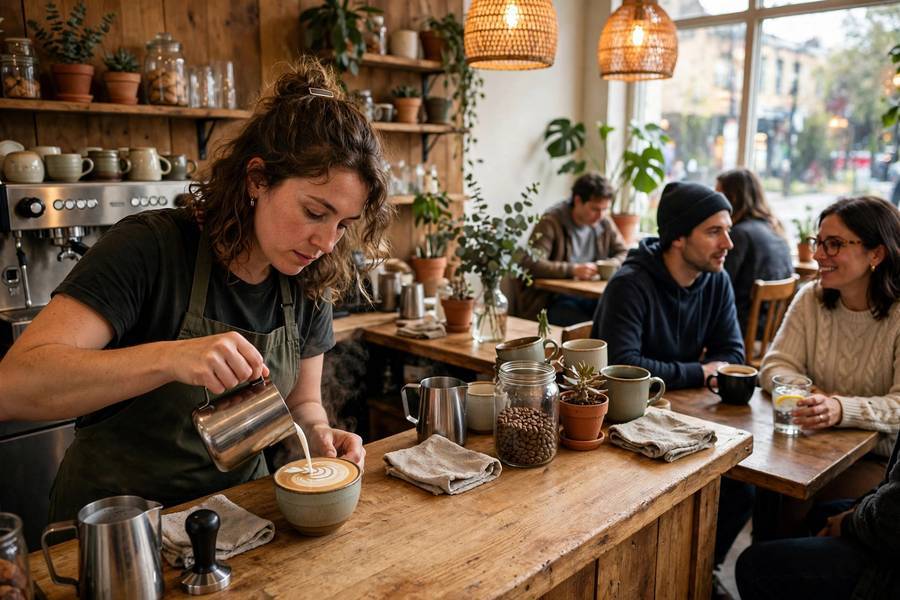
Everyone loves the idea of owning a coffee shop. The smell, the regulars, the community hub. I’m not here to kill the dream — I’m here to give you the numbers, because coffee shops have one of the highest failure rates in small business, and it’s almost always the math, not the coffee.
I’ve advised food-service founders. The ones who survive share a trait: they fell in love with the business model, not just the aesthetic. A coffee shop is a high-volume, low-margin, operations-intensive retail business that happens to sell coffee. If that sentence excites you, keep reading.
Table of Contents
- The Real Startup Costs (No Sugar-Coating)
- Step 1: Location — The Decision That Decides Everything
- Step 2: The Business Plan and Funding
- Step 3: Permits, Licenses, and the Paperwork Gauntlet
- Step 4: Equipment — What You Need vs What’s Nice
- Step 5: Menu, Suppliers, and Pricing
- Step 6: Hiring and the People Problem
- The Margin Truth: Where Coffee Shops Make (and Lose) Money
- Frequently Asked Questions
The Real Startup Costs (No Sugar-Coating)
Forget the “$50k and a dream” blog posts. Realistic ranges:
Small kiosk / cart: $25,000-$75,000. Minimal rent, minimal staff, limited menu. The leanest entry point.
Small sit-down shop (500-1,000 sq ft): $80,000-$200,000. Leasehold improvements, full espresso setup, furniture, initial inventory, permits, working capital.
Mid-size café with kitchen: $200,000-$400,000+. The kitchen doubles everything — equipment, permits, staffing, complexity.
Where the money goes:
– Lease deposits + first months: often 3-6 months rent upfront
– Buildout/renovation: $30,000-$150,000+ (plumbing for espresso machines is not cheap)
– Equipment: $20,000-$60,000 (see below)
– Initial inventory: $5,000-$15,000
– Permits/licenses: $1,000-$5,000
– Working capital: 3-6 months of operating expenses — the line item everyone underfunds
Add 20% contingency to whatever you calculate. Buildouts always overrun. Always.
Step 1: Location — The Decision That Decides Everything
In coffee, location isn’t just important — it’s the business. A mediocre shop in a great location beats a great shop in a dead location, every time.
What to look for:
– Foot traffic, measured. Don’t guess — stand outside at 7am, noon, and 5pm on weekdays and weekends. Count. A location with 200 passersby/hour at morning rush is a different business than one with 20.
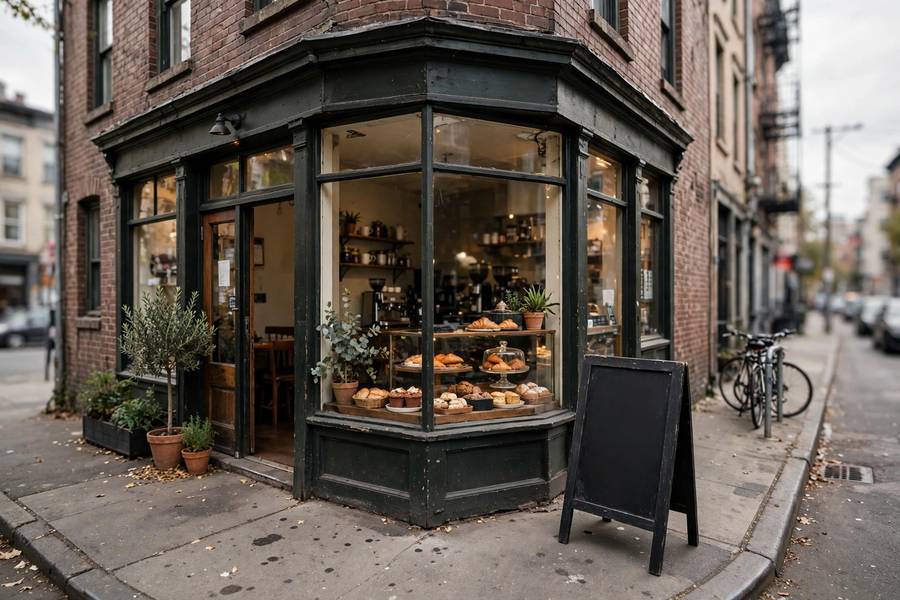
– Visibility and access. Corner spots, ground floor, easy in-and-out. If people have to hunt for you, you’ve already lost the impulse buyers who are 60% of revenue.
– Complementary neighbors. Offices (morning rush), gyms (post-workout), bookstores, co-working spaces. Avoid being the 4th coffee shop on one block unless you have a genuinely different offer.
– Parking and transit. Suburban locations live or die on parking. Urban ones on foot/transit flow.
The rent rule: total occupancy cost (rent + utilities + insurance + taxes) should stay under 15% of projected revenue. At $15,000/month revenue, that’s $2,250 max. Landlords will happily let you sign a lease that bankrupts you — the math is your job, not theirs.
Negotiate: tenant improvement allowances, rent-free buildout periods, and personal guarantee limits. Get a commercial lease lawyer for anything over a year. The $1,500 legal fee is nothing next to a 5-year bad lease.
Step 2: The Business Plan and Funding
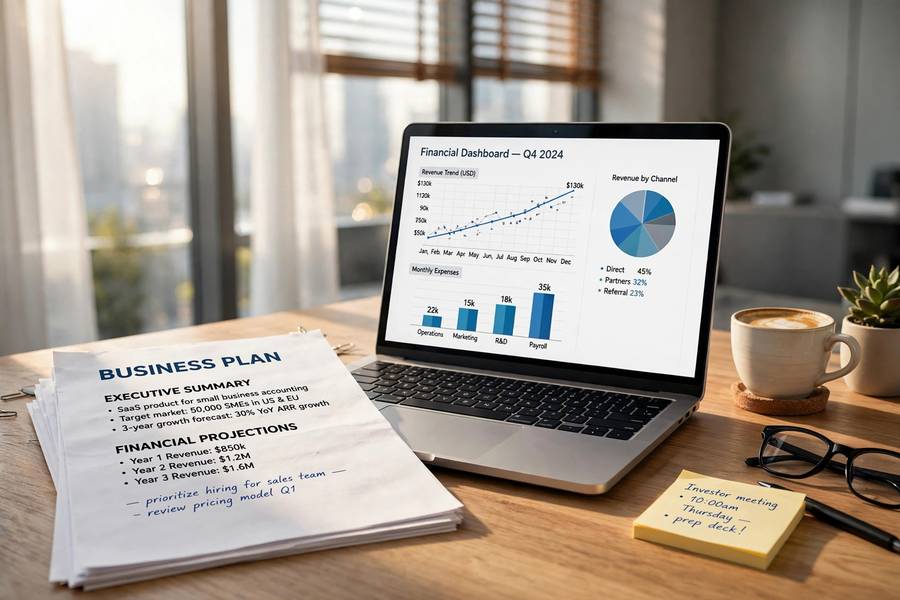
You need a plan — not a 40-page fantasy, but a working document with real numbers:
- Concept: what kind of shop (third-wave specialty? cozy neighborhood? drive-through?), and who exactly it’s for
- Revenue model: average ticket × transactions/day × days open. Be conservative. Then cut it 20%.
- Startup budget: the full cost list above, itemized
- Break-even analysis: at what daily revenue do you cover all costs? Know this number cold.
- Funding: savings, SBA loans, investors, or some mix. Know that lenders want to see 15-25% owner equity injection.
On funding: SBA 7(a) loans are the workhorse of small food-service financing, but they want collateral, cash flow projections, and patience (60-90 days). Borrowing from family? Put it in writing with terms. Money + informality = destroyed relationships.
The entrepreneurial judgment calls here — how much risk, what structure — are covered well in our guide on how to become an entrepreneur.
Step 3: Permits, Licenses, and the Paperwork Gauntlet
Unsexy and non-negotiable. Typical requirements:
- Business license (city/county)
- Food service / health department permit — includes inspections; your buildout must meet code
- Signage permits — yes, even the sign needs a permit in most cities
- Fire department clearance — occupancy limits, extinguishers, hood systems if cooking
- Music licensing — playing Spotify in a commercial space without a license (ASCAP/BMI/SESAC) can get you fined. This surprises everyone.
- Employer registrations — EIN, state employer accounts, workers’ comp
Start permits 3-4 months before your target open date. Health department backlogs are real, and you cannot open without clearance. Build the timeline around the slowest permit, not the fastest contractor.
Step 4: Equipment — What You Need vs What’s Nice
Need:
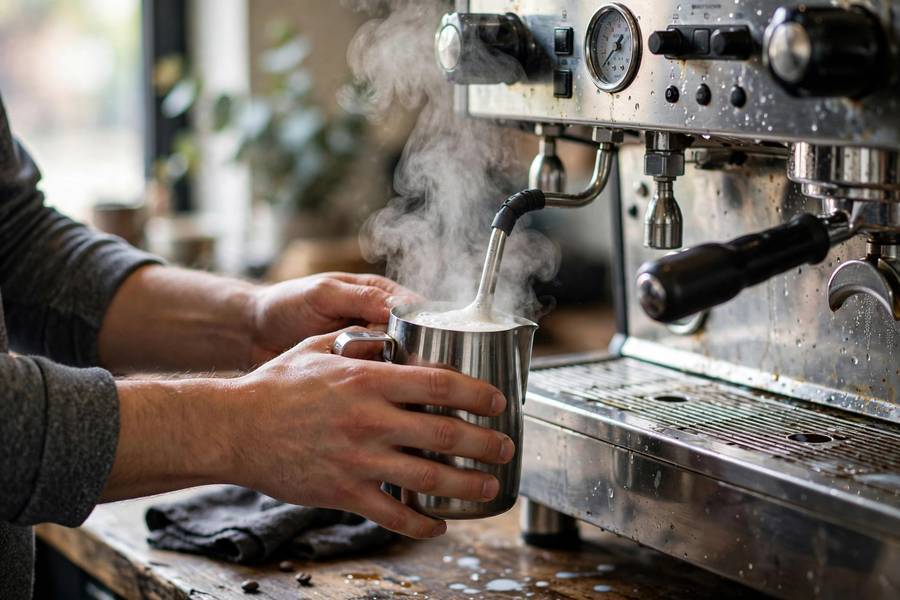
– Espresso machine. The heart. $8,000-$25,000 for a commercial 2-3 group machine. Don’t cheap out here — it’s your revenue engine and it runs 12 hours a day. La Marzocco, Synesso, and Nuova Simonelli dominate for a reason.
– Grinders. At least two (espresso + drip/brew). $1,500-$3,000 each. Stale grind = bad coffee, full stop.
– Brewer. Batch brewer for drip ($1,000-$2,500) or pour-over setup.
– Refrigeration. Under-counter fridges, milk storage — $2,000-$6,000.
– Water filtration. Non-negotiable for taste and machine longevity. $500-$2,000.
– POS system. Square, Toast, etc. $1,000-$2,500 including hardware.
Nice (add later):
– Nitro cold brew system, single-origin pour-over bar, full kitchen equipment, fancy furniture.
Buy the best espresso machine and grinders you can afford; economize on furniture and decor. Customers taste the coffee; they forgive the chairs.
Step 5: Menu, Suppliers, and Pricing
Menu: keep it tight. Espresso drinks, drip, cold brew, tea, 3-5 pastries. Every menu item is inventory, training, and complexity. The most profitable shops I’ve seen have under 20 items. You can always expand; you can’t easily un-expand.
Suppliers: find a roaster who’ll partner with you — training, equipment support, consistent quality. Local roasters often provide the machine on favorable terms in exchange for exclusivity. Taste widely before committing; this relationship defines your product.
Pricing: know your cost per cup. Beans + milk + cup + lid ≈ $0.80-$1.50 for a latte. At a $5.50 price, gross margin looks great — until labor (30-35% of revenue) and rent take their cut. Price for the business you need, not the customers you hope for. Underpricing to “get people in” is the slowest form of bankruptcy.
Step 6: Hiring and the People Problem
Your baristas ARE the product as much as the coffee. A great barista who remembers names is worth more than a $20,000 machine upgrade.
- Hire for attitude, train for skill. You can teach latte art; you can’t teach warmth.
- Pay above market. Turnover in food service is brutal. An extra $2/hour that keeps a great employee 18 months instead of 3 is the cheapest money you’ll spend.
- Cross-train everyone. Sick calls on Saturday morning will happen. If only one person can open, you don’t have a business — you have a hostage situation.
- Labor target: 30-35% of revenue including taxes and benefits. Above 40%, something’s wrong with scheduling or pricing.
The Margin Truth: Where Coffee Shops Make (and Lose) Money
Typical coffee shop P&L (as % of revenue):
– COGS (beans, milk, cups, food): 25-35%
– Labor: 30-35%
– Occupancy: 10-15%
– Other (utilities, marketing, misc): 5-10%
– Net profit: 5-15% if well-run; many shops run 0-5%
Read that again: a good coffee shop nets maybe 10%. On $500k annual revenue, that’s $50k — for 60-hour weeks. The economics work at volume and efficiency, not at romance.
Where the money actually comes from: morning rush throughput (speed of service = revenue), food attach rate (pastry with coffee doubles the ticket), and repeat regulars (acquisition cost near zero). Optimize those three and the rest follows.
For the bigger picture of venture structure, see our guide on what a startup actually is. More operational guides in our guide on what branding actually means.

Frequently Asked Questions
A small kiosk runs $25,000-$75,000; a small sit-down shop $80,000-$200,000; a mid-size café with kitchen $200,000-$400,000+. Add 20% contingency and 3-6 months of working capital on top of buildout costs.
Well-run shops net 5-15% profit margins, but many operate at 0-5%. Profitability depends on location (foot traffic), throughput speed during rush hours, labor control (30-35% of revenue), and food attach rates. It’s a volume business, not a high-margin one.
Not necessarily, but you need either experience or a great head barista/manager who has it. The business is operations-heavy — hiring, inventory, health codes, equipment maintenance. Passion for coffee alone doesn’t cover the operational skill gap.
Typically: business license, food service/health department permit, signage permits, fire clearance, music licensing (ASCAP/BMI), and employer registrations (EIN, workers’ comp). Start 3-4 months before your planned opening — health inspections are often the bottleneck.
Location — specifically consistent foot traffic during morning hours. A mediocre shop in a high-traffic location consistently outperforms a great shop in a dead location. Measure actual passerby counts before signing any lease.