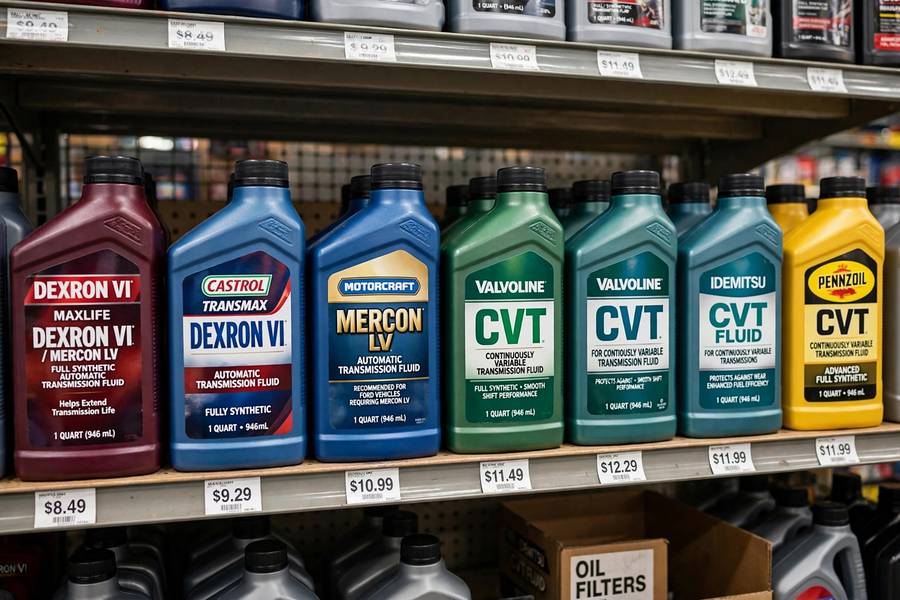
Walk down the transmission fluid aisle at any parts store and you’ll face a wall of bottles making big promises: “multi-vehicle,” “universal,” “synthetic,” plus a dozen manufacturer specs that all sound vaguely the same. It’s overwhelming, and the stakes are real — put the wrong fluid in your transmission and you’re not just wasting $40, you’re potentially causing slipping, shudder, and premature wear on a component that costs thousands to replace.
I’ve spent enough years around transmissions to have strong opinions about this aisle. Here’s the no-nonsense guide: what the major fluid types are, why they exist, why they’re not interchangeable, and how to figure out exactly what your car needs.
Table of Contents
- Why So Many Types? (The 30-Second Version)
- Conventional ATF: Dexron, Mercon, ATF+4
- CVT Fluid: The Specialist
- Dual-Clutch (DCT/DSG) Fluid
- Manual Transmission Gear Oil
- Synthetic vs Conventional: Does It Matter?
- The “Universal ATF” Question
- How to Find Your Car’s Fluid Spec
- Frequently Asked Questions
Why So Many Types? (The 30-Second Version)
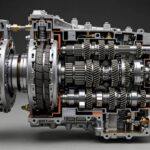
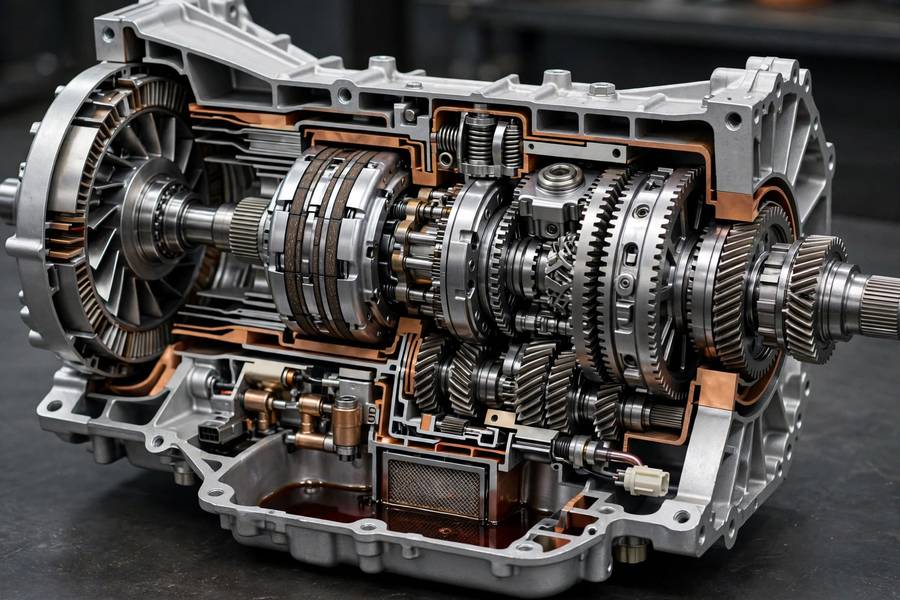
Transmission fluid isn’t just oil. In an automatic, it’s simultaneously a hydraulic fluid (applying clutches via pressure), a lubricant (gears, bearings, bushings), a coolant (carrying heat to the cooler), and — critically — a friction modifier (controlling exactly how clutch plates grip and release).
That last job is why specs proliferate. Different transmission designs need different friction characteristics: how quickly a clutch grabs, how smoothly it releases, how it behaves when hot versus cold. A fluid formulated for one clutch design can make another design shudder, slip, or wear prematurely. The chemistry is tuned to the hardware, which is why “close enough” is a gamble.
Think of it like this: motor oil mostly needs to lubricate, so there’s more room for overlap between specs. Transmission fluid has to lubricate AND manage friction precisely, so the specs diverge more.
Conventional ATF: Dexron, Mercon, ATF+4
These are the big three families of traditional automatic transmission fluid:
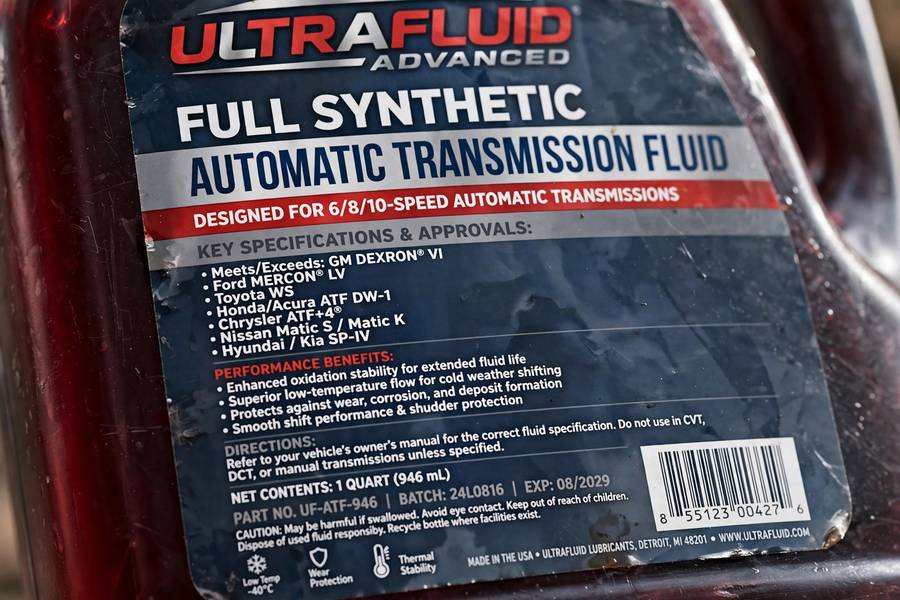
Dexron (GM). Currently Dexron VI, which is backward-compatible with older Dexron III applications. Dexron VI is a synthetic-blend fluid with better heat resistance and longer life than its predecessors. If your GM, or many other makes, spec Dexron VI — that’s one of the most common ATF specs on the road. Note: Dexron VI is NOT backward compatible in the other direction — don’t put old Dexron III in a transmission that specs VI.
Mercon (Ford). Currently Mercon V and Mercon LV (low viscosity). These are NOT interchangeable with each other — Mercon V and Mercon LV are different specs for different transmissions. This trips people up constantly. Check which one your Ford needs; they’re both “Mercon” but they’re not the same fluid.
ATF+4 (Chrysler/Stellantis). A full-synthetic fluid spec’d for Chrysler, Dodge, Jeep, and Ram automatics. ATF+4 is very specific about its friction characteristics — using Dexron or Mercon in a Chrysler transmission that specs ATF+4 is one of the classic wrong-fluid mistakes, and it causes shudder and shift problems.
Toyota WS, Honda DW-1, Nissan Matic series. The Japanese manufacturers each have their own specs too. Toyota WS (World Standard) is a low-viscosity fluid for sealed transmissions. Honda DW-1 replaced the older Z1. Nissan has Matic D, J, K, and S for different applications. Use the one your car specs — “it’s all Asian ATF” is not a thing.
The pattern: each manufacturer tunes fluid to their transmission designs. Within a family (Dexron VI covering older Dexron applications), there’s backward compatibility. Across families, there isn’t.
CVT Fluid: The Specialist
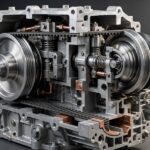
CVT fluid is in a category of its own, and this is where I see the most expensive mistakes. A CVT transmission doesn’t have gears or traditional clutch packs — it has a belt or chain riding on variable pulleys, and the fluid’s job includes maintaining precise friction between the belt and pulleys under extreme pressure.
CVT fluids (Nissan NS-2/NS-3, Honda HCF-2, Toyota FE, Subaru’s CVT fluid, and others) are formulated specifically for this. They are NOT interchangeable with regular ATF, and they’re generally not interchangeable with each other either. Nissan NS-3 is not Honda HCF-2. Period.
The wrong-fluid consequences are worse with CVTs than with conventional automatics: belt slip, shudder, overheating, and accelerated pulley wear — on a transmission type that’s already expensive to replace and often not rebuildable economically.
My hard rule: for CVTs, buy the exact OEM-spec fluid. Not “compatible with.” Not “meets the requirements of.” The actual spec, from the manufacturer or a fluid maker that licenses it. The price difference is trivial compared to a CVT replacement.
Dual-Clutch (DCT/DSG) Fluid
Dual-clutch transmissions — VW’s DSG, Ford’s PowerShift, Porsche’s PDK, Hyundai/Kia’s DCT — use yet another fluid category. These transmissions are essentially automated manuals with two clutches, and their fluid needs depend on the design:
- Wet-clutch DCTs (VW DSG, for example) bathe the clutches in fluid, which manages both clutch friction and gear lubrication. The fluid spec is highly specific.
- Dry-clutch DCTs have separate gear oil for the gearbox and no fluid on the clutches at all.
Some DCTs even use two different fluids — one for the clutch pack, one for the gear set. VW’s DSG service is famous (or infamous) partly because of this complexity.
Bottom line: DCT fluid is manufacturer-specific, full stop. There is no universal DCT fluid worth trusting. Follow the book exactly, including the service interval — DCT clutch wear is real, and the fluid is part of managing it.
Manual Transmission Gear Oil
Manuals are the simple ones. Most use a gear oil (typically 75W-90 GL-4), and they’re far more forgiving about exact specs than automatics. The fluid’s job is straightforward lubrication — no hydraulic clutch application, no precise friction management.
The main thing to watch: GL-4 vs GL-5. Many manual transmissions spec GL-4, and using GL-5 (which has more extreme-pressure additives, including sulfur compounds) can corrode the yellow-metal synchros (brass/bronze) in some transmissions. If your manual specs GL-4, use GL-4. This is one of those details that seems fussy until you’re rebuilding a gearbox with eaten synchros.
Some modern manuals spec ATF or specific synthetic fluids instead of gear oil — check the manual. “It’s a manual, any gear oil works” was true in 1985. It’s less true now.
Synthetic vs Conventional: Does It Matter?
For transmission fluid, synthetic (or synthetic-blend) is genuinely better in ways that matter:
- Heat resistance. Synthetics handle high temperatures without breaking down as fast. Since heat is the primary fluid killer, this is the big one.
- Cold flow. Better performance on cold starts, when most wear happens.
- Longer service life. Synthetics maintain their properties longer, which is part of why modern service intervals stretched out.
Most modern ATF specs (Dexron VI, ATF+4, Mercon LV) are synthetic or synthetic-blend by definition — you’re getting synthetic whether you ask for it or not. Where you have a choice (some older applications), I’d go synthetic. The price premium is small; the protection margin is real.
But “synthetic” doesn’t override “correct spec.” Synthetic Dexron VI in a transmission that needs Honda DW-1 is still the wrong fluid. Spec first, synthetic second.
The “Universal ATF” Question
Those “multi-vehicle” or “universal” ATF bottles claim to meet a dozen specs at once. Are they legit? It depends, and I’m going to be honest about the nuance:
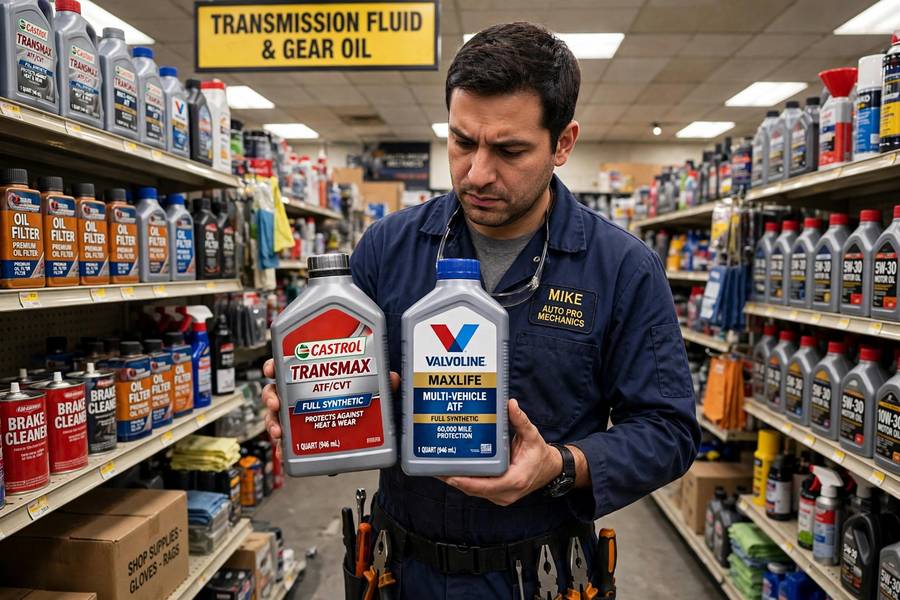
The case for them: reputable fluid makers (Valvoline MaxLife, Castrol Transmax, and similar) formulate multi-vehicle ATFs that genuinely meet the performance requirements of many common specs — Dexron III/VI, Mercon V, ATF+4, Toyota T-IV, and others. For older, conventional automatics, these are widely used by shops and generally work fine. The chemistry can cover a range because many older specs have overlapping requirements.
The case against them: no single fluid can be optimal for every friction spec simultaneously. “Meets the requirements” and “identical performance” aren’t the same thing. And for CVTs, DCTs, and newer low-viscosity specs, universal fluids are a hard no — the tolerances are too tight.
My take: for an older conventional automatic that’s out of warranty, a quality multi-vehicle ATF from a reputable brand is a reasonable choice. For anything with a CVT, DCT, a specific low-viscosity spec, or a car still under warranty — use the exact spec. When in doubt, the exact spec is never the wrong answer.
How to Find Your Car’s Fluid Spec
In order of reliability:
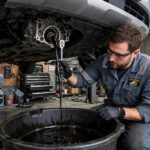
- Owner’s manual. The maintenance/fluids section names the exact spec. This is the answer.
- The dipstick. Many have the spec stamped on them (“Use Dexron VI only” etc.).
- Underhood labels or the fill plug area. Sometimes stamped on the transmission case.
- Dealer parts counter. Give them your VIN; they’ll tell you the exact fluid. Free advice, no purchase required.
- Reputable fluid-maker lookup tools. Valvoline, Castrol, and others have online tools where you enter your car and get the spec. Good cross-check, not a primary source.
What NOT to trust: the guy at the parts counter guessing, forum posts from 2009, “my buddy runs X in his and it’s fine,” or the bottle that says “recommended for” in tiny print (that’s marketing language, not a spec license — “licensed” or “approved” is what you want).
Once you know your fluid, the rest follows: check your transmission fluid on schedule, and when service time comes, you already know the transmission fluid change vs flush decision framework.
Frequently Asked Questions
The main types are conventional ATF (Dexron, Mercon, ATF+4 families), CVT fluid (Nissan NS-3, Honda HCF-2, etc.), dual-clutch/DCT fluid (manufacturer-specific), and manual transmission gear oil (usually 75W-90 GL-4). Each is formulated for different hardware and they are not interchangeable.
No. Use the exact spec in your owner’s manual (Dexron VI, Mercon LV, ATF+4, Toyota WS, etc.). Different specs have different friction characteristics, and the wrong fluid can cause shuddering, slipping, and premature wear. This is especially critical for CVTs.
Quality multi-vehicle ATFs from reputable brands are generally fine for older conventional automatics. But they’re not appropriate for CVTs, dual-clutch transmissions, or newer low-viscosity specs — those need the exact manufacturer fluid.
Absolutely not. CVT fluid is specially formulated for belt-and-pulley friction characteristics. Regular ATF in a CVT causes belt slip, shudder, overheating, and rapid wear. Always use the exact OEM-spec CVT fluid.
Dexron is GM’s ATF spec (currently Dexron VI) and Mercon is Ford’s (Mercon V and Mercon LV). They’re different formulations for different transmission designs and are not interchangeable. Note that Mercon V and Mercon LV aren’t interchangeable with each other either.