If you’ve driven a modern Nissan, Honda, Subaru, or Toyota hybrid and noticed the engine drone at a constant RPM while the car accelerates — no shift points, no gears changing — you’ve driven a CVT. Customers ask me about them constantly in the shop: what is a CVT transmission, why does it feel so weird, and should I be worried about reliability?
Ten years around cars, and I’ve serviced plenty of these. Let me give you the straight story — how they work, where they shine, where they fail, and whether I’d spend my own money on one.
Contents
- The Basic Idea: Gears Without Gears
- How a CVT Actually Works
- Why It Feels Weird: The “Rubber Band” Effect
- Pros of CVT Transmissions
- Cons of CVT Transmissions
- CVT Reliability: The Honest Record
- Maintenance: What CVTs Actually Need
- Should You Buy a Car With a CVT?
The Basic Idea: Gears Without Gears
CVT stands for Continuously Variable Transmission. A conventional automatic has a fixed number of gears — 6, 8, 10 — and steps between them. A CVT has no fixed gears at all. Instead, it can produce an infinite number of ratios within its range, seamlessly.
Think of it this way: a regular transmission is a staircase — you climb step by step. A CVT is a ramp — smooth, continuous, no steps. The engine can stay at its most efficient RPM while the car accelerates, which is the whole point.
How a CVT Actually Works
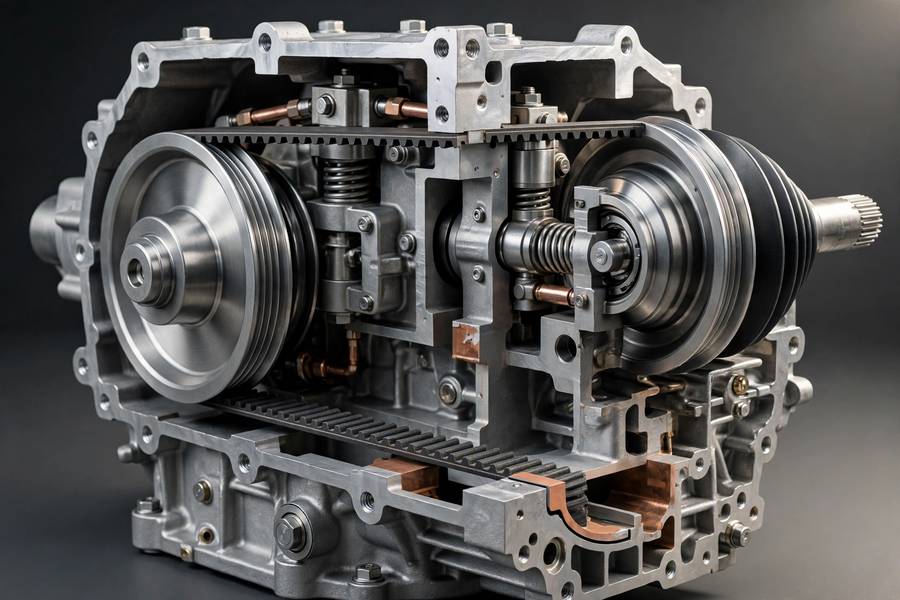
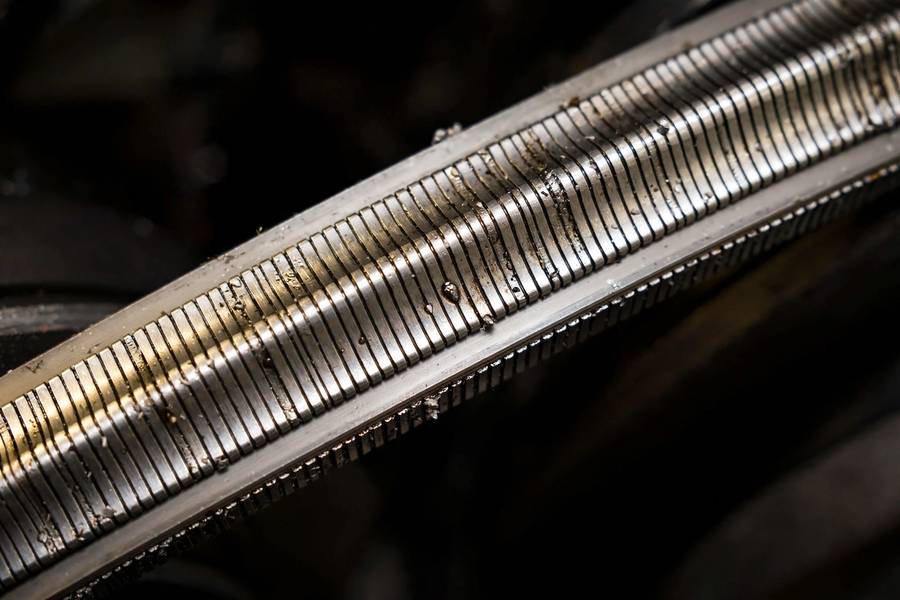
Most automotive CVTs use a belt-and-pulley design. Picture two pulleys — one connected to the engine, one to the wheels — linked by a steel belt or chain. Each pulley is actually two cones facing each other, and they can move closer together or farther apart, which changes the effective diameter where the belt rides.
- For acceleration (low “gear”): the input pulley is small, the output pulley is large — like a low gear multiplying torque.
- For cruising (high “gear”): the input pulley grows, the output shrinks — like an overdrive gear for efficiency.
- Everything between: infinite ratios in between, adjusted continuously by hydraulics responding to throttle, speed, and load.
Some designs differ — Toyota’s e-CVT in hybrids uses planetary gears instead of a belt (a completely different and famously reliable design), and a few use toroidal (disc-and-roller) systems. But belt-and-pulley is what most people mean by “CVT.”
Why It Feels Weird: The “Rubber Band” Effect
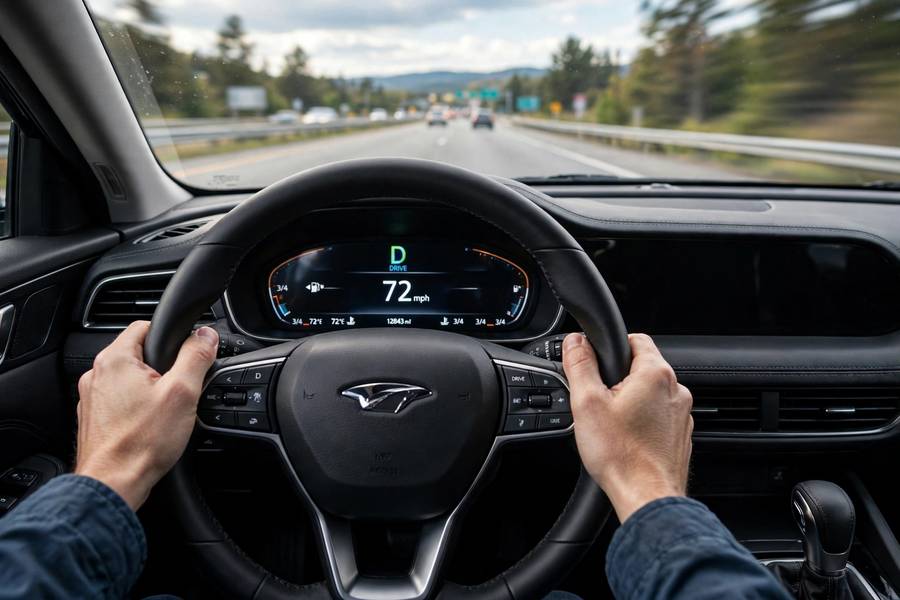
The number one complaint I hear: “it feels like the transmission is slipping.” What’s actually happening: you press the gas, the engine jumps to, say, 4,000 RPM and stays there while the car accelerates. Your brain, trained by decades of stepped gears, expects the RPM to rise and fall with shifts. When it doesn’t, it feels wrong — like a slipping clutch or a rubber band stretching.
It’s not slipping. It’s the CVT holding the engine at peak power or peak efficiency while the ratio changes underneath. Once you understand what’s happening, the feeling goes from “broken” to “different.” Most drivers adapt within a week.
Manufacturers know people dislike the sensation, so many now program in fake shift points — the CVT deliberately steps through simulated gears. I have mixed feelings about this: it wastes a little efficiency to make humans comfortable, but comfort sells cars.
Pros of CVT Transmissions
Credit where it’s due — CVTs have real advantages:
Fuel economy. This is the big one. By keeping the engine at its most efficient RPM in all conditions, CVTs typically beat conventional automatics by 5–10% in fuel economy. Over a car’s life, that’s real money.
Smoothness. No shift shock, ever. For stop-and-go commuting, a CVT is genuinely more pleasant than a stepped automatic hunting between gears.
Simplicity (in theory). Fewer moving parts than a modern 8- or 10-speed automatic. A belt, two pulleys, and hydraulics vs. hundreds of clutch plates, planetary gearsets, and solenoids.
Weight and packaging. CVTs are compact and light, which is why they’re popular in small cars and hybrids where every pound and inch counts.
Cons of CVT Transmissions
Now the other side, from someone who’s seen the repair bills:
Driving feel. The drone, the rubber-banding, the disconnected sensation. Enthusiasts hate it. Even non-enthusiasts notice. Fake shift points help but don’t fully fix it.
Torque limits. Belt CVTs don’t handle high torque well. That’s why you see them in 4-cylinder economy cars and hybrids, not in V8 trucks. Push too much power through a belt designed for less, and bad things happen.
Repair costs. When a conventional automatic has issues, shops can often rebuild it — replace clutch packs, solenoids, valve body. When a CVT belt or pulley fails, the usual fix is a complete replacement, because few shops rebuild them and parts are scarce. A replacement CVT can run $3,000–$5,000+. That’s the number that should focus your mind.
Towing. Most manufacturers rate CVT vehicles for little or no towing. The belt system doesn’t like sustained high loads. If you tow, buy something else.
CVT Reliability: The Honest Record
Here’s where I have to be blunt, because reputations were earned:
Nissan’s Jatco CVTs (roughly 2007–2018, especially in Altimas, Rogues, Sentras) had genuinely terrible reliability — overheating, belt failures, class-action lawsuits, extended warranties. If you’re shopping used, a Nissan CVT from this era is the one I’d walk away from. Later units improved, but the reputation persists for a reason.
Honda and Toyota CVTs have been far better. Honda’s units are generally solid with proper maintenance. Toyota’s e-CVT (planetary design, used in all their hybrids) is among the most reliable transmissions ever made — a completely different animal from belt CVTs.
Subaru’s Lineartronic CVT is mid-pack: decent with maintenance, expensive when it fails, and Subaru extended warranties on some years for a reason.
The pattern: the design isn’t inherently unreliable — the execution and maintenance vary enormously by manufacturer. Which brings us to…
Maintenance: What CVTs Actually Need
The single most important thing: change the fluid. CVT fluid degrades, and degraded fluid kills belts. Most manufacturers spec 30,000–60,000 mile intervals. The “lifetime fluid” claim some brands made? Ignore it. There’s no such thing as lifetime fluid — there’s only fluid whose lifetime ends with the transmission.
Other rules: – Never tow beyond the rating (usually “don’t”) – Don’t neutral-drop or abuse it — belt CVTs hate shock loads – Let it warm up in extreme cold before hard acceleration – Use the correct fluid — CVT fluid is not ATF, and the wrong fluid destroys the belt. This is a dealer-or-specialist job, not a quick-lube gamble.
I’ve seen well-maintained Honda CVTs go 200,000+ miles without issues. I’ve seen neglected ones die at 80,000. Maintenance is the whole game.
Should You Buy a Car With a CVT?
My mechanic’s verdict, no fluff:
Yes, if: you want a fuel-efficient commuter, you drive mostly in traffic and suburbs, you pick Honda/Toyota/Subaru (not early Nissan), and you’ll actually change the fluid on schedule. For that use case, a CVT is a rational, economical choice.
No, if: you tow, you drive hard, you want driving engagement, you’re buying a used Nissan from the bad years, or the thought of a $4,000 replacement keeps you up at night.
The hybrid exception: Toyota’s e-CVT isn’t really a CVT in the belt sense — it’s a planetary power-split device with an outstanding reliability record. If someone asks “should I worry about the CVT in a Toyota hybrid,” my answer is: that’s the least of your worries. Buy the car.
Would I spend my own money on a belt CVT? For a commuter appliance — a Civic or Corolla doing 15,000 miles a year in traffic — yes, with eyes open and fluid changes on the calendar. Whatever gearbox you end up with, know what cruise control does behind the scenes — and how to jump start a car belongs in every driver’s mental toolkit. For anything I wanted to keep for 15 years or tow with — no. Match the tool to the job, as always.
Frequently Asked Questions
A CVT (Continuously Variable Transmission) is an automatic transmission with no fixed gears. It uses a belt and variable pulleys (or planetary gears in hybrids) to provide infinite gear ratios, keeping the engine at its most efficient RPM.
It depends heavily on the manufacturer. Honda, Toyota (e-CVT), and later Subaru units are generally reliable with proper fluid changes. Early Nissan Jatco CVTs (2007–2018) had serious reliability problems. Maintenance — regular fluid changes — is critical for all of them.
It’s not slipping — that’s the “rubber band” effect. The CVT holds the engine at constant RPM while continuously changing the gear ratio, which feels strange if you’re used to stepped gears. Many manufacturers now add artificial shift points to make it feel familiar.
Every 30,000–60,000 miles depending on the manufacturer. Ignore “lifetime fluid” claims — degraded fluid is the leading cause of CVT failure. Always use the manufacturer-specified CVT fluid, not generic ATF.
Generally no, or only very light loads. Belt CVTs don’t handle sustained high torque well, and most manufacturers rate CVT vehicles for minimal or zero towing. If you tow regularly, choose a conventional automatic instead.