
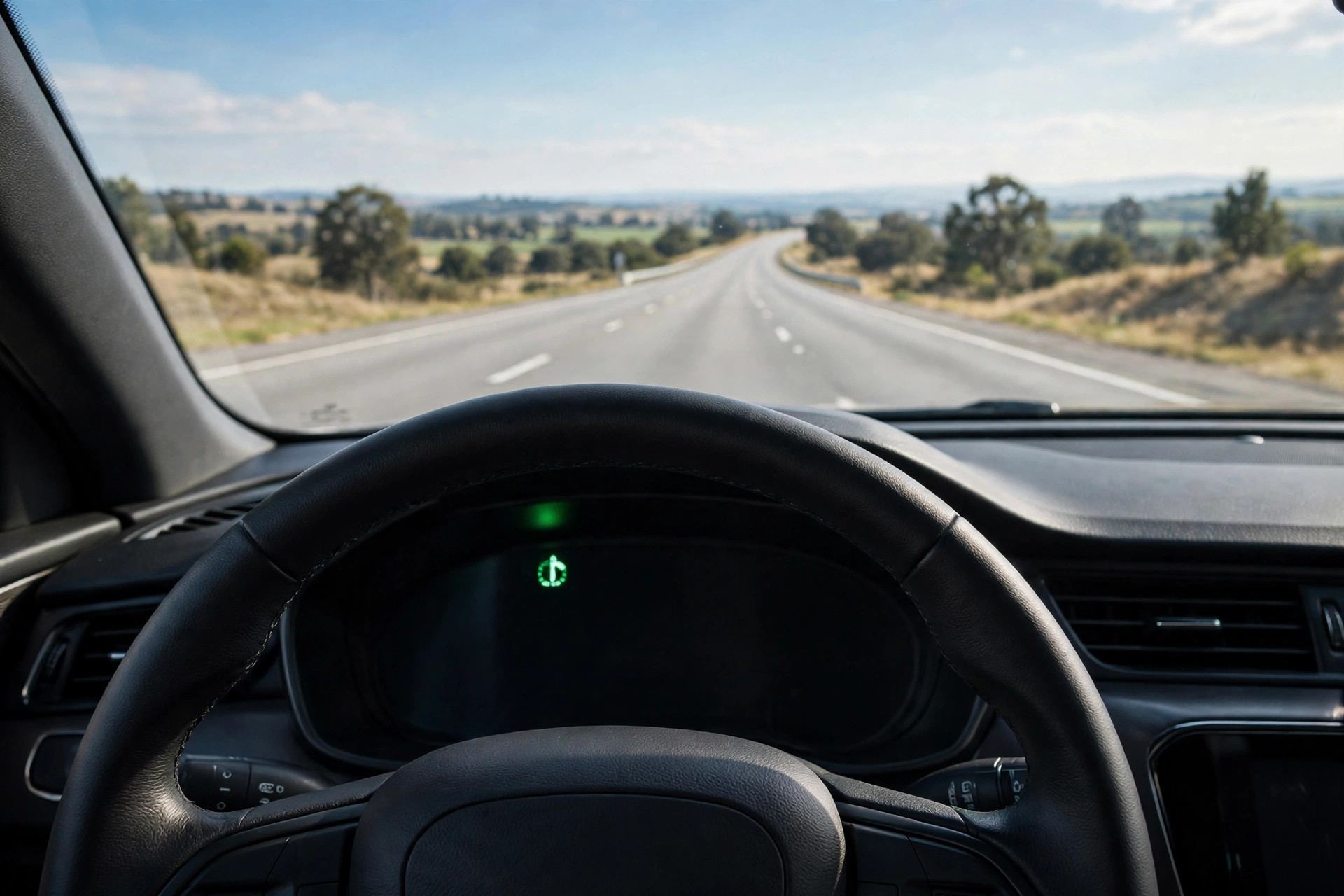
Four hundred miles into a drive on I-80, somewhere in the middle of Nebraska where the road is straighter than a ruler, I realized my right foot had gone numb. I’d been holding the same throttle position for two hours. I pressed the little button on the steering wheel I’d ignored for years — and the car just… kept going. Same speed. Foot off. That was the day cruise control stopped being a mystery button and started being a tool.
For a deeper dive, see our guide on all-wheel drive.
Ten years turning wrenches taught me how the thing actually works under the skin, and a lot of highway miles taught me when to use it and when to leave it alone. Here’s both — the mechanic’s explanation and the driver’s verdict. No owner’s-manual jargon.
The Basic Idea in One Paragraph
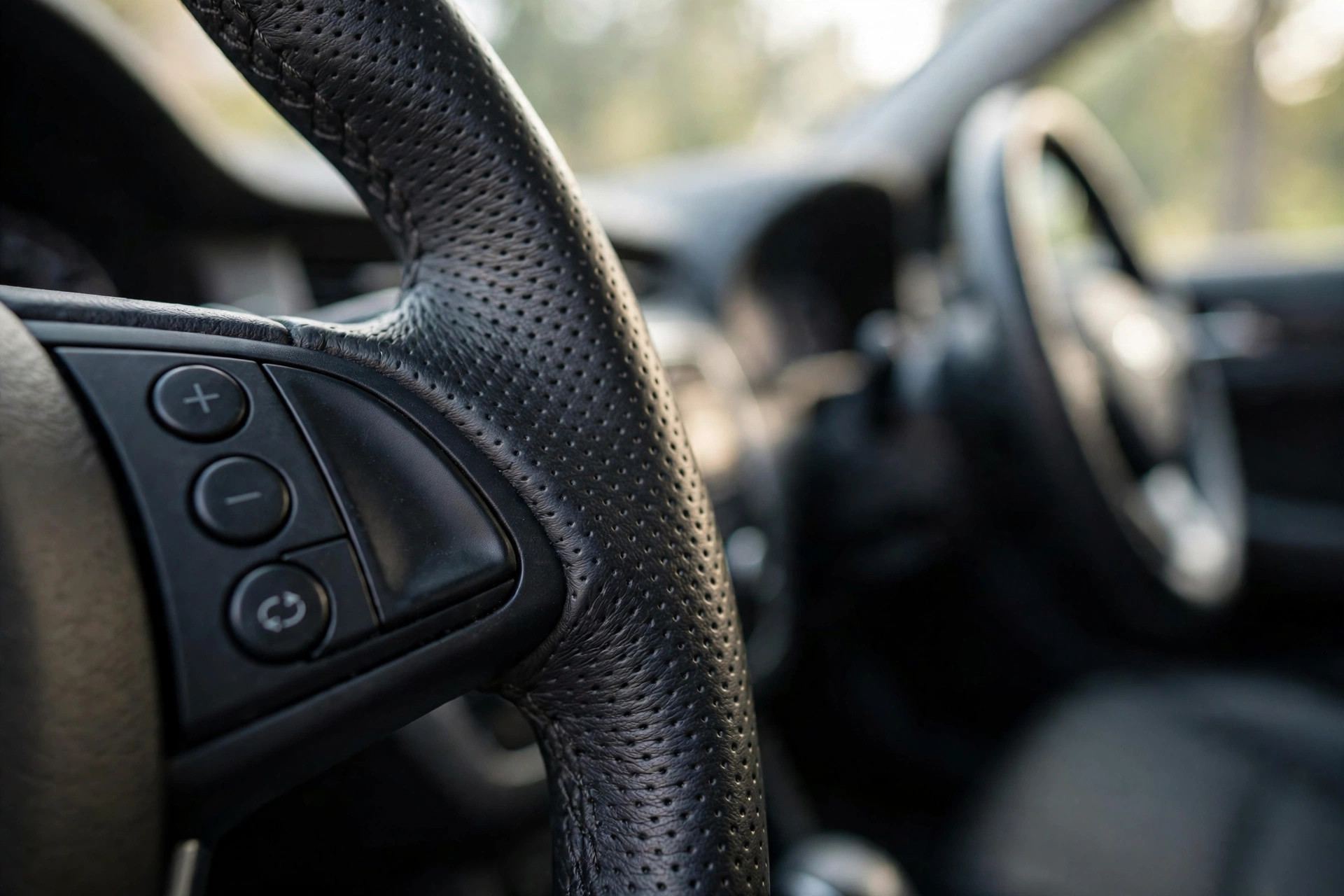
Cruise control holds your car at a speed you set, without you touching the gas pedal. You get up to speed, press “set,” and the car takes over throttle control to maintain it. Tap the brake or press cancel, and you’re back in charge instantly. That’s the whole concept. Everything else — the different types, the radar, the buttons — is just fancier ways of doing that one job.
How Classic Cruise Control Works
The old systems — the ones in cars from the ’80s through the 2000s — were beautifully mechanical. Here’s what happened when you pressed “set”:
A small servo motor, usually mounted under the hood, pulled on a second throttle cable connected to the same throttle body your gas pedal controlled. The car’s computer watched the vehicle speed sensor, and if the car slowed down (a hill), it told the servo to pull the cable a little more. If the car sped up (downhill), it eased off. A simple feedback loop: measure speed, adjust throttle, repeat — dozens of times per second.
Modern cars ditched the cable. With electronic throttle control (drive-by-wire), there’s no physical link between your pedal and the engine — the pedal is just a sensor. So cruise control became pure software: the computer reads your set speed, reads the actual speed, and commands the electronic throttle directly. Same feedback loop, no moving cables. Simpler, more precise, and one less thing to wear out. When I was in the shop, cruise control complaints on these newer systems were almost always a bad brake-light switch or a blown fuse — cheap fixes, not computer problems.
We break down what the check engine light means step by step in a separate guide.
One thing worth knowing: classic cruise control can only add throttle. It cannot brake. Going downhill, it’ll close the throttle, but if the hill is steep enough, the car will gain speed anyway. The system doesn’t care — it did its part. That’s on you, which matters for the safety section below.
Adaptive Cruise Control: The Radar Upgrade
Adaptive cruise control (ACC) is the version most new cars have now, and it’s a genuine step up. It does everything classic cruise does, plus one big thing: it watches the car ahead.
A radar sensor — usually hidden behind the front grille or emblem — constantly measures the distance and closing speed of the vehicle in front of you. You set your speed AND a following distance (usually shown as bars: one to four). If traffic ahead slows, your car slows with it, maintaining the gap. If the lane clears, it accelerates back to your set speed. And unlike classic cruise, adaptive systems CAN brake — they use the actual brakes, not just throttle.
The fancier versions add stop-and-go capability: in heavy traffic, the car will slow to a complete stop behind the car ahead, then pull away when traffic moves. Some need you to tap the gas or press resume after a full stop; newer ones just go. I’ve driven these in rental cars through construction zones, and I’ll admit it: in crawling traffic, it’s genuinely relaxing.
How the radar sees: it bounces radio waves off the car ahead and measures the return time — same principle as police radar, pointed forward. The system fuses that with camera data in most cars, which is why a dirty windshield or a snow-covered grille emblem can disable it. Keep the sensors clean. The car will tell you with a dashboard warning when it can’t see.
When Cruise Control Shines (And My Personal Rules)
I use cruise control on:
- Long, open highways with light traffic. This is what it was invented for. It kills the foot fatigue and — the part nobody mentions — it stops the unconscious speed creep. Without cruise, most drivers slowly accelerate over long stretches. With it, you sit at exactly the speed you chose. I’ve avoided tickets this way more than once.
- Speed-trap zones and average-speed-check areas. Set it 2–3 mph under the limit and forget about it. Your right foot is a worse speedometer than the computer.
- Flat, familiar roads where you know the rhythm of the traffic.
My personal rules: I set it and leave my foot hovering near the brake, not flat on the floor. Old habit from the shop — I want that half-second. And I cancel it (don’t just brake-tap) when I see brake lights a quarter mile ahead, because I want to be the one deciding how we slow down, not the radar.
When to Turn It OFF: The Safety Section
This is the part I’d tattoo on every new driver’s arm if I could. Turn cruise control off when:
It’s raining, snowing, or the road might be icy. This is the big one. On slick roads, you want your foot controlling the throttle moment to moment. If the car hydroplanes with cruise engaged, the system may try to maintain speed by adding throttle — exactly the wrong response. Worse, your reaction is delayed because your foot isn’t already on the pedals. I’ve seen the aftermath of this in the shop. It’s not theoretical.
In heavy or unpredictable traffic. Classic cruise in stop-and-go traffic means you’re constantly overriding it — pointless. Adaptive handles it better, but I still take over in chaotic merging zones and construction areas. The radar is good. It’s not psychic.
On winding roads. Cruise holds speed; corners need judgment. A speed that’s fine on the straight is too fast for the curve, and the system doesn’t know the curve is coming.
When you’re drowsy. Here’s the counterintuitive one: cruise control can make drowsy driving worse. With your foot idle and the car doing the work, there’s less keeping you engaged. If you’re fighting sleep, you need MORE involvement, not less — or better yet, a rest stop. The rumble strip is not a cruise control accessory.
The mistake I see most: drivers who treat adaptive cruise like self-driving. It isn’t. It’s a very good assistant that still needs a supervisor. Hands on the wheel, eyes on the road, brain in the car. Every “the cruise control didn’t stop” story I’ve heard ends the same way: the driver wasn’t supervising.
The Fuel-Economy Myth, Honestly Answered
“Does cruise control save gas?” The honest answer: sometimes, a little, on flat highways.
On flat ground at steady speed, cruise beats most human drivers because humans unconsciously speed up and slow down — and every one of those fluctuations wastes fuel. The computer holds a steadier speed than your foot can. In that scenario, expect a small improvement, maybe a few percent.
On hilly roads, it can actually do worse than a skilled driver. Cruise control will downshift and pour on throttle to hold exactly 70 mph up a hill; a human driver lets the speed bleed off a few mph uphill and regains it on the descent, which uses less fuel overall. Adaptive systems are a bit smarter about this, but the principle holds.
So: flat highway, light traffic — yes, it helps a bit. Hills — you’re probably better off driving yourself if economy is the goal. Either way, it’s not the 10–15% miracle some articles claim. Tire pressure and driving style matter far more. If you’re curious about the broader money picture of car ownership, I think about costs the same way I think about everything automotive — would I spend my own money on it, and what does it actually return?
Common Problems (The Cheap Fixes First)
From my shop years, cruise control failures ranked like this:
- Blown fuse or bad brake-light switch — the most common by far. The system is designed to disengage when you brake, so it watches the brake-light circuit constantly. A failed switch tells the computer the brake is always pressed, and cruise refuses to engage. The fix is a $15–30 part and twenty minutes.
- Dirty or blocked radar sensor (adaptive systems) — snow, mud, or a misaligned grille emblem after a minor bump. Clean it, and it usually comes right back.
- Vacuum leaks (older cable systems) — the servo ran on engine vacuum; a cracked hose meant weak or dead cruise. Mostly a classic-car issue now.
- Clock spring failure — the electrical connection in the steering wheel that carries the button signals. If the cruise buttons AND the horn or airbag light are acting up together, suspect this one.
If your cruise control suddenly won’t engage, check the brake lights first — have someone watch while you press the pedal. No brake lights plus no cruise equals the switch, almost every time. That’s a free diagnosis you just did yourself.
For more of my automotive guides — the stuff I’d tell you over the counter — they’re all in the automotive section. And if your DIY ambitions run to the cosmetic side too, my headlight restoration walkthrough is the most satisfying afternoon project I know.

Frequently Asked Questions
Classic cruise control holds one set speed and can only adjust the throttle — it cannot brake. Adaptive cruise control adds a forward radar sensor that watches traffic ahead: it slows your car to maintain a following gap, brakes when needed, and accelerates back to your set speed when the lane clears. Many adaptive systems also handle stop-and-go traffic down to a full stop.
On flat highways, yes, slightly — it holds a steadier speed than most human drivers, avoiding the small accelerations that waste fuel. On hilly roads it can actually use more fuel than a skilled driver, because it pours on throttle to hold exact speed uphill instead of letting speed bleed off naturally. Expect a small improvement on flat ground, not a miracle.
No — turn it off. On wet roads you want your foot controlling the throttle moment to moment. If the car hydroplanes with cruise engaged, the system may add throttle to maintain speed, which is the opposite of what you want, and your reactions are slower with your foot off the pedals. This applies to snow and ice as well.
Classic cruise control cannot brake — it only controls the throttle, so the car can gain speed on downhills. Adaptive cruise control can brake using the car’s actual brakes to maintain following distance and handle stop-and-go traffic. If you only have the basic system, remember that descents are entirely your job.
Yes, aftermarket cruise control kits exist for many older vehicles, typically costing a few hundred dollars plus installation. They work best on cars with electronic throttle control. On very old cable-throttle cars, installation is more involved. For most people, it’s only worth it if you do a lot of highway miles — otherwise the cost outweighs the convenience.
The most common causes are a failing brake-light switch (the system thinks you’re braking), a blown fuse, or — on adaptive systems — a dirty or blocked radar sensor. It can also disengage if the car detects wheel slip, if speed drops too far below the set point, or on steep grades. Check your brake lights first: no brake lights plus no cruise almost always means the switch.
The Bottom Line
Cruise control is a throttle-holding tool: classic systems manage speed with the gas pedal alone, adaptive systems add radar and real braking. Use it on open highways, turn it off in rain and heavy traffic, and never confuse assistance with autonomy. Would I spend my own money on adaptive cruise? On a car I’ll drive long distances — yes, every time. For city-only driving, the basic system is plenty. Use it like a tool, not an autopilot, and it’ll serve you well for hundreds of thousands of miles.