
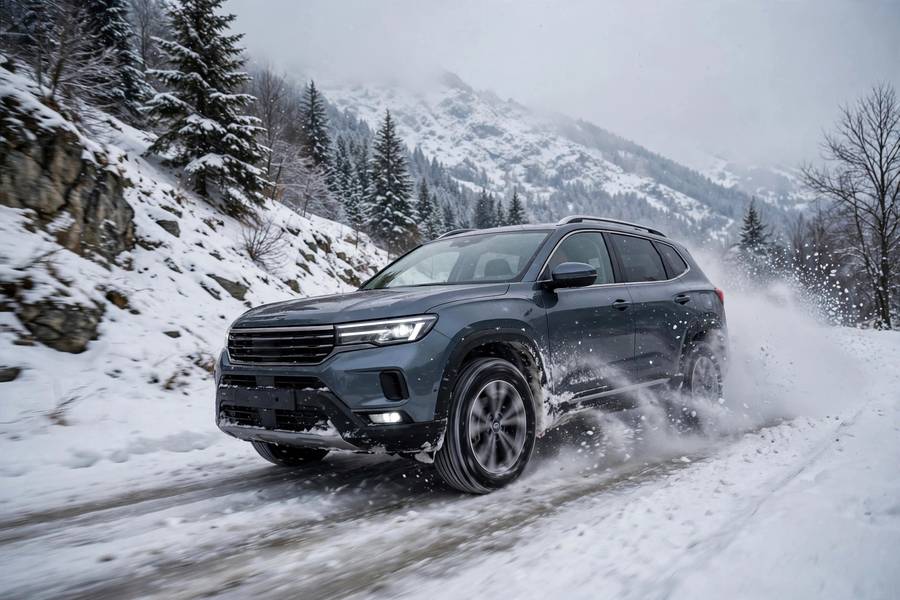
I’m Marcus. Ten years around cars, and few topics generate more confident misinformation than all-wheel drive. I’ve heard salespeople tell buyers AWD “makes you invincible in snow” — it does not — and buyers pay $2,000 extra for AWD they’ll never need. Meanwhile the people who genuinely need it often buy the wrong kind.
Here’s what AWD actually is, how it differs from the alternatives, and whether you should pay for it.
Table of Contents
- AWD in One Paragraph
- How AWD Works
- AWD vs 4WD: The Difference That Matters
- AWD vs FWD vs RWD
- The Honest Pros and Cons
- Do You Actually Need It
- The Tire Rule Nobody Tells You
- Frequently Asked Questions

AWD in One Paragraph
All-wheel drive can send engine power to all four wheels — versus front-wheel drive (front two) or rear-wheel drive (rear two). Its job is traction: shifting torque to whichever wheels have grip when others slip. That’s the whole concept.
The key insight most people miss: AWD helps you go. It does almost nothing to help you stop or turn — braking is brakes, cornering grip is tires. An AWD car on worn all-seasons slides off an icy road as enthusiastically as a FWD car; it just reaches the slippery part faster. Remember that sentence. It’ll save you someday.
How AWD Works
Every system does the same job: take power from the transmission, split it between front and rear axles, and let each axle’s differential split it left to right.
The center differential (or clutch-pack equivalent) is the heart — it lets front and rear axles rotate at different speeds, which they must in turns. Without it, the drivetrain binds and hops. (That binding is exactly what happens driving a part-time 4WD truck locked on dry pavement.)
Power distribution is where systems differ: maybe 60/40 front-biased normally, shifting toward 50/50 when slip is detected. Performance systems actively shuffle torque side-to-side to rotate the car through corners — real engineering, not marketing.
The electronics do the heavy lifting now. Wheel-speed sensors detect slip in milliseconds; the computer brakes the spinning wheel and shifts torque via clutch packs. Modern AWD is more software than mechanical cleverness — which is why a modern crossover’s “simple” on-demand system embarrasses a 1990s full-time system in traction tests.
Types: full-time AWD sends power to all four continuously (Subaru, Audi quattro). On-demand systems run essentially FWD until slip is detected, then engage the rear axle in milliseconds (most crossovers: CR-V, RAV4, Escape) — better economy, fine for normal driving including snow, but sustained abuse can overheat the clutch pack.
AWD vs 4WD: The Difference That Matters
People use these interchangeably. They’re different systems for different jobs:
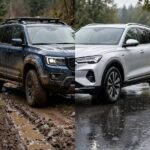
AWD: Always-on, all-surface, automatic. The center differential allows front/rear speed differences, so you drive it on dry pavement indefinitely. Crossovers, SUVs, sedans, performance cars. No driver input. This is what 90% of buyers mean by “four-wheel drive.”
4WD: Traditionally part-time — a transfer case locks front and rear axles together, no speed difference allowed. Enormous off-road traction, but locked on dry pavement it binds, hops, and wears. You engage it for mud, rocks, deep snow, then disengage. Wranglers, Broncos, 4Runners, pickups. Many modern trucks add an “auto” mode that behaves like AWD daily — honestly the best of both.
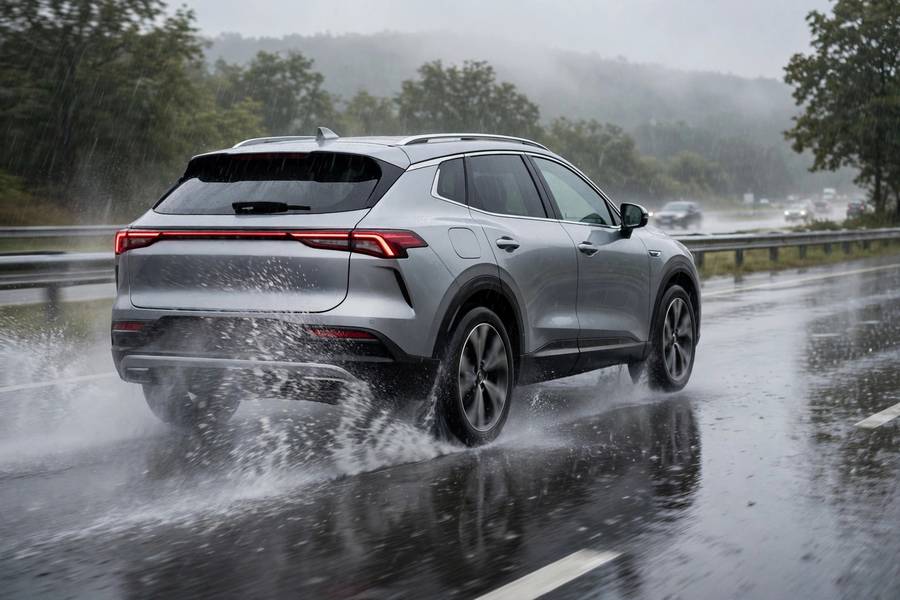
The practical rule: paved roads plus snow and rain = AWD. Trails, rocks, deep mud = 4WD with low range. Buying a Wrangler for highway snow commuting is a sledgehammer for a picture-hanging job — an AWD crossover does it better, quieter, cheaper.
(Ignore the badges — marketing blurs this relentlessly. Ask whether the system can stay engaged on dry pavement. If yes, it’s functionally AWD.)
AWD vs FWD vs RWD
FWD: The default. Cheap, space-efficient, decent in snow since engine weight sits over the driven wheels. Weaknesses: torque steer in powerful versions, a hard traction limit. For most drivers in most climates, FWD with good tires is completely adequate — it’s the most common drivetrain on earth for a reason.
RWD: The enthusiast’s choice and truck default. Better balance, no torque steer, the “correct” performance feel. Weaknesses: in snow, the driven wheels are at the light end — RWD on summer tires in winter is genuinely treacherous. Stability control tamed it, but physics applies. Makes sense for sports cars and tow vehicles (tongue weight plants the rear tires).
AWD: The traction maximizer. Best launch grip, best slippery-surface climbing, most forgiving when conditions change. Weaknesses: $1,500–$2,500 option cost, 100–200 lbs of hardware, 1–3 mpg penalty, extra maintenance — and overconfidence. Every winter, ditches collect AWD vehicles whose drivers forgot that AWD is irrelevant in the icy corner, where tires are everything.
My honest ranking: FWD + good winter tires beats AWD + worn all-seasons in winter, every time. Tires are the drivetrain that touches the road. If budget forces one winter upgrade, buy tires, not AWD.
The Honest Pros and Cons
Pros: traction on rain, snow, gravel, wet leaves — the real, legitimate benefit. Clean launches and hill starts. Genuine confidence when weather turns. Resale premium in snow-belt states (in Florida, nobody cares).
Cons: $1,500–$2,500 upfront. 1–3 mpg forever — hundreds of gallons over 150,000 miles. Extra differentials and fluids to service. The tire rule (next section) — the hidden cost that surprises owners. 100–200+ lbs dulling handling slightly. And overconfidence — the most dangerous con of all.
The math: AWD costs roughly $3,000–$5,000 more than the FWD version over typical ownership (premium + fuel + maintenance + tires). Worth it with regular snow, steep hills, or slippery towing. Questionable in a mild climate bought “just in case.”
Do You Actually Need It
Yes: meaningful snow (regular slick roads, not dustings), steep hills on your route, towing in wet conditions, regular gravel/forest roads. Also yes if AWD holds resale much better in your region — the premium sometimes pays for itself at trade-in.
Maybe: occasional light snow, flat terrain. FWD with quality all-seasons or winters is genuinely competitive here. I’d rather have FWD on good tires than AWD on worn ones — and the price difference buys a lot of tire.
No: warm climate, flat terrain, city driving. Dead weight and wasted fuel. I’ve watched Florida buyers pay $2,000 for AWD “for safety” on cars that’ll never see a snowflake. That’s marketing working as intended.
The tire trump card: whatever you drive, tires matter more than driven wheels for winter safety. FWD on winters out-brakes, out-turns, and out-climbs AWD on worn all-seasons. Budget forces a choice? Choose tires. Get AWD? Still get good tires — AWD on bad tires is the overconfidence trap in pure form.
Winter prep beyond drivetrain: AWD doesn’t help you see — keep headlights clean, since winter grime can slash nighttime visibility. And treat cruise control with extra caution on slippery roads — never use it on ice; it can’t react to traction loss like your foot can.
The Tire Rule Nobody Tells You
This saves AWD owners real money, because it’s explained poorly and late:
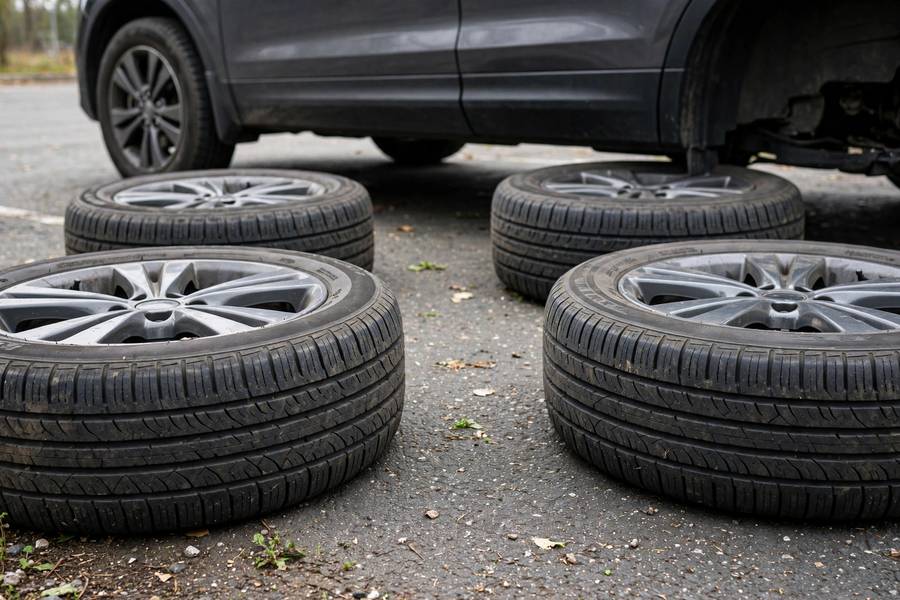
All four tires must match — closely. AWD constantly compares wheel speeds. One tire significantly different in circumference (worn vs new, different model, very different wear) reads as constant slip — the system works overtime, wearing clutch packs and differentials, sometimes overheating. Rule: tread depth within 2/32″ across all four; same brand, model, size.
In practice: – Rotate religiously. Every 5,000–7,500 miles, no exceptions. Even wear keeps the system happy — the cheapest AWD maintenance there is. – One unrepairable flat at 50% wear often means replacing all four — or two on the same axle (check your manual), or having the new tire shaved to match ($25–$40 at a tire shop, saves you $600). – The spare counts if it’s full-size and ever used.
Fluid services: AWD adds a rear differential and often a transfer case, each needing fluid every 30,000–60,000 miles — $100–$200 a service the FWD version never needs. I’ve seen neglected rear diffs fail at 120k — a $1,500+ repair a $150 fluid change would have prevented.
Warning signs: binding or hopping in tight parking-lot turns, rear whine on the highway, AWD warning lights, burning smell after hard use. Get it checked before a small problem becomes a transfer-case problem.
AWD is excellent engineering for a real problem — putting power to gripping wheels on slippery surfaces. Not magic, not a tire substitute, not worth “just in case” in a warm climate. But where winters are real, it’s one of the few options I’d call genuinely worth the money. Would I spend my own money on it? In a snow state, yes — with good tires, proper maintenance, and the humility physics demands.
Frequently Asked Questions
All-wheel drive can send engine power to all four wheels instead of just the front two (FWD) or rear two (RWD). A center differential or clutch system splits power between the axles, shifting torque to wheels with grip. It improves traction for accelerating, but does not help braking or cornering.
AWD stays engaged all the time on all surfaces, with a center differential allowing front and rear axles to turn at different speeds. Traditional 4WD locks the axles together for maximum off-road traction but must be disengaged on dry pavement. AWD suits daily driving and snow; 4WD suits serious off-roading.
AWD accelerates better in snow, but tires matter more than driven wheels. A FWD car on winter tires out-brakes and out-corners an AWD car on worn all-seasons. AWD helps you go; it does nothing for stopping or turning. Combine AWD with good tires for real winter safety.
Yes. Tread depth should be within 2/32 inch across all four tires, same brand, model, and size. Mismatched tires make the system detect constant slip, wearing clutch packs and differentials prematurely. One flat at 50% wear often means replacing all four or shaving the new tire to match.
Yes, typically 1-3 mpg less than the FWD version due to 100-200+ lbs of extra hardware and mechanical drag. Over 150,000 miles that is hundreds of gallons. On-demand systems that run in FWD until slip narrow the gap but do not eliminate it.
It depends on climate and driving. Worth it with real snow, steep hills, or slippery towing: the $1,500-2,500 premium plus fuel and maintenance pays back in capability and resale. Not worth it in warm, flat climates. Whatever you choose, good tires matter more than the drivetrain for safety.