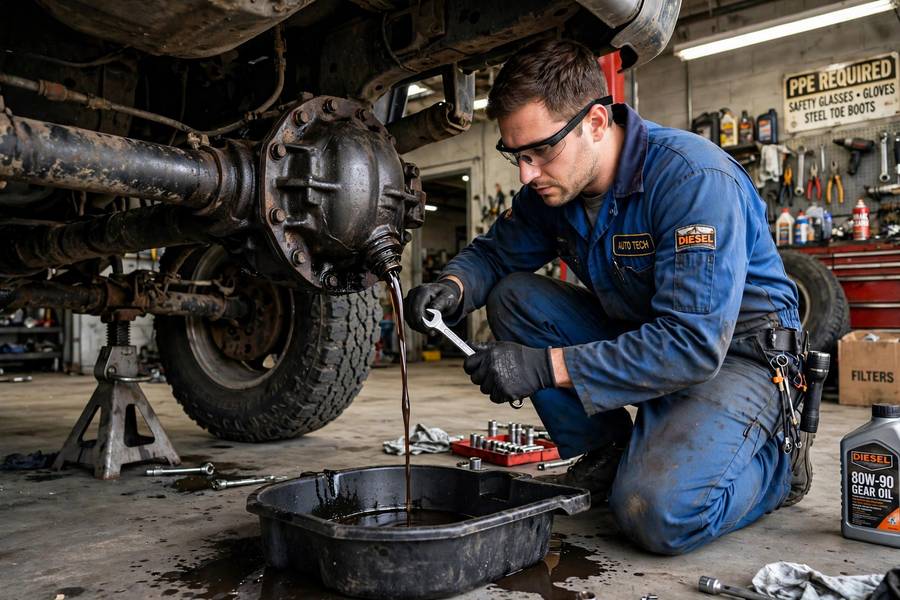
When customers ask me whether AWD or 4WD costs more to own, they’re usually standing next to a repair estimate, doing the math too late. So let’s do the math early. I’ve serviced both systems for twenty years — the fluid changes, the failed couplings, the neglected differentials that turned into four-figure repairs. Here’s what each system actually costs to maintain, what breaks, what the repairs run, and the honest 10-year difference. The mechanical background is in my AWD vs 4WD guide.
Table of Contents
- The Short Answer
- Scheduled Maintenance: The Non-Negotiables
- AWD Maintenance Costs, Item by Item
- 4WD Maintenance Costs, Item by Item
- The Repairs I See Most (and What They Cost)
- Tires: The Hidden Drivetrain Tax
- The Neglect Multiplier
- 10-Year Cost Comparison
- Frequently Asked Questions
The Short Answer
Over 10 years and 120,000 miles, expect to spend roughly $1,500 to $2,500 more maintaining an AWD vehicle versus its 2WD equivalent, and roughly $1,200 to $2,000 more for a part-time 4WD truck versus its 2WD version. Full-time 4WD runs closest to AWD costs. So in direct AWD-vs-4WD terms: AWD usually costs slightly more to maintain than part-time 4WD, because AWD’s components work continuously while part-time 4WD’s front drivetrain rests in 2WD mode.
But those are averages across maintained vehicles. The real cost driver isn’t the system — it’s neglect. A maintained AWD vehicle is cheap to own; a neglected one can generate a $3,000 repair bill in a single visit. The most expensive drivetrain is the one whose fluids nobody changed.
Scheduled Maintenance: The Non-Negotiables
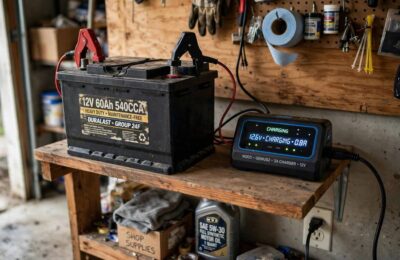
Both systems share a core service schedule that owners ignore at their peril. Differential fluid (front and rear): every 30,000 to 60,000 miles, $120 to $200 per axle at a shop. Transfer case fluid (4WD) or center differential fluid (AWD): same interval, $100 to $180. These fluids break down from heat and collect metal particles from normal gear wear — they’re not lifetime fluids no matter what any marketing material claims.
AWD adds: rear coupling/clutch-pack inspection (usually just a fluid check where serviceable), and more frequent CV joint boot inspections since the front axles work continuously. 4WD adds: transfer case shift linkage/actuator check, front hub service on older manual-hub trucks, and U-joint greasing where fittings exist.
Annualize it: budget $200 to $350 a year for drivetrain fluid services on either system, on top of normal maintenance. Skip it and you’re not saving money — you’re financing a future repair at predatory interest rates.
Build the full service calendar while you’re at it — how often to change engine oil is the other interval owners get wrong most often, and it’s cheap compared to drivetrain work.
AWD Maintenance Costs, Item by Item
Front and rear differential service: $120-$200 per axle every 30k-60k miles. Center differential service: $100-$180 on the same interval — and this is the one owners skip most, because they don’t know the center diff exists. Rear coupling fluid (where serviceable): $80-$150.
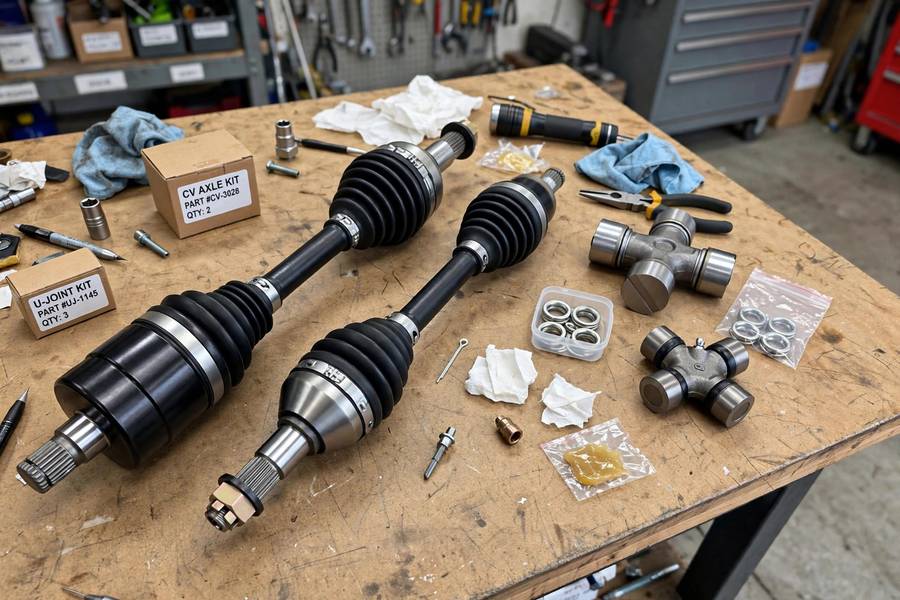
CV axles: AWD vehicles wear front CV joints continuously. Boots crack with age ($150-$250 to reboot per side if caught early); ignored, the joint itself fails ($300-$600 per axle replaced). I recommend boot inspections at every oil change — a $20 boot saves a $500 axle.
The big-ticket AWD item is the rear coupling/clutch pack: $800-$1,500 replaced. It’s a wear component in on-demand systems, with a typical life of 100,000 to 150,000 miles depending on use and heat exposure. Full-time AWD’s Torsen center diff rarely fails when serviced — but “rarely” isn’t “never,” and replacement is $1,500-$2,500.
Tires: AWD demands four matched tires. A single unrepairable flat at 50 percent tread often means buying four tires ($600-$1,000) instead of one ($150-$250), because circumference mismatch damages the center diff. Some shops can shave a new tire to match — ask; it can save you three tires’ worth of money.
4WD Maintenance Costs, Item by Item
Transfer case fluid: $100-$180 every 30k-60k miles. Use the correct fluid — ATF versus gear oil versus specialty fluid varies by case, and the wrong one causes shifting problems and premature wear. The owner’s manual is the authority; the quick-lube shop’s bulk ATF is not.
Front and rear differential service: same $120-$200 per axle. The front diff on a part-time truck lives an easier life (disconnected in 2WD), so its fluid stays cleaner longer — but change it on schedule anyway.
U-joints: $200-$400 per joint replaced; most trucks have four to six. Greaseable joints last indefinitely with maintenance; sealed joints are replace-when-worn. Annual inspection catches looseness before failure — a failed U-joint at highway speed can take the driveshaft, and the driveshaft can take the transmission housing with it. Ask me how I know. Actually, don’t.
The big-ticket 4WD items: transfer case rebuild ($1,500-$2,500) and replacement ($2,500-$4,000). Causes in my experience: running 4WD on dry pavement (binding damage), never changing the fluid, and never exercising the system until the actuator seizes. All three are owner-inflicted. A maintained transfer case routinely outlasts the truck around it.
The Repairs I See Most (and What They Cost)
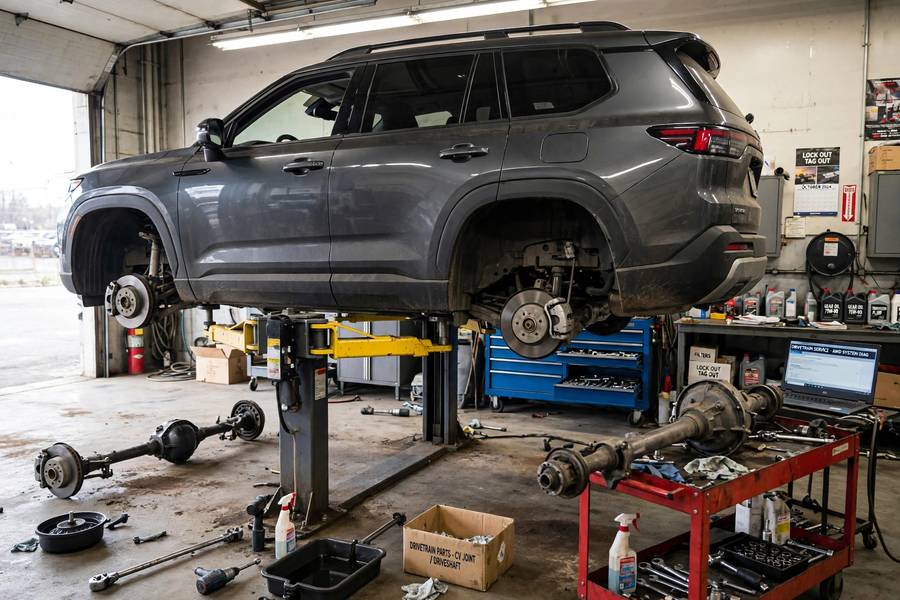
Across both systems, ranked by frequency in my bays. Number one: CV axle replacement on AWD vehicles — $300-$600 per side, usually from torn boots ignored too long. Number two: rear coupling replacement on on-demand AWD — $800-$1,500, usually heat/wear related. Number three: U-joint replacement on 4WD trucks — $200-$400 per joint, wear or binding damage.
Number four: differential rebuilds from fluid neglect — $1,200-$2,000 per axle. The story is always the same: “I didn’t know the differential had fluid.” It does. It did. Now it has metal shavings. Number five: transfer case actuator/shift motor failure from disuse — $300-$700. The truck that never used 4WD for three years, then needed it in a snowstorm. Exercise the system monthly; it’s free.
Notice the pattern: four of the five are preventable. The repair business runs on maintenance that didn’t happen.
Tires: The Hidden Drivetrain Tax
AWD’s matched-tire requirement is a genuine ownership cost that surprises buyers. Beyond the four-tire replacement scenario, there’s rotation discipline: AWD vehicles need rotation every 5,000 to 7,500 miles to keep wear even across all four. Uneven wear creates the same circumference differences as mismatched tires, just slower. A $30 rotation is cheap protection for a $1,500 center diff.
4WD trucks are more forgiving — part-time systems in 2WD don’t care about minor differences — but full-time 4WD shares AWD’s sensitivity. And 4WD trucks have their own tire tax: bigger, more expensive tires ($200-$400 each versus $150-$250 for crossover tires), faster wear from weight, and the temptation of oversized tires that stress the drivetrain and void the “it was fine before” defense.
Wheel alignment matters for both: misalignment scrubs tires unevenly, and uneven tires stress AWD center diffs. An $80 alignment every year or two is drivetrain maintenance wearing a different hat.
The Neglect Multiplier
Let me quantify neglect, because it’s the biggest variable in this whole comparison. A maintained AWD vehicle over 10 years: ~$2,000 in drivetrain services, maybe one CV axle ($450), total ~$2,500 above a 2WD car’s baseline. A neglected one: skipped fluid changes ($0 “saved”), then a rear diff rebuild ($1,800), a coupling replacement ($1,200), two CV axles ($900), and four premature tires from never rotating ($800). Total: ~$4,700 — nearly double, for the privilege of skipping $200-a-year maintenance.
The multiplier is roughly 3x: every dollar of skipped drivetrain maintenance becomes three dollars of repair, on average, in my experience. It’s the most consistent ratio in my business. Fluids are cheap. Metal is expensive.
I’ve watched this play out hundreds of times on the lift. The owners who follow the service schedule almost never meet me for a major repair; the ones who “save” money skipping fluids meet me eventually, and the invoice is always bigger than what they saved. If you take one thing from this article, take that.
This applies equally to 4WD: the maintained truck needs fluid changes and U-joint grease; the neglected truck needs a transfer case rebuild. The system’s inherent cost difference is a few hundred dollars over a decade. The maintenance discipline difference is thousands.
10-Year Cost Comparison
The honest table, assuming 12,000 miles/year and scheduled maintenance performed. AWD crossover vs its FWD twin: +$1,500 to $2,500 in drivetrain maintenance and repairs over 10 years (fluids, one CV axle, coupling inspection/replacement reserve, tire-matching premium). Part-time 4WD truck vs its 2WD twin: +$1,200 to $2,000 (fluids, U-joints, actuator service, slightly bigger tires). Full-time 4WD vs 2WD: +$1,500 to $2,500, tracking AWD closely.
Direct AWD vs part-time 4WD: AWD costs roughly $300 to $500 more over a decade — the price of components that never rest versus components that rest in 2WD. It’s real but small: about the cost of one nice dinner per year. Don’t let it decide your purchase. Let your traction needs decide, then maintain whatever you buy.
The footnote that matters: these numbers assume you do the maintenance. Neglect erases every comparison and replaces it with a repair bill that doesn’t care which system you bought.
Frequently Asked Questions
AWD typically costs slightly more — roughly $300-$500 extra over 10 years versus part-time 4WD — because its components work continuously while part-time 4WD’s front drivetrain rests in 2WD mode. Both cost $1,200-$2,500 more than 2WD over a decade. Maintenance discipline matters far more than the system choice.
Every 30,000-60,000 miles for front, rear, and center differentials, plus the transfer case on 4WD vehicles. Towing, off-roading, or heavy use means the shorter interval. Skipped fluid changes are the number one cause of expensive differential rebuilds ($1,200-$2,000).
CV axle replacement ($300-$600 per side), usually from torn boots ignored too long, followed by rear coupling/clutch-pack replacement ($800-$1,500) on on-demand systems. Both are largely preventable: inspect boots at every oil change and avoid sustained wheel slip that overheats the coupling.
Circumference differences between tires force the center differential or clutch pack to constantly absorb speed differences, causing overheating and premature wear. One new tire with three worn ones can damage a $1,500+ drivetrain component. Replace all four together and rotate every 5,000-7,500 miles.
Change all drivetrain fluids on schedule ($200-$350/year), inspect CV boots and U-joints regularly, rotate tires on time, keep tires matched and properly inflated, exercise 4WD monthly, and use 2WD mode on pavement. Every dollar of skipped maintenance becomes roughly three dollars of repair.