What Is All Wheel Drive vs 4WD? The Real Difference Explained

Walk into any dealership and you’ll hear “AWD” and “4WD” thrown around like they’re interchangeable. They’re not. So what is all wheel drive vs 4WD, really? Understanding the real difference can save you from buying the wrong vehicle — or from getting stuck in the wrong conditions with the wrong system.
I’m going to break down exactly how each system works, where each one shines, and how to pick the right one for how you actually drive. No marketing fluff — just the mechanical truth.
What Is All Wheel Drive vs 4WD? The Short Answer
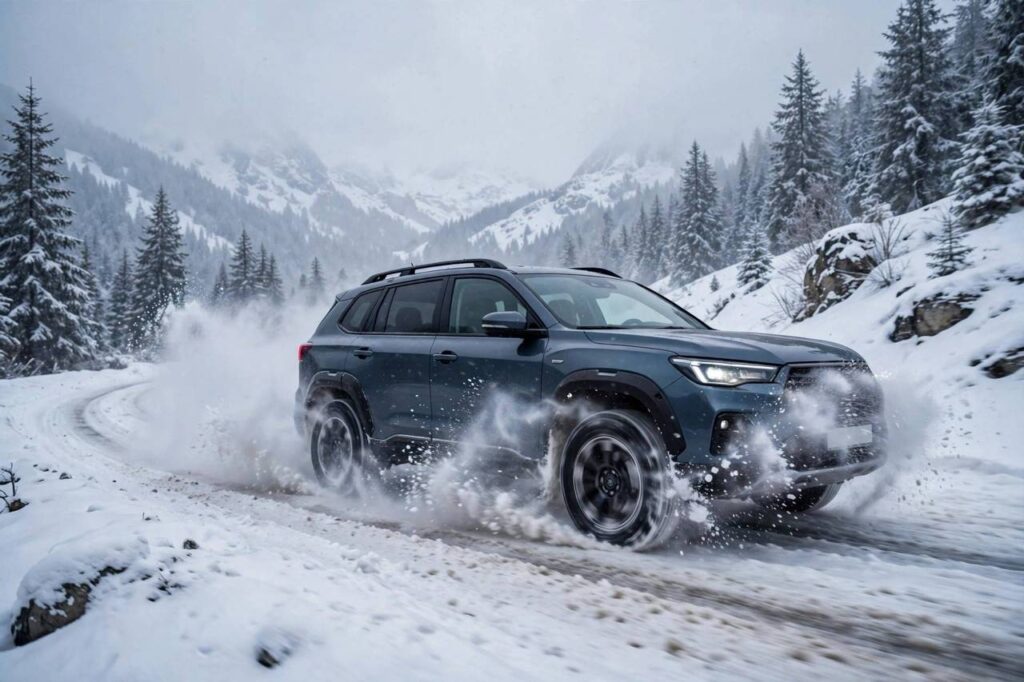
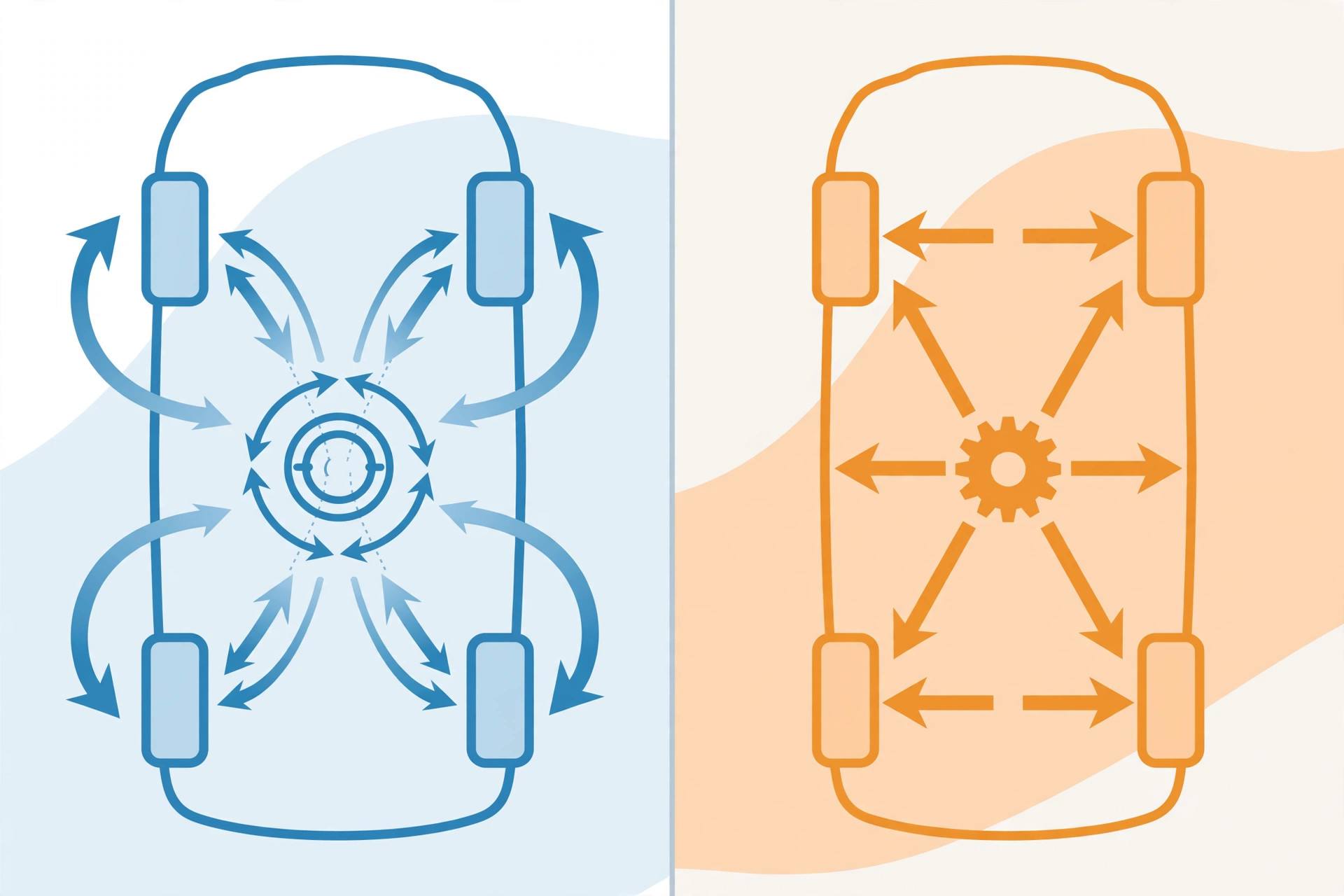
All-wheel drive (AWD) is an always-on (or automatically engaging) system designed primarily for on-road traction — rain, snow, light gravel. It works seamlessly in the background without driver input.
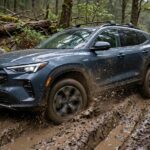
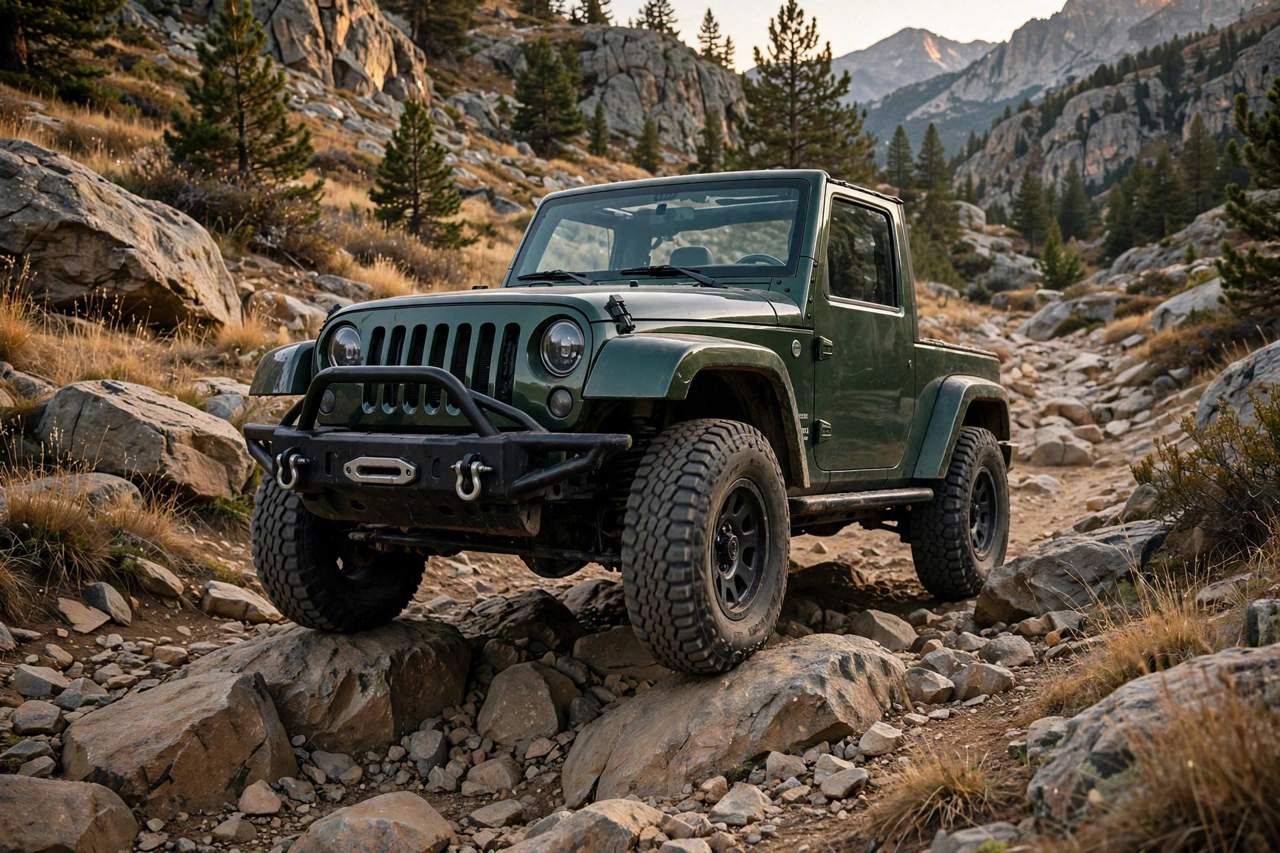
Four-wheel drive (4WD / 4×4) is a driver-controlled system designed primarily for off-road use — mud, rocks, deep snow, serious terrain. You engage it when conditions demand it, and disengage it on dry pavement.
Think of it this way: AWD is your guardian angel for bad weather on normal roads. 4WD is your weapon for terrain where normal roads don’t exist.
How All-Wheel Drive (AWD) Works
AWD systems power all four wheels, but the key is how they distribute that power. Most modern AWD systems are front-wheel-drive-based: under normal conditions, most power goes to the front wheels, and the system automatically sends power rearward when it detects front-wheel slip.
This happens through a center differential or an electronically controlled clutch pack — no driver input needed. You’re driving in the rain, the fronts start to slip, and within milliseconds the system routes torque to the rears. You never touch a button. You might never even notice it happened.
Some performance-oriented AWD systems are rear-biased or can actively shuffle power side-to-side (torque vectoring) for better cornering. But the core idea is the same: automatic, seamless, always working.
For the full mechanical deep-dive, here’s how all-wheel drive works in detail.
How Four-Wheel Drive (4WD) Works
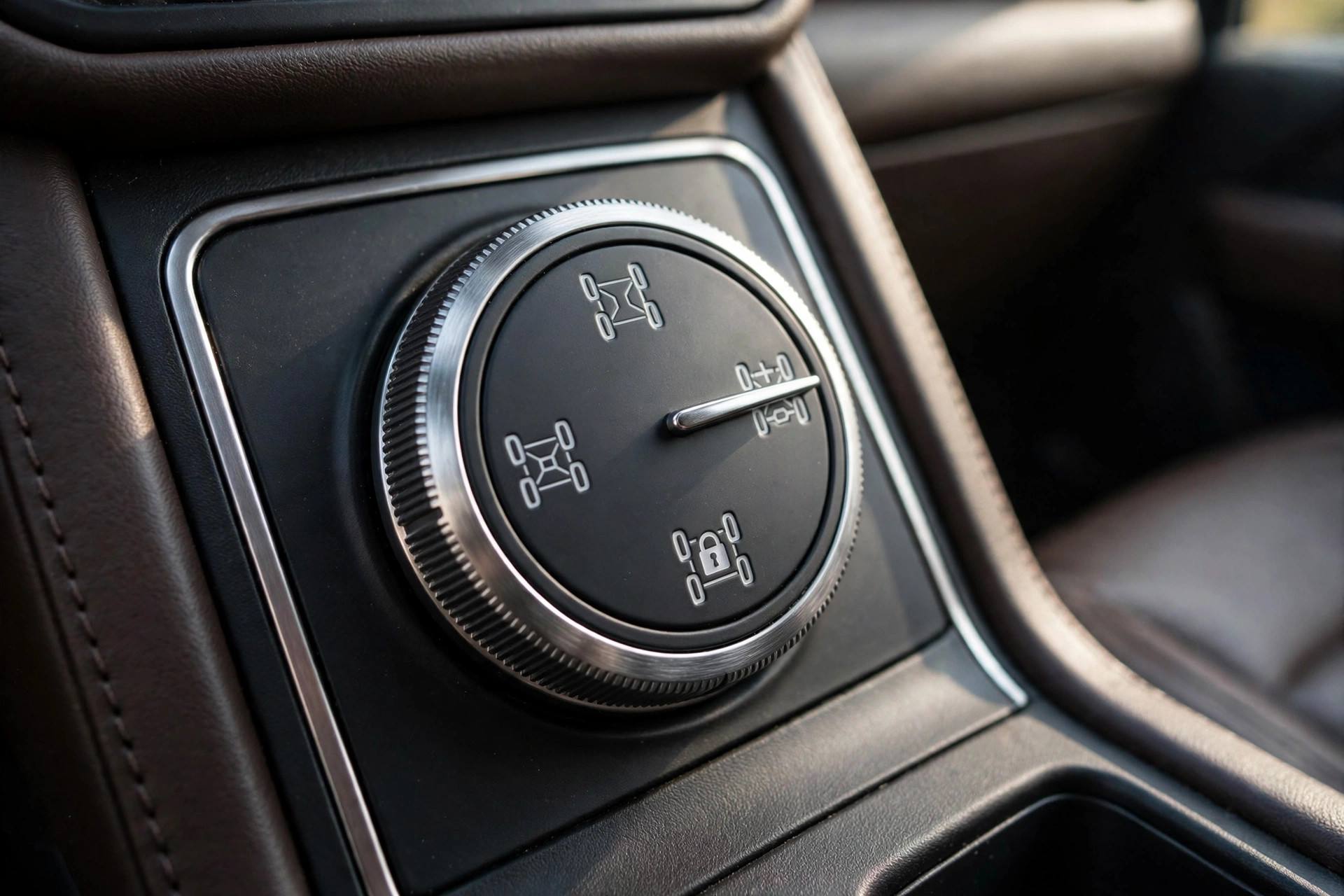
4WD is the more traditional, more rugged system. In a part-time 4WD vehicle, you normally drive in rear-wheel drive (2WD). When conditions get tough, you engage 4WD — via a lever, dial, or button — which locks the front and rear axles together through a transfer case so they rotate at the same speed.
That locking is 4WD’s superpower and its limitation. Locked axles mean maximum traction off-road — if one axle has grip, you’re moving. But on dry pavement, locked axles can’t accommodate the different speeds the front and rear wheels need in turns, causing binding, tire scrub, and drivetrain stress. That’s why you must disengage part-time 4WD on dry roads.
Most 4WD systems also offer low range (4L) — a gear reduction that multiplies torque for crawling over rocks, pulling through deep mud, or climbing steep grades at walking pace. AWD systems don’t have this. Low range is what separates “bad weather capable” from “genuinely off-road capable.”
Want the mechanical details? Here’s how four-wheel drive works under the skin.
AWD vs 4WD: Head-to-Head Comparison
| Factor | AWD | 4WD |
|---|---|---|
| Engagement | Automatic, always working | Driver-selected (2H, 4H, 4L) |
| Best for | Rain, snow, on-road traction | Off-road, mud, rocks, deep snow |
| Low range gearing | No | Yes (most systems) |
| Dry pavement use | Fine — designed for it | Part-time: no (causes binding) |
| Fuel economy | Slight penalty vs 2WD | Bigger penalty; heavier hardware |
| Complexity/cost | Moderate | Higher — transfer case, solid axles |
| Driver skill needed | None — it’s automatic | Some — knowing when to engage |
Which One Do YOU Need?
Be honest about how you drive. Not how you fantasize about driving — how you actually drive.
- Choose AWD if: You deal with rain, snow, and winter weather on paved roads. You want extra traction without thinking about it. You never go off-road beyond a gravel driveway or a grassy parking area. This covers the vast majority of drivers — which is why AWD crossovers dominate sales.
- Choose 4WD if: You genuinely go off-road — trails, mud, rocks, deep snow, beach driving. You tow heavy loads on slippery surfaces (boat ramps!). You need low-range gearing for serious terrain. You understand when to engage and disengage the system.
- Save your money with 2WD if: You live somewhere with mild weather, drive only on pavement, and want the best fuel economy and lowest purchase price. A good set of winter tires on a 2WD car outperforms an AWD car on all-seasons in snow — tires matter more than drivetrain for most situations.
And don’t forget the broader context — drivetrain is just one piece of the traction puzzle. This comparison of AWD vs FWD vs RWD differences rounds out the picture.
Common Myths About AWD and 4WD
- “AWD/4WD helps you stop faster.” No. Drivetrain affects acceleration traction, not braking. All cars brake with all four wheels regardless of drivetrain. In snow, braking distances are about tires, not driven wheels.
- “AWD makes you invincible in snow.” AWD helps you GO in snow. It does nothing for turning or stopping. Overconfidence in AWD causes more winter accidents than the system prevents. Slow down anyway.
- “4WD is always better than AWD.” Better for off-road, worse for daily driving — heavier, thirstier, and part-time systems can’t be used on dry pavement. “Better” depends entirely on the job.
- “You don’t need winter tires with AWD.” The single most persistent myth. AWD with all-season tires is outperformed in snow by 2WD with proper winter tires. Tires are the foundation; drivetrain is the bonus.
- “Full-time 4WD and AWD are the same thing.” Close cousins, not twins. Full-time 4WD (like in some Land Rovers and Jeeps) has a center differential allowing dry-pavement use plus low range — it’s the most capable and most complex option, blending both worlds.
AWD vs 4WD in Snow: Which Wins?
This deserves its own callout because it’s the question I get most. For typical winter driving — plowed roads, snowstorms, icy highways — AWD is the better tool. It’s automatic, it works at all speeds, and it’s designed exactly for these conditions.
4WD (in 4H) is excellent in deep, unplowed snow — the kind where you’re breaking trail. But most drivers shouldn’t be out in those conditions anyway, and part-time 4WD becomes a liability the moment roads are patchy (dry patches between snow cause binding).
For the detailed breakdown, see is AWD better than 4WD in snow. Spoiler: for 95% of winter drivers, AWD plus good winter tires is the winning combination.
Maintenance Differences
Both systems need a bit more attention than 2WD:
- Tire matching matters enormously. AWD and 4WD systems are sensitive to differences in tire circumference. Replace tires in sets of four, keep them properly inflated, and rotate regularly. A single new tire among three worn ones can damage differentials over time.
- Fluid changes. Transfer cases (4WD) and rear differentials (both) have fluid that needs periodic changing — check your manual for intervals. Neglected drivetrain fluid is a slow-motion expensive failure.
- 4WD: exercise the system. Engage 4WD monthly for a few minutes (on a loose surface, not dry pavement) to keep seals lubricated and linkages moving. Systems that sit unused for years often refuse to engage when finally needed.
The Third Option: Full-Time 4WD
There’s actually a middle ground worth knowing about: full-time 4WD, found in vehicles like certain Land Rovers, higher-trim Jeeps, and some Toyotas. It combines a center differential (so it can be driven on dry pavement like AWD) with a low-range transfer case (so it crawls like part-time 4WD).
It’s the most capable and most complex option — genuine off-road hardware with on-road manners. The trade-offs: higher cost, more weight, worse fuel economy, and more maintenance. For most buyers it’s overkill, but if you split time between highways and serious trails, it’s the “have it all” answer.
Towing: AWD vs 4WD
If you tow — boats, campers, trailers — drivetrain choice matters beyond traction. 4WD’s low range is genuinely useful for boat ramps: that steep, slippery incline where you need maximum controlled torque at crawling speed is exactly what low range was built for. Many boat owners choose 4WD trucks specifically for the ramp.
AWD handles lighter towing competently — small campers, utility trailers — especially with a tow package that includes transmission cooling and trailer sway control. But for heavy trailers and genuinely slippery launch conditions, 4WD’s mechanical advantage is real.
For the detailed comparison, see AWD vs 4WD for towing. And whatever you tow with, remember: tow ratings, proper hitch setup, and trailer brakes matter far more than which wheels are driven.
Test Driving: What to Feel For
If you’re shopping, the test drive tells you things spec sheets can’t. In an AWD vehicle, you should feel nothing unusual — just confident traction, especially if you can test on wet roads. In a 4WD vehicle, find a safe loose surface (a gravel lot with permission) and engage 4H: you’ll feel the system working, steering gets heavier, and traction feels unshakeable. Never test 4WD on dry pavement — the binding you’ll feel is the drivetrain telling you to stop. Trust what you feel; the right system for you should feel like confidence, not compromise.
FAQ
What is all wheel drive vs 4WD in simple terms?
AWD is an automatic system that powers all four wheels continuously for on-road traction in bad weather — no driver input needed. 4WD is a driver-engaged system for off-road use, with locked axles and usually a low-range gear for serious terrain. AWD = bad weather helper; 4WD = off-road tool.
Can you use 4WD on dry pavement?
Part-time 4WD: no — the locked axles bind in turns on high-traction surfaces, stressing the drivetrain and scrubbing tires. Full-time 4WD and AWD: yes, they’re designed for it. When in doubt, check your owner’s manual — it specifies exactly when each mode is appropriate.
Is AWD good enough for off-roading?
Light off-roading — gravel roads, grassy fields, mild trails — yes. Serious off-roading — rock crawling, deep mud, steep loose climbs — no. AWD lacks low-range gearing and the rugged locking differentials that make 4WD capable in extreme terrain.
Does AWD use more fuel than 2WD?
Yes, slightly — powering extra drivetrain components adds weight and mechanical drag. The penalty is typically small with modern systems (many disconnect the rear axle when cruising), but it’s real. 4WD systems generally carry a bigger penalty due to heavier hardware.
Which is better in snow: AWD or 4WD?
For typical winter road driving, AWD — it’s automatic, works at all speeds, and handles the patchy conditions of plowed roads. For deep unplowed snow, 4WD in 4H has the edge. Either way, winter tires matter more than the drivetrain choice.