Why Is My Car Overheating? Causes, What to Do & Fixes

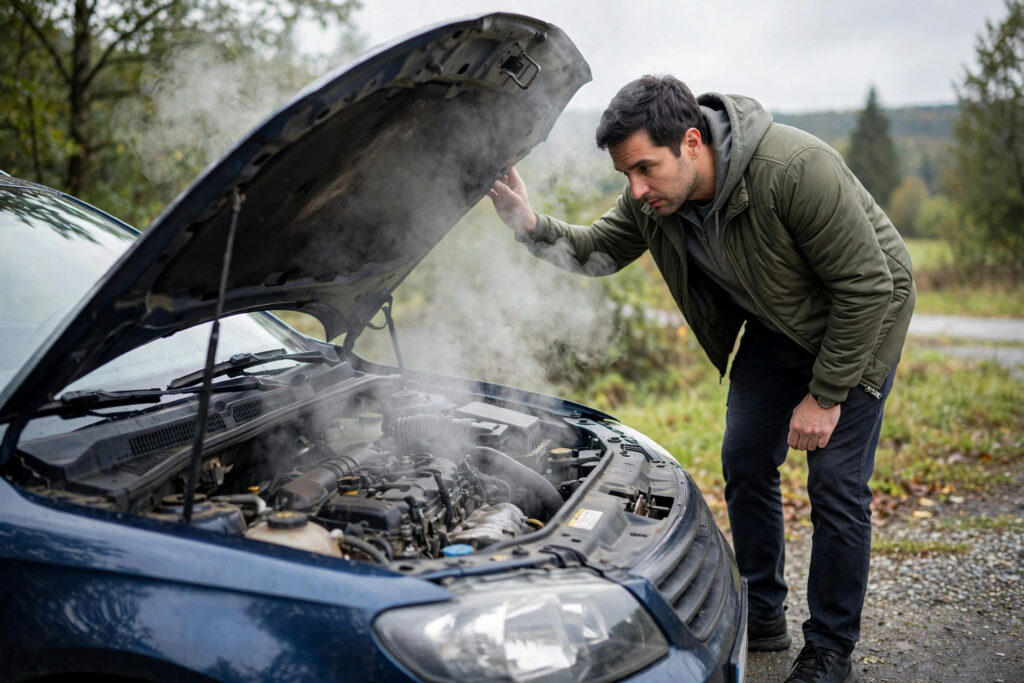
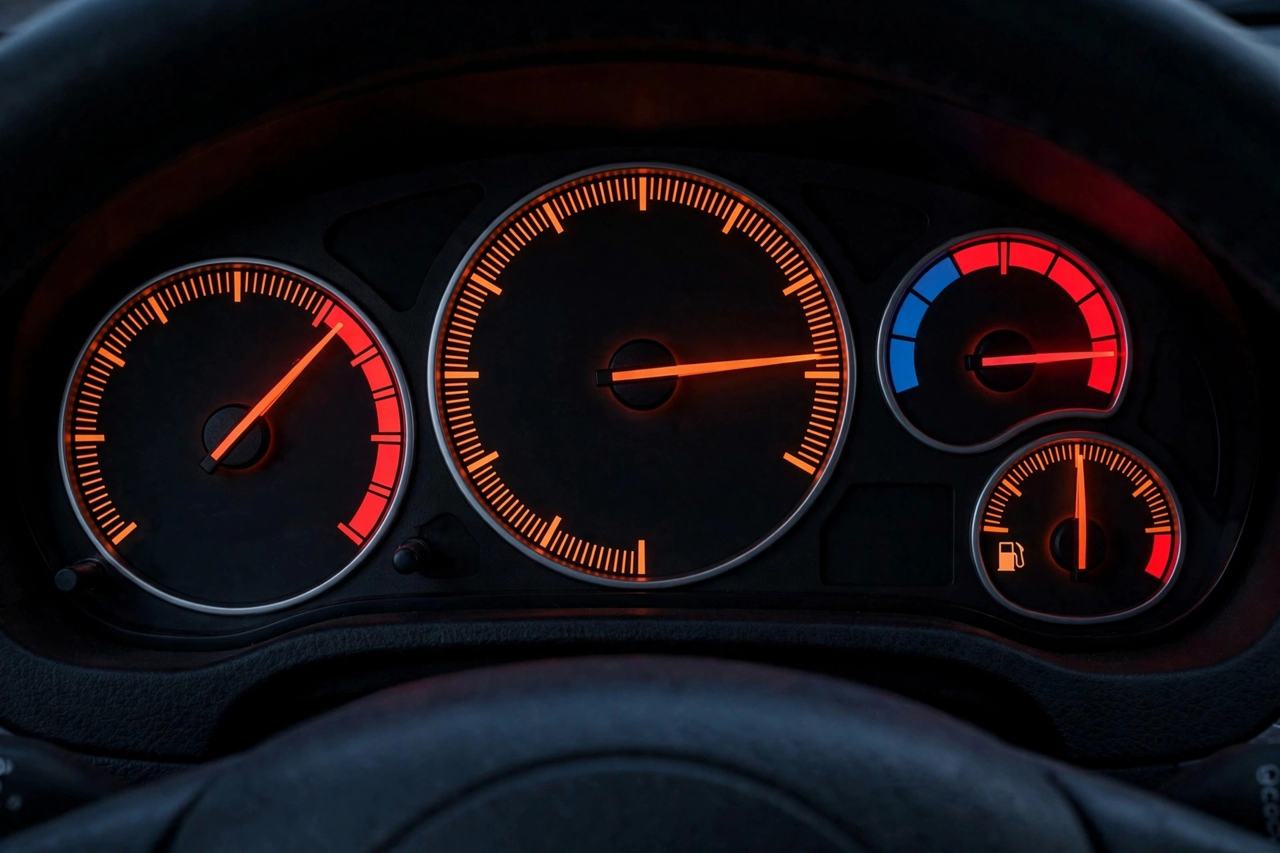
The temperature gauge is climbing into the red, there’s a smell like hot syrup, and maybe steam is starting to curl from under the hood. Your car is overheating, and every minute you keep driving makes it worse. If you’re asking why is my car overheating, you need two things: what to do right now, and what’s likely causing it. Let’s handle the emergency first, then the diagnosis.
Why Is My Car Overheating? What to Do RIGHT NOW
Pull over safely as soon as you can. Turn off the air conditioning and turn the heater to full blast — yes, even in summer. The heater pulls heat off the engine, and it can buy you crucial minutes. If the gauge keeps climbing or you see steam, shut the engine off.
Do NOT open the radiator cap while the engine is hot. The cooling system is pressurized, and opening it can release scalding coolant explosively. Wait at least 30-45 minutes for things to cool. I don’t care how late you are — a burn unit visit is worse.
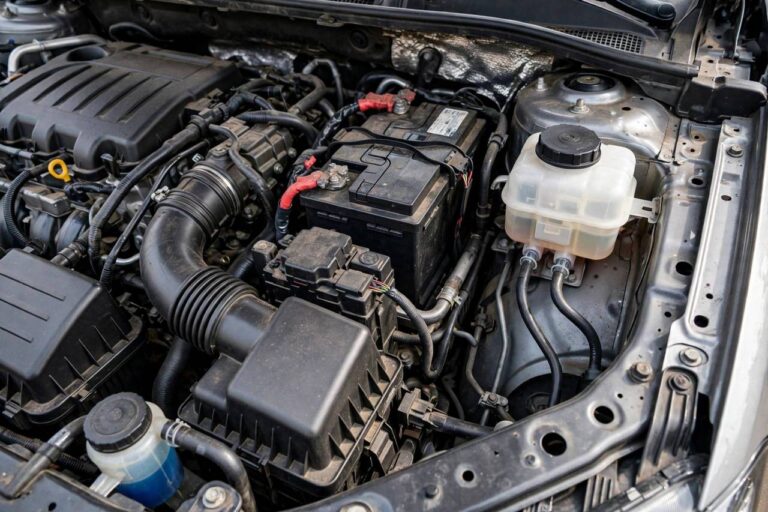
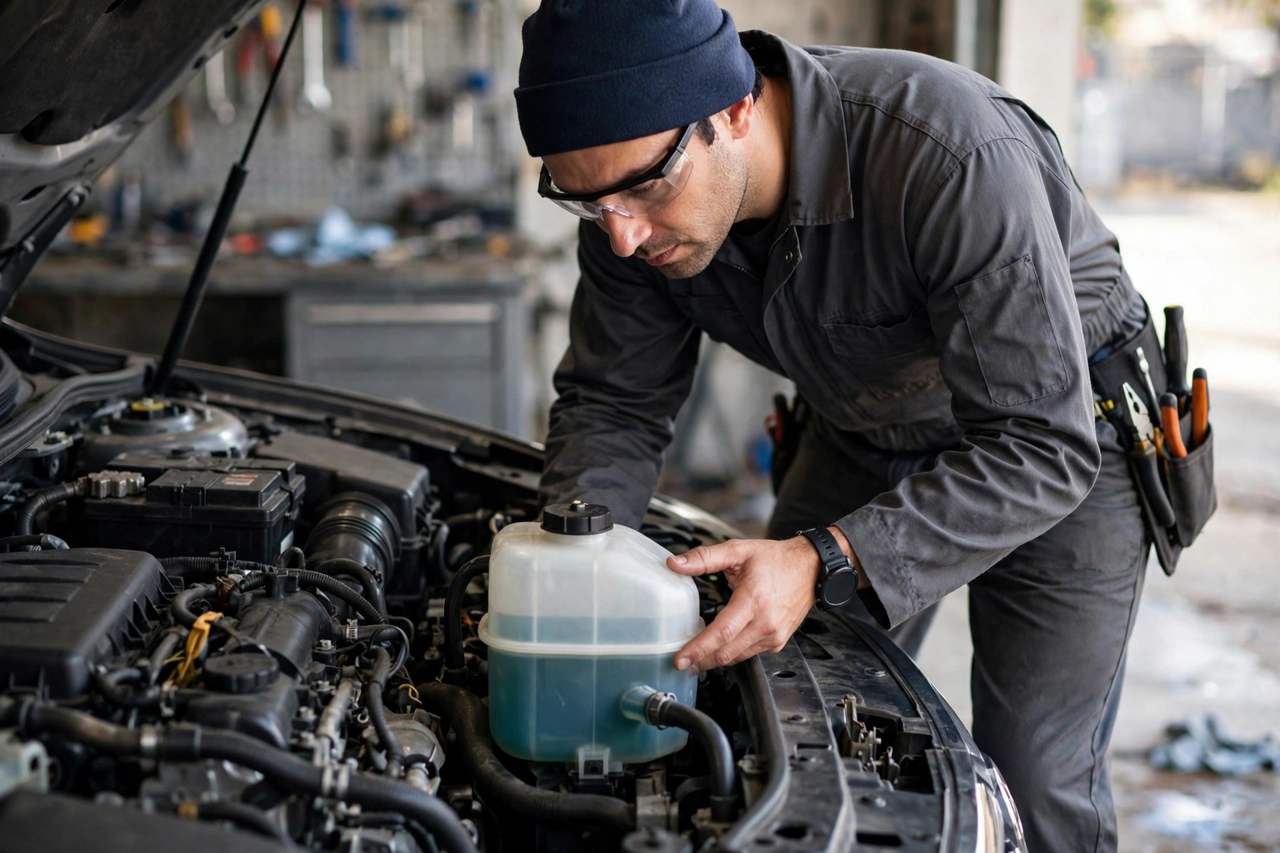
Once the engine is cool, you can check the coolant level in the overflow reservoir (the translucent plastic tank, not the radiator cap). If it’s empty or very low, that’s a strong clue. You can add coolant or even plain water in an emergency to get to a shop — water works short-term, but get proper coolant in there soon since water alone doesn’t protect against corrosion or freezing.
If the car overheated badly (steam, gauge pegged, warning lights), don’t try to drive it to the shop — call a tow. Driving an overheated engine warps cylinder heads and blows head gaskets, turning a $200 repair into a $2,000 one. The tow is always cheaper.
How Your Cooling System Works (60-Second Version)
Your engine makes enormous heat. Coolant circulates through the engine, absorbs that heat, then flows to the radiator where airflow cools it down before it cycles back. The water pump keeps it moving, the thermostat regulates the flow, and electric fans provide airflow when you’re not moving fast enough for natural airflow.
Overheating means something in that loop failed: not enough coolant, coolant not circulating, or heat not being shed at the radiator. Every cause below is one of those three. Understanding coolant’s role in the system helps the diagnosis make sense.
The Most Common Causes of Overheating
1. Low coolant (the #1 cause). Coolant doesn’t get “used up” — if it’s low, it’s leaking somewhere. Check for puddles under the car (coolant is usually green, orange, or pink and smells sweet), white crusty residue around hose connections, or a dropping reservoir level over days. Common leak points: radiator hoses, the radiator itself, the water pump, and heater hoses.
2. Failed thermostat. The thermostat is a temperature-controlled valve. When it sticks closed, coolant can’t reach the radiator and the engine overheats — often quickly, within 10-15 minutes of driving. A thermostat is a cheap part; the labor to reach it varies. Classic symptom: gauge shoots up fast, and the upper radiator hose stays cool while the engine is hot.
3. Dead water pump. The pump circulates the coolant. When its impeller fails or its bearing seizes, circulation stops and overheating follows. Listen for grinding or whining from the front of the engine, and look for coolant leaking from the pump’s weep hole. Water pump replacement is a bigger job — on many cars it’s done with the timing belt.
4. Clogged or damaged radiator. Internal corrosion, external debris (leaves, plastic bags, bugs packed into the fins), or bent fins all reduce the radiator’s ability to shed heat. If your car overheats mainly in traffic or at idle but cools down at highway speed, suspect airflow — which points to fans or a blocked radiator.
5. Failed cooling fans. Electric fans kick in when you’re moving slowly. If they don’t — bad fan motor, blown fuse, failed relay, bad temperature sensor — the car overheats in traffic but runs fine on the highway. You can test this: let the car idle with the AC on (which usually triggers the fans) and look/listen for the fans spinning.
6. Blown head gasket (the serious one). The head gasket seals the engine’s combustion chambers. When it fails, combustion gases enter the cooling system (causing rapid overheating and bubbling in the reservoir) or coolant enters the cylinders (white smoke from the exhaust, milky oil on the dipstick). This is the expensive repair — but don’t assume the worst until the simpler causes are ruled out.
Two more causes worth knowing because they’re expensive when missed. A failing water pump often announces itself before it quits: a whining noise from the front of the engine, coolant weeping from the pump’s weep hole, or play in the pump pulley. Catch it at the whining stage and it’s a manageable repair; catch it at the overheating-on-the-highway stage and you might be shopping for a head gasket too. And speaking of head gaskets — the repair everyone fears — the early warning signs are white exhaust smoke that smells sweet, coolant disappearing with no visible leak, oil that looks like a chocolate milkshake on the dipstick, or bubbles in the coolant reservoir with the engine running. Any one of those means stop driving and get it diagnosed. Driving on a blown head gasket turns a big repair into a catastrophic one.
Quick Diagnostic: Match Your Symptoms
- Overheats within 10-15 minutes, every time? → Thermostat stuck closed or very low coolant.
- Overheats only in traffic/idle, fine on highway? → Cooling fans or radiator airflow issue.
- Overheats on highway, fine in town? → Restricted radiator or water pump circulation problem.
- Coolant disappearing with no visible puddle? → Internal leak — possibly head gasket. Check oil for milkiness.
- Bubbling in the coolant reservoir? → Combustion gases in the cooling system — head gasket suspect.
- Heater blows cold when the engine is hot? → Low coolant or air trapped in the system.
Can You Drive a Short Distance While Overheating?
Sometimes you have no choice — you’re on a highway with no shoulder, or the shop is a mile away. If you must: heater on full blast, drive gently, watch the gauge like a hawk, and shut it down the moment it hits the red zone. Let it cool for 30+ minutes before continuing. This is damage control, not a solution — aluminum cylinder heads warp fast under extreme heat, and warped heads mean a blown head gasket.
The honest rule: if the gauge is in the red, the engine is being damaged. Every minute matters. A tow costs a fraction of an engine rebuild. Make the call.
Preventing Overheating: The Maintenance That Matters
Check coolant level monthly. It takes ten seconds — glance at the overflow reservoir. If it’s dropping between checks, you have a leak developing. Catch it early.
Flush coolant on schedule. Old coolant loses its corrosion inhibitors, and internal corrosion is what kills radiators and water pumps from the inside. Follow your owner’s manual interval (typically 5 years/100k miles for long-life coolant).
Inspect hoses and belts. Squeeze the radiator hoses — they should be firm but pliable, not mushy, cracked, or rock-hard. Replace at the first sign of deterioration, not after they burst.
Keep the radiator clean. Clear leaves and debris from the front of the radiator, and rinse the fins gently with a hose (not a pressure washer — you’ll bend the fins) once or twice a year.
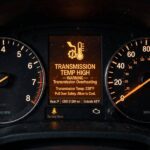
Fix small leaks immediately. A $15 hose clamp today beats a $1,500 head gasket tomorrow. Cooling system problems never get cheaper with time — they only get more expensive. And if you’re noticing heat-related issues elsewhere in the drivetrain, transmission overheating symptoms covers the warning signs for transmission overheating, which follows the same “fix it early” logic.
Overheating in Specific Situations: What Each Pattern Means
When your car overheats tells you almost as much as the fact that it does. Different patterns point to different failures, and knowing the pattern saves you from paying for parts you don’t need.
Overheats at idle or in traffic, fine on the highway: this is the classic cooling fan failure. At speed, airflow through the radiator does the fan’s job; at a standstill, there’s no airflow without the fan. The culprit is usually the electric fan motor, the fan relay, or the temperature sensor that triggers the fan. A quick test: with the engine hot and idling, the fan should be roaring. If it’s silent, you’ve found your problem.
Overheats on hills or under load, fine around town: the cooling system can’t keep up when the engine works hard. Suspect a partially clogged radiator (coolant flows, but not enough), a weak water pump, or a slipping belt driving the pump. This pattern can also mean low coolant that’s just enough for easy driving — check the level first, because it’s the cheapest fix on this list.
Temperature spikes right after shutdown, then normal on restart: this is called heat soak, and a little of it is normal — coolant stops circulating when the engine stops, so residual heat has nowhere to go. But if the gauge pegs into the red after every shutdown, your coolant level is likely low or there’s air trapped in the system preventing proper circulation.
Overheats within minutes of a cold start: that’s not normal warmup — something is badly wrong. A thermostat stuck closed is the most common cause; coolant can’t reach the radiator at all. Stop driving immediately. This pattern can go from “replace a $20 thermostat” to “replace a $4,000 engine” in one stubborn commute.
Gauge swings up and down erratically: air pockets in the cooling system are the usual suspect, often after a recent coolant service that wasn’t bled properly. It can also be a failing temperature sensor sending bad readings — in which case the engine might be fine and the gauge is lying. A mechanic can verify actual temperature in about two minutes.
FAQ
Why is my car overheating but the coolant is full?
Full coolant with overheating points to a circulation or heat-shedding problem: a stuck-closed thermostat, failed water pump, clogged radiator, or dead cooling fans. The coolant is there — it’s just not moving or not cooling properly.
Can I drive my car if it’s overheating?
Only as an absolute last resort and only with the heater on full blast, driving gently, and shutting down before the gauge hits red. Driving an overheated engine warps cylinder heads and blows head gaskets — a tow is always cheaper than the resulting damage.
What does it mean when my car overheats in traffic but not on the highway?
That pattern points to an airflow problem — usually failed electric cooling fans (bad motor, fuse, relay, or sensor) or a radiator blocked by debris. At highway speed, natural airflow does the fans’ job; at idle, nothing does.
How much does it cost to fix a car that overheats?
It depends entirely on the cause: a thermostat or hose is inexpensive, a water pump or radiator is mid-range, and a blown head gasket is the expensive one. That’s why quick diagnosis matters — the longer overheating continues, the more it costs.
Why does my car lose coolant with no visible leak?
Coolant can leak internally — most seriously through a blown head gasket into the cylinders (look for white exhaust smoke or milky oil) or evaporate from a pinhole leak that only opens under pressure. A cooling system pressure test finds leaks that visual inspection misses.
Why does my car overheat when the AC is on?
Running the AC puts extra load on the engine and extra heat in front of the radiator (the AC condenser sits right in front of it, dumping heat into the same airflow). If your cooling system is marginal — slightly low coolant, a weak fan, a partially clogged radiator — the AC is often what pushes it over the edge. Turning the AC off and the heater on full blast is actually a legitimate emergency cooldown trick: the heater core acts as a second tiny radiator. It’s miserable in summer, but it can get you to a shop without engine damage.