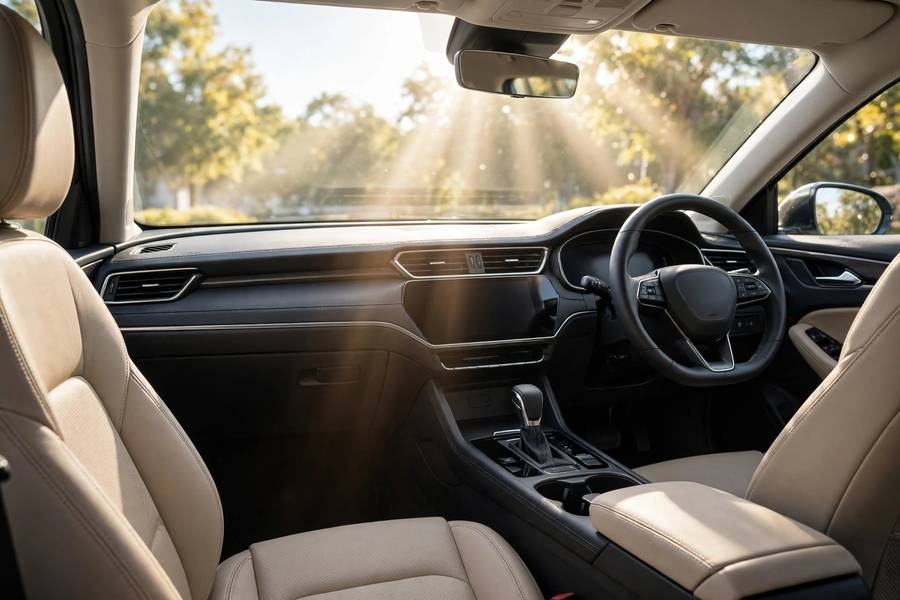
Every month, somebody rolls into the shop and asks me to “just spray something” to fix their car’s smell. And every month I tell them the same thing: air freshener on top of a dirty car is like cologne on top of not showering. It doesn’t fix anything — it just makes a worse combination.
After ten years of climbing into thousands of cars, I can tell you exactly where bad smells come from and how to actually eliminate them. Not mask. Eliminate. Here’s the real process, in order.
Table of Contents
- Step 1: Find the Source Before You Fix Anything
- Step 2: The Full Trash-Out
- Step 3: Deep-Clean the Carpets and Seats
- Step 4: Don’t Forget the Trunk
- Step 5: Change the Cabin Air Filter
- Step 6: Fix the Musty AC Smell
- Step 7: Odor Neutralizers That Actually Work
- What Doesn’t Work (Save Your Money)
- The 15-Minute Monthly Routine
- Frequently Asked Questions
Step 1: Find the Source Before You Fix Anything
Smells have causes. Your nose is a diagnostic tool — use it like one.
- Sweet, syrupy smell: Coolant leak. Check under the car for green/orange puddles and watch your temperature gauge. This one needs a mechanic, not a spray bottle.
- Rotten egg / sulfur: Usually the catalytic converter or a battery issue. Get it checked.
- Musty when AC starts: Mold or mildew in the evaporator box. Very common, very fixable (see Step 6).
- General funk, old food, gym bag: That’s just a dirty interior. Steps 2–4 handle it.
- Burning oil or rubber: Mechanical problem. Stop and diagnose.
Rule of thumb: if the smell changes with the HVAC system (stronger when heat or AC runs), the source is in the ventilation. If it’s constant, it’s in the cabin itself. Knowing which half you’re dealing with saves you half the work.
Step 2: The Full Trash-Out
Take everything out of the car. Everything. Floor mats, seat covers, the stuff in the door pockets, the glove box archaeology, the trunk. Lay it all on the driveway.
Now look at what you removed with honest eyes. Old food wrappers, mystery containers, gym clothes from last month, kids’ sippy cups — this is where 80% of car smells live. Throw away what’s trash, wash what’s washable (floor mats go in with laundry or get hosed down), and only put back what you’d be comfortable smelling.
I once found a forgotten protein shake bottle under a passenger seat that had been there since summer. The owner had spent $60 on air fresheners. The bottle was the entire problem. Check under the seats. Trust me.
Step 3: Deep-Clean the Carpets and Seats
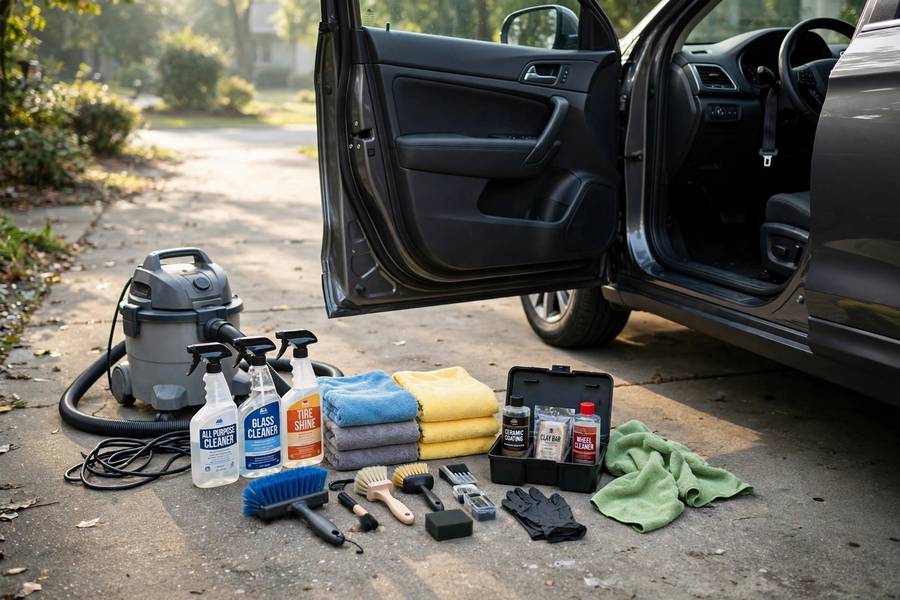
With everything out, vacuum thoroughly — and I mean thoroughly. Move the seats fully forward and back, vacuum under them, get into the seat rails, the crevices where the seat meets the console, everywhere crumbs migrate.
Then shampoo. You don’t need a professional extractor, though renting one ($25–$30 for a day) gets the best results. A stiff brush, warm water with a capful of carpet cleaner, and elbow grease work fine for most cars:
- Spray the cleaner lightly — don’t soak the carpet.
- Agitate with the brush in circles.
- Wipe up with clean microfiber towels, flipping to a clean side often.
- Let it dry completely with the doors open. Damp carpet grows mildew, which puts you right back where you started.
For cloth seats, same process. For leather, use a dedicated leather cleaner and conditioner — household cleaners dry leather out and crack it over time. For headliners, go gentle: light mist, soft cloth, minimal pressure. Headliner glue is fragile and sagging headliners are an expensive fix.
Step 4: Don’t Forget the Trunk
The trunk is the forgotten country of car smells. Spare tire wells collect water through bad seals — pull the spare out and check for standing water or dampness underneath. I find wet spare tire wells constantly, and owners never know because they never look.
Wipe down the trunk liner, check for old spills, and make sure the trunk seal isn’t letting rain in. If the trunk smells musty and the carpet is damp, you’ve got a water leak — usually a taillight seal or trunk gasket. Dry it out, fix the seal, and the smell goes with it.
Step 5: Change the Cabin Air Filter
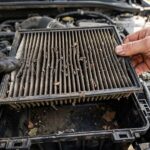
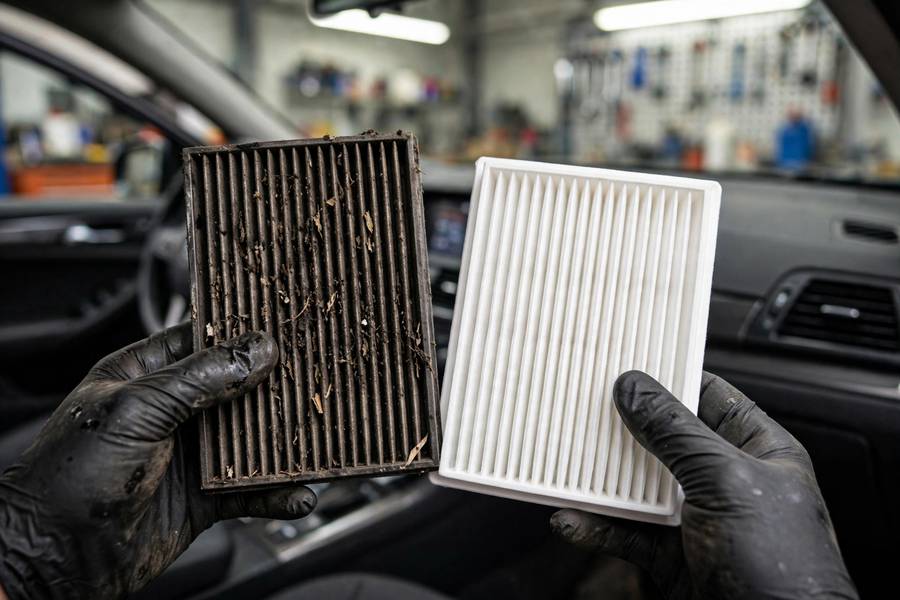
This is the single highest-impact, lowest-effort step on this list, and almost nobody does it. The cabin air filter cleans every cubic foot of air that comes through your vents. After a year or two, it’s a gray, matted rectangle of dust, pollen, leaves, and whatever else blew in.
On most cars, it’s behind the glove box and takes ten minutes and a $15–$25 filter. Pop the glove box out (usually just squeeze the sides), slide the old filter out, note the airflow direction arrow, slide the new one in. Done. I’ve pulled filters out that looked like small animals. The difference in air quality — and smell — is immediate and dramatic.
Do this once a year, or every 12,000–15,000 miles. If you park under trees, do it twice a year.
Step 6: Fix the Musty AC Smell
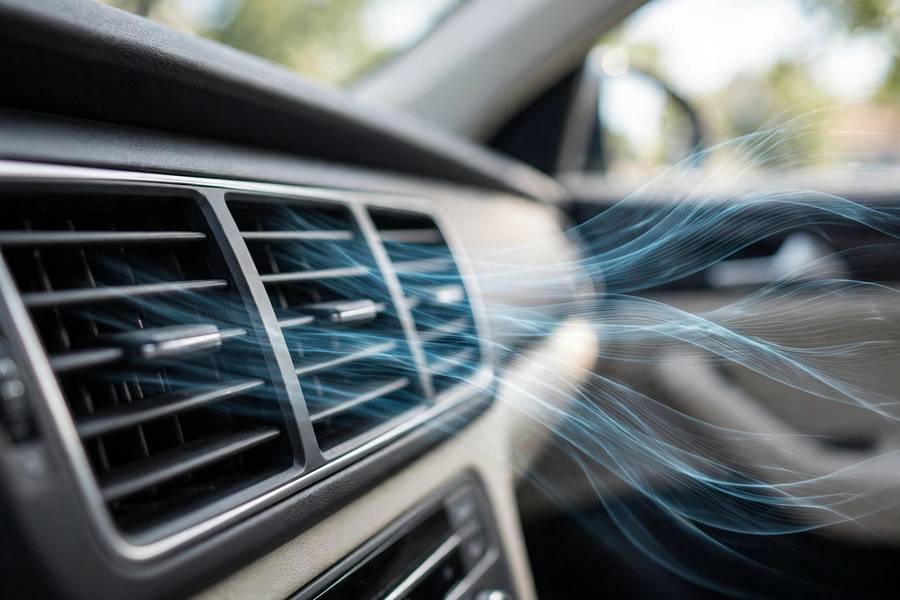
That sour, locker-room blast when you first turn on the AC? That’s mold and bacteria growing on the evaporator coil — the cold, damp part of your AC system behind the dashboard. It’s dark and wet in there, which is paradise for microbes.
Here’s the fix that actually works:
- Run the fan without AC for the last few minutes before you park. This dries the evaporator and prevents most growth in the first place.
- Use an evaporator cleaner foam. You spray it into the AC drain tube or through the vents (product instructions vary), it foams up inside the evaporator box, kills the mold, and drains out. Costs $15–$20, takes 30 minutes.
- Replace the cabin filter after the treatment (see Step 5 — see why it’s important?).
If the smell comes back within weeks, the drain tube might be clogged — water sitting in the evaporator box instead of draining under the car. A shop can blow it clear in minutes. And if you’ve been running the interior lights and accessories during a long cleaning session and the battery’s now dead, here’s how to jump start a car to get going again.
Step 7: Odor Neutralizers That Actually Work
After the source is gone and everything’s clean, then you can add scent. But use things that neutralize or genuinely freshen, not things that just perfume over problems:
- Baking soda: Sprinkle on carpets and cloth seats, leave overnight, vacuum up. It absorbs odors rather than covering them. Cheap and genuinely effective.
- Activated charcoal bags: Leave them under the seats. They passively absorb odors and moisture for months. Around $10 for a multi-pack.
- White vinegar solution: A 50/50 mix with water wipes down hard surfaces and neutralizes smells as it dries. The vinegar smell vanishes in an hour.
- Quality vent-clip fresheners: Fine as a finishing touch on an already-clean car. Get subtle scents — if your car smells like a pine forest exploded, you’ve overdone it.
- Ozone generator: The nuclear option for serious smells (smoke, mildew). Run it in the sealed car for an hour, then air it out completely before driving. Don’t breathe ozone — air the car out thoroughly.
What Doesn’t Work (Save Your Money)
- Hanging air fresheners as a “fix.” They’re a finishing touch, not a solution. On a dirty car they just make scented dirt.
- “Odor bomb” sprays used alone. They’ll freshen the air for a week, then the source smell returns because you never removed it.
- Scented cleaning products on dirty surfaces. Clean first, scent second. Always in that order.
- Ignoring it. Smells don’t improve with age. That milk spill from June is worse in October, not better.
The 15-Minute Monthly Routine
Keeping a car smelling good is easier than making a bad one smell good. Once a month:
- Trash-out: remove everything that doesn’t belong (5 minutes).
- Quick vacuum of driver and passenger footwells (5 minutes).
- Wipe the dashboard and console with a damp microfiber (3 minutes).
- Check under the seats for escapees (2 minutes).
Do that, change the cabin filter yearly, and run the fan dry before parking — your car will smell fine indefinitely. Pair it with the outside work, like how to clean car headlights, and the whole car feels new again.
Frequently Asked Questions
The fastest real fix: remove all trash, vacuum the interior, replace the cabin air filter (10 minutes, $15–$25), and wipe hard surfaces with a vinegar-water solution. That handles most smells in under an hour. Air fresheners alone only mask odors temporarily.
A musty smell from the AC is almost always mold or bacteria on the evaporator coil. Fix it with an evaporator cleaner foam ($15–$20), replace the cabin air filter afterward, and run the fan without AC for a few minutes before parking to keep the evaporator dry.
Once a year or every 12,000–15,000 miles, whichever comes first. If you park under trees or drive on dusty roads, twice a year is better. It’s a $15–$25 part and a 10-minute job on most cars, and it makes the biggest single difference to cabin air quality.
Yes — baking soda absorbs odors rather than masking them. Sprinkle it generously on carpets and cloth seats, leave it overnight (8+ hours), then vacuum thoroughly. It works well on food smells, smoke, and general funk, though severe odors may need a second treatment.
Activated charcoal bags are the best long-term option — they passively absorb odors and moisture for months without adding perfume. For added scent on an already-clean car, a subtle vent-clip freshener works well. But no freshener substitutes for cleaning and a fresh cabin filter.
A sulfur or rotten-egg smell usually points to the catalytic converter or, less commonly, a failing battery. This isn’t a cleaning problem — it’s a mechanical one. Get it diagnosed at a shop soon, since catalytic converter issues can affect emissions and performance.