Walk into any shop asking about transmission service and you’ll hear two options: a change (drain and fill) or a flush. Ask three people which is better and you’ll get four opinions, at least one of which will be delivered with strong emotions and weak evidence. I’ve been around this argument for years, and honestly, both sides oversimplify it.
A fluid change and a flush are different procedures with different risks, different benefits, and different best-use cases. Which one your car needs depends on its mileage, service history, and current condition — not on whichever one the service writer is pushing today. Let me break down what actually happens in each, so you can make the call with your eyes open.
Quick baseline first: know what you’re working with. Before either service, check your transmission fluid — level and color tell you a lot about which service makes sense.
Table of Contents
- What a Fluid Change (Drain and Fill) Actually Does
- What a Flush Actually Does
- The Core Difference: Percentage Replaced
- When a Fluid Change Is the Right Call
- When a Flush Makes Sense
- When Neither Is the Right Call
- The Flush Controversy: What the Fear Is Really About
- Costs Compared
- Frequently Asked Questions
What a Fluid Change (Drain and Fill) Actually Does
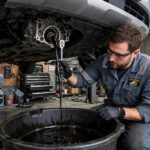
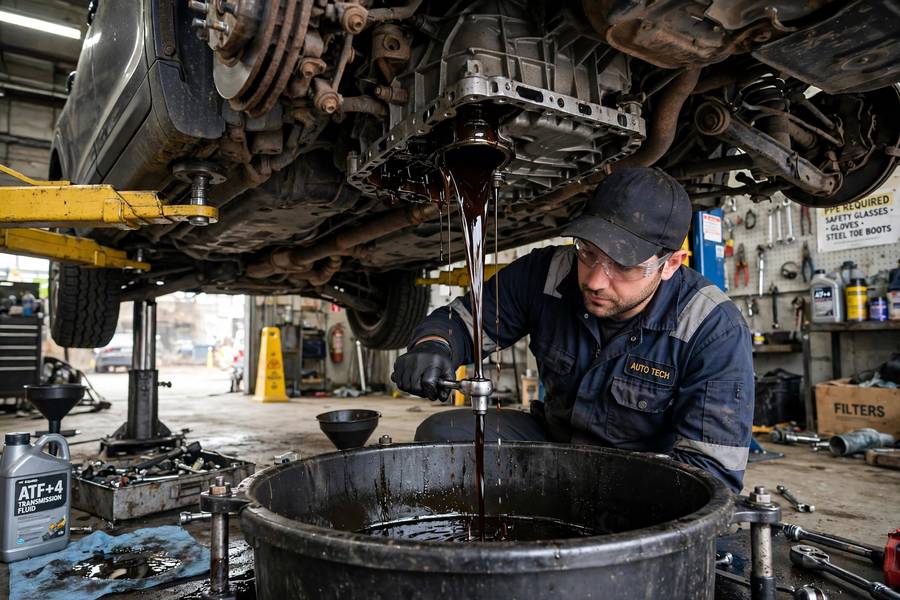
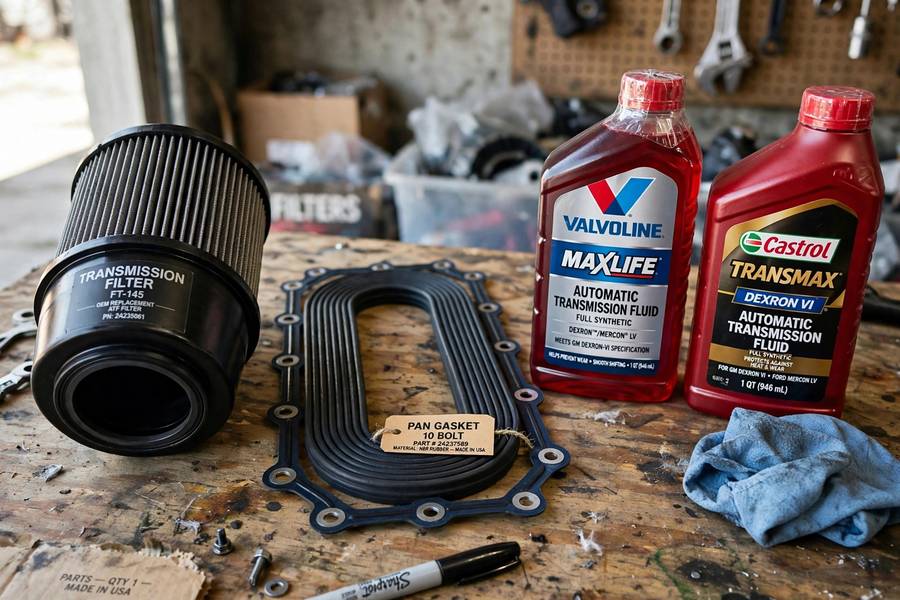
A fluid change — also called a drain and fill — is the simple, honest service. The tech removes the transmission drain plug (or drops the pan), drains the fluid that comes out by gravity, replaces the filter and pan gasket if applicable, and refills with fresh fluid.
Here’s what nobody mentions at the counter: draining by gravity only gets about 30-50% of the total fluid out. The rest is trapped in the torque converter, the valve body passages, and the cooler lines. So a single drain and fill is really a partial refresh — you’re diluting the old fluid with new, not replacing it.
Some people do a “3x drain and fill” — drain, refill, drive a few hundred miles, repeat three times — which gets you to roughly 80-90% new fluid without ever using a machine. It’s more labor, but it’s gentle. I’ve done this on my own cars and I’m a fan of the approach for anything with questionable history.
What a Flush Actually Does
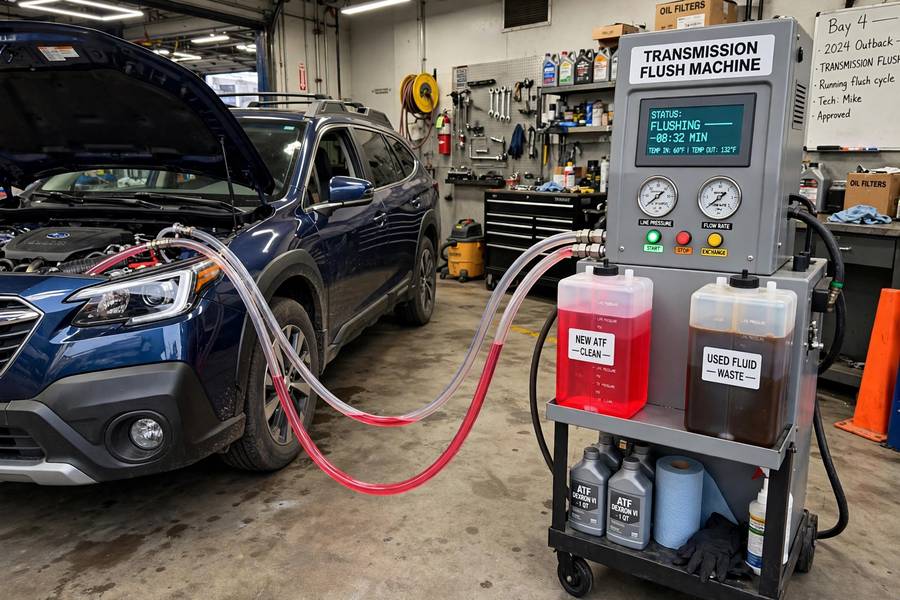
A flush (or fluid exchange) uses a machine connected to the transmission’s cooler lines. As the engine runs, the machine pumps old fluid out and pushes new fluid in at the same rate, cycling through until the fluid coming out runs clean. A proper flush replaces nearly 100% of the fluid — torque converter included.
Modern flush machines are designed to match the transmission’s own pump pressure, so they’re not “blasting” fluid through at fire-hose pressure the way the horror stories suggest. The reputable shops use this method, and it’s how you get a complete exchange.
But here’s the thing: a standard flush does NOT replace the filter. The old filter stays in place unless you specifically ask for (and pay for) a pan drop with it. This is one of my biggest gripes with flush-only shops — you get pristine fluid flowing through a filter that’s still full of the old fluid’s debris. For a proper job, filter replacement should be part of the conversation.
The Core Difference: Percentage Replaced
| Fluid change (drain & fill) | Flush (fluid exchange) | |
|---|---|---|
| Fluid replaced | 30-50% per drain | ~95-100% |
| Filter replaced | Yes, if pan is dropped | Usually no (ask for it) |
| Method | Gravity drain | Machine exchange at line pressure |
| Gentleness | Very gentle | More thorough, slightly more aggressive |
| Typical cost | $80-$200 | $150-$350 |
| DIY friendly | Yes | No (needs the machine) |
Neither one is “better” in absolute terms. They’re different tools for different situations.
When a Fluid Change Is the Right Call
A drain and fill is my default recommendation in most of these situations:
- The car has a solid service history. If the fluid has been changed on schedule its whole life, a drain and fill keeps it that way. You don’t need the nuclear option for a well-maintained unit.
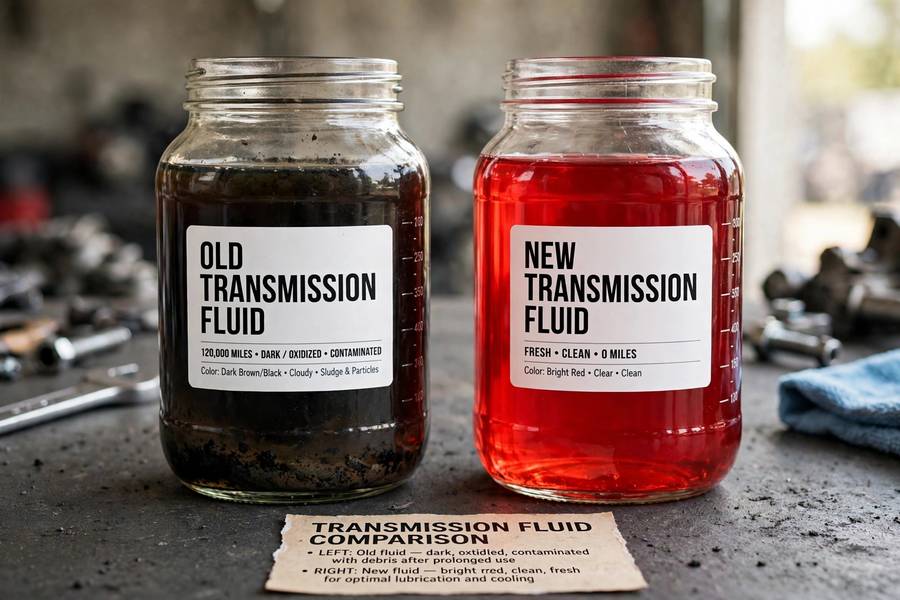
- High mileage with unknown or neglected history. This is the big one. If the fluid is dark, the car has 120,000 miles, and nobody’s touched the transmission since the Bush administration, a gentle drain and fill (maybe a series of them) is safer than a flush. The concern — and it’s a legitimate one — is that aggressive exchange can dislodge varnish and debris that’s currently holding worn components together. (I go deeper on this in my high-mileage fluid change article.)
- CVT transmissions. Many CVT manufacturers specifically recommend against power flushing. A CVT transmission is a different animal — belt/chain and pulley systems are sensitive, and most CVT service procedures specify a drain and fill with the exact OEM fluid.
- You want the filter changed. Dropping the pan to change the filter is only part of a drain-and-fill service. If you want eyes inside the pan (looking for metal debris, checking the magnet), this is the way.
When a Flush Makes Sense
A flush is the better tool when:
- The fluid is moderately degraded but the transmission shifts fine. A complete exchange gives you a clean baseline. If the unit is healthy, there’s no reason a proper machine flush at correct pressure should hurt it.
- The fluid is contaminated but the transmission isn’t damaged. Wrong fluid added, minor coolant intrusion caught early — a flush gets all of it out in a way repeated drain-and-fills take weeks to accomplish.
- You’re doing a full service after a repair. Torque converter replaced, cooler lines replaced, rebuild done — you want 100% new fluid in there, and only a flush (or the shop’s fill procedure) gets you there.
- The manufacturer specifies it. Some service schedules call for exchange procedures. Follow the book.
When Neither Is the Right Call
Sometimes the honest answer is “don’t touch it yet”:
- The transmission is already slipping badly. If clutch packs are shot, new fluid of any kind won’t save them — and fresh, slippery fluid can actually make worn clutches slip MORE than the old, gritty fluid did. A fluid service on a dying transmission can turn “limping along” into “won’t move.” This is a diagnosis-first situation.
- You can’t verify the correct fluid. If the shop can’t tell you exactly which fluid spec they’re using and you can’t confirm it’s right for your car, walk out. Wrong fluid is worse than old fluid.
- The shop can’t explain their flush machine’s procedure. Reputable shops will tell you the machine matches line pressure and that they can do a filter service too. Vague answers mean vague work.
The Flush Controversy: What the Fear Is Really About
Let me demystify the great flush debate, because both camps have a point.
The anti-flush camp’s fear comes from real cases: old, neglected transmissions that started slipping (or died) shortly after a flush. What actually happened in most of those cases is that the transmission was already worn out — the thick, degraded fluid with all its suspended friction material was the only thing letting the worn clutches grip. Fresh fluid removed that crutch. The flush didn’t cause the wear; it revealed it. But try explaining that to someone whose car died two days after a $200 service.
The pro-flush camp is right that on a healthy or moderately-worn transmission, a proper exchange is safe and beneficial. The machine isn’t forcing fluid through at destructive pressure — it’s exchanging at the transmission’s own operating pressure.
My take after years of watching this play out: the flush itself is rarely the villain. The villain is servicing a transmission that’s already failing and expecting maintenance to perform resurrection. Know your transmission’s condition first — which starts with checking the fluid — then pick the service that matches.
Costs Compared
Ballpark numbers (they vary by region and vehicle):
- Drain and fill: $80-$200, more if the filter and gasket are included (they should be).
- Drain and fill series (3x): $240-$600 spread over a few weeks — more expensive total, gentlest option.
- Flush: $150-$350 depending on fluid type. CVT and European-spec fluids cost more.
- Flush + filter/pan drop: $250-$450. This is the “do it right” combo when a flush is appropriate.
Avoid the $59.99 flush special at quick-lube places, by the way. That price means generic bulk fluid and no filter. For reference on general maintenance costs and intervals, my piece on how often to change engine oil covers the engine side of the same “cheap service vs. right service” debate. Either way, it’s the cheapest maintenance a transmission will ever get.
Frequently Asked Questions
Neither is universally better. A flush replaces nearly 100% of the fluid and is great for healthy transmissions or contamination cleanup. A drain and fill replaces 30-50% per service, is gentler, includes a filter change, and is safer for high-mileage units with neglected history.
A proper flush at correct line pressure won’t damage a healthy transmission. The horror stories usually involve transmissions that were already worn out — fresh fluid revealed the existing damage rather than causing it. Flush on a slipping transmission, though, can finish it off.
Usually not — a standard flush exchanges fluid through the cooler lines without dropping the pan. If you want the filter replaced, ask for a pan drop with the flush, or choose a drain-and-fill service that includes it.
A drain and fill typically runs $80-$200 (more with filter and gasket), while a flush runs $150-$350 depending on fluid type and vehicle. A flush combined with a pan drop and filter is $250-$450.
Most CVT manufacturers recommend against power flushing — they specify drain-and-fill service with the exact OEM CVT fluid. CVTs are sensitive to fluid type and level, so follow the manufacturer’s procedure rather than a generic flush.