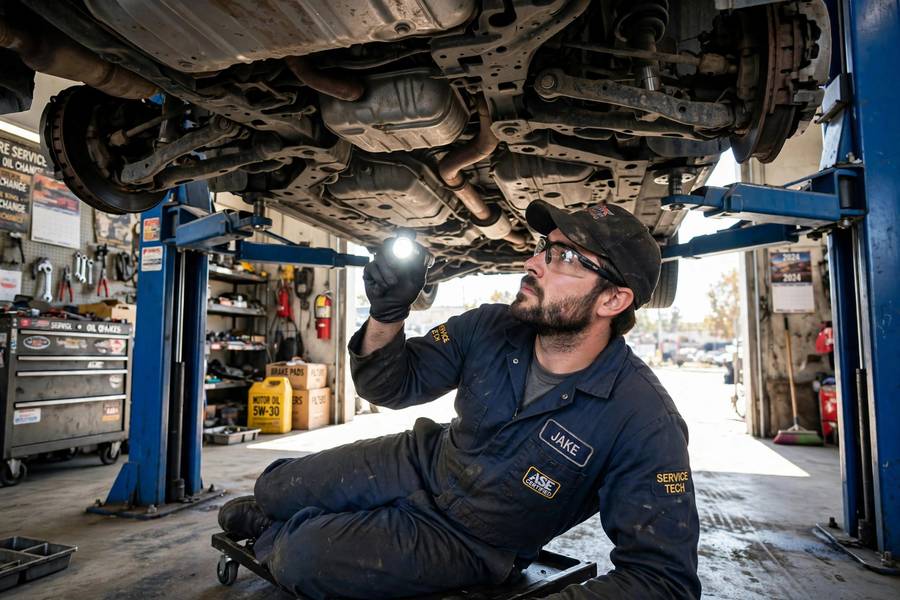
I’ve spent enough Saturdays under cars to tell you this: a dying CVT doesn’t go quietly. It talks. It whines, it shudders, it slips, and it heats up — and if you learn its language early, you can catch problems before a repair bill turns into a replacement bill.
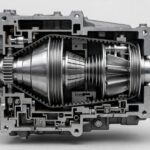
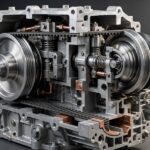
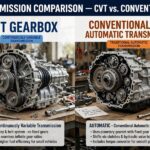
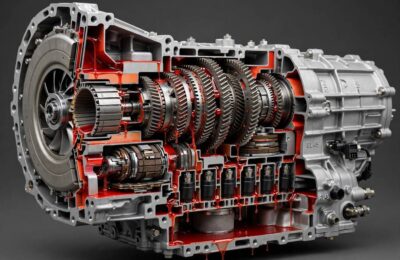
A conventional automatic gives you gears. A CVT gives you a belt (or chain) riding on two variable pulleys, gliding through an infinite number of ratios. When everything’s healthy, it’s smooth as butter. But that belt-and-pulley design has a few weak spots, and when they start to go, the symptoms are pretty distinctive. If you’re new to this transmission type, my primer on what a CVT transmission is and how it works is a good place to start before reading this.
Here’s what I tell every friend who calls me about a funny noise from under the hood: pay attention to the details below, because CVTs rarely fail without warning. They warn you for weeks or months — the question is whether you’re listening.
Table of Contents
- Whining or Whirring Noise Under Acceleration
- Shuddering or Jerking at Low Speeds
- Slipping: RPMs Rise but Speed Doesn’t
- Delayed Engagement When Shifting
- Transmission Overheating
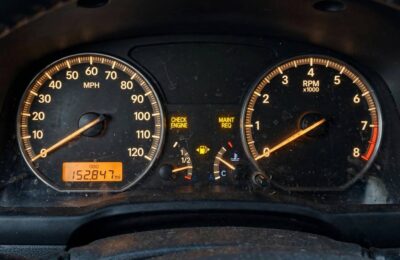
- Check Engine Light and Transmission Warning
- Fluid Leaks and Burnt Smell
- What to Do When You Spot a Symptom
- Frequently Asked Questions
Whining or Whirring Noise Under Acceleration
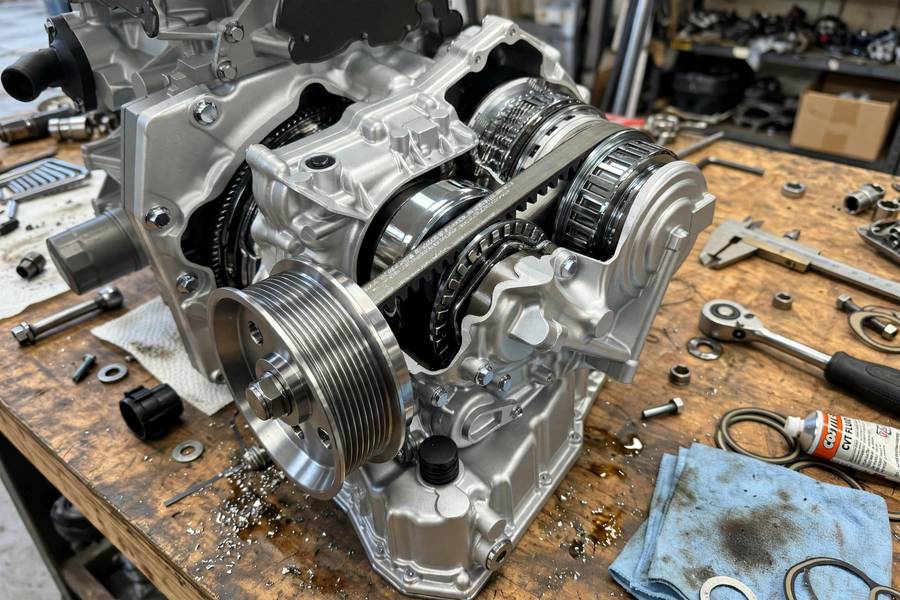
This is the classic CVT tell. A healthy CVT has a subtle hum — you get used to the “rubber band” feeling where the engine holds one RPM while speed climbs. But when that hum turns into a pronounced whine that gets louder as you press the gas, something’s wearing.
Nine times out of ten, the culprit is the belt and pulley surfaces. The metal belt rides on smooth conical pulleys, and the whole system depends on transmission fluid to maintain friction and hydraulic clamping force. When fluid degrades or levels drop, the belt starts to slip microscopically on the pulleys — and that micro-slip sings.
I had a buddy with a 2015 Nissan Sentra (a car with a famously fragile CVT) who ignored the whine for six months. “It’s always sounded like that,” he told me. It hadn’t. By the time the belt was audibly squealing, the pulley surfaces were scored, and his “service” turned into a replacement. Catch the whine early, and a fluid change plus a code scan can save you thousands.
How to tell normal CVT hum from a problem whine: a healthy one stays roughly constant with RPM and doesn’t change character. A failing one gets louder under load — going uphill, merging onto the highway — and may have a pitch that rises and falls in ways the old hum didn’t.
Shuddering or Jerking at Low Speeds
A CVT shouldn’t shudder. The whole point of the design is stepless, seamless ratio changes. So when you’re pulling away from a stoplight and the car feels like it’s driving over rumble strips, pay attention.
This judder — especially between 10 and 40 mph — is the most common complaint I hear about older CVTs. In a lot of cases it’s the torque converter lockup clutch misbehaving, or the transmission control module (TCM) struggling to manage the pulley positions smoothly. Contaminated or worn-out fluid is the usual trigger; degraded fluid can’t maintain the precise hydraulic pressure the pulleys need, so the ratio changes come in little stutters instead of a smooth glide.
The shudder that should worry you is one that gets worse over weeks. A mild shudder right after a cold start that goes away? Monitor it. A shudder that starts mild and steadily becomes more violent? That’s progression, and progression in a CVT means wear is accelerating. Get it scanned and have the fluid inspected before the wear snowballs.
Slipping: RPMs Rise but Speed Doesn’t
This one is unmistakable once you’ve felt it. You press the gas, the tachometer climbs — 4,000, 5,000 RPM — and the car barely accelerates. Then it catches and surges forward. That’s belt slip, and it’s the most serious mechanical symptom on this list.
In a healthy CVT, the hydraulic system clamps the belt between the pulleys with enormous force. Slipping means that clamping force isn’t holding — low fluid, worn pulley surfaces, a failing hydraulic pump, or a pressure control solenoid going bad. Whatever the cause, every slip event wears the metal surfaces a little more, so this symptom feeds on itself.
Don’t test this by flooring it to “see if it still does it.” That’s like pressing harder on a cut to see if it still bleeds. If you notice sustained slipping, keep your driving gentle and short — straight to a shop. Driving hard on a slipping CVT can turn a repairable issue into a box of scrap metal in surprisingly few miles.
Delayed Engagement When Shifting
Shift from park to drive, and… nothing. Count one Mississippi, two Mississippi, then a clunk as the car engages. Or reverse takes a long breath before kicking in. That’s delayed engagement, and it usually points to hydraulic pressure problems or a worn start clutch.
A little hesitation in very cold weather can be normal — fluid is thicker when it’s cold. But a delay that happens every time, or one that’s getting longer, is a symptom. I test this by shifting with my foot firmly on the brake and counting. Under a second is normal. Over two seconds consistently, especially once the car is warmed up, means the transmission’s internal pressure is building too slowly — often a valve body or seal issue, sometimes just fluid that’s overdue for a change.
The clunk that follows a long delay is worth respecting too. That bang is driveline shock, and every shock stresses the belt and pulleys. If your CVT clunks into gear, don’t just live with it.

Transmission Overheating
CVTs run hot by design — the constant friction between belt and pulleys generates serious heat, and they’re more heat-sensitive than conventional automatics. Many modern CVTs have a dedicated cooler for exactly this reason. When cooling can’t keep up, you get overheating, and overheating kills CVTs faster than almost anything else.
Symptoms of an overheating CVT: a transmission temperature warning light (some cars have one), a sudden loss of power (many CVTs derate themselves — they deliberately cut power to save the belt), a strong burning smell, and in bad cases, the car going into limp mode.
The classic trigger is sustained heavy load: long uphill grades, towing near the limit, or stop-and-go traffic on a brutal summer day. If your car warns you and you keep pushing, the fluid breaks down rapidly at high temperatures — and degraded fluid plus heat is a spiral that ends with a fried belt. When the light comes on: back off, let it cool, and have the fluid checked soon after. Repeated overheating events are a red flag that the cooler or the fluid is no longer up to the job.
Check Engine Light and Transmission Warning
Your car’s computer watches the CVT constantly — input and output speed sensors compare the ratio the TCM commanded against the ratio it actually got. When those don’t match, or when pressure sensors, temperature sensors, or solenoid circuits report problems, you get a light.
The tricky part: the standard check engine light often accompanies CVT problems but doesn’t specifically say “transmission.” A dedicated transmission or gear warning icon does. Either way, what the check engine light actually means applies here — it’s a signal to get codes read, not a diagnosis.
What I tell everyone: get the codes read with a proper scanner, not a free parts-store code pull that only reads engine codes. Transmission codes often live in the TCM, and cheap scanners miss them. A shop scan tells you whether you’re looking at a pressure solenoid, a speed sensor, or a ratio control issue — three very different problems with very different bills.
Fluid Leaks and Burnt Smell
CVT fluid is the lifeblood of the whole system — it lubricates, cools, transmits hydraulic pressure, and provides the friction the belt needs to grip. CVTs are sealed systems, so they don’t “consume” fluid. If the level is low, it’s leaking somewhere: pan gasket, axle seals, cooler lines, or the torque converter seal.
Healthy CVT fluid is typically a clear green, blue, or red (it varies by manufacturer — Nissan NS-2/NS-3 is greenish, Honda HCF-2 is different, Toyota CVT fluid is its own thing). Dark, brown, or black fluid with a burnt toast smell means it’s been overheated and is breaking down. That smell alone is worth a service appointment.
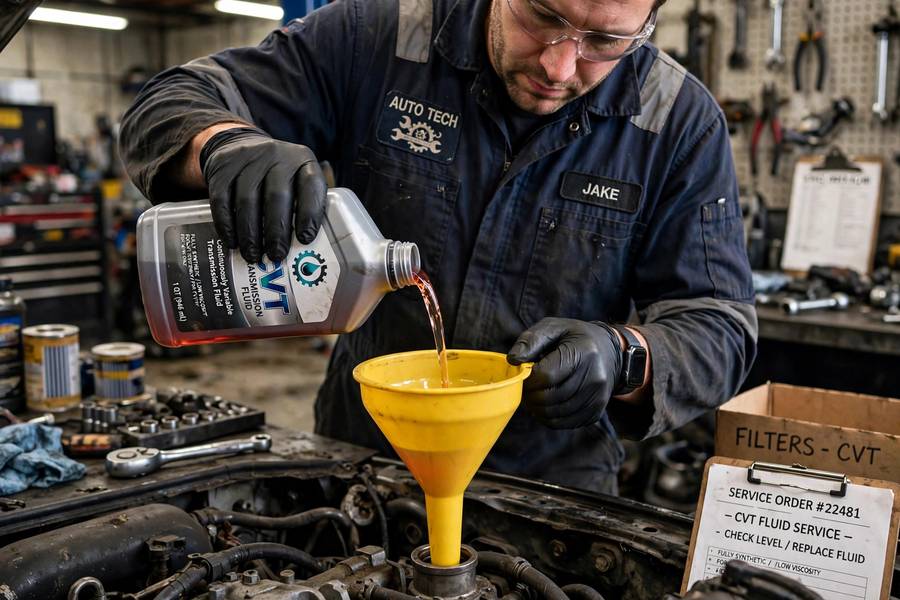
One critical thing I’ve learned the hard way: never use generic “universal” ATF in a CVT. CVT fluid has very specific friction characteristics, and the wrong fluid will destroy a CVT. Always use the exact fluid your manufacturer specifies. This is one place where “close enough” costs you a transmission.
What to Do When You Spot a Symptom
Here’s my shop-tested playbook, in order:
- Don’t panic, but don’t ignore it. A single odd noise on a cold morning isn’t a crisis. A symptom that repeats or worsens over days is a to-do item.
- Check the fluid level and condition if your car has a dipstick (many CVTs don’t — they’re checked from underneath). Note color and smell.
- Get a full code scan — engine AND transmission modules — at a reputable shop, preferably one that knows CVTs. Not every shop does.
- Check your service history. If the fluid hasn’t been changed in 60,000+ miles, a fluid change is the first and cheapest intervention.
- Avoid the “flush” trap. On a high-mileage CVT that hasn’t been serviced, a high-pressure flush can dislodge debris and make things worse. A drain-and-fill is gentler.
- Get a second opinion before authorizing a replacement. CVT rebuilds are specialized; many shops just replace the whole unit. A second quote from a transmission specialist can save you real money.
The unifying lesson from every CVT I’ve seen fail: the owners who caught symptoms early and changed fluid spent hundreds. The ones who drove it “until it breaks” spent thousands. A CVT rewards attention the way a high-strung sports car does — ignore it at your peril.
Frequently Asked Questions
Usually a whining or whirring noise under acceleration, or a shudder at low speeds. These symptoms appear before serious damage, so catching them early is the best way to avoid a replacement.
Short distances at gentle throttle to get to a shop, yes. But every slip event wears the belt and pulleys further, so driving hard on a slipping CVT can turn a repairable problem into a full replacement quickly.
No — it can mean hundreds of things. But CVT ratio or pressure faults do trigger it, so get both engine and transmission codes scanned with a scanner that can read the transmission control module.
Yes — degraded fluid is one of the most common causes of CVT shudder. It can’t maintain the precise hydraulic pressure the pulleys need, so ratio changes come in stutters. A fluid change often fixes mild shudder.
Like burnt toast or scorched oil — acrid and sharp. Healthy CVT fluid has a mild, slightly sweet petroleum smell. If your fluid smells burnt, it’s been overheated and needs changing.