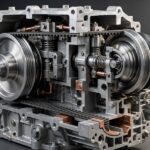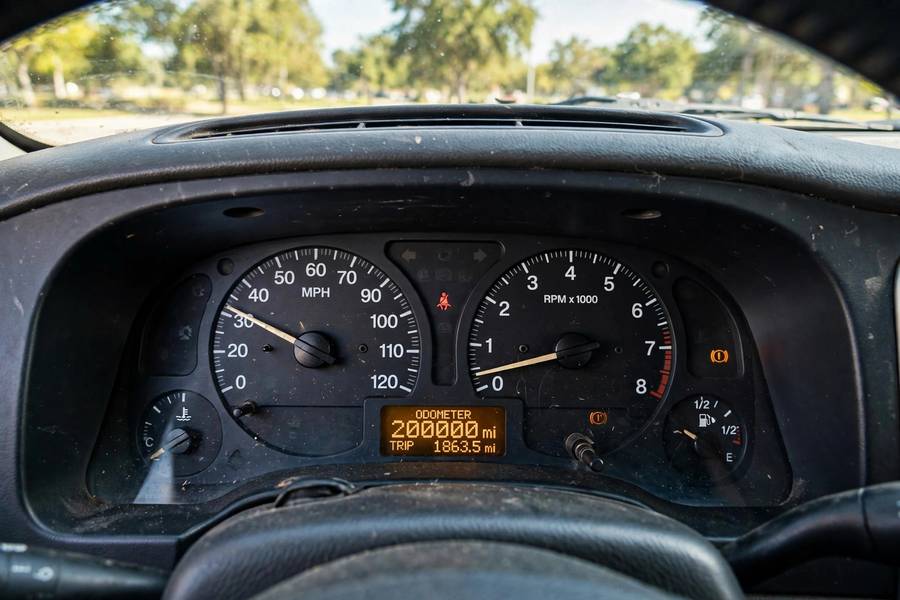
Ask ten people how long a CVT lasts and you’ll get ten different answers — because the range is genuinely wide. I’ve personally seen CVTs die at 60,000 miles and others soldier past 250,000. The honest answer is that a CVT’s lifespan is less about the design and more about two things: how it’s maintained and which manufacturer built it.
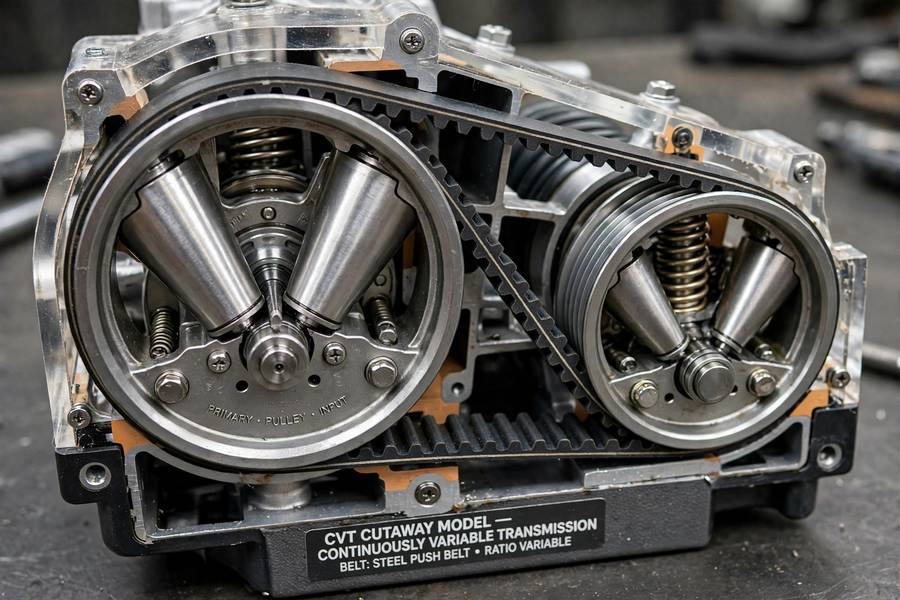
If you haven’t wrapped your head around the belt-and-pulley design yet, start with my explainer on what a CVT transmission is and how it works. It’ll make everything below click faster.
The short version: a well-maintained CVT from a good manufacturer typically lasts 150,000 to 200,000 miles. Some go further. Some — from certain eras of certain brands — barely clear 100,000. Here’s the full picture.
Table of Contents
- The Realistic Mileage Range
- Why Some CVTs Die Early
- Manufacturer Differences That Actually Matter
- The Maintenance Factor: Fluid Is Everything
- Driving Habits That Extend or Shorten CVT Life
- How to Know Where Your CVT Stands
- Getting to 200,000 Miles: The Playbook
- Frequently Asked Questions
The Realistic Mileage Range
Let me give you the numbers as I’ve observed them in the real world, not the brochure:
- 80,000–120,000 miles: The danger zone for poorly maintained CVTs and certain problematic units (early-2010s Nissan Jatco units, for instance). If the fluid was never changed and the car saw heavy use, this is where failures cluster.
- 120,000–180,000 miles: The most common range for an average-maintained CVT. The fluid was changed once or twice, driving was normal, no towing. This is where most healthy CVTs live their lives.
- 180,000–250,000 miles: Achievable with diligent maintenance — regular fluid changes, no abuse, and a well-designed unit. Honda and Toyota CVTs hit this regularly in my experience.
- 250,000+ miles: Rare but real. I’ve met taxi and delivery drivers with CVTs pushing 300,000 miles, almost always on strict fluid-change schedules.
Compare that to a conventional automatic, which typically runs 150,000–200,000 miles with similar care. So no — a CVT is not automatically a shorter-lived transmission. It’s a more maintenance-sensitive one. The failures that give CVTs a bad name are overwhelmingly maintenance failures: old fluid, overheating, ignored symptoms.
One pattern worth noting: the range shifts with use case, not just maintenance. A CVT in a highway commuter that rarely sees full throttle will outlast the same unit in a delivery vehicle doing 200 stop-and-go miles a day — sometimes by 50,000 miles or more. City miles are harder miles for a CVT: constant ratio changes, more heat cycles, more belt wear per mile. When people ask me how long theirs will last, I always ask about the driving pattern before the mileage, because 120,000 gentle highway miles and 120,000 hard city miles are two completely different transmissions.
Why Some CVTs Die Early
Three things kill CVTs young, and I see the same pattern over and over:
Neglected fluid. This is the big one — probably responsible for half of all premature CVT failures. CVT fluid doesn’t just lubricate; it creates the friction the belt needs to grip the pulleys and carries hydraulic pressure for the clamping system. When it degrades, everything degrades. The tragedy is that “lifetime fluid” marketing convinced a generation of owners that CVTs never need servicing. They do.
Heat. A CVT’s worst enemy. The belt-pulley contact generates enormous heat, and once fluid temperatures spike repeatedly, the fluid breaks down and internal clearances change. Cars that tow near their limit, climb mountain grades regularly, or sit in desert traffic run hotter — and their CVTs live shorter lives without extra care.
Design issues. Some units were just flawed. The early Jatco CVTs (used heavily by Nissan in the 2010s) had undersized coolers, weak belt designs, and valve body issues that caused widespread failures — some under 100,000 miles. Later generations improved significantly. The design matters, which is why manufacturer differences are real.
Manufacturer Differences That Actually Matter
Not all CVTs are created equal, and anyone who tells you otherwise hasn’t worked on enough of them:
- Toyota and Honda build CVTs that, in my experience, are the most durable on the road. Toyota’s K-series and Honda’s units (paired with their excellent fluid specifications) routinely clear 200,000 miles with basic maintenance. Honda even built their reputation on CVTs that just keep going.
- Subaru’s Lineartronic is solid when maintained — the chain-type design handles torque well — though earlier versions had some torque converter issues.
- Nissan’s Jatco units are the mixed bag. The mid-2000s to mid-2010s versions earned the CVT’s bad reputation almost single-handedly. Newer ones are notably better, but I’d still maintain a Nissan CVT more aggressively than a Toyota’s.
- Mitsubishi, Hyundai/Kia, and others fall in the middle — generally fine with proper fluid service.
The takeaway isn’t “avoid brand X entirely.” It’s that your maintenance urgency should scale with your transmission’s reputation. A 2013 Nissan Altima’s CVT needs fluid changes like clockwork; a 2020 Toyota Corolla’s CVT is more forgiving. Know what you’re driving.

The Maintenance Factor: Fluid Is Everything
If there’s one maintenance item that determines CVT lifespan, it’s the fluid change. I’ve seen a 180,000-mile Honda with three fluid changes shift like new, and a 70,000-mile neglected unit whining like a tea kettle.
The schedule that works in the real world:
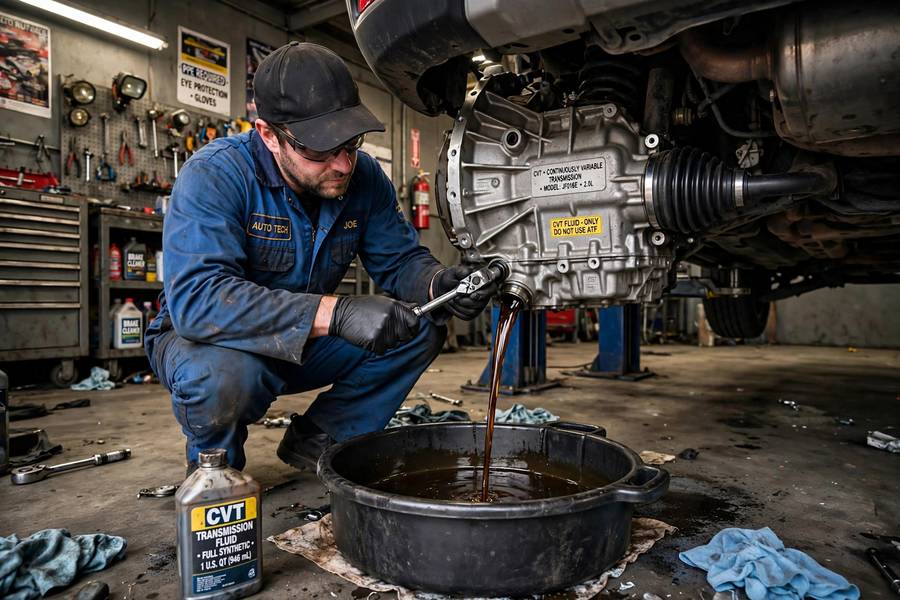
- Every 30,000–50,000 miles for normal driving. This is the interval I recommend to everyone, regardless of what the owner’s manual says about “lifetime” fluid.
- Every 25,000–30,000 miles for severe service: towing, mountain driving, extreme heat, rideshare/delivery work.
- Drain-and-fill, not flush, especially on high-mileage units that haven’t been serviced. A gentle drain-and-fill replaces about half the fluid without the pressure shock of a flush.
My full breakdown of intervals and the drain-vs-flush debate lives in my guide to CVT transmission fluid change intervals (publishing soon in this series).
One more thing: use the exact fluid the manufacturer specifies. CVT fluid is not interchangeable with regular ATF, and “universal” fluids are a gamble I won’t take. The wrong fluid changes the friction characteristics the belt depends on. This is a $100 job where cheaping out on fluid can cost you a transmission.
Driving Habits That Extend or Shorten CVT Life
Your right foot matters more than you think:
What shortens CVT life: – Launching hard from stops repeatedly (full-throttle launches shock-load the belt) – Towing at or over the rated limit – Ignoring warm-up — hammering a cold CVT before fluid circulates properly – Riding at high RPMs on steep grades instead of backing off – Ignoring early symptoms (see above on neglected fluid)
What extends it: – Smooth, gradual acceleration — this is the single biggest habit change – Letting the car warm up for a minute or two before driving hard – Backing off on long grades instead of holding full throttle – Coming to complete stops before shifting between drive and reverse – Engine braking awareness — most CVTs handle it fine, but don’t force downshifts aggressively
I tell people to drive a CVT the way you’d treat a good pair of running shoes: steady, consistent use keeps it happy. Abuse it and it wears out fast.
How to Know Where Your CVT Stands
Mileage alone doesn’t tell the story. Here’s how to assess your transmission’s actual health:
- Check the fluid. Color, smell, level — learn checking transmission fluid like a pro if your car has a dipstick. Dark, burnt-smelling fluid at any mileage is a red flag.
- Review the service history. Fluid changed every 40,000 miles? You’re probably fine. Never changed at 120,000? Start planning a gentle drain-and-fill.
- Listen and feel. Whining, shuddering, slipping, delayed engagement — any of these mean the clock is ticking faster than the mileage suggests.
- Get a scan. A transmission shop can read TCM codes and check for stored ratio or pressure faults that haven’t triggered symptoms yet.
- Consider the model year and brand. Research your specific unit’s reputation — some have known weak points worth watching.
Getting to 200,000 Miles: The Playbook
Here’s the formula, distilled from every long-lived CVT I’ve encountered:
- Change the fluid every 30,000–50,000 miles with the exact OEM-spec fluid.
- Address symptoms immediately — whine, shudder, and slip don’t self-heal.
- Keep it cool: don’t tow over the limit, back off on grades, service the cooler if your car has a serviceable one.
- Drive smoothly. Full-throttle launches are the enemy.
- Get a transmission scan at every major service interval (60k, 120k, 180k) — cheap insurance.
- Fix leaks immediately. CVTs don’t consume fluid; low fluid means a leak, and a leak means the belt is running starved.
Follow that playbook and a good CVT will outlast the rest of the car in many cases. Ignore it, and you’ll join the chorus of “CVTs are junk” — when really, it was the maintenance that was junk.
Frequently Asked Questions
A well-maintained CVT typically lasts 150,000 to 200,000 miles. Honda and Toyota units often exceed this; poorly maintained or early-design units can fail under 100,000 miles.
Yes, when maintained properly. Both average roughly 150,000–200,000 miles. CVTs are more maintenance-sensitive, but they aren’t inherently shorter-lived than conventional automatics.
It’s rare but possible with strict fluid maintenance every 30,000–50,000 miles, gentle driving, and a well-designed unit. Fleet vehicles with regimented service schedules have achieved this.
Neglected fluid is the top killer, followed by overheating from towing or heavy loads, and ignoring early symptoms like whining or shuddering. All three are preventable.
Yes. “Lifetime fluid” is marketing, not engineering. I recommend a drain-and-fill every 30,000–50,000 miles with the exact manufacturer-specified fluid for maximum CVT lifespan.