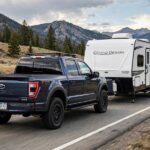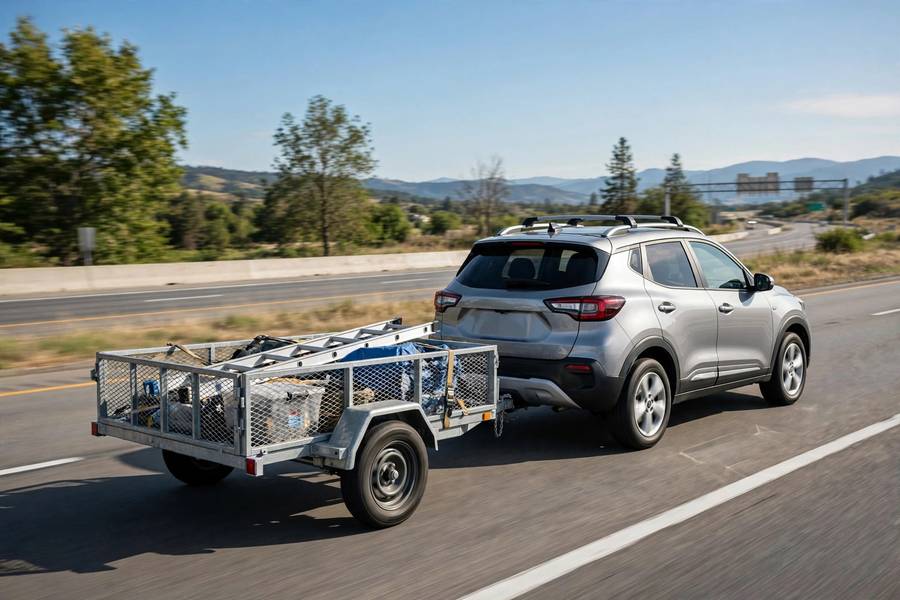
Short answer: yes, you can tow with a CVT — if your vehicle is rated for it and you stay within the limits. Long answer: towing is one of the hardest things you can ask a CVT to do, and doing it wrong is a fast track to an overheated, worn-out transmission.
I’ve seen both sides. A friend towed a small utility trailer with his Subaru Outback for years without a hiccup — stayed under the rating, drove sensibly, serviced the fluid. Another friend towed a camper “just a little over” his Rogue’s rating through summer heat and cooked his CVT in one trip. The difference wasn’t luck. It was physics and respect for limits.
If you’re new to the belt-and-pulley design, my primer on what a CVT transmission is and how it works explains why towing stresses it the way it does.
Table of Contents
- Why Towing Is Hard on a CVT
- Check Your Rating First
- Typical CVT Tow Ratings
- The Heat Problem
- Safe Towing Technique for CVTs
- What to Do Before and After Towing
- When a CVT Is the Wrong Tool
- Real-World CVT Towing Stories: What I’ve Seen in the Shop
- Frequently Asked Questions
Why Towing Is Hard on a CVT
It comes down to how a CVT handles load. When you add a trailer, the transmission spends much more time at low ratios (where the belt is under maximum clamping force) and the engine works harder to maintain speed. The belt-pulley contact — already the hottest, most stressed point in the transmission — gets hotter and more loaded.
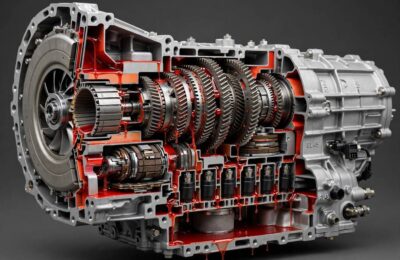
A conventional automatic handles this with brute mechanical advantage: real gears, a torque converter that multiplies torque at launch, and generally more thermal mass. The CVT’s belt, gripping smooth pulleys through friction alone, has less margin. Sustained heavy load pushes the system toward its thermal and friction limits.
This doesn’t mean the CVT can’t do it. It means the safety margins are thinner, so your technique and respect for ratings matter more. Think of it like the difference between carrying a heavy box with a good grip versus a slippery one — both possible, but the slippery grip demands more care.
Check Your Rating First
Before you hitch anything up, find your vehicle’s tow rating. Check:
- The owner’s manual — the definitive source, with conditions and caveats
- The driver’s door jamb sticker — GCWR (gross combined weight rating) and related numbers
- The manufacturer’s towing guide for your specific model year and trim
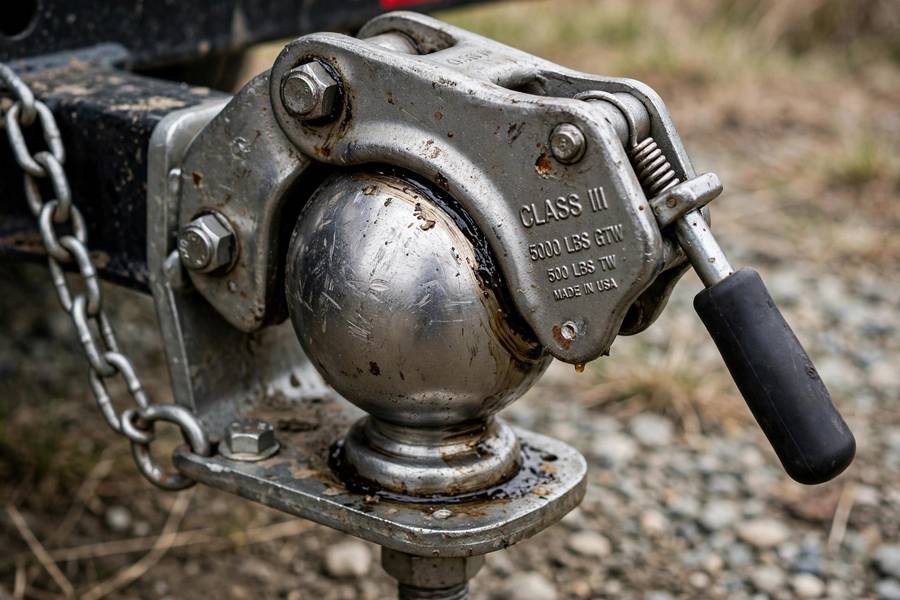
Critical detail: the tow rating assumes a properly equipped vehicle — sometimes that means a factory tow package with an upgraded transmission cooler. If your car didn’t come with the tow package, your effective rating may be lower or even zero. “My buddy tows with the same car” isn’t a rating.
Also understand what the rating includes: it’s the trailer’s fully loaded weight, not its empty weight. A “1,500-pound” trailer becomes 2,200 pounds once you load gear, water, and supplies into it. Weigh your loaded trailer if you’re anywhere near the limit — guessing is how people end up over.
Typical CVT Tow Ratings
To calibrate your expectations, here are typical ranges for CVT-equipped vehicles:
- Compact sedans (Civic, Corolla, Sentra): usually 0–1,000 lbs; many aren’t rated for towing at all
- Compact crossovers (CR-V, RAV4, Rogue): typically 1,000–1,500 lbs
- Midsize crossovers (Outback, Highlander hybrid): up to 2,700–3,500 lbs on the stronger ones
- Small trucks with CVTs: rare — most trucks use conventional automatics precisely because of towing
Notice the pattern: if serious towing is in your life, you’re shopping in the wrong transmission category. A body-on-frame SUV or pickup with a conventional automatic tows 5,000–10,000+ pounds without breaking a sweat. The CVT’s domain is light duty — utility trailers, small campers, jet skis.
And if you’re deciding between drivetrains for towing duty, my AWD vs 4WD for towing breakdown covers which driven-wheel setup handles trailers best.
The Heat Problem
Heat is the thread connecting every CVT towing failure I’ve seen. Here’s the thermal reality:
Towing raises transmission fluid temperatures significantly — often 30–50°F above normal cruising temps. CVT fluid starts breaking down rapidly above roughly 240°F, and sustained temperatures in that range cook the fluid’s friction modifiers. Once the fluid degrades, the belt slips microscopically, which generates more heat, which degrades the fluid further. It’s a thermal spiral, and it can happen in a single long, hot towing day.
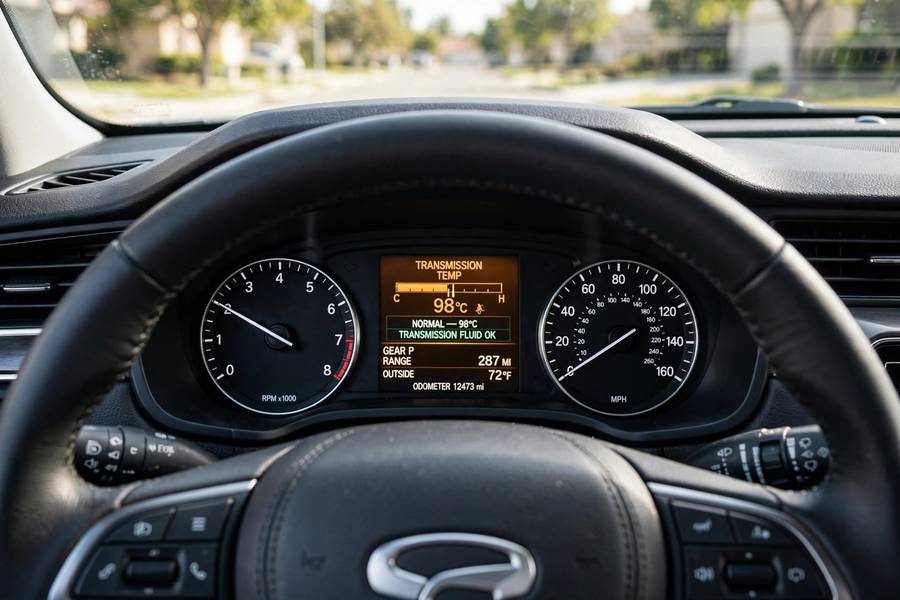
Warning signs while towing: a burning smell, the transmission holding very high RPMs without corresponding speed, reduced power (the computer derating to protect itself), or a transmission temperature warning light. If you get the warning: pull over safely, let it idle or shut down to cool, and do not continue pushing. Finishing the trip “just a few more miles” is how a $200 fluid service becomes a $5,000 replacement.
Safe Towing Technique for CVTs
If you’re within your rating, here’s how to tow without hurting the transmission:
Keep speeds moderate. 55–60 mph instead of 70+. Aerodynamic drag rises with the square of speed, and the transmission works dramatically harder at 70 than at 60. The time difference on a 200-mile trip is about 30 minutes. Worth it.
Use manual mode or “L” on grades. On long climbs, lock in a ratio instead of letting the CVT hunt. On descents, engine braking saves your brakes and keeps the transmission in a controlled state.
Take cooling breaks. On long hauls, especially in heat, stop every hour or two. Let the car idle for a few minutes (idling circulates fluid through the cooler) or shut it off. This isn’t being precious — it’s thermal management.
Accelerate gently. No jackrabbit starts with a trailer. Smooth, progressive throttle keeps belt loads manageable.
Watch the temperature. If your car has a transmission temp gauge or warning, it’s your most important instrument while towing. No gauge? Be conservative — assume you’re hotter than you think.
Distribute the load. Tongue weight should be 10–15% of the loaded trailer weight. Too little tongue weight causes sway; too much overloads the rear suspension and changes the vehicle’s dynamics.
What to Do Before and After Towing
Before: – Verify the tow rating and your loaded trailer weight – Check transmission fluid level and condition — learn how to check transmission fluid if your car has a dipstick – Confirm your hitch, wiring, and trailer brakes (if equipped) are in good order – Check tire pressures on both vehicle and trailer (including the spare)
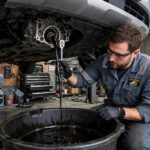
After: – If it was a serious tow (heavy load, heat, grades, long distance), consider a transmission fluid change afterward. Towing is severe service, and the fluid took a beating. – Inspect for leaks — heat cycles stress seals – Note any new noises or behavior changes, and address them promptly
I treat every significant tow as a severe-service event for the transmission. The fluid change afterward costs $150–$300. The transmission it protects costs twenty times that.
When a CVT Is the Wrong Tool
Honest assessment time. A CVT vehicle is the wrong tow vehicle if:
- You tow regularly (weekly or more) — the cumulative heat cycling adds up
- Your trailer is near or over the rating — no margin means no forgiveness
- You tow in mountains or desert heat routinely — the worst-case combination
- You’re buying a vehicle primarily for towing — get a truck or a body-on-frame SUV with a conventional automatic
There’s no shame in recognizing the wrong tool. A CVT crossover is a fantastic daily driver that can handle occasional light towing. Asking it to be a tow rig is like asking a marathon runner to compete in powerlifting — impressive effort, wrong sport.
Real-World CVT Towing Stories: What I’ve Seen in the Shop
Advice is cheap; tow bills are not. Three stories from my bays that I tell every customer who asks about pulling with a CVT.
The Rogue and the camper. A customer bought a used 2016 Rogue — right in the Jatco danger zone — and pulled a 2,000-pound pop-up camper from Ohio to Tennessee. He made it. He also came straight to me afterward with a CVT that whined like a table saw and fluid the color of used motor oil. The transmission survived, but the fluid service we did that day was three years of life poured back in. He tows with a truck now.
The Outback that did everything right. A regular customer with a newer Outback pulls a small utility trailer — well under the rating — twice a month, and has the factory tow package with the auxiliary cooler. That car has 140,000 miles, tows regularly, and its fluid still looks respectable at every service. The difference wasn’t luck. It was the cooler, the weight margin, and the service intervals.
The one that ended badly. A young guy tried to flat-tow his CVT Civic behind an RV — engine off, all four wheels down. I don’t know who told him that was fine, but the owner’s manual explicitly forbids it. The belt slipped on dry pulleys the whole way. He needed a transmission.
The pattern across all three: the transmission didn’t care about intentions, only about heat, weight, and lubrication. Respect all three and a CVT tows fine. Ignore one and the shop sees you sooner than you’d like.
Frequently Asked Questions
Yes, as long as you stay within your vehicle’s rated towing capacity. Most CVT vehicles are rated for light towing (1,000–1,500 lbs); some larger crossovers handle up to 3,500 lbs. Never exceed the rating.
Towing within the rating, done properly, doesn’t damage a CVT — but it does count as severe service. Towing over the limit, in extreme heat, or without fluid maintenance afterward can overheat and damage the transmission.
The belt-and-pulley design grips through friction alone, giving it less torque-handling margin than geared transmissions. Sustained heavy loads generate heat that degrades CVT fluid quickly, so manufacturers rate them conservatively.
After a serious tow — heavy load, heat, long grades, or long distance — yes. Towing is severe service, and a $150–$300 fluid change afterward is cheap insurance against heat-degraded fluid.
Only a very light camper (pop-up or teardrop, typically under 1,500 lbs) and only if your specific vehicle is rated for it. Standard travel trailers are too heavy for almost all CVT-equipped vehicles.