How to Dress for Your Body Type: A Practical Style Guide



Here’s a secret the fashion industry doesn’t advertise: there is no garment that flatters every body, but there is a way of dressing that flatters every body. Learning how to dress for your body type isn’t about memorizing a label — apple, pear, hourglass, rectangle — and then following a list of rules like a dress-code manual. It’s about understanding proportion, balance, and what makes you feel like the best version of yourself when you catch your reflection in a shop window.
I’ve spent years in fitting rooms with women of every shape, and the pattern is always the same: the ones who look incredible aren’t the ones with the “best” bodies. They’re the ones who know which cuts work for them and — just as important — which details to avoid. This guide will teach you exactly that: how to identify your shape, what silhouettes love it, and how to build a wardrobe that fits your life, not just your measurements.
How to Dress for Your Body Type: An Honest Starting Point
The traditional categories — apple, pear, hourglass, rectangle, inverted triangle — are useful shorthand, but they’re not boxes you’re trapped in. Most women are a blend: maybe a pear with a fuller bust, or a rectangle with defined shoulders. Use the categories as a starting point, not a verdict.
Here’s the quick read: an apple shape carries weight around the midsection, with slimmer legs and often a fuller bust. A pear (or triangle) is narrower on top and fuller through the hips and thighs. An hourglass has a defined waist with balanced bust and hips. A rectangle has fairly even measurements from shoulders to hips with less waist definition. An inverted triangle has broader shoulders and a narrower lower body.
But here’s what actually matters more than the label: your proportions. Where’s your waist, really? Are your legs long relative to your torso, or the reverse? Do clothes tend to gape at the bust, pull at the hips, or swim at the shoulders? Those fitting-room observations are worth more than any chart.
The Universal Principles (These Work for Everyone)
Before the shape-specific advice, the foundations that flatter literally every body:
Fit beats size. The number on the tag is arbitrary — it varies wildly between brands. A size 12 that skims your body looks infinitely better than a size 10 pulling at the seams. Buy the size that fits the largest part of you and tailor the rest. A thirty-dollar alteration can make a fifty-dollar dress look like five hundred.
Define your waist — somewhere. This doesn’t mean tight belts for everyone. It means giving the eye a reference point: a tucked shirt, a jacket that nips in, a dress with seaming at the waist, a high-rise trouser. An undefined silhouette makes everyone look shapeless, regardless of size.
Proportion is the whole game. Volume on top wants sleekness on the bottom, and vice versa. A billowy blouse with wide-leg trousers drowns most figures; the same blouse with a slim skirt looks intentional. When in doubt, balance one relaxed piece with one fitted piece.
Fabric matters as much as cut. Stiff fabrics hold structure and skim; clingy fabrics reveal every line underneath. Neither is bad — but choose deliberately. A structured blazer forgives; a thin jersey dress does not.
Dressing an Apple Shape

If you carry fullness through your middle, your best friends are pieces that skim rather than cling, and details that draw the eye up or down — never straight to the center.
Empire waists and A-line cuts are classics for a reason: they float over the midsection while showing off slimmer arms and legs. V-necks and scoop necks elongate the torso and flatter a fuller bust. Structured jackets worn open create long vertical lines that streamline everything underneath. Shift dresses, tunic tops over slim trousers, and wide-leg pants all work beautifully.
What to approach carefully: anything cinched tight at the natural waist over a clingy fabric, high-waisted bottoms that cut across the fullest part, and tops that end exactly at the widest point of your torso. It’s not that these are forbidden — it’s that they require the right fabric and fit to work.
Dressing a Pear Shape
Pear shapes have a lovely natural balance to work with: the goal is usually to add a little visual interest up top while letting the lower half flow.
Boat necks, off-shoulder tops, and statement sleeves add width at the shoulders, balancing fuller hips. A-line skirts and wide-leg trousers in dark, matte fabrics are endlessly flattering — they skim the hip and thigh without clinging. Fitted tops tucked into high-rise bottoms show off a defined waist, which many pears have and should celebrate.
Be cautious with: skinny jeans in light washes or thin fabrics (they emphasize exactly what you’re trying to balance), skirts that end at the widest part of the thigh, and oversized tops that hide your waist entirely — they can make you look bigger overall rather than balanced.
Dressing an Hourglass Shape
The hourglass figure’s superpower is the defined waist — so the entire strategy is showcasing it without adding bulk where you don’t want it.
Wrap dresses were practically invented for this shape: they follow the body’s natural lines, define the waist, and accommodate a fuller bust without gaping. Fitted knit dresses, high-rise trousers with tucked blouses, and belted coats all highlight the waist-to-hip ratio that defines the shape. V-necks prevent a fuller bust from overwhelming the frame.
Watch out for: boxy, shapeless cuts that hide the waist (they add visual weight), high necklines with full busts (they can look constricting), and empire waists — ironically, the apple shape’s friend can make an hourglass look pregnant by tenting over the waist you want to show.
Dressing a Rectangle Shape
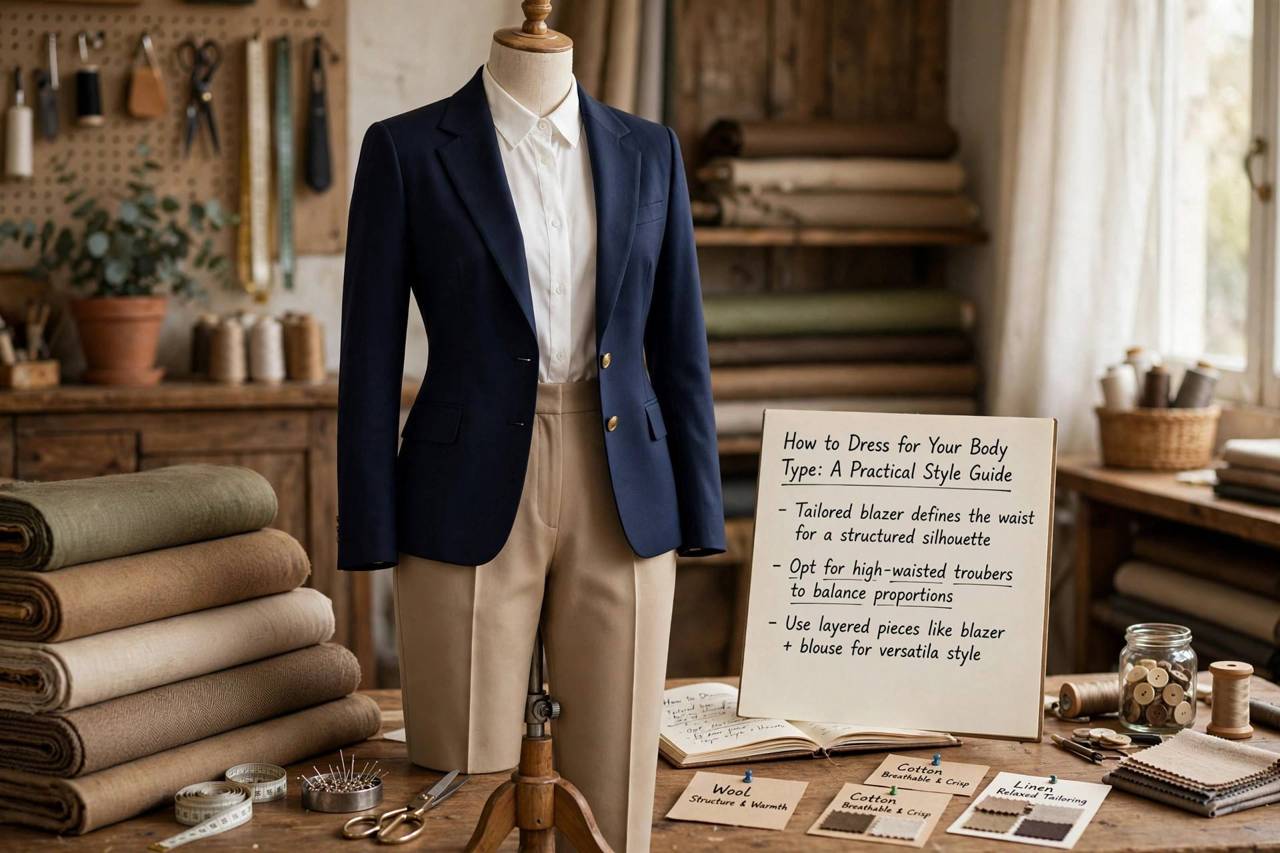
Rectangle shapes have a wonderful advantage: most structured clothing hangs beautifully on a straighter frame. The goal is usually creating the illusion of curves.
Peplum tops, belted dresses, and anything with ruching or draping at the waist create definition where nature didn’t. Layering — a jacket over a top over a camisole — adds dimension. Wide-leg trousers and full skirts add volume at the hip, balancing the shoulders. Ruffles, pleats, and texture are your allies: they create visual interest and the suggestion of curves.
Go easy on: straight shift dresses with no waist shaping (they emphasize straightness), and oversized everything at once — one relaxed piece is chic, head-to-toe oversized is shapeless.
Dressing an Inverted Triangle Shape
With broader shoulders and a slimmer lower half, the aim is softening the shoulder line and adding fullness below.
V-necks and scoop necks break up a broad shoulder line beautifully. A-line skirts, wide-leg trousers, and anything with volume at the hip balance the silhouette. Soft, draping fabrics on top beat stiff, structured ones — a fluid blouse flatters where a sharp-shouldered blazer might emphasize width.
Be careful with: shoulder pads and puff sleeves (they add width where you want less), halter necks (they draw every eye to the shoulders), and skinny bottoms paired with bulky tops — the imbalance exaggerates rather than flatters.
Building a Wardrobe That Works
Knowing your shape is step one. Step two is building a closet where everything works together — which is where most people go wrong by buying random “flattering” pieces that don’t coordinate.
Start with a foundation of neutrals in cuts you know work: the trouser shape that loves you, the neckline that never fails, the jacket length that’s always right. Then add personality through color, print, and accessories. A wardrobe of ten pieces that all work together beats thirty pieces that don’t.
Invest in tailoring. Almost nothing fits perfectly off the rack — sleeves run long, waists gap, hems drag. A good tailor is the difference between “nice outfit” and “that looks made for you.” Budget for alterations the way you budget for the clothes themselves.
And build slowly. The women with the best style didn’t buy it in a weekend. They learned what works, replaced what doesn’t, and edited ruthlessly. Every piece in your closet should earn its place. If you haven’t worn it in a year and it doesn’t fit your shape strategy, let it go.
For a systematic approach to a smaller, harder-working wardrobe, our capsule wardrobe guide shows how to build a closet where every piece coordinates. And if you’re shopping for a specific occasion, choosing a wedding dress for your body type applies these same principles to the most important dress you’ll ever buy.
Frequently Asked Questions
How do I figure out my body type?
Stand in front of a mirror in fitted clothing and observe: where do you carry weight, where is your waist defined, and are your shoulders and hips balanced? Take your bust, waist, and hip measurements for a more objective read. Remember most women are a blend of two types — use the categories as a starting guide, not a strict label.
What is the most flattering dress style for most body types?
The wrap dress comes closest to a universal winner — it defines the waist, accommodates different bust sizes, and the V-neckline flatters most figures. A-line dresses are a close second, skimming the midsection and hips while showing the legs.
Can I wear something even if it’s “not for my body type”?
Absolutely. Body-type guidelines are starting points, not laws. If you love a piece and feel great in it, wear it — confidence is the most flattering thing anyone can wear. The guidelines just help you understand why something works or doesn’t, so you can adjust the fit, fabric, or styling.
Does dressing for your body type mean hiding your body?
No — it means understanding proportion and choosing cuts that show your shape at its best. The goal isn’t camouflage; it’s harmony. The best-dressed women aren’t hiding anything. They’re just wearing clothes that work with their bodies instead of against them.
How often should I reassess what flatters me?
Bodies change — with age, lifestyle, and life events — and that’s normal. Reassess whenever your clothes stop feeling right, rather than forcing old rules onto a new shape. The principles stay the same; the application evolves with you.