How to Layer Clothes for Winter Without Looking Bulky


There is a particular misery to being cold in an outfit you thought would be warm enough — the shiver that starts at your lower back and never quite leaves. Learning how to layer clothes for winter properly changes everything. It is not about piling on bulk until you cannot move your arms; it is a system, refined over decades by mountaineers and adopted by anyone who dresses well in cold cities. Three layers, each with a job, chosen in the right fabrics. Master the logic once and you will stay warm in anything from a damp November to a proper January freeze, and you will look sharper doing it.

The Three-Layer System, Explained
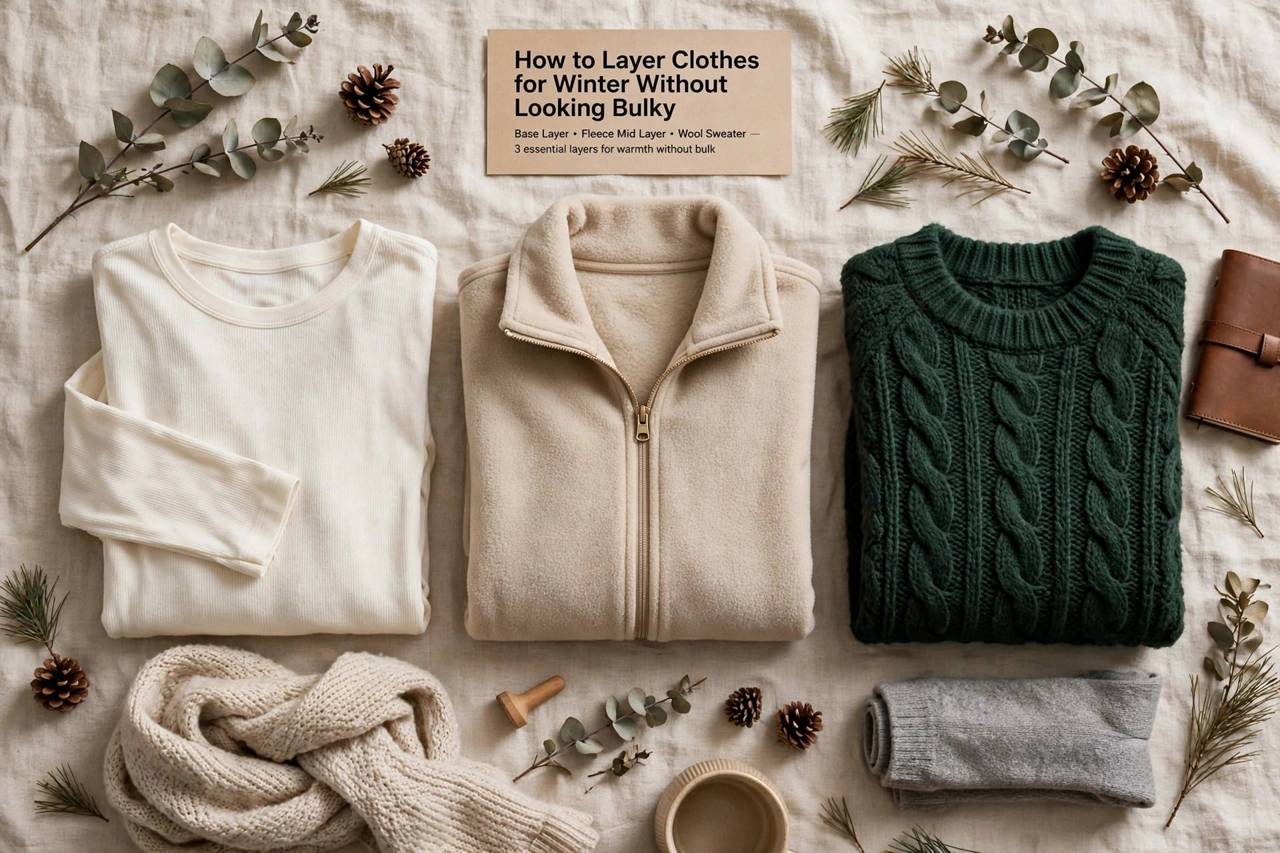
Every effective winter outfit follows the same architecture. The base layer sits against your skin and manages moisture. The mid layer traps warm air around your body. The outer layer blocks wind and rain. Get all three right and you can handle serious cold in surprisingly slim clothing; get one wrong — usually the base — and no amount of bulk on top will save you. Think of it like a building: insulation means nothing if the walls leak. The beauty of the system is its adaptability. Peel the mid layer for a heated office, add a second mid layer for a long evening outdoors, swap the outer shell when rain turns to snow. Once you dress in systems instead of single garments, winter stops being a wardrobe problem.
Base Layers: The Foundation Most People Get Wrong
Your base layer’s job is to move sweat away from your skin, because damp skin loses heat frighteningly fast. Cotton is the classic mistake — it absorbs moisture and holds it, which is why the old outdoor saying goes “cotton kills.” Choose merino wool or synthetic performance fabrics instead. Merino regulates temperature, resists odor for days, and feels soft rather than scratchy; synthetics dry fastest and cost less. Fit should be close but not compression-tight, with no gaps at the wrists or waistband where cold air sneaks in. For everyday city winter, a merino long-sleeve top and leggings or long johns under trousers is transformative — invisible under clothes, decisive in comfort.
Mid Layers: Where the Warmth Lives
The mid layer’s job is insulation — trapping the warm air your body produces. Fleece is the workhorse: light, warm even when damp, and affordable. Down (or high-quality synthetic insulation) offers the best warmth-to-weight ratio for serious cold but loses effectiveness when soaked, so it suits dry cold best. Wool sweaters — chunky knits, merino crewnecks — insulate beautifully and look intentional rather than sporty. The key technique is using two thinner mid layers instead of one thick one on the coldest days; the air trapped between layers adds real warmth. A thin fleece under a wool sweater, for example, outperforms either one alone and still fits under a coat.
Outer Layers: Your Shield Against the Elements
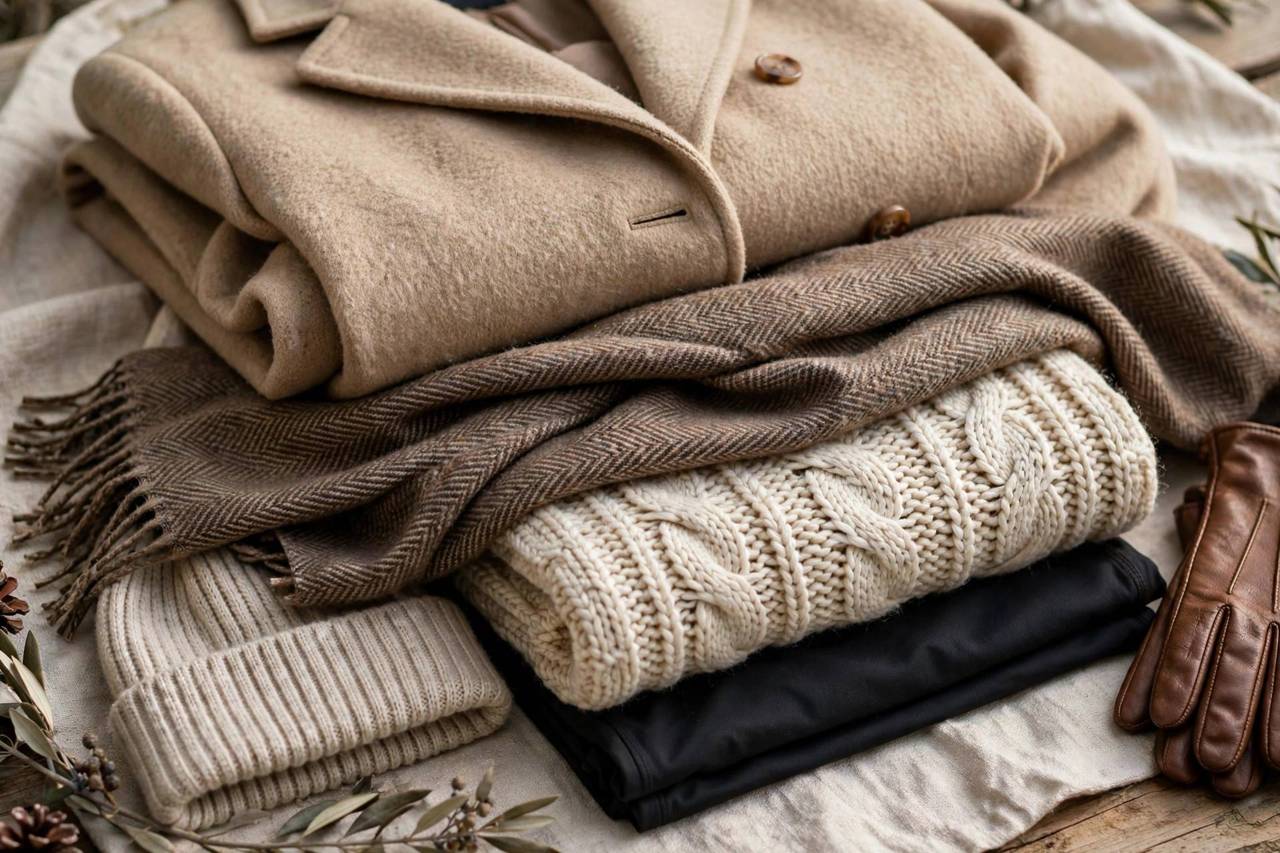
The outer layer blocks wind and precipitation — the two forces that strip warmth fastest. A proper winter coat should be windproof, water-resistant at minimum, and long enough to cover your hips (longer is warmer; thigh-length or knee-length coats make a dramatic difference). Down-filled parkas handle deep cold; wool overcoats handle city winters with more elegance but need a water-resistant treatment in wet climates. Check the details: a storm flap over the zipper, snug cuffs, and a collar or hood that actually closes around your neck. Fit matters here more than anywhere — your outer layer must close comfortably over everything beneath it, so try coats on wearing your real mid layers, not a t-shirt in a warm fitting room.
Fabrics That Work — and Ones to Avoid
Fabric choice separates warm outfits from cold ones more than brand names do. Wool (especially merino), down, fleece, and technical synthetics are your allies. Cotton, linen, and silk absorb moisture and chill you — fine for a heated dinner, terrible for a winter walk. Denim is notoriously cold; jeans in freezing wind are a form of self-punishment. Leather looks wonderful but insulates poorly unless lined. For socks, wool blends beat cotton decisively — cold feet ruin everything. One underrated move: silk or synthetic liner socks under wool socks for truly frigid days. Your extremities lose heat fastest, so fabric upgrades at the socks, gloves, and hat level pay outsized dividends.
Layering Without the Bulk: The Style Tricks
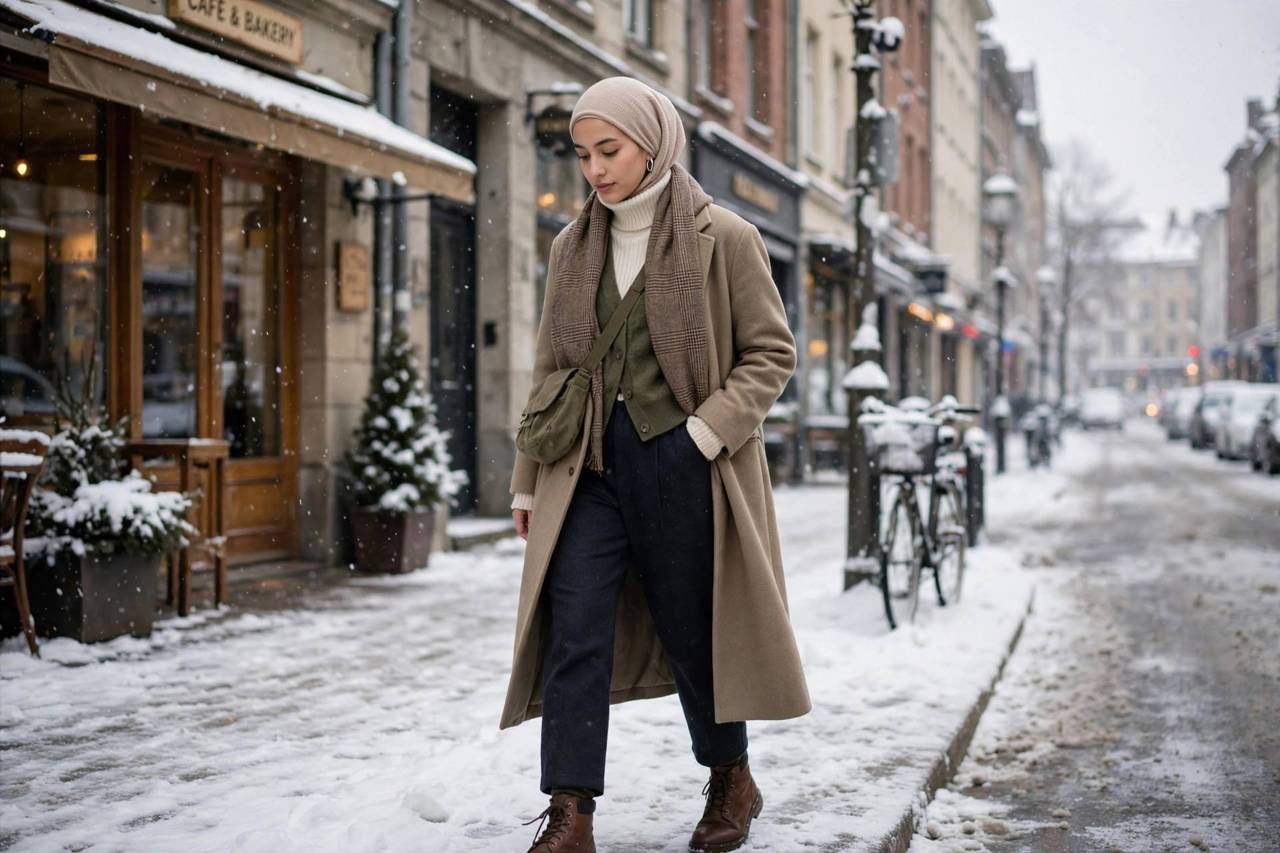
Warmth and elegance are not enemies; bulk is usually a sign of wrong fabrics rather than too many layers. Keep each layer thin and fitted — three slim layers beat one puffy one. Let textures do the visual work: a ribbed turtleneck under a smooth blazer under a textured wool coat looks deliberate. Play with visible layering at the neckline and cuffs — a shirt collar over a sweater, a scarf bridging coat and sweater — because these details signal intention. Monochrome or tonal color schemes (charcoal, navy, cream, camel) make layered outfits look cohesive instantly. And remember proportion: if the coat is long and clean, slimmer layers underneath keep the silhouette sharp rather than marshmallow-like.
Accessories: The 30 Percent You Are Forgetting
You can lose a remarkable amount of heat through an uncovered head, neck, and hands — accessories are not decoration in winter, they are insulation. A wool or fleece-lined hat, a proper scarf (wrapped, not draped, with no gap at the collar), insulated gloves or mittens (mittens are warmer than gloves), and wool socks transform an outfit’s performance. A scarf alone can make a light coat viable in temperatures ten degrees colder. Keep a spare pair of gloves and a compact umbrella or packable rain shell in your bag; winter weather turns fast. These small pieces also carry your style — the scarf, hat, and gloves are what people actually see, so choose them with the care you give the coat.
Building a Winter Wardrobe That Lasts
You do not need a closet full of winter clothes — you need the right few pieces in the right fabrics. A strong starter set: two merino base tops, one mid-weight fleece, one wool sweater, one serious winter coat, one pair of insulated waterproof boots, wool socks, hat, scarf, and gloves. Choose a coherent color palette so everything layers together, and invest most in the coat and boots since they do the heaviest work and last longest with care. This minimalist approach overlaps beautifully with a considered wardrobe philosophy — our capsule wardrobe guide shows how fewer, better pieces simplify every season. Buy once, maintain well, and winter becomes something you dress for with pleasure rather than dread.
How to Layer Clothes for Winter: Five Outfit Formulas
Formulas remove morning guesswork. Formula one, the office commute: merino long-sleeve base, fine-gauge wool sweater, tailored wool overcoat, leather gloves, scarf. Formula two, the long outdoor day: synthetic base layer, fleece mid, insulated parka, wool socks, insulated boots, hat and mittens. Formula three, the evening out: silk-blend base, cashmere sweater, long dress coat, heeled boots — warmth without bulk. Formula four, the weekend errands: thermal top, hoodie or chunky knit, puffer jacket, jeans (with thermal leggings beneath when it is truly cold), sneakers or boots. Formula five, the deep freeze (below -15C): double base layers, fleece plus down mid layers, expedition parka, balaclava or neck gaiter, two pairs of socks. Memorize the formulas that match your life and winter dressing becomes automatic.
Caring for Winter Fabrics
Good winter pieces last decades with basic care. Wash merino wool cold and infrequently — it resists odor, so airing often beats washing. Never wring wool; press water out in a towel and dry flat. Down jackets need occasional washing with proper detergent and thorough drying with dryer balls to restore loft. Reproof water-resistant shells yearly with a spray-on treatment. Store winter coats on wide hangers, never crammed, and keep cedar or lavender with woolens to deter moths. A little maintenance protects a significant investment and keeps every layer performing as designed.
Winter Layering Mistakes Everyone Makes
Even experienced winter dressers slip up. Mistake one: the cotton base layer — comfortable indoors, a cold trap outdoors; switch to merino or synthetic. Mistake two: a coat that barely closes over a sweater, compressing the insulation and actually making you colder; size outerwear for your real layers. Mistake three: neglecting the neck — a gap between scarf and collar leaks heat all day; wrap properly or wear a neck gaiter. Mistake four: cotton socks, the foot version of mistake one; wool blends are non-negotiable. Mistake five: overdressing for the commute and arriving sweaty, then freezing when the sweat cools — vent or shed a layer before you overheat. Mistake six: forgetting that wind cuts through knit-only outfits; you need a windproof shell no matter how good the sweater. Fix these six and most “I am always cold” complaints disappear.
Traveling in Winter: Layering on the Move
Winter travel rewards the layering system more than anywhere else. Wear your bulkiest pieces — boots, heavy coat — on the plane to save luggage space. Pack base and mid layers, which compress small, and plan to do laundry rather than packing fourteen outfits. A packable down layer is the traveler’s secret weapon: it stuffs into its own pocket and handles everything from chilly terminals to mountain towns. Keep a compact umbrella and a warm hat in your day bag always; weather turns fastest when you are far from your hotel. And dress for the destination’s indoors too — overheated museums and restaurants mean you will strip to your base layer, so make it something you are happy to be seen in.
Frequently Asked Questions
How many layers do I need for winter?
Three is the standard system: a moisture-wicking base layer, an insulating mid layer, and a windproof outer layer. Add a second mid layer for extreme cold, and remove layers as conditions or indoor heating dictate.
What is the warmest base layer fabric?
Merino wool is the best all-rounder — warm, breathable, and odor-resistant. Synthetic performance fabrics dry faster and cost less. Avoid cotton as a base layer in cold weather because it holds moisture against your skin.
How do I layer clothes without looking bulky?
Use thin, fitted layers in the right fabrics instead of one thick layer. Tonal colors, visible layering details at the neckline, and a well-fitted outer coat keep the silhouette clean.
Should winter layers be tight or loose?
Base layers should be close-fitting with no air gaps; mid layers comfortably fitted; the outer layer roomy enough to close over everything. Slight air space between mid layers actually adds insulation.
What should I wear for winter commuting?
A merino base, a sweater or fleece mid layer, a knee-length windproof coat, wool socks, and proper accessories (hat, scarf, gloves). Choose pieces that transition into a heated office — you will shed the outer layers indoors.