What Is a Capsule Wardrobe for Men? The Essential Guide

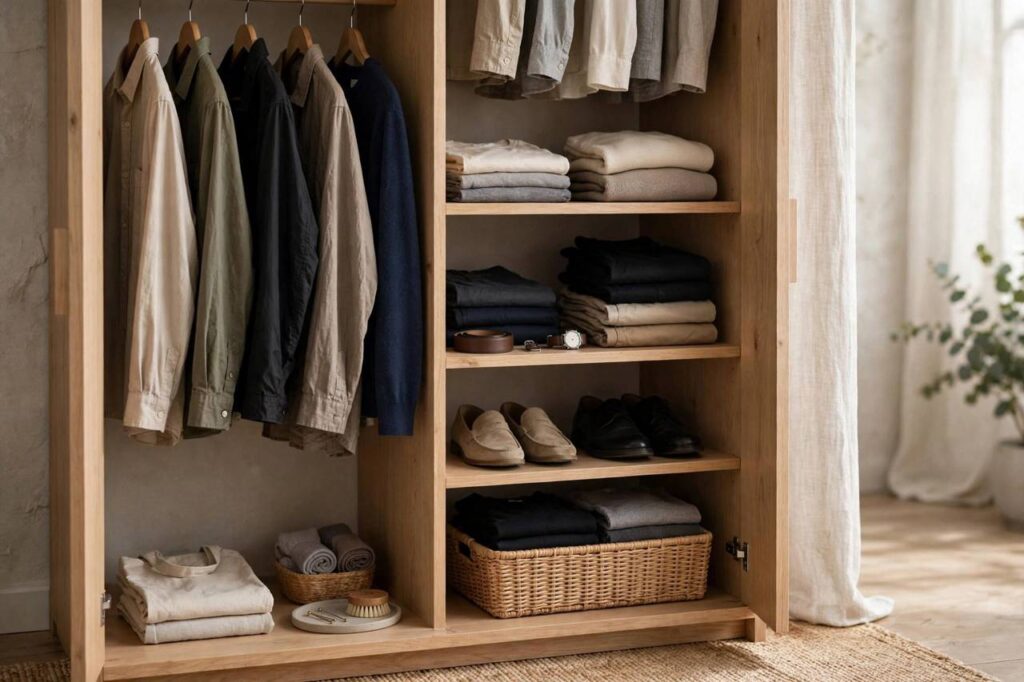
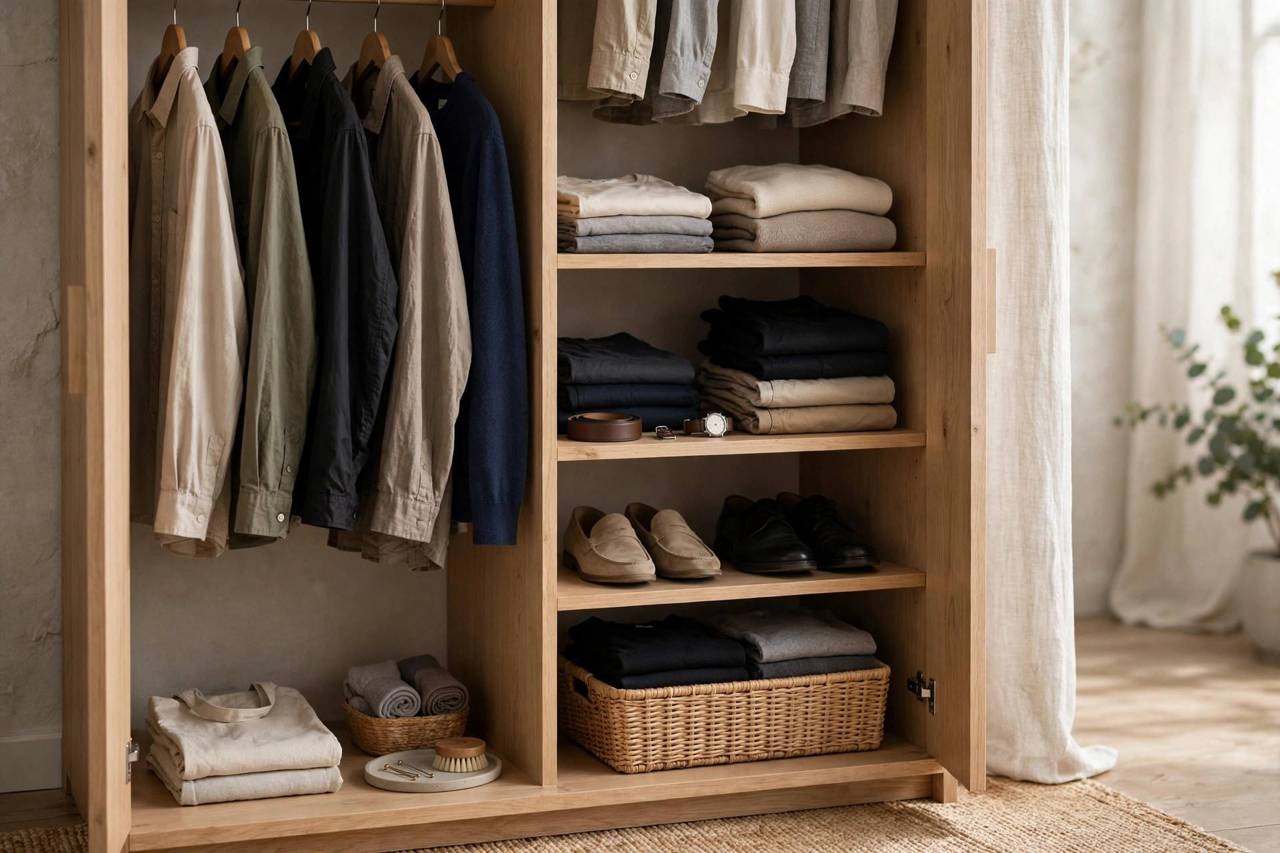
Open the average man’s closet and you’ll find a paradox: dozens of items, nothing to wear. Shirts that don’t match any trousers. Trousers that match nothing at all. The capsule wardrobe for men is the elegant solution to this very modern problem — a small, deliberate collection of versatile pieces that all work together, so getting dressed becomes effortless instead of exasperating. But what is a capsule wardrobe for men, exactly, and how do you build one that actually suits your life? Let’s get precise.
The concept is simple: 25 to 40 pieces (including shoes, excluding underwear and workout gear) chosen in a coordinated palette, each one earning its place by pairing with nearly everything else. The result is a wardrobe where almost any combination works — which means fewer decisions, less clutter, and, counterintuitively, better style.
What Is a Capsule Wardrobe for Men? The Philosophy
A capsule wardrobe is not minimalism as aesthetic suffering. It isn’t about owning three shirts and feeling virtuous. It’s about curation: every piece deliberate, every piece compatible, every piece worn often. The average garment in a conventional wardrobe is worn a handful of times; in a capsule, each piece is worn dozens of times per year. That changes the economics completely — when a coat will be worn two hundred times, investing in a good one stops being extravagance and starts being arithmetic.
The philosophy has three pillars. First, versatility over variety: a navy blazer that works with jeans, chinos, and wool trousers beats three statement jackets that each work with one outfit. Second, fit over fashion: a well-fitting plain shirt out-dresses a poorly fitting trendy one every single time. Third, cohesion over collection: the wardrobe is designed as a system, not accumulated as a series of impulse purchases.
None of this means boring. A capsule done well has personality — it just expresses it through texture, fit, and a few considered accents rather than through novelty. Think of it as the difference between a sentence and a pile of words: fewer elements, more meaning.
The Color Palette: Where It All Begins
Every capsule starts with color, because color is what makes pieces interchangeable. The classic men’s capsule palette is built on neutrals: navy, charcoal, grey, white, black, olive, tan, and brown. These colors all harmonize with each other, which is the entire trick — when everything is in the same family, everything matches.
Choose two or three “base” neutrals that dominate (navy and grey are the most forgiving starting point for most men), one or two secondary neutrals (olive, tan), and one accent color for personality — burgundy, forest green, or a muted rust. The accent appears sparingly: a sweater, a pair of socks, a pocket square. It’s the difference between a wardrobe with character and a wardrobe in witness protection.
Patterns deserve a note of caution. In a small wardrobe, loud patterns are expensive — a boldly patterned shirt pairs with far fewer things than a solid one. Keep patterns subtle and classic: fine stripes, small checks, subtle textures. One or two patterned pieces per capsule is plenty; let solids do the work.
The Essential Pieces
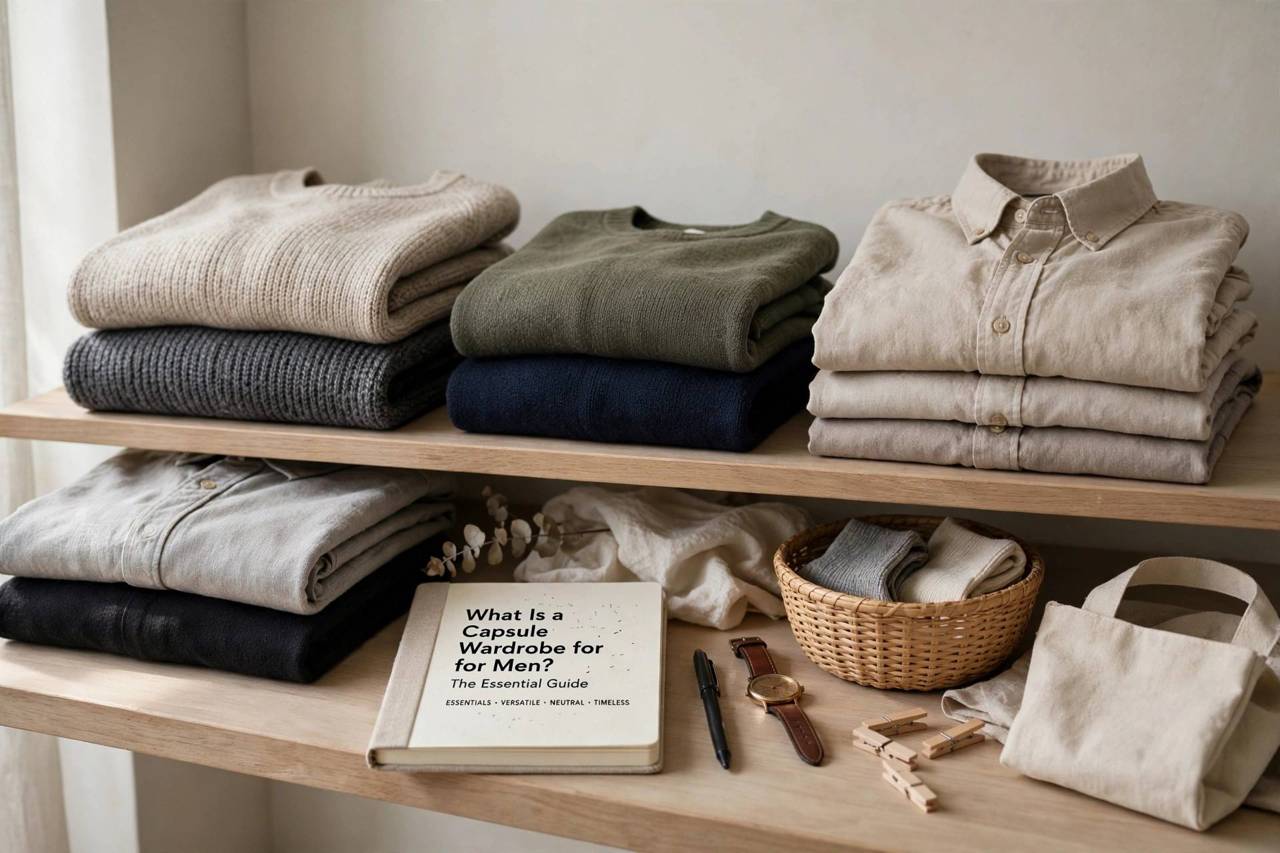
Here’s the foundation. Adjust quantities to your life — an office worker needs more shirting than a freelancer — but these categories cover nearly every man:
Tops: 4–5 well-fitting t-shirts (white, grey, navy, black), 3–4 casual button-downs (oxford cloth in white and light blue is the workhorse), 2–3 dress shirts if your life requires them. Knitwear: 2–3 sweaters — a crewneck in navy or charcoal, something in merino for layering, and one with texture or a subtle pattern for interest. Bottoms: 2 pairs of dark jeans (no distressing, proper fit), 2 pairs of chinos (tan and olive or navy), 1 pair of wool trousers for occasions that require them.
Outerwear: This is where men should invest. One tailored wool coat or overcoat, one versatile jacket (a Harrington, a bomber in a dark neutral, or a field jacket), and one proper rain layer. Three outerwear pieces, chosen well, cover every weather and every level of formality you’ll encounter. Shoes: white leather sneakers, brown leather boots or derbies, and one dress shoe if needed. Shoes anchor outfits; cheap shoes undermine everything above them.
The finishing layer: one navy blazer — unstructured, in wool or a wool blend — is the single highest-leverage item in a men’s capsule. It dresses up jeans and a t-shirt, dresses down wool trousers, and works in every season. If you buy one thing from this entire guide, make it this. For a broader look at the concept across wardrobes, our capsule wardrobe guide covers the foundations in more depth.
Building Yours: The Practical Method
Don’t throw everything out and start over — that’s how people end up with a worse wardrobe and an empty wallet. Instead, audit what you own. Pull everything out, and sort into three piles: pieces you wear constantly (these are your capsule’s core), pieces you like but rarely wear (usually a fit or coordination problem), and pieces you never wear (donate or sell without guilt).
You’ll likely discover you already own half a capsule — most men do. The gaps are usually predictable: the versatile layer (blazer, quality knitwear), shoes that aren’t sneakers, and trousers that aren’t jeans. Fill gaps deliberately, one piece at a time, buying the best quality you can afford for high-rotation items. A useful rule: cost per wear. A $300 coat worn 150 times costs $2 per wear. A $60 trendy jacket worn twice costs $30 per wear. The “expensive” coat is cheaper.
Fit is the step men skip and shouldn’t. Budget for a tailor — hemming trousers, taking in a blazer’s waist, shortening sleeves. Off-the-rack clothes are cut for an average body that doesn’t exist; twenty dollars of tailoring transforms a $100 shirt into something that looks like $300. This single habit separates men who look “put together” from men who just own nice things.
Maintaining It: The One-In-One-Out Rule
A capsule only stays a capsule if you defend it. The rule is simple: something new comes in, something old goes out. This isn’t asceticism — it’s quality control. It forces every purchase to justify itself against something you already own and presumably like.
Seasonal rotation keeps things fresh without expansion. Store off-season pieces properly (clean, folded or hung, in breathable bags — never plastic for wool), and the “new” wardrobe you unpack each season feels like shopping without spending. Many men find their capsule naturally splits into a warm-weather and cool-weather version sharing a core of year-round pieces.
Finally, care for what you own. Good shoes get trees and polish. Knitwear gets folded, never hung. Shirts get washed cold and hung to dry. A capsule’s pieces work hard; maintenance is how they keep working for years instead of seasons. The man with fifteen well-kept pieces always looks better than the man with fifty neglected ones.
Do an honest annual cull. Even a disciplined capsule accumulates drift — the shirt that shrank slightly, the shoes that never quite broke in, the sweater that’s pilled beyond rescue. Once a year, try everything on and be ruthless. Anything that doesn’t fit, flatter, or function leaves. The empty hanger is an invitation to find something better, not a failure of the system. Most men find the cull gets easier every year — decisiveness is a muscle too. Stronger every year, if you exercise it.
Capsule Wardrobe Mistakes to Avoid
Men building their first capsule tend to make the same handful of errors, and they’re all avoidable. The most common: buying everything at once. A capsule built in a single shopping spree usually reflects a mood, not a wardrobe — you’ll end up with five things you love and fifteen you tolerate. Build over two to three months, living with each addition, and the wardrobe assembles itself around your actual life.
Second: confusing basics with boring. There’s a version of the capsule wardrobe that’s just grey t-shirts and black jeans — technically functional, spiritually dead. The capsule needs your personality to work: the textured knit, the interesting boots, the watch that isn’t like everyone else’s. Minimalism is a framework for expressing taste, not a substitute for having any.
Third: ignoring your actual life. The man who works from home in athleisure doesn’t need three dress shirts; the man who attends weddings monthly needs more than one blazer. Audit your last month — what did you actually wear, and where did you feel underdressed or overdressed? The capsule should be weighted toward your real routines, not an imagined more formal version of yourself.
Fourth: skimping on the high-rotation items. The t-shirts you wear three times a week, the shoes you live in, the coat that’s on your back daily — these deserve the best quality you can afford, because their cost per wear will be pennies. Save the economizing for the pieces you wear monthly.
Frequently Asked Questions
How many items should be in a men’s capsule wardrobe?
Most men’s capsules run 25–40 pieces including shoes and outerwear, excluding underwear, socks, and workout clothes. The exact number matters less than the principle: every piece should pair with nearly everything else.
What colors work best for a men’s capsule wardrobe?
Navy, charcoal, grey, white, black, olive, tan, and brown form the classic palette. Start with two or three base neutrals, add one or two secondary neutrals, and include a single accent color like burgundy or forest green for personality.
Is a capsule wardrobe expensive to build?
It can actually save money. Because each piece is worn far more often, the cost per wear drops dramatically — which justifies investing in quality for core items. Build gradually, filling gaps one piece at a time, rather than buying everything at once.
Can a capsule wardrobe work for formal offices?
Yes — just weight it toward shirting, wool trousers, blazers, and dress shoes. The capsule principle is about coordination and curation, not casualness; a formal capsule simply uses formal building blocks.
How often should I update my capsule wardrobe?
Review it seasonally: retire worn-out pieces, reassess gaps, and rotate for weather. With the one-in-one-out rule, the wardrobe evolves gradually without ever ballooning back into clutter.