How to Style Oversized Clothes Without Looking Swamped

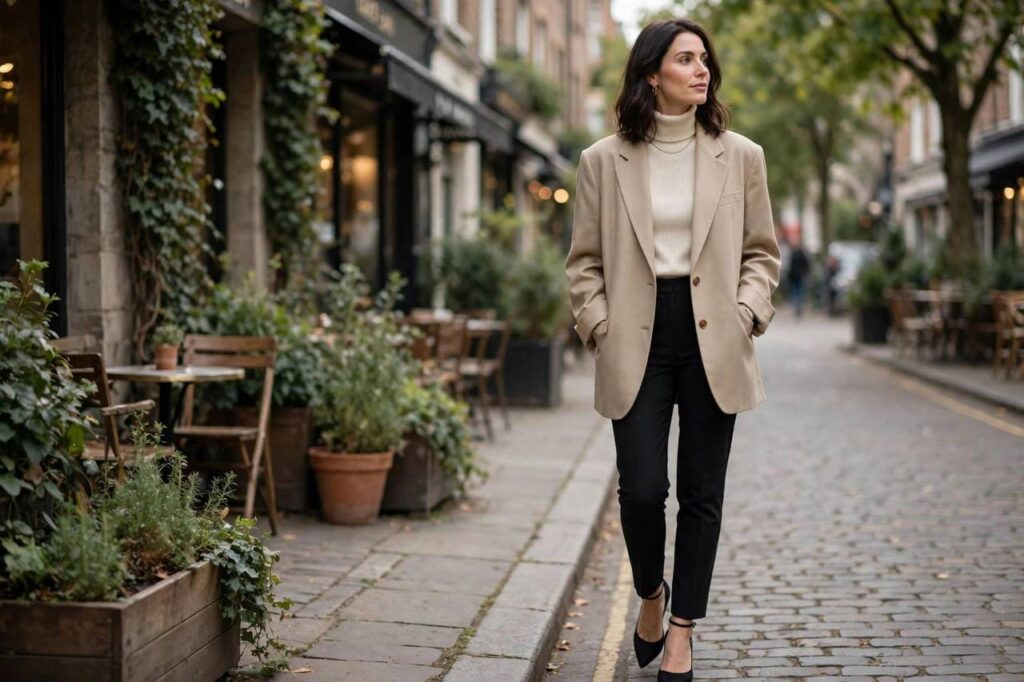
Oversized clothing is a paradox. Done well, it looks effortless, modern, and quietly luxurious. Done badly, it looks like you got dressed in the dark from someone else’s closet. The difference between the two is rarely the clothes themselves. Learning how to style oversized clothes is really about understanding proportion, and once you see the logic, the whole trend becomes easy to wear.
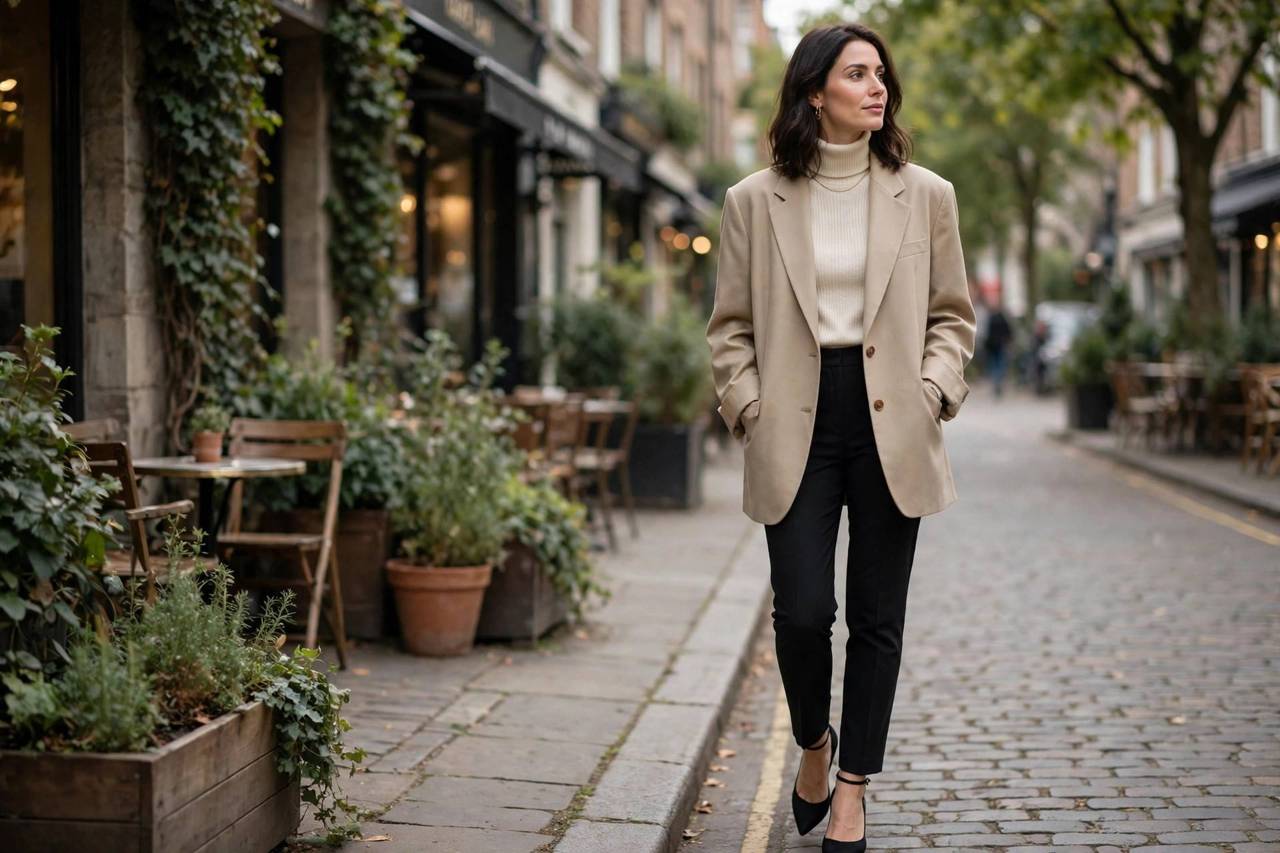
The golden rule is simple: one oversized piece per outfit. An oversized blazer with slim trousers. A slouchy sweater with a neat skirt. Wide-leg trousers with a fitted top. The oversized item is the statement. Everything else is the frame. Break this rule only when you truly know what you are doing, and even then, sparingly.
The Proportion Formula That Never Fails
Think of every outfit as a balance scale. Volume on top demands sleekness below, and volume below demands structure on top. An oversized shirt tucked into tailored jeans works because the jeans anchor the look. An oversized coat over a simple dress works because the dress underneath keeps the silhouette clean. When both halves are oversized, the eye has nowhere to rest, and the outfit reads as shapeless.
Showing a little skin, strategically, helps enormously. Rolled sleeves reveal the wrist, which is the slimmest part of the arm. A slightly cropped oversized sweater shows a flash of waistband. An open collar frames the face. You are not dressing to reveal. You are giving the outfit reference points so the volume looks intentional instead of accidental.
Fabric matters more with oversized pieces than with fitted ones. A slouchy blazer in good wool drapes. The same cut in stiff cheap fabric boxes out and adds visual weight. When shopping oversized, touch everything. If the fabric does not fall beautifully on the hanger, it will not fall beautifully on you.
How to Style Oversized Blazers and Jackets
The oversized blazer is the gateway piece, and it is the easiest to get right. Wear it with straight-leg or slim trousers, a simple top underneath, and either heels or clean sneakers depending on the mood. Push the sleeves up slightly to show the wrist. Leave it open or close a single button at the waist, never all of them, which defeats the relaxed line.
For evening, an oversized blazer over a slip dress is a classic for a reason. The structure of the blazer against the softness of the dress creates contrast, and the combination works for dinners, events, and nights when you want to look polished without trying visibly hard. Add one strong accessory, a bold earring or a structured bag, and stop there. Restraint is what keeps the look chic.
Oversized outerwear follows the same logic on a larger scale. A big wool coat looks best over streamlined layers. Keep what is underneath simple and let the coat be the outfit. This is the formula behind the most memorable red carpet looks of recent years, where stars pair dramatic outerwear with minimal bases and let proportion do the talking.
Oversized Sweaters, Shirts, and Knitwear
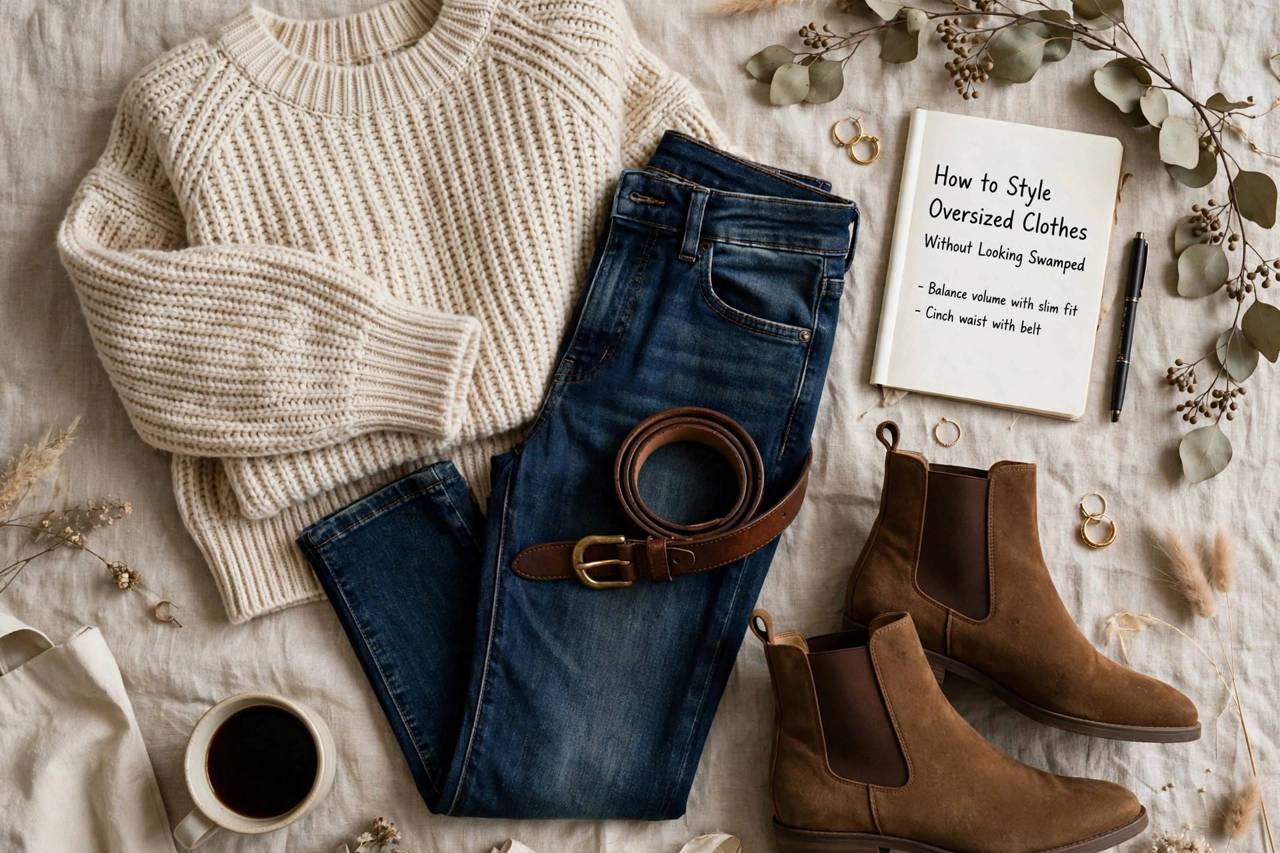
Chunky oversized sweaters are a cold-weather gift, but they need shaping. The half-tuck is your best friend: tuck just the front of the sweater into jeans or a skirt to define the waist without losing the relaxed feel. Alternatively, add a belt over the sweater at your natural waist. It sounds counterintuitive with knitwear, but it transforms the silhouette instantly.
With oversized shirts, the styling options multiply. Wear one open over a camisole as a light jacket. Tie the front in a loose knot with high-waisted trousers. Or go full shirt-dress with bare legs and boots, adding a belt to keep it from reading as a nightshirt. An oversized white shirt is one of the hardest-working pieces any wardrobe can hold.
Layering is where oversized knitwear truly shines. A long slouchy cardigan over a fitted turtleneck, a big scarf over a simple coat, a vest over an oversized shirt. Each layer adds depth without adding bulk at the wrong places. The trick is varying the lengths so each layer peeks out from the next, creating a deliberate cascade instead of a lump.
Wide-Leg Trousers and Oversized Bottoms
Volume on the bottom half follows the mirror image of the rule: keep the top fitted or tucked. Wide-leg trousers with a slim sweater or a tucked-in blouse is one of the most flattering combinations in fashion, because the long line of the trouser elongates the leg while the fitted top keeps the waist defined.
Hem length is critical. Wide-leg trousers should just graze the top of your shoe. Too long and they drag and look sloppy. Too short and they chop the leg line. If you find a perfect pair that needs hemming, it is worth the tailor’s fee. Fit at the hem makes or breaks the whole look.
Shoes change the attitude completely. Heels or pointed flats sharpen wide legs for evening. Sneakers or loafers keep them casual for day. The trousers stay the same. The shoe decides the occasion. This versatility is why wide-leg trousers earn their place in a capsule wardrobe, where every piece must work three ways.
Accessories: The Finishing Touch
Oversized outfits need deliberate accessories because the clothes themselves are quiet. A structured handbag contrasts beautifully with slouchy clothing. It adds architecture where the outfit has softness. The same logic applies to shoes: a clean, defined shoe grounds an outfit that is all drape.
Jewelry should be visible. Delicate pieces disappear against big silhouettes, so go slightly bolder: a cuff bracelet, statement earrings, a layered necklace that sits above the neckline. One or two strong pieces beat five small ones that nobody can see, every time.
Watch how celebrities handle this on the street. The best celebrity street style with oversized pieces almost always includes one polished element, great sunglasses, a luxury bag, perfect hair, that signals intention. Borrow that trick. Looking effortless takes exactly one deliberate effort.
Common Mistakes to Avoid
The most common mistake is sizing up in a regular cut instead of buying a true oversized design. A regular blazer in two sizes too big has the wrong shoulder placement and sleeve proportions. A blazer designed to be oversized has dropped shoulders and adjusted proportions built in. Buy the oversized version, not the bigger size.
The second mistake is ignoring tailoring. Oversized does not mean unfinished. Sleeves that swallow your hands and hems that pool on the floor look like a mistake, not a style. A quick trip to the tailor to adjust sleeve length or hem turns an okay oversized piece into a perfect one.
Finally, do not wear oversized everything to hide. The trend works because of confidence and proportion, not because it conceals. Wear the volume where you love it, keep the rest clean, and the result looks like fashion instead of camouflage.
How to Style Oversized Clothes for Different Seasons
Oversized dressing adapts beautifully to the calendar once you adjust fabrics and layers. In spring, an oversized trench or a slouchy blazer over a simple dress handles unpredictable weather with elegance. Light knits replace heavy ones, and the half-tuck keeps everything looking intentional as temperatures swing through the day.
Summer is the hardest season for oversized clothes, because volume plus heat can feel overwhelming. The answer is breathable fabrics and strategic skin. An oversized linen shirt worn open over a camisole, wide-leg linen trousers with a fitted tank, a big cotton shirt as a beach cover-up: the volume stays, but the fabrics let air move. Keep the palette light, since dark oversized pieces absorb heat and look heavier in bright sun.
Fall is oversized season at its best. Chunky sweaters, big scarves, oversized coats over layers: the weather finally matches the aesthetic. This is when the layering techniques shine, with each piece visible in the cascade. A long coat over a slouchy sweater over slim jeans is the uniform of the season for a reason.
Winter demands that oversized outerwear actually perform. A big wool coat needs to close properly against the cold, so check that the cut allows for layers underneath without pulling. Oversized does not mean drafty. The coat should still meet at the front, and the sleeves should cover your wrists. Warmth first, silhouette second, and with the right coat you get both.
Before you leave the house, do the mirror check from a distance. Step back six feet and look at the whole silhouette, not the individual pieces. If the outfit reads as one intentional shape, you nailed it. If something looks off, it is almost always a proportion issue: tuck a little more, roll a sleeve, swap the shoe. Oversized dressing rewards this final glance more than any other style, because the difference between effortless and sloppy is decided in the last thirty seconds.
Frequently Asked Questions
Can short women wear oversized clothes?
Absolutely. The key is proportion: one oversized piece at a time, hems that hit at the right points, and shoes that elongate the leg. A cropped oversized jacket or a half-tucked slouchy sweater works beautifully on petite frames, especially with a heel or pointed flat.
How do I keep oversized clothes from looking sloppy?
Balance the volume with something fitted, show the wrists and ankles, choose fabrics that drape well, and add one polished accessory. Grooming matters too: neat hair and clean shoes signal that the looseness is deliberate.
Should oversized clothes be tailored?
Often yes. Buy the oversized design, then tailor the details: sleeve length, hem, and waist definition. True oversized cuts have the right proportions built in, but small adjustments make them look custom.
What shoes go best with oversized outfits?
Defined shoes ground slouchy clothes. Pointed flats, clean sneakers, ankle boots, and heels all work depending on the occasion. Avoid shoes that are themselves bulky unless the whole outfit is intentionally maximalist.
Can I wear oversized clothes to the office?
Yes, with structure. An oversized blazer over tailored trousers or a slouchy sweater with a pencil skirt reads as modern professional. Keep fabrics refined and the overall silhouette intentional, and it works in most business-casual workplaces. When in doubt, keep the fabrics elevated and the silhouette clean, and most dress codes will accommodate the look.