

Nobody dresses like a celebrity by accident — least of all celebrities. Every “effortless” street-style photo you’ve ever admired was the output of a system: a stylist, a tailor, a showroom relationship, and a budget most people will never see. I cover the business side of fame, and fashion is one of its most misunderstood machines.
So let’s decode how to dress like a celebrity honestly — what the system actually is, which parts you can replicate on a normal budget, and which parts are pure economics. Because the good news is: the most impactful 80% of celebrity style has nothing to do with money. The bad news is: the other 20% is the part you’re actually noticing.
Table of Contents
- The System: What “Celebrity Style” Actually Is
- Secret #1: Everything Is Tailored
- Secret #2: They Don’t Buy Most of It
- Secret #3: The Uniform Strategy
- Secret #4: Fit and Fabric Beat Logos
- Secret #5: Grooming Is Half the Outfit
- Building the Look on a Real Budget
- The Red-Carpet Formula (and Its Street-Style Cousin)
- Mistakes That Instantly Break the Illusion
- Frequently Asked Questions
The System: What “Celebrity Style” Actually Is
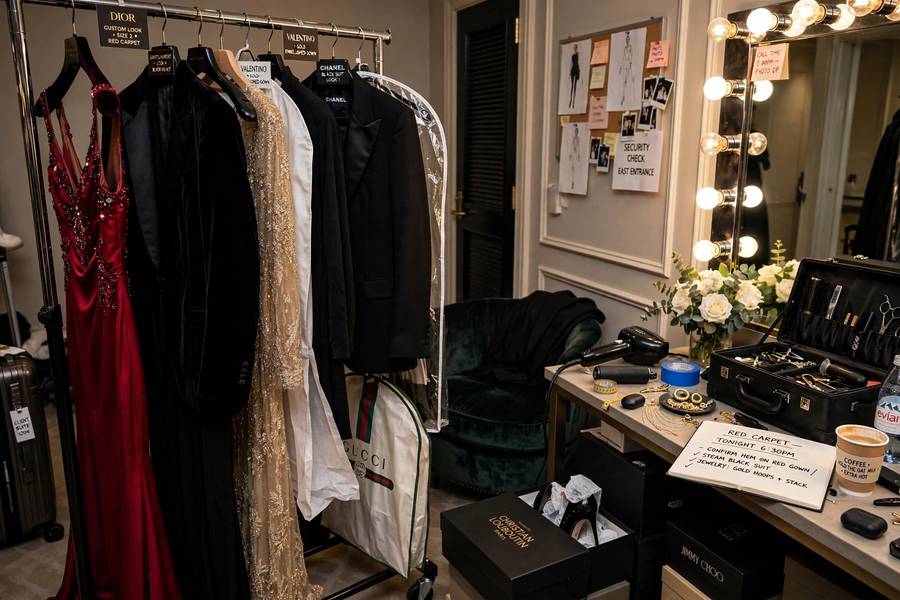
Celebrity style is a professional operation with four pillars:
- A stylist — the architect. A-list stylists pull from designer showrooms, build looks for specific events, and manage the star’s overall image direction. They think in narratives: what does this premiere, this talk show, this paparazzi walk communicate?
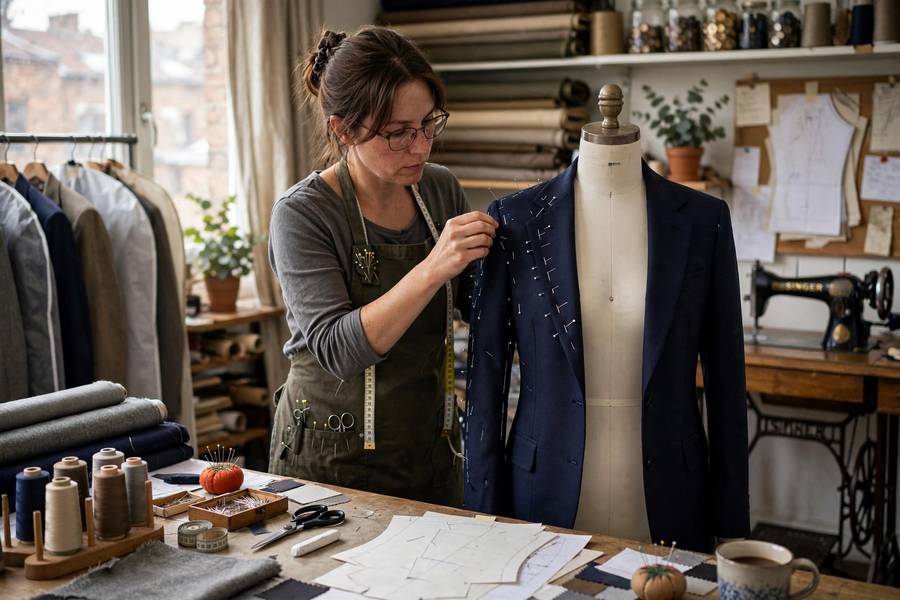
- A tailor — the secret weapon. More on this below; it’s the single highest-leverage element.
- Showroom access — the inventory. Stylists borrow samples directly from fashion houses. The clothes arrive, get worn once, go back.
- The glam team — hair and makeup, because an outfit is only as good as the head above it.
Understanding this matters because it reframes the goal. You’re not trying to “buy celebrity clothes.” You’re trying to replicate the decisions the system makes: fit, cohesion, intention, finish. Those decisions are free.
Secret #1: Everything Is Tailored
This is the single biggest open secret in celebrity style, and the one regular people underuse most.
That $40 blazer on the red carpet? It was a $400 blazer after the tailor. Or it was a $4,000 blazer that still got tailored — because even couture is cut for a sample size, not for a human being. Hemming trousers, taking in a waist, shortening sleeves, nipping a jacket: these $15–$50 alterations are what make clothes look expensive.
The rule: if it doesn’t fit off the rack (and it won’t — racks are built for averages), budget for the tailor the way you’d budget for the item. A $60 dress with $40 of tailoring looks better than a $300 dress worn as-bought. Every stylist knows this. Now you do too.
What to tailor first: trouser hems, jacket sleeves, dress waists, anything that gapes or pools. What not to bother with: cheap fast-fashion pieces with bad fabric — tailoring can’t fix material that looks cheap.
Secret #2: They Don’t Buy Most of It
The red-carpet gown wasn’t purchased. It was borrowed from the designer’s showroom, worn for four hours, and returned. Same for the watch, the bag, the shoes, often the jewelry. This is the loan system, and it’s the economic engine of celebrity fashion.
Why do brands lend? Because a photo of a star in their dress is worth more than any ad. This is celebrity endorsement in its purest form — except instead of a paid contract, it’s a mutually beneficial loan. The brand gets the photo; the star gets the look; the stylist gets the relationship.
What this means for you: stop comparing your closet to a borrowed inventory. The celebrity “owns” that outfit the way a museum owns a traveling exhibition — temporarily, for display. Your goal isn’t their inventory; it’s their decision quality with your inventory.
Secret #3: The Uniform Strategy
Look closely at the best-dressed celebrities off-duty and you’ll notice something: they’re not creative every day. They’re consistent. The great ones have a uniform.
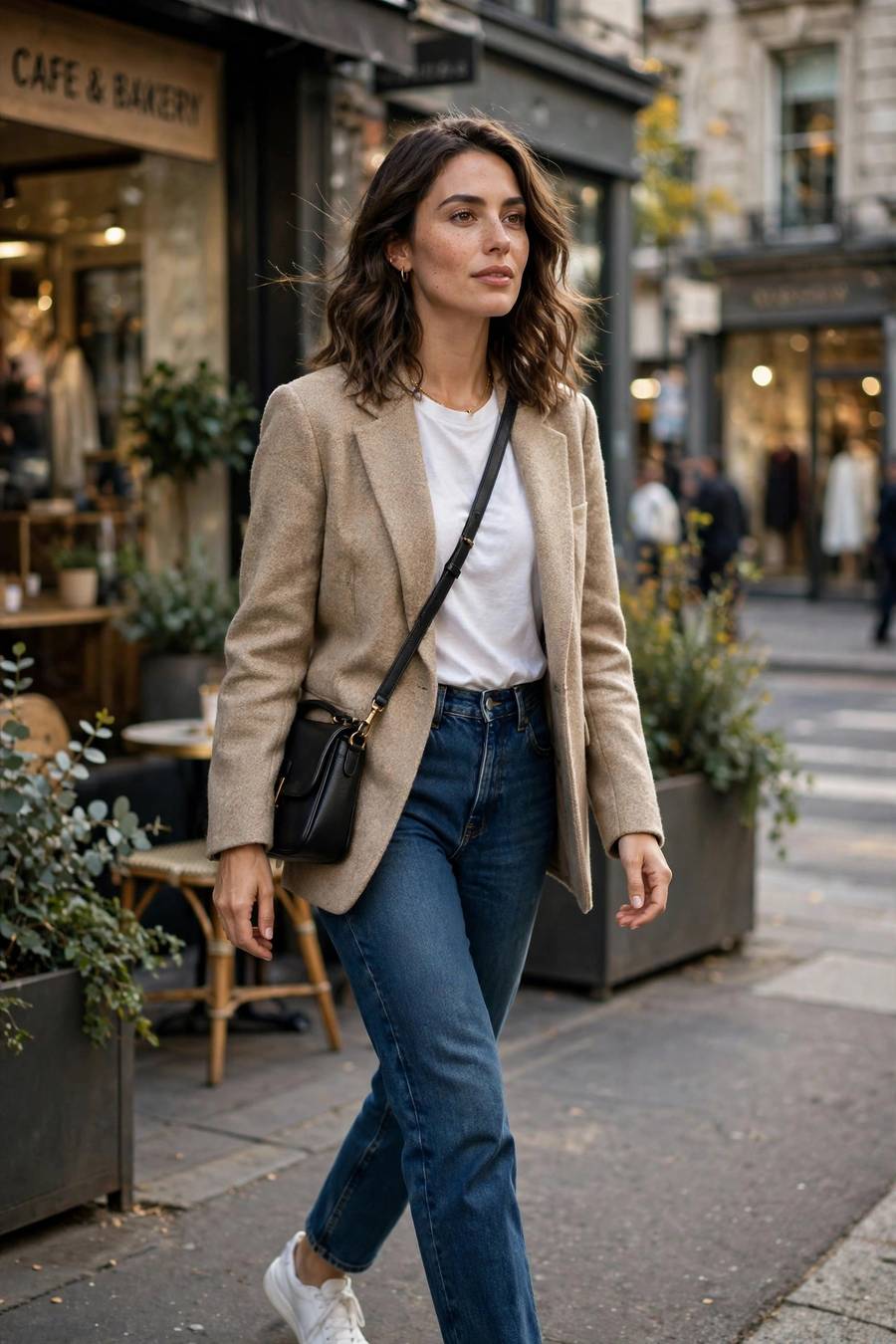
Think of the formulas: dark jeans, clean sneakers, fitted jacket. Or: monochrome tailoring, minimal jewelry, one great bag. Or: the all-black everything that never fails. The uniform works because it removes daily decision fatigue and guarantees a baseline of polish — the same reason stylists build “modules” for press tours.
Build yours: pick a silhouette that suits your body, a palette of 3–4 colors that suit your skin, and 2–3 outfit formulas you can assemble blindfolded. Invest the saved mental energy in fit and grooming. Consistency reads as style; randomness reads as laundry day.
The celebrities famous for “always looking good” aren’t trying harder each morning. They solved the problem once and repeat the solution.
Secret #4: Fit and Fabric Beat Logos
Here’s a test I love: cover the logos in any street-style photo. The outfits that still look good are the ones with great fit and good fabric. The ones that collapse without the logo were never outfits — they were receipts.
Celebrity stylists obsess over fabric because cameras are unforgiving: cheap polyester shines wrong under flash; good wool, silk, cotton, and linen photograph with depth. You don’t need designer fabric — you need honest fabric. A well-cut cotton shirt beats a logo-emblazoned synthetic one every time, on camera and off.
The hierarchy of what matters: 1. Fit (tailored to your body) 2. Fabric (natural fibers, good drape, no shine) 3. Condition (pressed, lint-free, shoes clean) 4. Cohesion (colors and formality levels agree with each other) 5. Brand (dead last — and often a negative if it’s loud)
Notice that four of the five are achievable at any budget. The stylist’s real skill isn’t spending — it’s ranking these correctly.
Secret #5: Grooming Is Half the Outfit
Ask any red-carpet photographer: the difference between “celebrity” and “person in nice clothes” is usually above the neck. Hair that’s maintained, skin that’s cared for, nails that are clean — these read as wealth and intention more reliably than any garment.
This is also the most democratic part of the system. A $15 haircut maintained every few weeks, clean nails, and basic skincare cost almost nothing and do enormous work. The celebrities with the most “effortless” style are typically the most disciplined about maintenance — it’s just invisible discipline.
Building the Look on a Real Budget
The practical playbook, stylist-approved logic at civilian prices:
Audit first. Pull everything out. Keep what fits well or can be tailored; donate the rest. Most people don’t need more clothes — they need fewer, better-fitting ones.
Buy the boring things well. A great white shirt, dark jeans that fit, a blazer, clean minimal sneakers or loafers, one good coat. These are the chassis of the uniform. Spend here; save on trends.
Tailor everything worth keeping. Find a local tailor (not a dry-cleaner’s rush service — a real alterations tailor). Build the relationship. This is the highest-ROI fashion spending that exists.
Learn your palette. Figure out which colors make you look alive (a stylist would call this color analysis; you can approximate it with honest mirror time). Then stop buying colors outside it.
One statement piece at a time. Celebrities let one item talk: the bag, the shoe, the jacket. Everything else supports. Two statement pieces argue; three is a costume.
Maintain ruthlessly. Lint roller, steamer, shoe care, pressed shirts. The “expensive” look is mostly a maintenance look.
The Red-Carpet Formula (and Its Street-Style Cousin)
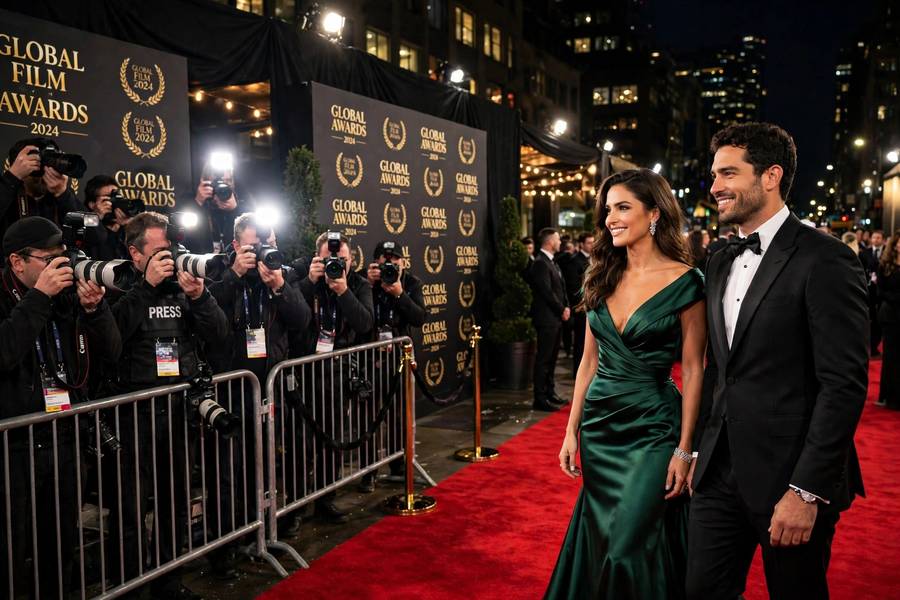
For events, the celebrity formula is: one strong silhouette + impeccable fit + minimal accessories + perfect grooming. It works because restraint photographs well and because confidence fills the gaps.
The street-style version: elevated basics + one interesting piece + clean finish. The “model off duty” look that launched a thousand Pinterest boards is really just this — leggings or jeans, a great coat, sunglasses, good hair. The coat does 70% of the work. (If you buy one thing this year, make it the coat.)
And behind both: the talent agent-managed image strategy. A star’s style evolution is rarely accidental — it’s timed to career phases. The edgy reinvention before the indie film, the polished classicism during awards season. Image is managed like a portfolio. Your version: dress for the room you want to be in, not just the room you’re in.
Mistakes That Instantly Break the Illusion
- Wearing the trend instead of the fit. If the oversized trend doesn’t suit your frame, it’s not fashion — it’s a tent.
- Too many logos. One is branding; three is a billboard. The best-dressed celebrities are often logo-free.
- Ignoring shoes. Stylists will tell you: people look at shoes first. Scuffed, worn-out shoes sink any outfit.
- Wrong formality mix. Sneakers with a suit can work; gym shoes with a suit cannot. The line is thinner than you think.
- Chasing someone else’s uniform. The goal is your best version, not a copy of someone with a different body, budget, and glam team.
Frequently Asked Questions
Focus on the free and cheap levers: get everything tailored ($15–$50 per alteration), build a consistent uniform of 2–3 outfit formulas, choose natural fabrics over logos, and maintain grooming ruthlessly. Fit and maintenance create 80% of the expensive look.
Usually not. Most red-carpet looks are borrowed from designer showrooms through the star’s stylist, worn once, and returned. The loan system benefits both sides: brands get priceless photos, stars get the look without the price tag.
Tailoring. Every celebrity outfit is altered to fit the wearer’s exact body — even couture. A $60 garment with $40 of tailoring looks more expensive than a $300 garment worn off the rack.
They follow a uniform strategy: a consistent silhouette, a limited color palette, elevated basics, and one interesting piece. Plus disciplined grooming and maintenance that reads as effortlessness.
Use celebrities as inspiration for principles (fit, palette, cohesion), not as templates to copy exactly. The best results come from adapting their decision-making — tailored fit, restrained accessories, consistent silhouette — to your own body, budget, and life.
Stylists are paid by the celebrity (or their team), typically per project or on retainer. The clothes themselves are usually loaned by brands seeking the publicity — the stylist’s relationships with showrooms are one of their most valuable professional assets.