
Let me be straight with you: the sit-up is the most famous ab exercise in the world, and it’s also one of the most misunderstood. I’ve watched countless people crank out hundreds of sloppy sit-ups and wonder why their core isn’t stronger and their back hurts.
Here’s my honest take as a trainer: sit-ups can work, but most people do them wrong, and there are usually better options. This guide covers proper form if you’re going to do them, the mistakes to avoid, and the alternatives I’d actually program first.
Table of Contents
- My Honest Take on Sit-Ups
- How to Do a Sit-Up Properly: Step by Step
- The 5 Mistakes Everyone Makes
- Sit-Ups vs. Crunches: What’s the Difference
- Are Sit-Ups Bad for Your Back
- Better Core Alternatives
- How to Program Core Work
- Frequently Asked Questions

My Honest Take on Sit-Ups
Before the how, the whether. Here’s where I land after years of training:
Sit-ups aren’t evil. They train trunk flexion through a full range of motion, which is a real function of your abs. Done well, by healthy people, in reasonable volumes, they’re fine.
But they’re overrated. The rectus abdominis (the “six-pack” muscle) is only one part of your core. Sit-ups barely touch the deep stabilizers (transverse abdominis), obliques get limited work, and the hip flexors often take over — which is the opposite of what most people want.
The back concern is real but nuanced. Repeated loaded spinal flexion isn’t great for everyone, especially with existing disc issues. But bodyweight sit-ups for a healthy person aren’t the spinal death sentence some claim. Context matters.
My actual recommendation: If you enjoy sit-ups and they don’t hurt, do them properly (below) as part of core training. But build your core around anti-movement exercises (planks, dead bugs, Pallof presses) first — they’re safer, more functional, and train the core’s real job: stabilizing, not just flexing.
How to Do a Sit-Up Properly: Step by Step
If you’re doing them, do them right:
-
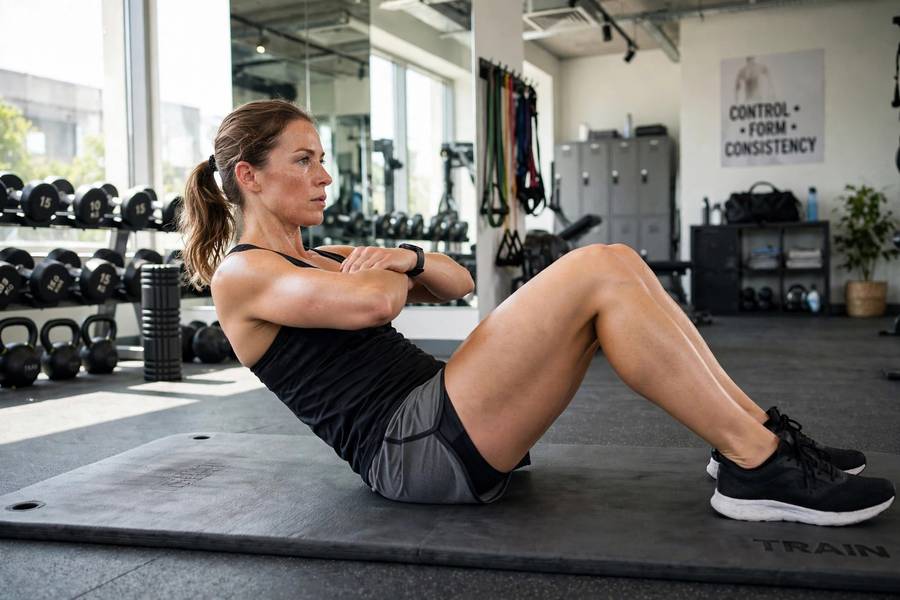
Lie back. Knees bent, feet flat on the floor about hip-width apart. Don’t anchor your feet under something heavy — it just lets your hip flexors take over.
-
Position your arms. Cross them over your chest (beginner) or place fingertips lightly behind your ears (intermediate). Never pull on your neck — your hands are passengers, not engines.
-
Engage before moving. Flatten your lower back slightly toward the floor by bracing your abs. Think about pulling your ribcage toward your pelvis.
-
Curl up in segments. Lift your head, then shoulders, then upper back off the floor — peeling up one vertebra at a time. Come up until your torso is roughly 45 degrees, or until your elbows reach your thighs.
-
Pause briefly. One second at the top. Feel the abs working — if you feel it mostly in your hip flexors or neck, reset your form.
-
Lower with control. Take 2-3 seconds going down. The eccentric (lowering) phase is where the work happens — don’t just flop back.
-
Don’t rest at the bottom. Keep slight tension; don’t fully relax between reps.
Breathing: exhale on the way up, inhale on the way down. And keep it slow — if you’re doing 50 fast sit-ups, you’re doing cardio with extra steps, not core training.
The 5 Mistakes Everyone Makes
1. Yanking the neck. Hands behind the head become a pulling mechanism. Your neck isn’t a handle. Fix: cross arms on chest, or keep fingertips lightly touching the head with elbows wide.
2. Anchoring the feet. Tucking feet under a couch turns the sit-up into a hip-flexor exercise. Your abs do less, your hip flexors do more, and your lower back pays. Fix: unanchored feet, focus on curling the torso.
3. Going too fast. Momentum replaces muscle. The bounce at the bottom, the fling at the top — all cheating. Fix: 2-3 seconds down, 1 second up, pause at top.
4. Full range overkill. Sitting all the way up to your knees shifts work to hip flexors past ~45 degrees. Fix: stop at 45 degrees — that’s where ab engagement peaks.
5. Holding your breath. Or worse, bearing down like a powerlifter. Fix: steady breathing, exhale on exertion.
Sit-Ups vs. Crunches: What’s the Difference
Quick clarification since these get confused:
- Crunch: Only the shoulders and upper back lift off the floor — small range of motion, pure rectus abdominis, minimal hip flexor involvement.
- Sit-up: Full torso comes up to ~45 degrees or more — larger range, more muscles involved (including hip flexors).
Crunches are the more targeted ab exercise; sit-ups are the more functional movement. For most people, I prefer crunches over full sit-ups (less hip flexor takeover, less spinal loading) — but honestly, I’d pick dead bugs over both. More on that below.
Are Sit-Ups Bad for Your Back
The nuanced answer:
The concern: Dr. Stuart McGill’s influential research showed repeated spinal flexion under load stresses spinal discs. This is real biomechanics, not fear-mongering.
The context: That research involved loaded, repeated flexion — think heavy, high-volume, or with added weight. Bodyweight sit-ups in moderate volumes are a different stimulus.
Who should be careful: Anyone with disc herniation, chronic lower back pain, or osteoporosis. If sit-ups hurt your back, stop — there are better options (below), and no exercise is mandatory.
Who’s probably fine: Healthy people doing moderate volumes (a few sets of 10-20) with good form. Your spine flexes all day; controlled bodyweight flexion isn’t inherently dangerous.
My rule: Pain is information. Discomfort in the abs = working. Pain in the back = stop and switch exercises. And when in doubt, choose the alternatives — they train the core’s stabilizing function better anyway.
Better Core Alternatives
If I were building your core from scratch, here’s my priority list:
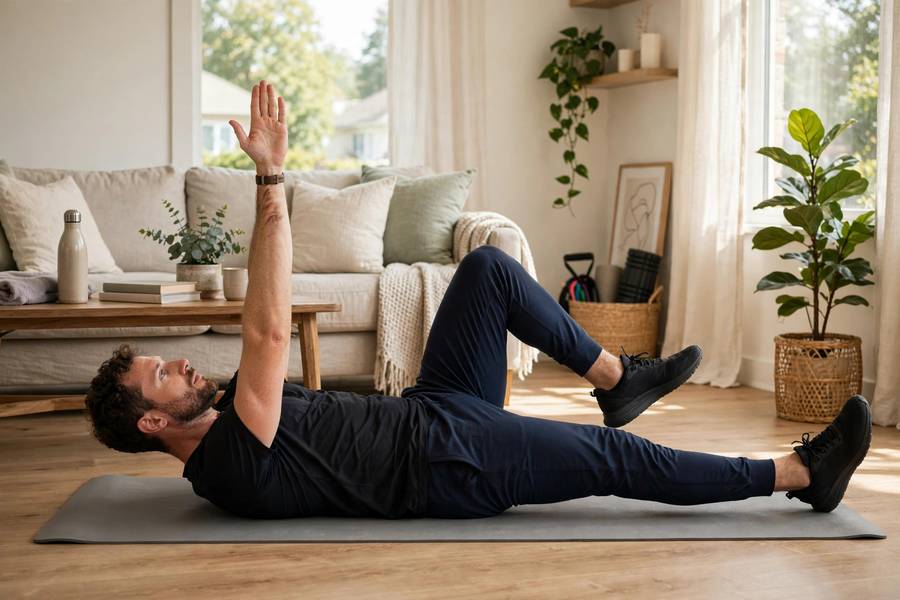
1. Dead bug. Lie on your back, arms up, knees up, lower opposite arm/leg while keeping your back flat. Trains anti-extension — the core’s most important job. My #1 recommendation for almost everyone.
2. Plank (done right). Not the 5-minute saggy plank — a hard 30-60 second plank with full tension. See my guide on how to do a plank correctly.
3. Pallof press. Anti-rotation using a band or cable. Brilliant for obliques and real-world stability.
4. Hanging knee/leg raises. The best of both worlds — trunk flexion with stabilization demand. Harder than sit-ups, more useful.
5. Ab wheel rollouts. Advanced. Extraordinary core stimulus when you’re ready.
6. Carries. Farmer’s walks, suitcase carries. Your core’s job in real life is stabilizing under load — train it that way.
The pattern: the best core exercises train stability (resisting movement), not just mobility (creating movement). Your core is a corset, not a hinge.
How to Program Core Work
Frequency: 2-3x per week is plenty. Your core also works during squats, deadlifts, and push-ups — it doesn’t need daily isolation.
Structure: Pick 2-3 exercises per session: – One anti-extension (dead bug or plank) – One anti-rotation or lateral (Pallof press or side plank) – One flexion (crunch, sit-up, or hanging raise) — if you want it
Sets/reps: 2-3 sets. For stability exercises: 30-60 seconds or 8-12 slow reps per side. For flexion: 10-20 controlled reps.
Progression: Harder variations before more reps. A 60-second perfect plank beats a 3-minute sloppy one. Quality over quantity, always.
And the truth about visible abs: They’re made in the kitchen, as the cliché goes — more precisely, body fat percentage determines visibility. You can have the strongest core in the world and not see it at higher body fat. Core training builds function and strength; nutrition reveals the definition.
Frequently Asked Questions
Lie back with knees bent and feet flat (don’t anchor them). Cross arms over your chest. Brace your abs, then curl up segment by segment to about 45 degrees — peeling head, shoulders, then upper back off the floor. Pause one second, lower over 2-3 seconds. Exhale going up, inhale going down. Never pull on your neck.
It depends. Research shows repeated loaded spinal flexion stresses discs, but moderate bodyweight sit-ups are different from heavy loaded flexion. Healthy people doing a few sets with good form are generally fine. Anyone with disc issues, chronic back pain, or osteoporosis should choose alternatives like dead bugs and planks — and stop any exercise that causes back pain.
Sit-ups strengthen the rectus abdominis but don’t reveal it — visible abs depend on body fat percentage, which comes from nutrition and overall training. No ab exercise burns belly fat specifically (spot reduction is a myth). For core strength, anti-movement exercises like planks and dead bugs are more effective than sit-ups alone.
Daily sit-ups aren’t necessary — 2-3 core sessions per week is plenty since your core works during squats, deadlifts, and push-ups too. When you do them: 2-3 sets of 10-20 slow, controlled reps. Quality beats quantity — 10 perfect reps outperform 50 rushed ones, and daily high-volume sit-ups risk overuse without added benefit.
For core strength and function: dead bugs (anti-extension, the safest all-rounder), planks done with full tension, Pallof presses (anti-rotation), hanging knee raises, and farmer’s carries. These train the core’s real job — stabilizing your spine — better than sit-ups, which mainly train trunk flexion.
Crunches lift only the shoulders and upper back (small range, targeted abs, minimal hip flexor use). Sit-ups bring the full torso up to ~45 degrees or more (larger range, more muscles including hip flexors). Crunches are more targeted; sit-ups are more functional. For most people, crunches or dead bugs are better default choices.