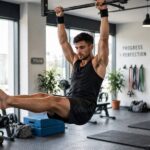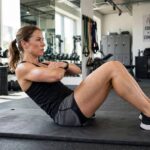

Somewhere along the way, “core strength” became shorthand for “do a thousand crunches.” It’s a shame, because your core is so much more interesting — and so much more useful — than that. Your core is the bridge between your upper and lower body, the stabilizer for everything you do, from carrying groceries to sitting upright without aching.
I came to core training sideways, through back pain that turned out to be weakness in disguise. A physical therapist gave me dead bugs instead of crunches, and within weeks the difference was remarkable. Not because my abs looked different — they didn’t — but because my body worked better.
This is a gentle, practical guide to building a core that’s strong in the ways that actually matter.
Table of Contents
- What Your Core Really Is
- Why Crunches Miss the Point
- The Four Core Functions to Train
- The Essential Exercises
- A Simple 15-Minute Routine
- Progressing Without a Gym
- Core Strength for Daily Life
- Common Mistakes
- Frequently Asked Questions
What Your Core Really Is
Your “core” isn’t just your abs. It’s a whole system: the deep abdominals (transverse abdominis), the obliques on your sides, the muscles along your spine, your pelvic floor, and even your diaphragm. Together they form a pressurized cylinder that stabilizes your trunk.
Think of it less like a six-pack and more like a corset — a deep, supportive structure that holds everything together. When it works well, you move better, stand taller, and your back complains less. When it doesn’t, everything from lifting to sitting becomes harder than it should be.
This is why core training matters far beyond aesthetics. It’s functional strength for real life.
Why Crunches Miss the Point
Crunches train one small motion — spinal flexion — that you rarely need in daily life. Worse, endless crunches with poor form strain the neck and reinforce the hunched posture most of us are trying to escape.
Your core’s real jobs are:
- Resisting movement (staying stable when forces try to bend you)
- Transferring force (between upper and lower body)
- Protecting the spine during lifting and carrying
Exercises that train these functions — planks, dead bugs, carries — build genuinely useful strength. Crunches build… the ability to do crunches. There’s a hygge lifestyle lesson here too: the quiet, unglamorous work is usually what matters most.
The Four Core Functions to Train
A complete core program covers four patterns:
- Anti-extension — resisting arching (planks, dead bugs, ab wheel)
- Anti-rotation — resisting twisting (Pallof press, bird dogs)
- Anti-lateral-flexion — resisting side-bending (side planks, farmer’s carries)
- Controlled flexion/rotation — the small dose of “crunch-like” work (reverse crunches, cable woodchoppers)
Most people only train #4. Flip that ratio — spend 80% of core time on the “anti” movements. They’re what protect your spine and build the deep stability that changes how your body feels day to day.
The Essential Exercises
You need surprisingly few:
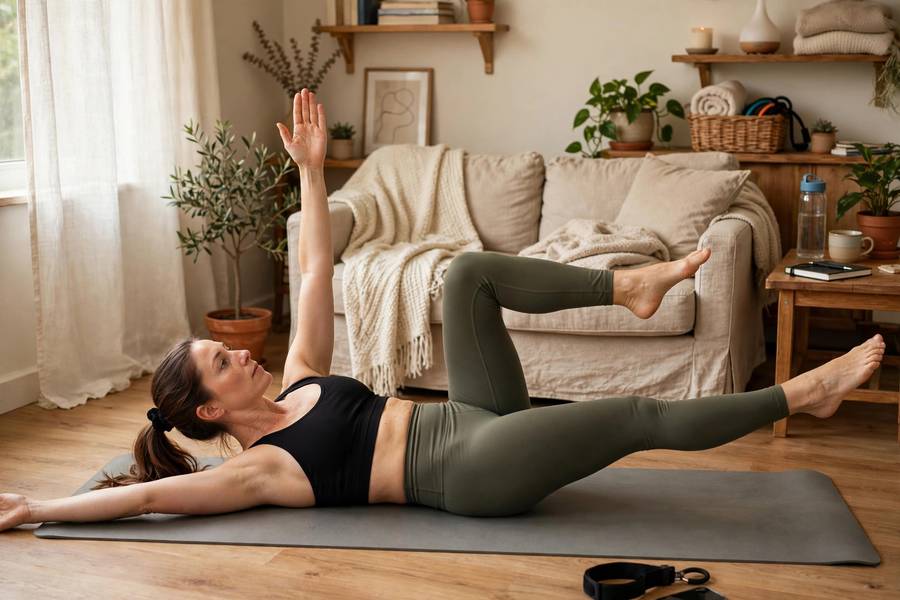
Dead bugs. Lie on your back, arms toward ceiling, knees bent at 90 degrees. Slowly extend opposite arm and leg, keeping your lower back pressed into the floor. The name is silly; the exercise is gold. Start here if your core is weak — there’s no shame in it.
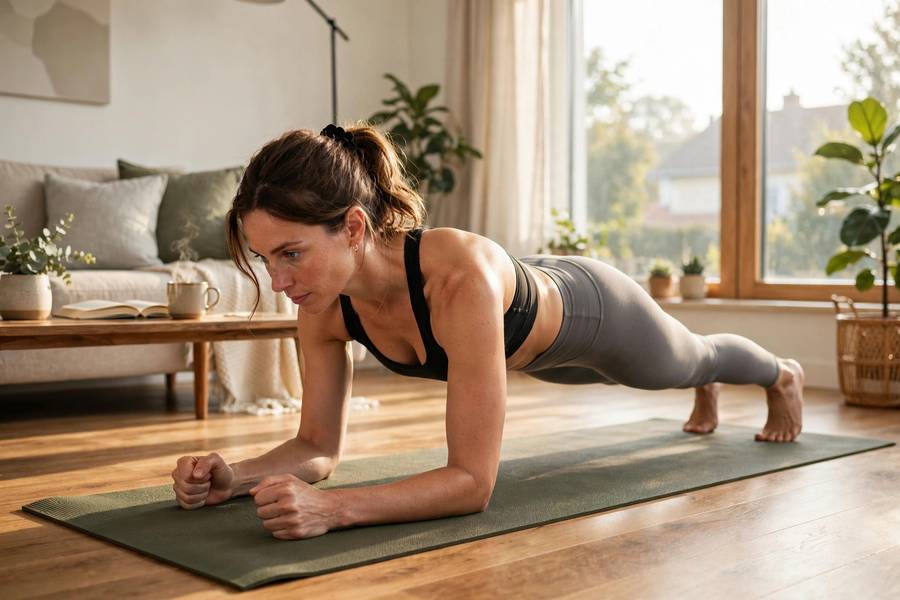
Forearm plank. The classic, done right: straight line from head to heels, glutes squeezed, breathing normally. Quality over duration — a perfect 30 seconds beats a saggy two minutes.
Side plank. The most neglected core exercise. Supports the obliques and the muscles that keep you upright. Start on knees if needed.
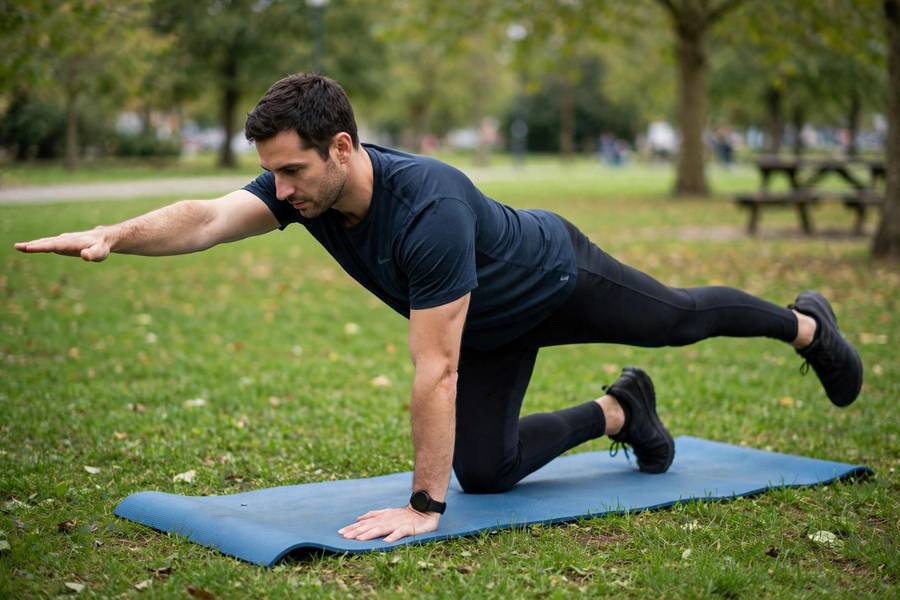
Bird dogs. On hands and knees, extend opposite arm and leg slowly. Looks easy, humbles everyone. Wonderful for coordination and spinal stability.
Farmer’s carries. Pick up something heavy in each hand and walk. Grip, core, posture — everything works. The simplest effective core exercise in existence.
Glute bridges. Your glutes are part of your core system. Weak glutes force your lower back to compensate — bridges wake them up.
The Underrated Core: Transverse Abdominis
Beneath the visible abs lies the transverse abdominis (TVA) — a deep corset-like muscle that wraps around your torso. It’s the first muscle that should fire when you move, and in many people, it’s essentially asleep.
How to wake it up: lie on your back, knees bent. Place your fingers just inside your hip bones. Now gently draw your lower belly inward, as if zipping tight jeans — without holding your breath or moving your pelvis. You should feel a gentle tension under your fingers. That’s your TVA.
Practice this activation for a minute daily for two weeks. Then integrate it: engage gently before lifting, carrying, or doing any core exercise. Once the TVA fires automatically, everything else — planks, dead bugs, daily movement — gets more effective. It’s the foundation under the foundation.
A Simple 15-Minute Routine
Three times a week, no equipment needed:
- Dead bugs — 2 × 8 per side (slow)
- Forearm plank — 2 × 30–45 seconds
- Side plank — 2 × 20–30 seconds per side
- Bird dogs — 2 × 8 per side (slow)
- Glute bridges — 2 × 15 (squeeze at top)
Rest 30 seconds between exercises. The whole thing takes 15 minutes. Do it consistently for a month and you’ll feel the difference in how you sit, stand, and move — that’s the real payoff.
As life gets busy, remember that balancing work and personal life includes protecting small windows for your body. Fifteen minutes is always findable.
Progressing Without a Gym
When the routine gets easy, progress it:
- Add time — extend planks toward 60–90 seconds
- Add reps — more dead bugs, more bridges
- Add complexity — plank shoulder taps, dead bugs with extended pauses
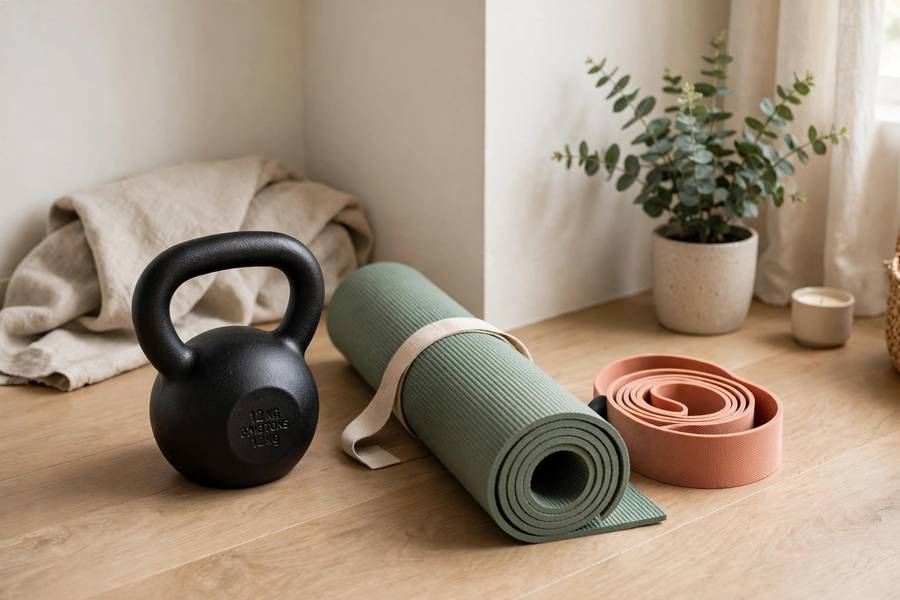
- Add load — a book on your hips during bridges, a backpack during planks
- Slow down — tempo is free resistance. Three seconds per rep changes everything.
You can progress bodyweight core work for a very long time before needing equipment. The core responds beautifully to consistency — it’s one of the fastest areas to feel improvement.
Core Strength for Daily Life
Here’s where it pays off, in ordinary moments:
- Carrying groceries without your back complaining
- Sitting at a desk without melting into a question mark by 3 PM
- Playing with kids — lifting, twisting, getting up off the floor
- Gardening, cleaning, moving furniture — all core work in disguise
- Posture — standing tall without thinking about it
None of these require visible abs. They require a core that does its quiet job in the background. That’s the version worth building.
Common Mistakes
- Holding your breath. Breathe normally during core work. Bracing isn’t breath-holding.
- Sagging planks. If your hips drop, you’re done — rest and reset. Junk reps teach junk patterns.
- Only training abs. The full 360-degree core includes your back and sides. Train all of it.
- Daily max-effort core. Like any muscle, the core needs recovery. Three focused sessions beat seven sloppy ones.
- Expecting visible abs. Core strength and visible abs are different goals. This program builds the first; the second is mostly nutrition.
Breathing and the Core: The Connection
Here’s something most core programs miss: your diaphragm is a core muscle. How you breathe directly affects core stability.
Diaphragmatic breathing practice: lie on your back, one hand on chest, one on belly. Breathe so only the belly hand rises. Five minutes daily retrains the pattern most desk workers have lost.
Bracing vs. bearing down: when lifting or exerting, brace like expecting a gentle punch — firm but not strained. The mistake is either not bracing at all or bracing so hard you hold your breath and spike blood pressure.
Exhale on effort: breathe out during the hard part of any movement (the lift, the push, the rise). This coordinates the deep core automatically — it’s how your body is designed to work.
Good breathing makes every core exercise more effective. It’s the invisible half of core training.
Frequently Asked Questions
Most people feel noticeable improvement in 3–4 weeks of consistent training (3x/week). Meaningful strength gains take 8–12 weeks. The core adapts relatively quickly because it’s used constantly in daily life.
Planks are excellent but incomplete alone. Add dead bugs, side planks, bird dogs, and carries to cover rotation resistance, lateral stability, and dynamic control — the full 360-degree core.
Light core work can be near-daily, but focused strength sessions need rest — 3–4 times per week is ideal. Like any muscle, the core adapts during recovery, not during the workout itself.
Dead bugs. They’re gentle, teach proper bracing, and scale easily. Most beginners with weak cores get more from dead bugs than from any plank variation.
Often, yes — weak cores force the lower back to compensate. But back pain has many causes; see a professional for diagnosis. Start gently with dead bugs and bird dogs, never pushing through sharp pain.