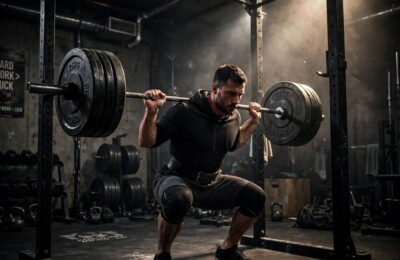

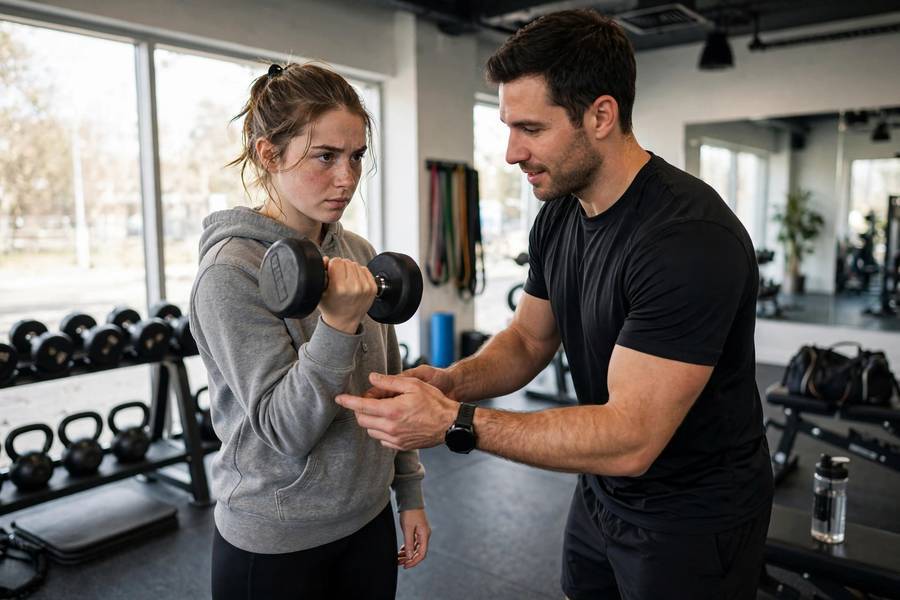
Let me kill the biggest myth about lifting weights before we go any further: you do not need to be strong to start lifting. That’s like saying you need to be clean before you take a shower. The bar doesn’t care where you’re starting from. It only cares that you show up and do the work with good form.
I’ve trained people who walked into the gym terrified of the weight room and people who walked in overconfident and hurt themselves in week two. The ones who succeeded long-term had one thing in common: they started simple, learned the basics properly, and added weight gradually. That’s it. No secret program, no magic supplement, no six-week transformation nonsense.
This guide is everything I wish someone had told every beginner I’ve ever coached. Follow it and you’ll be lifting safely, getting stronger, and — here’s the real prize — still lifting a year from now, which is when the results actually show up.
Table of Contents
- Why Lift Weights at All?
- What You Actually Need to Start
- The 5 Movements Every Beginner Should Learn
- Your First Program: Simple and Effective
- How Much Weight Should You Start With?
- Sets, Reps, and Rest: The Basics
- Form First, Always
- Nutrition and Recovery Basics
- Mistakes That Stall Beginners
- Frequently Asked Questions
Why Lift Weights at All?
Strength training does more than build muscle. Here’s what it actually buys you:
- Stronger bones and joints. Resistance training increases bone density — it matters at every age, especially as you get older.
- A faster metabolism. Muscle is metabolically active tissue — more of it means your body burns more energy around the clock.
- Injury prevention. Strong muscles protect your joints and fix desk-life imbalances — weak glutes, tight hips, rounded shoulders.
- Real-world strength. Groceries, furniture, picking up your kids without throwing your back out — the stuff that actually matters.
- Mental payoff. Loading a bar, picking it up, and putting it down rewires your confidence. I’ve watched it happen hundreds of times.
You don’t need to want to look like a bodybuilder — just to be capable. Lifting is the most direct route there.
What You Actually Need to Start
Here’s the complete equipment list for a beginner: less than you think.
Option A: A gym. Best option if you have access — barbells, dumbbells, racks, machines, no investment required. Don’t be intimidated; most people in the weight room are focused on themselves, not you.
Option B: Home setup. Adjustable dumbbells and a sturdy bench cover 90% of beginner training — see my guide on how to build muscle at home for the full setup.
Option C: Bodyweight. Push-ups, squats, lunges, and planks teach you the movement patterns before you add load. If you’re starting from zero, bodyweight exercises you can do anywhere is a perfect on-ramp, and how to do push-ups with perfect form transfers directly to bench pressing later.
What you don’t need: gloves, a belt, wrist wraps, pre-workout, or a $200 program. Those are for later, if ever. Beginners need exactly one thing — consistency with the basics.
The 5 Movements Every Beginner Should Learn
Forget the 47-exercise routines online. Your body moves in fundamental patterns — five of them cover everything:
1. The Squat
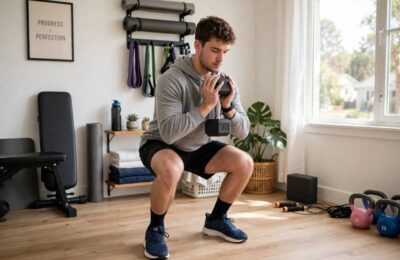
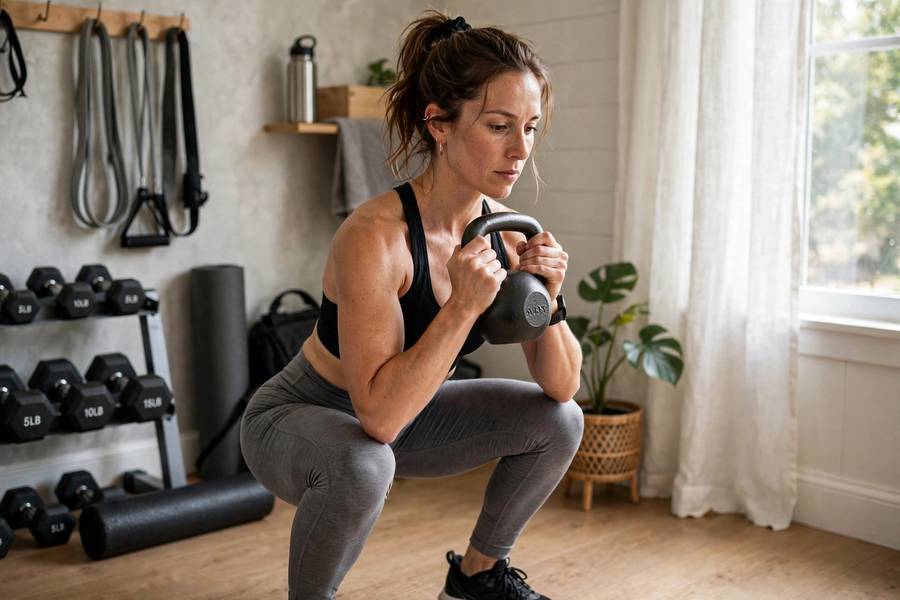
The king of lower-body movements. Feet shoulder-width apart, chest up, sit your hips back and down like you’re sitting in a chair. Knees track over your toes. Stand back up by driving through your whole foot.
Start with bodyweight or goblet squats. Master these before touching a barbell.
2. The Hinge (Deadlift Pattern)
The hinge is the movement that teaches you to pick things up safely — and it’s the one most beginners butcher. Hips go back, back stays flat, weight stays close to your body. It’s not a squat; your knees bend only slightly.
Start with light Romanian deadlifts. Film yourself from the side — back flat the whole time.
3. The Push (Press)
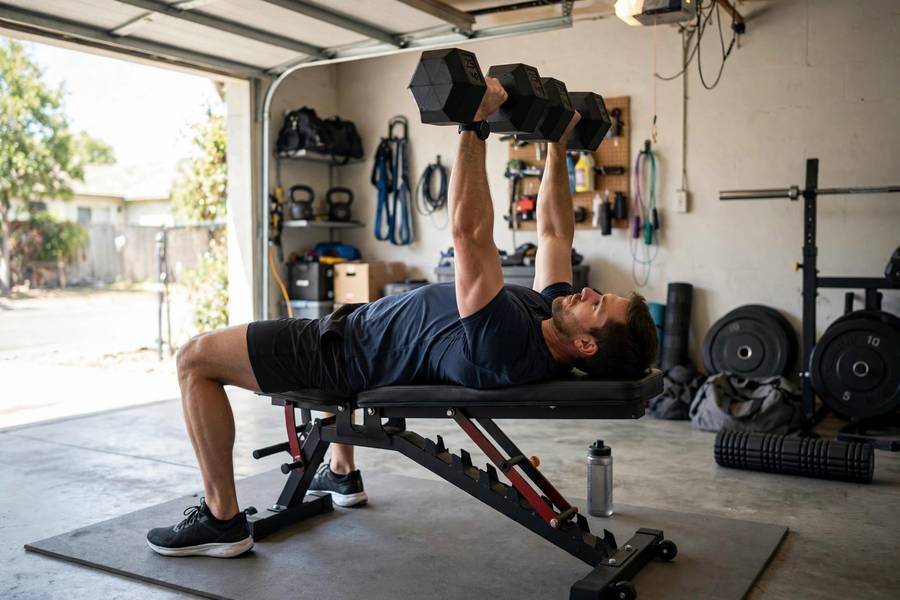
Pushing weight away from your body builds your chest, shoulders, and triceps. The dumbbell bench press is the beginner version: lie on a bench, dumbbells at chest level, press up until your arms are straight, lower with control.
Start with push-ups to build the pattern, then dumbbell press. Can’t do a full one yet? Knees or elevated hands — no shame.
4. The Pull (Row)
Pulling builds your back, biceps, and the posture muscles that counteract sitting all day. The one-arm dumbbell row is perfect for beginners: one knee and hand on a bench, back flat, pull the dumbbell to your hip like you’re starting a lawnmower.
Start with: dumbbell rows. Keep your back flat and don’t twist. Your back muscles should do the work, not your arm yanking the weight up.
5. The Carry
The most underrated movement in training. Pick up something heavy and walk with it. Farmer’s carries build grip, core, and total-body stability in a way nothing else does.
Grab two dumbbells, stand tall, walk 30-40 seconds. Shoulders back, core tight.
Learn these five and you have a complete training system. Everything else is a variation.
Your First Program: Simple and Effective
Here’s a full-body program for your first 2-3 months, 2-3 days per week. Full-body beats body-part splits for beginners because you practice each movement more often — and practice builds skill.
Workout A
- Goblet squat: 3 sets of 8-10
- Dumbbell bench press: 3 sets of 8-10
- One-arm dumbbell row: 3 sets of 10 per arm
- Romanian deadlift: 3 sets of 10
- Farmer’s carry: 3 rounds of 30-40 seconds
Workout B
- Dumbbell Romanian deadlift: 3 sets of 10
- Push-ups (or incline press): 3 sets of as many good reps as you can
- Goblet squat: 3 sets of 8-10
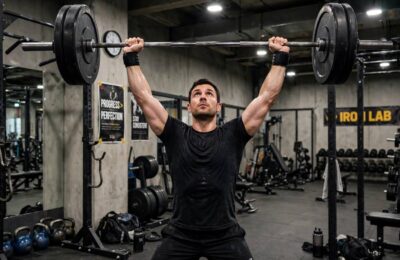
- Overhead dumbbell press: 3 sets of 8-10
- Plank: 3 rounds of 30 seconds
Alternate A and B on three non-consecutive days (Mon/Wed/Fri works). When this gets easy, add weight — not exercises.
Why full-body and not a “bro split”? Hitting each pattern 2-3 times a week builds the neural pathways — your brain learning to recruit muscle — far faster than hitting chest once a week ever will.
How Much Weight Should You Start With?
Lighter than your ego wants:
Pick a weight you think you can lift for 10 clean reps. If the last two were challenging but your form stayed perfect, that’s your starting weight. Form broke down? Go lighter. Could have done 15? Go heavier next set.
Month-one rule: every rep should look the same. The moment form breaks, the set is over, whatever the rep target says.
Rough starting points for untrained adults: goblet squats 15-25 lbs, dumbbell presses 15-25 lbs, rows 20-30 lbs. Guides, not prescriptions — your body will tell you.
Sets, Reps, and Rest: The Basics
Quick terminology:
- Rep (repetition): one complete movement. One squat = one rep.
- Set: a group of reps done without stopping. 10 squats in a row = one set of 10.
- Rest: the break between sets.
For beginners: 3 sets of 8-12 reps per exercise. Enough volume to stimulate growth without so much that form collapses.
Rest 60-90 seconds between sets (2 minutes for the harder lifts). Log every session — weight, sets, reps. That log is how you apply progressive overload: beating last week’s numbers. That’s the entire engine of getting stronger.
Form First, Always
I’d rather watch a beginner squat 20 pounds perfectly than 200 pounds badly: bad form with light weight is a habit; with heavy weight, it’s an injury.
The non-negotiables:
- Neutral spine. Your back stays in its natural position — not rounded like a cat, not arched like a bridge. This applies to squats, deadlifts, rows, everything.
- Controlled tempo. Lower in 2-3 seconds — don’t drop or bounce it. The lowering phase (the eccentric) builds as much strength as the lifting phase.
- Full range of motion. Half-reps build half results: squat to at least parallel, touch your chest on presses, stretch at the bottom of rows.
- Breathe. Exhale on the effort, inhale on the lowering. Don’t hold your breath through a whole set.
Film yourself — prop your phone up and record a set from the side. What you feel like you’re doing and what you’re actually doing are often different things, and video doesn’t lie. It’s the fastest form coach in the world, and it’s free.
Nutrition and Recovery Basics
You don’t need a perfect diet to start lifting. You need enough fuel and enough sleep.
Protein. Roughly 0.7-1 gram per pound of bodyweight daily — meat, eggs, dairy, beans, lentils, whatever fits your life. Powder is optional, convenient if you’re falling short.
Eat enough. You can’t build muscle in a steep deficit — keep it modest if you’re also losing weight. Beginners can build muscle and lose fat simultaneously for the first few months. Enjoy it; it doesn’t last forever.
Sleep. Muscles don’t grow in the gym; they grow when you recover. Seven to nine hours — non-negotiable.
Rest days. Muscles need ~48 hours before you train them hard again — which is why the program spaces sessions out. Walk and stretch on rest days; don’t do another hard workout.
Soreness. The first two weeks can be rough — that’s DOMS (delayed onset muscle soreness), and it’s normal. Light movement helps more than sitting still. If something feels sharp or wrong rather than just sore, back off and get it checked.
Mistakes That Stall Beginners
I’ve watched these same mistakes derail hundreds of beginners. Learn from their pain:
Program hopping. Switching programs every three weeks because something shinier appeared online. Pick one and run it 8-12 weeks. The program works if you work the program.
Adding weight too fast. Muscles adapt faster than tendons and joints. Five pounds a week is fantastic progress — 260 a year. Patience is a training variable.
Skipping the warm-up. Five minutes of light cardio plus easy warm-up sets. Cold muscles and heavy weight are a bad combination.
Training through pain. Soreness is fine; pain is information. Sharp joint pain or pain that changes how you move — stop, figure it out, don’t be a hero.
Comparing yourself to others. The person next to you has lifted five years; you, five days. Compare yourself to yourself last month — the only comparison that matters.

Frequently Asked Questions
Two to three full-body sessions per week is ideal for beginners. This gives each muscle group 48 hours to recover while letting you practice the fundamental movements frequently enough to build skill. More than that is unnecessary when you’re starting out — your body adapts best with rest between sessions.
No. Building significant muscle mass takes years of dedicated training and eating in a calorie surplus — it doesn’t happen by accident. What lifting will do is make you stronger, firmer, and more capable. Most beginners end up looking leaner and more athletic, not bulky.
Do weights first. Lifting requires focus, coordination, and fresh muscles for safe form. If you exhaust yourself with cardio first, your lifting form suffers and your injury risk goes up. Do your strength work, then finish with 10-20 minutes of cardio if you want both in one session.
Strength gains come fast — most beginners add weight to their lifts every week for the first 2-3 months as their nervous system learns to recruit muscle efficiently. Visible muscle changes typically take 8-12 weeks of consistent training. The people who quit at week four never see what week twelve looks like. Stay consistent.
No. A pair of adjustable dumbbells and a sturdy bench at home covers nearly all beginner training, and bodyweight exercises build a real foundation with zero equipment. A gym gives you more options and heavier weights as you progress, but it’s a convenience, not a requirement. Start wherever you actually will train consistently.
Keep it simple: eat a normal meal with protein and carbs 2-3 hours before training, or a small snack like a banana 30-60 minutes before if that’s too long. After training, eat a protein-rich meal within a couple of hours. You don’t need precise nutrient timing as a beginner — total daily protein and calories matter far more than what you eat in any single window.