Best Pull-Up Bar for Home: Doorway, Wall-Mounted & Freestanding Picks

I’ve installed, tested, and eventually thrown away more pull-up bars than I can count — in my own garage, in clients’ homes, and in three different rental apartments where I learned exactly which mounting methods cost you a security deposit. The honest truth: there is no single “best” pull-up bar. There’s the best bar for your door frame, your walls, your bodyweight, and your willingness to drill holes. Buy the wrong type and you’ll either damage your home or own an expensive coat rack.
This guide cuts through the marketing. I’ll walk you through the four types of home pull-up bars, who each one is actually for, what to check before you buy, and the installation mistakes I’ve seen cost people money. No sponsored picks, no fluff — just what I’d tell you if you asked me in the gym.
The 4 Types of Home Pull-Up Bars
Every home pull-up bar on the market falls into one of four categories. Here’s the quick breakdown before we go deep:
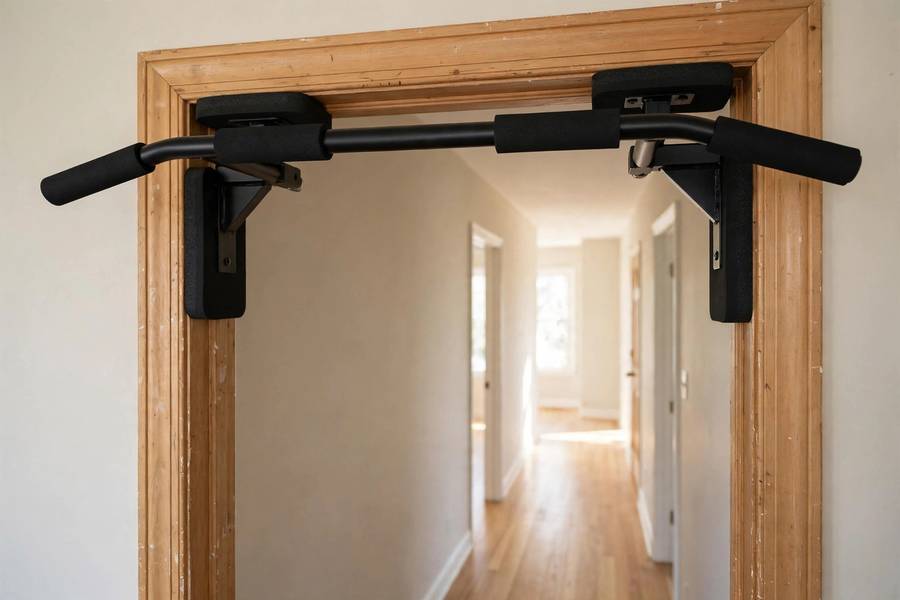
Doorway leverage bars wedge into your door frame using your bodyweight for pressure — no screws, removable in seconds. Cheapest and most popular. Weight limits around 250 to 300 pounds.
Wall-mounted bars bolt directly into wall studs or masonry. The most solid option by far, and the only one I’d trust for weighted pull-ups or kipping. Requires drilling and a suitable wall.
Freestanding power towers stand on the floor with a pull-up bar on top. No installation at all, but they eat floor space and the good ones aren’t cheap.
Ceiling-mounted bars bolt into ceiling joists. Excellent stability and zero wall damage, but you need the right joists and enough ceiling height.
Your living situation decides more than your preference does. Renters: doorway or freestanding. Homeowners with a garage: wall or ceiling mounted, full stop. Let’s get specific.
Doorway Bars: The Default Choice
The classic leverage-style doorway bar — the kind with the wide flat bar on one side and foam pads that press against the frame — is what most people should buy first. I’ve used these in apartments for years. A good one costs $30 to $50, installs in under a minute, and handles strict pull-ups, chin-ups, and hanging leg raises without complaint.
What to look for: a weight rating of at least 300 pounds (this gives you a real safety margin, not a marketing number), wide foam or rubber pads that distribute pressure across the trim, and multiple grip positions — wide, narrow, and neutral grips make a real difference over months of training. The cheap no-name bars with thin pads are the ones that dent trim and wobble; spend the extra ten dollars.
The limitations are real, though. Doorway bars sit inside the frame, so your knees will hit the door or wall on the way up unless your doorway is deep — tall lifters, measure your frame depth before buying. They also rely on trim molding for the leverage; if your trim is decorative, thin, or already loose, find another option. And they’re strictly for strict reps — no kipping, no swinging, no weighted vests beyond bodyweight-plus-a-little. I’ve seen a doorway bar pop out mid-kip. Nobody was hurt, but the drywall wasn’t so lucky.
Doorway fit check: measure the width of your door frame (most bars fit 24 to 36 inches) and the depth of the trim (you need at least half an inch of solid molding for the pads to bite). If your doors are metal-framed commercial style with no trim, doorway bars won’t work at all.
Wall-Mounted Bars: The Serious Option
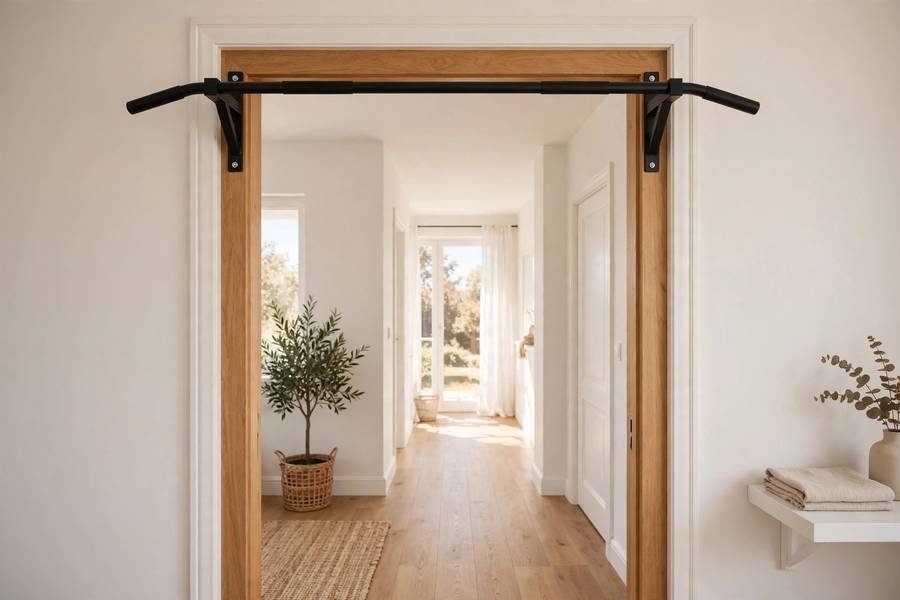
If you own your place — or have a landlord who doesn’t care about four lag bolts in the garage — a wall-mounted bar is the best training tool of the four, and it’s not close. Bolted into studs, a good wall-mounted bar feels like a commercial gym rig: zero flex, zero wobble, and rated for 400-plus pounds, which means weighted pull-ups, muscle-up transitions, and aggressive kipping are all on the table.
The catch is the wall itself. You need to hit studs or solid masonry — drywall anchors alone will rip out under dynamic load, and I’ve seen the aftermath. Use a stud finder, then verify with a thin drill bit before you commit to the full holes. Standard 16-inch stud spacing works with most mounting plates; if your studs are 24 inches apart, check the bar’s mounting width first.
Depth matters too: wall-mounted bars stick out 18 to 24 inches from the wall, which gives you clearance for full reps without your knees hitting anything. That’s a genuine training advantage over doorway bars. The downside is permanence — you’re drilling 3/8-inch holes, and patching them later is a weekend project. For a garage or basement gym, that’s a trade I’ll make every time. If you’re building out a dedicated space, my home gym setup guide covers how a wall-mounted bar fits into the bigger picture.
Freestanding Towers: The No-Drill Solution
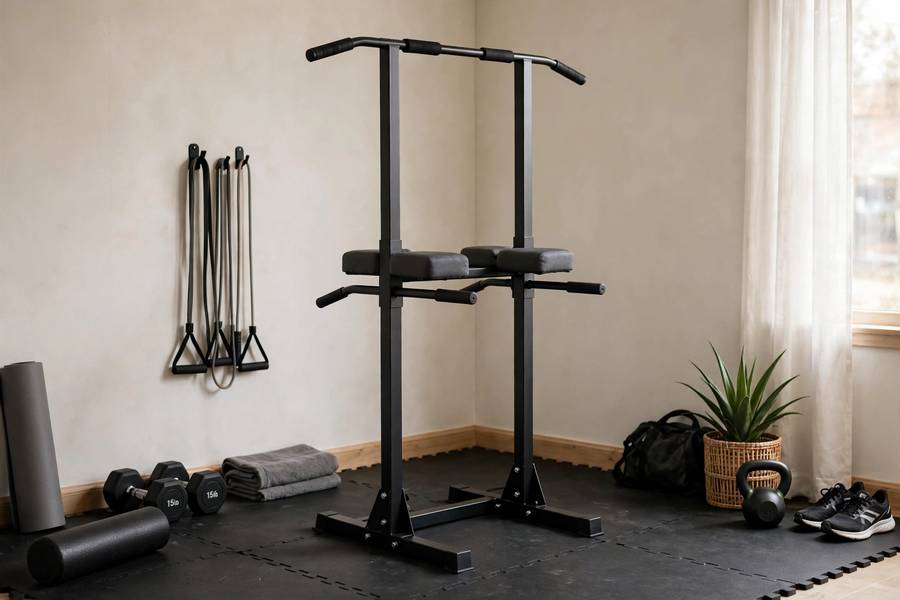
Power towers are the answer when you can’t drill anything and your door frames won’t cooperate. A decent tower gives you a pull-up bar, dip handles, and a captain’s chair for leg raises in one footprint — genuinely useful for a full bodyweight routine at home.
Here’s what the reviews won’t tell you: stability varies wildly. The light, cheap towers wobble during kipping and feel sketchy for anyone over 200 pounds. Look for a unit over 60 pounds in shipping weight, a wide base (at least 40 inches), and a pull-up bar height that actually fits your ceiling — most towers are 7 feet tall, which doesn’t work in basements with 7-foot ceilings. Ask me how I know.
The other honest drawback is footprint. A tower eats a permanent 4-by-4-foot square of your room. In a studio apartment, that’s a real cost. But if you have the space and zero ability to mount anything, a solid tower beats a doorway bar for training quality — the bar height and clearance are better, and you get dips and leg raises built in.
Ceiling-Mounted Bars: The Overlooked Pick
Nobody talks about ceiling-mounted bars, and for garage gyms they’re arguably the best option. Bolted into ceiling joists, they’re as solid as wall-mounted bars, they keep your walls completely clear, and installation is often easier — joists are easier to find and hit than wall studs in many garages.
Requirements: exposed or accessible joists (finished drywall ceilings make this harder but not impossible), at least 8-foot ceilings so you can hang without your knees hitting the floor — you’ll likely need to bend your knees slightly, which is fine — and joists rated for the load. Standard dimensional lumber joists on 16-inch centers handle a pull-up bar without breaking a sweat. Engineered trusses need more care; check with the manufacturer or a contractor if you’re unsure.
I put one in my garage in 2022 and it’s still the bar I use most. Total install time was under an hour, and there’s something psychologically nice about a bar that doesn’t move a millimeter when you kip.
What to Check Before You Buy
Run through this list regardless of which type you’re buying:
Weight rating vs. your bodyweight. Take the rated limit and subtract your bodyweight plus any added weight you plan to use. You want at least 50 pounds of margin. Dynamic movements multiply force — a 200-pound person kipping can briefly load the bar with far more than 200 pounds. Ratings are static; your training isn’t.
Grip options. At minimum you want a straight wide grip and neutral (parallel) grips. Wide grip hits the lats hardest; neutral is easiest on the shoulders and elbows. Bars with only one grip position get old fast. This matters more than it sounds — grip variety is how you keep training for years without overuse issues.
Bar diameter. Standard is about 1.25 inches. Thicker bars (2 inches, “fat bars”) build grip strength but make pull-ups significantly harder — great as a second bar, frustrating as your only bar.
Your actual training goal. If you’re working toward your first pull-up, a simple doorway bar is plenty — you’re doing strict reps and hangs, not weighted muscle-ups. Don’t buy a $300 rig for a $40 problem. Upgrade when your training outgrows the bar, not before.
Return policy. Bars are one of those things you can’t fully evaluate until they’re mounted. Buy from somewhere with a real return window in case your door frame or studs don’t cooperate.
Installation Mistakes That Cost Money
Mounting into drywall alone. I keep saying it because people keep doing it. Drywall anchors are rated for static shear loads — a picture frame, not a 200-pound human swinging. Every wall or ceiling mount must hit wood or masonry. No exceptions, ever.
Skipping the stud finder verification. Stud finders lie, especially cheap ones, especially on textured walls. After the finder beeps, drill a tiny pilot hole and confirm you’re in wood before you drill the full-size holes. A 1/16-inch test hole is invisible; a 3/8-inch hole in the wrong place is a patching job.
Over-tightening lag bolts. Snug is enough. Cranking a lag bolt until the wood groans strips the hole and weakens the hold. If you’re using a socket wrench, stop when it’s firmly seated — you’re not building a deck.
Ignoring the door trim on doorway bars. Test the bar with your full bodyweight while keeping your feet close to the ground first. Bounce-test it gently before you commit to full reps. If the trim creaks ominously, stop and reassess — replacing trim is cheap, falling is not.
Once your bar is up, the real work starts. A bar at home removes every excuse, which is exactly the point — pair it with a structured plan like my guide to building muscle at home and you’ll be amazed what a doorway and some consistency can do.

Frequently Asked Questions
A good leverage-style bar with wide pads won’t damage solid trim, but it can dent soft or thin molding and leave pressure marks on painted surfaces. Use bars with wide rubber pads, keep the contact points clean, and test gently first. If your trim is decorative or already loose, choose a wall-mounted or freestanding option instead.
Most quality doorway bars are rated for 250 to 300 pounds of static load. That rating assumes proper installation on solid trim and strict, controlled reps — not kipping or swinging, which multiply the force. Stay well under the rating, and never exceed it with added weight.
Wall-mounted bars are better for training — zero flex, higher weight ratings, and room for kipping and weighted reps. Doorway bars are better for renters and convenience — no drilling, removable in seconds, and plenty for strict pull-ups. If you own your home and have a suitable wall, go wall-mounted. If you rent, doorway is the smart pick.
Only on a solidly mounted wall or ceiling bar rated well above your bodyweight. Never kip on a doorway leverage bar — the dynamic forces can pop it out of the frame. And honestly, master strict pull-ups first; kipping without a strict foundation is how shoulders get injured, regardless of the bar.
For a doorway or wall-mounted bar, 8-foot ceilings are comfortable for most people — you’ll hang with knees slightly bent, which is fine. For freestanding towers (usually 7 feet tall), you need ceilings above 7 feet. Anyone over 6’2″ should measure carefully: hang from the mounted height with arms extended and confirm your knees clear the floor or bend comfortably.
Buy for your living situation, mount it into something structural, and then actually use it — the best pull-up bar for home is the one that’s installed correctly and gets trained on three times a week. Everything else is details.