Overhead Press vs Lateral Raises: Which Builds Better Shoulders?

Every few months, someone in the gym asks me: “If I could only do one shoulder exercise, overhead press or lateral raises?” It is a fair question, and the fitness internet has turned it into a holy war. The press camp says lateral raises are a “finisher” for people afraid of heavy weight. The lateral raise camp says the press is a front-delt exercise wearing a shoulder-day costume. Both camps are half right, which makes both camps wrong.
I have programmed both for over a decade, and the honest answer is that they do completely different jobs. Comparing them is like comparing a truck and a sports car: the question is not which is better, it is what you need done. Here is the head-to-head breakdown, the verdict, and exactly how to program both together.
In this guide:
- What Each Exercise Actually Does
- Head to Head: The Honest Comparison
- The Verdict (No Fence-Sitting)
- How to Program Both Together
- When to Pick Just One
- Frequently Asked Questions
What Each Exercise Actually Does
The Overhead Press
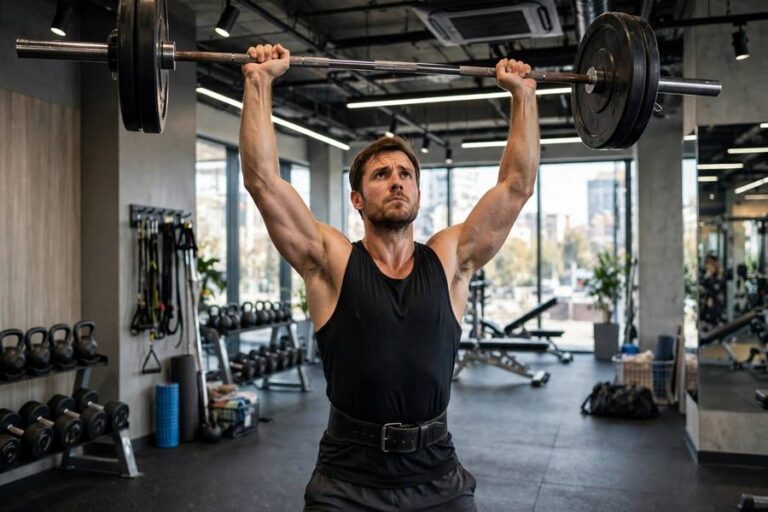
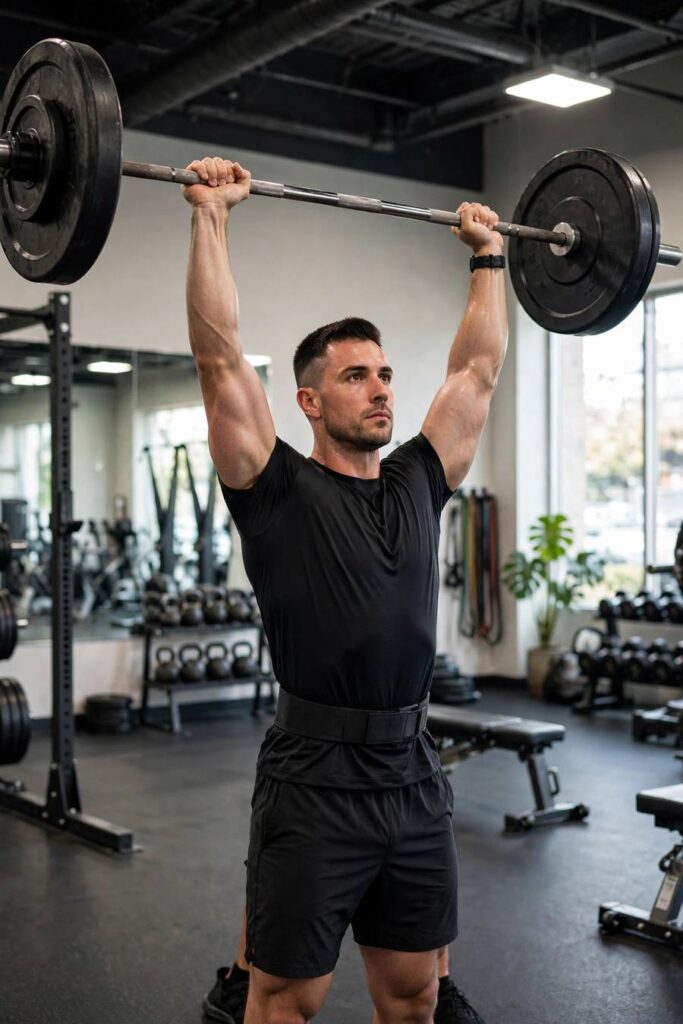
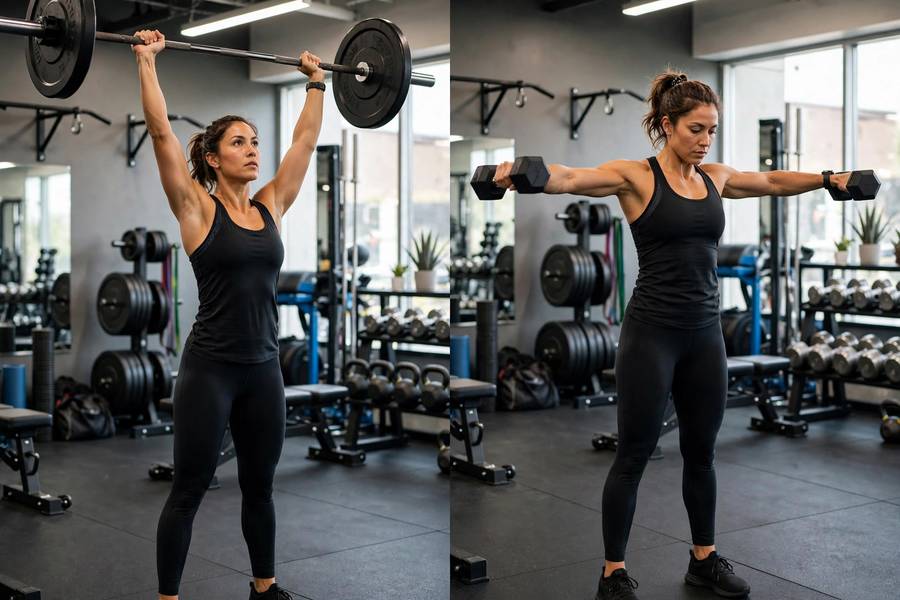
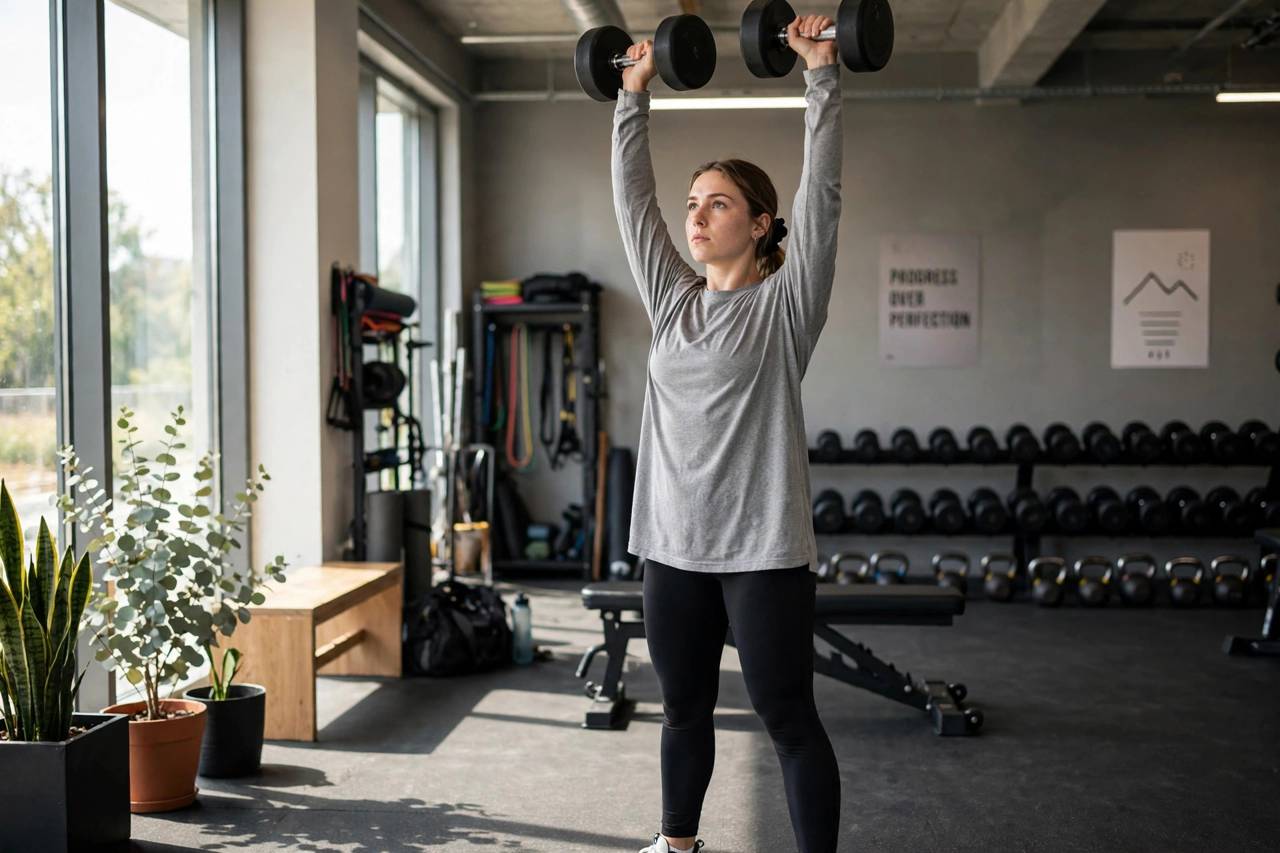
A compound pressing movement: you drive weight from shoulder height to full overhead lockout. The front delts are the prime movers, with the side delts, triceps, upper chest, traps, and core all contributing. Because multiple big muscles work together, you can load it heavy: most trained lifters press 95 to 185 pounds for reps. That heavy loading drives overall upper-body mass and real pressing strength. It is also a skill: balance, bracing, and bar path all matter, which is why press numbers take time to build.
The Lateral Raise
An isolation movement: you raise weight out to the sides, targeting the side (lateral) deltoid almost exclusively. The loads are small, typically 10 to 30 pounds per hand, because the side delt is a small muscle working at a mechanical disadvantage. There is no skill component and minimal systemic fatigue, which means you can do a lot of volume: 15 to 20 sets a week is realistic. It does one job, and it does it better than any other exercise: building shoulder width.
The key insight most people miss: these two exercises barely overlap. The press is a front-delt-dominant compound; the lateral raise is a side-delt isolation. Arguing about which is “the shoulder exercise” misses that the shoulder has three heads with different jobs. For context on how compounds and isolations complement each other generally, read our compound vs isolation exercises breakdown.
Head to Head: The Honest Comparison
| Category | Overhead Press | Lateral Raise | Winner |
|---|---|---|---|
| Front delt growth | Excellent: heavy loading, full range | Minimal: wrong movement plane | Press |
| Side delt growth (width) | Moderate: side delt assists only | Excellent: direct isolation | Lateral raise |
| Pressing strength | Excellent: trains the skill under load | None: no carryover to pressing | Press |
| Joint friendliness | Demanding: heavy load overhead | Gentle: light load, simple path | Lateral raise |
| Time efficiency | High: trains delts, triceps, core together | Low: one small muscle at a time | Press |
| Volume tolerance | Moderate: systemic fatigue limits sets | High: easy to do 15+ sets/week | Lateral raise |
| Athletic carryover | High: overhead strength transfers to sport | Low: pure aesthetics | Press |
| Beginner suitability | Good, but form takes coaching | Excellent: simple to learn | Lateral raise |
Look at that table and the pattern is obvious. The press wins on strength, efficiency, and front-delt mass. The lateral raise wins on width, joint-friendliness, and volume. Neither wins overall, because “overall” was never the right question. The right question is what your shoulders are missing.
The Verdict (No Fence-Sitting)
Do both. I know that sounds like a cop-out, but it is the actual answer, and here is the reasoning: the overhead press cannot build side delts effectively no matter how heavy you go, and the lateral raise cannot build pressing strength no matter how many reps you do. They are not competitors. They are complements that happen to share a workout day.
If you forced me to rank them for the average lifter whose goal is good-looking, strong, healthy shoulders:
- Overhead press first. It builds the most total mass, the most strength, and the foundation everything else sits on. Four sets of 6 to 10, heavy, twice a week or once heavy plus once moderate.
- Lateral raises second, but with more total volume. Eight to twelve sets a week of strict lateral raises is what actually creates width. The press builds the house; lateral raises put the wide porch on it.
The only lifters who should consider dropping one: if overhead pressing hurts your shoulders despite good form and coaching, drop the press and build around lateral raises, landmine presses, and high-incline work. Shoulder health beats exercise dogma every time. And if you are a competitive presser (strongman, Olympic lifting), the press obviously stays and lateral raises become assistance. Context, as always.
See where both fit in a complete program in our best shoulder exercises guide.
How to Program Both Together
Order matters. Do the press first, when you are fresh and can handle heavy loads safely. Do lateral raises after, when the goal is fatigue and pump rather than maximal loading. Reversing the order (laterals before press) pre-fatigues the delts and makes your press weaker and sloppier, which is the worst of both worlds.
The standard template (twice a week):
- Day 1: Overhead press 4×6-8 (heavy) + lateral raise 3×12-15
- Day 2: Overhead press 3×8-10 (moderate) or Arnold press + lateral raise 4×15-20 + rear-delt work
Volume guidelines: 6 to 10 hard sets of pressing per week, 8 to 12 sets of lateral raises per week. That ratio, roughly equal sets with higher reps on laterals, is the sweet spot I return to with client after client. Press for strength in lower rep ranges, raise for size in higher rep ranges, and both adaptations show up.
Progression: Add weight to the press when you hit the top of the rep range on all sets. Add reps to the lateral raise weekly until you hit 20, then bump the weight and drop back to 12. The press progresses in pounds; the lateral raise progresses in reps. Respect what each movement is.
One more programming note from years of watching lifters run this split: do not add a third pressing variation “for extra front delt” on top of the press and laterals. The front delts are already getting heavy work from the press plus indirect work from any chest training in your week. Extra pressing volume on shoulder day almost always shows up as achy AC joints two weeks later, not bigger delts. If you have energy left after the template above, spend it on rear delts or upper back, which are almost always the actual weak link.
When to Pick Just One
Life is not always a perfect program. Here is when specialization makes sense:
Pick only the press when: you are short on time (one compound beats one isolation for total stimulus), you are training for strength or sport, or you are a beginner who needs to learn to press before anything else. Three to five sets of overhead press, twice a week, done.
Pick only lateral raises when: overhead pressing hurts despite form work, you are rehabbing a shoulder issue (with professional guidance), or you are in a pure aesthetics phase and your pressing strength is already well-developed. Ten to fifteen sets a week across two to three sessions.
Pick neither temporarily when: your shoulders are genuinely overtrained: achy joints, stalled presses, pain sleeping on your side. Take a deload week, cut pressing volume in half, and come back fresh. Time off is a programming tool, not a failure.
Whatever you choose, keep the rest of the arm and shoulder musculature balanced. Our best arm exercises guide covers the pressing and pulling accessories that round out upper-body development, and if you are still learning the basics, weight lifting for beginners lays the foundation.

Neither is better overall; they do different jobs. The overhead press builds front-delt mass and pressing strength with heavy loads. The lateral raise builds side-delt width with high volume. For complete shoulder development, do both: press heavy first, then lateral raise for volume.
For side-delt size, yes; for overall shoulder development, no. Lateral raises cannot build pressing strength or front-delt mass the way heavy overhead pressing does. They can replace the press temporarily if overhead pressing causes pain, but long-term you want both.
Partially. The side delts assist in the overhead press, but the front delts do most of the work. If shoulder width is the goal, pressing alone is not enough; you need direct lateral raise volume. Pressing builds thickness, lateral raises build width.
After. Do the overhead press first while fresh for heavy, safe loading, then lateral raises for volume and pump. Doing laterals first fatigues the delts and makes pressing weaker and less stable.
A proven ratio is 6 to 10 hard sets of overhead pressing per week (6 to 10 reps) plus 8 to 12 sets of lateral raises per week (12 to 20 reps). Press for strength in lower ranges, raise for size in higher ranges.