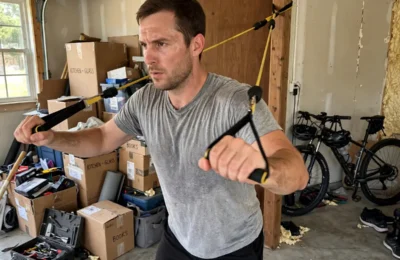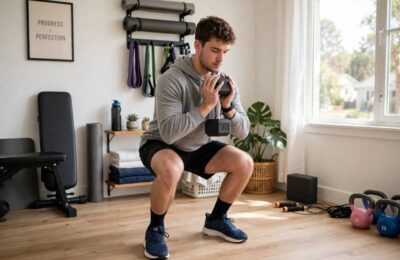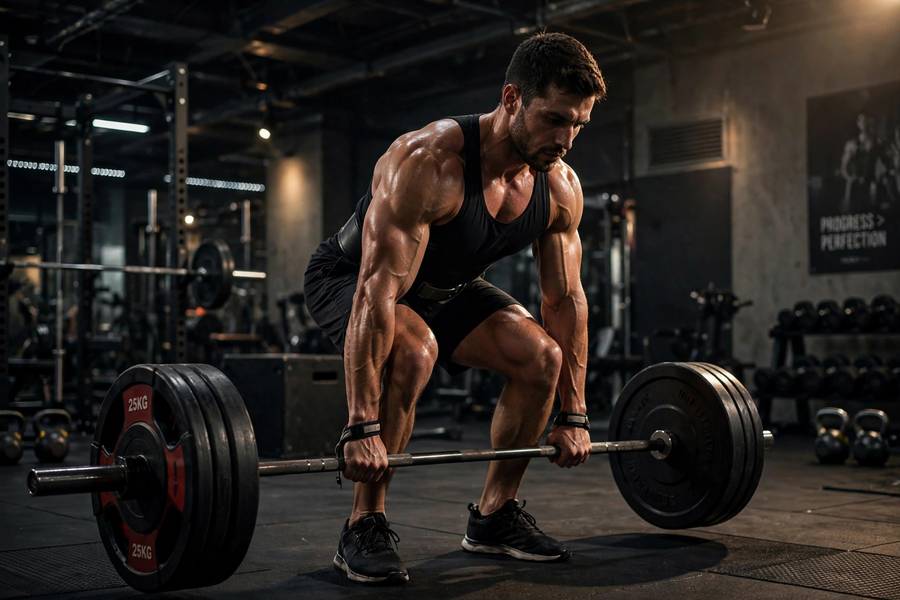
“Should I do compound or isolation exercises?” It’s one of the most common questions I get as a trainer — and the fitness internet has turned it into a holy war it doesn’t need to be. The answer isn’t either/or. It’s when and why.
Let me break down what each type actually does, where each wins, and how to combine them like someone who wants results instead of internet arguments.
Table of Contents
- The Short Answer
- What Compound Exercises Are
- What Isolation Exercises Are
- Head-to-Head: The Honest Comparison
- When Compound Exercises Win
- When Isolation Exercises Win
- How to Program Both Together
- Sample Splits
- Frequently Asked Questions
The Short Answer
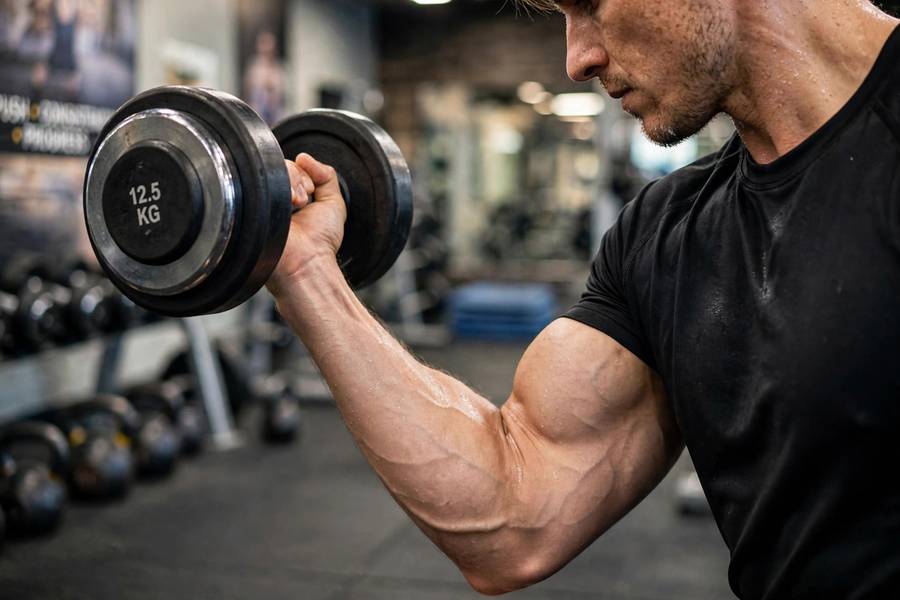
Compound exercises work multiple joints and muscle groups at once (squats, deadlifts, push-ups, rows). Isolation exercises target one joint and one muscle (bicep curls, leg extensions, lateral raises). Compounds build the most strength and muscle per unit of time; isolations fix weak points and add volume where compounds can’t reach. You need both — compounds as the foundation, isolations as the finishers.
What Compound Exercises Are
A compound exercise moves two or more joints simultaneously, which means multiple muscle groups share the work.
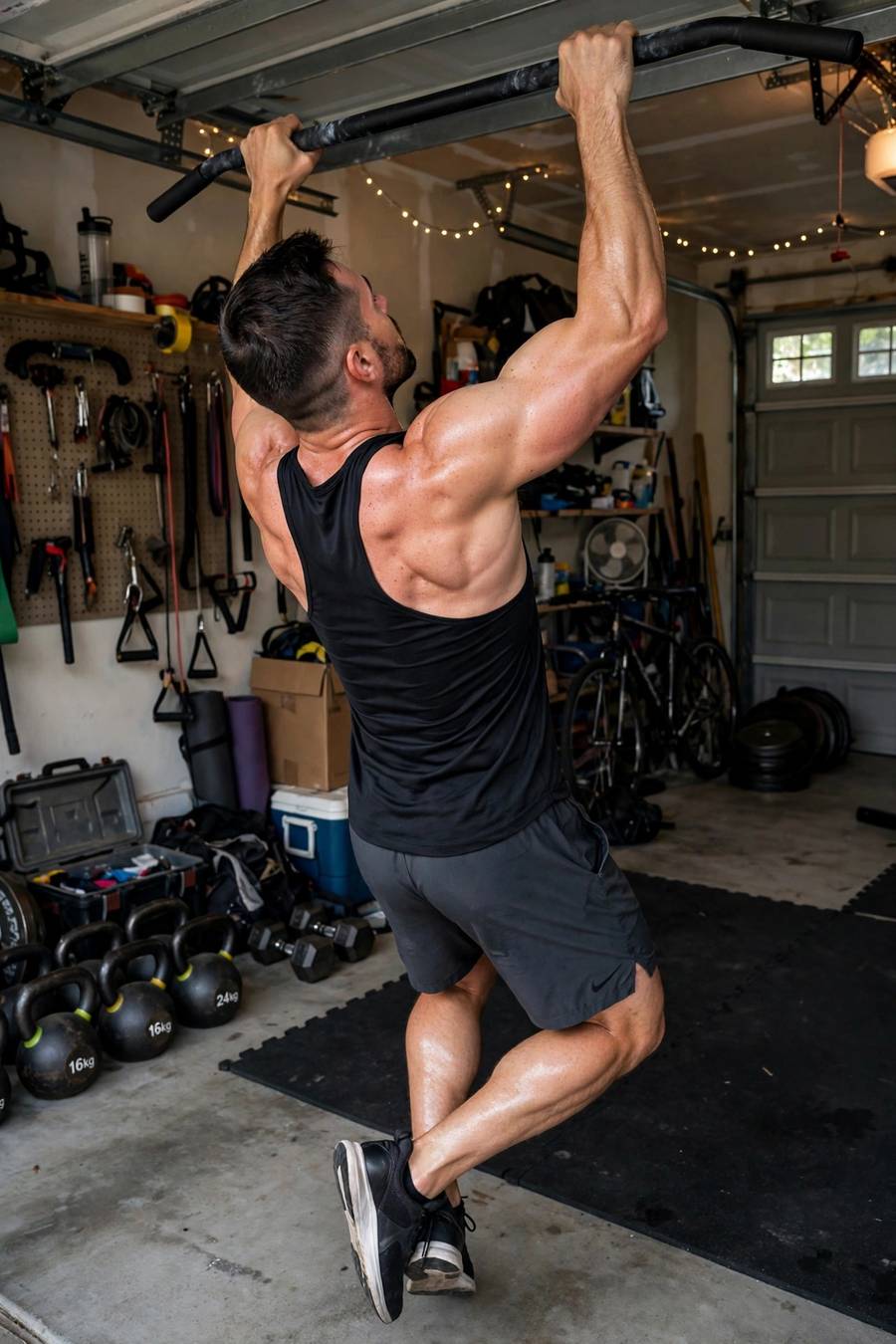
The big ones: – Squat — hips, knees, ankles; quads, glutes, core – Deadlift — hips, knees; entire posterior chain – Bench press — shoulders, elbows; chest, triceps, front delts – Overhead press — shoulders, elbows; delts, triceps, upper chest, core – Row — shoulders, elbows; lats, rhomboids, biceps, rear delts – Pull-up — shoulders, elbows; lats, biceps, core
And the bodyweight classics: push-ups, pull-ups, dips, lunges — all compounds. This is why bodyweight exercises can build serious muscle: the best bodyweight moves are compound by nature.
Why they’re efficient: One set of squats trains quads, glutes, adductors, core, and back stabilizers. To hit all that with isolations would take four exercises. When time is limited — and it’s always limited — compounds give the most return per minute.
What Isolation Exercises Are
An isolation exercise moves one joint, targeting primarily one muscle:
- Bicep curl — elbow only; biceps
- Tricep pushdown — elbow only; triceps
- Leg extension — knee only; quads
- Leg curl — knee only; hamstrings
- Lateral raise — shoulder only; side delts
- Calf raise — ankle only; calves
- Chest fly — shoulder only; chest (with some front delt)
Why they exist: Compounds are efficient but not complete. Your biceps work during rows, but they never become the limiting factor — your back gives out first. If you want bigger biceps, you eventually need direct work. Isolations let you target what compounds under-stimulate.
Head-to-Head: The Honest Comparison
| Compound | Isolation | |
|---|---|---|
| Muscle built per minute | Higher | Lower |
| Strength gains | Superior (heavier loads, neural adaptations) | Modest |
| Hormonal response | Greater (more muscle mass involved) | Smaller |
| Targeting weak points | Poor (strong muscles compensate) | Excellent |
| Joint stress | Higher (heavier loads) | Lower (lighter loads) |
| Skill/learning curve | Steeper (technique matters more) | Gentle |
| Injury risk if form breaks | Higher | Lower |
| Fun factor | Varies | Often higher (pump!) |
Neither column is “better.” They’re different tools. The debate is silly — it’s like arguing whether a hammer is better than a screwdriver.
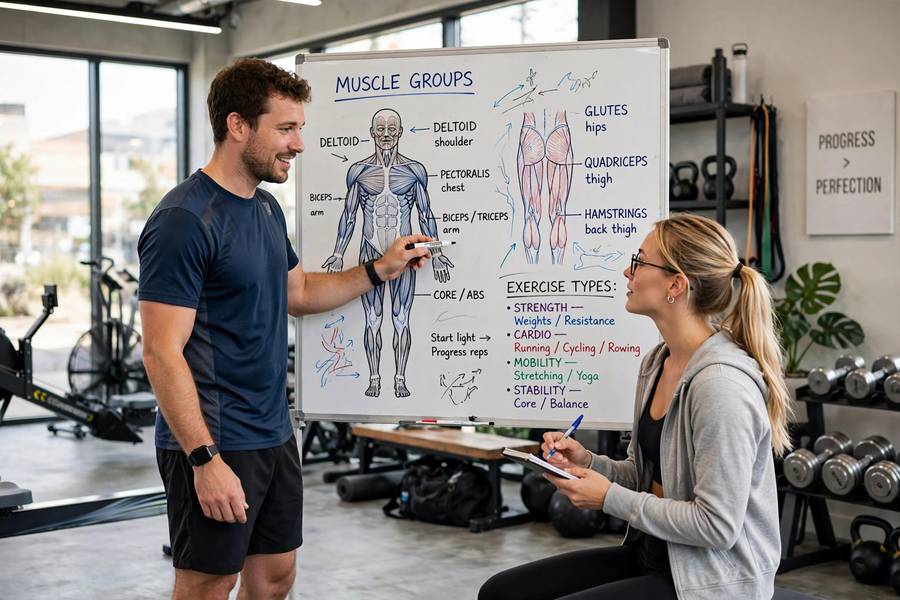
When Compound Exercises Win
You’re short on time. 3 full-body compound sessions per week beats 6 unfocused isolation days. If you can train 3×45 minutes, compounds are non-negotiable.
You want maximum strength. Strength is largely neural — your nervous system learning to recruit muscle. Heavy compounds drive this better than anything.
You’re a beginner. Beginners grow from everything, so do the thing with the biggest return. A beginner doing squats, presses, rows, and deadlifts will outgrow one doing 12 isolation exercises. Every time.
You want functional fitness. Compounds train movement patterns (push, pull, hinge, squat, carry) that transfer to real life. Nobody’s daily life requires an isolated leg extension pattern.
You’re cutting (losing fat). Preserve muscle with heavy compounds; they give the most stimulus per set when calories are low and recovery is limited.
When Isolation Exercises Win
Fixing imbalances. Your left arm is smaller, your upper chest lags, your calves won’t grow. Compounds let strong muscles dominate; isolations force the weak one to work.
Adding volume safely. After heavy compounds fry your nervous system, isolations let you add muscle-building volume without the systemic fatigue and injury risk of more heavy compounds.
Working around injuries. Bad back? You can still train arms, and do belt squats or leg extensions for legs. Isolations keep you training when compounds are off the table.
The pump and mind-muscle connection. Lighter isolation work lets you feel the target muscle working. This isn’t just vanity — the mind-muscle connection improves activation, especially for stubborn muscles.
Prehab and joint health. Face pulls, external rotations, terminal knee extensions — small isolation movements that keep shoulders and knees healthy. Boring, essential.
Bodybuilding detail. If the goal is aesthetics, compounds build the house and isolations do the interior decorating. You need both for a complete physique.
How to Program Both Together
The framework I use with clients:
1. Lead with compounds. Start each session with 1-2 heavy compound movements when you’re fresh. This is where strength is built.
2. Follow with isolations. After compounds, add 2-4 isolation exercises for the muscles you want to emphasize or that compounds under-hit.
3. Ratio by goal: – Strength focus: 70% compound / 30% isolation – Balanced muscle: 60/40 – Aesthetics/bodybuilding: 50/50 – Beginner: 80/20 (learn the big movements first)
4. Isolation placement matters. Do isolations after compounds, not before — pre-fatiguing with curls before rows just makes your rows worse. (The exception: deliberate pre-exhaustion, an advanced technique. Not for beginners.)
5. Don’t major in the minors. If your squat is 135 lbs, you don’t have a “weak point” — you have a weak everything. Build the foundation before specializing.
Sample Splits
3x/week full body (beginner/intermediate): – Squat (compound) → Romanian deadlift (compound) → Leg curl (isolation) → Calf raise (isolation) – Bench press (compound) → Row (compound) → Lateral raise (isolation) → Curl (isolation) – Deadlift (compound) → Overhead press (compound) → Lat pulldown (compound) → Tricep pushdown (isolation)
4x/week upper/lower: – Lower: Squat, Romanian deadlift, leg extension, leg curl, calves – Upper: Bench, row, overhead press, pull-up, curls, triceps
Notice the pattern: compounds first, isolations after, every session. For home training without equipment, my guide on how to build muscle at home shows how to apply this with bodyweight.
Frequently Asked Questions
Compound exercises move multiple joints and work several muscle groups at once (squats, deadlifts, push-ups). Isolation exercises move a single joint to target one muscle (bicep curls, leg extensions). Compounds build more strength and muscle per unit of time; isolations target weak points and add volume safely.
For strength and efficiency, yes — compounds should form the foundation. But “better” depends on the goal: isolations win for fixing imbalances, adding safe volume, working around injuries, and aesthetic detail. The smart approach is compounds first (60-70% of work), isolations after — not either/or.
Yes, especially as a beginner or intermediate — squats, deadlifts, presses, rows, and pull-ups build impressive overall muscle. But eventually weak points emerge (arms, side delts, calves) that compounds under-stimulate, which is when targeted isolation work becomes valuable.
You can build some muscle, but it’s inefficient — you’d need many more exercises and much more time to match what compounds deliver. Isolations also use lighter loads, producing less of the mechanical tension that drives growth. It’s possible but not advisable as a primary strategy.
Mostly compounds, with a little isolation. Beginners grow from everything, so the highest-return work is learning the big movements (squat, hinge, push, pull). Add 1-2 isolation exercises per session for arms or lagging areas — about an 80/20 split. Specializing too early is a common beginner mistake.
A good rule: 2-3 compound movements followed by 2-4 isolation exercises per session. By goal: strength 70/30 compound-to-isolation, balanced muscle 60/40, aesthetics 50/50. Always do compounds first when fresh; isolations after.