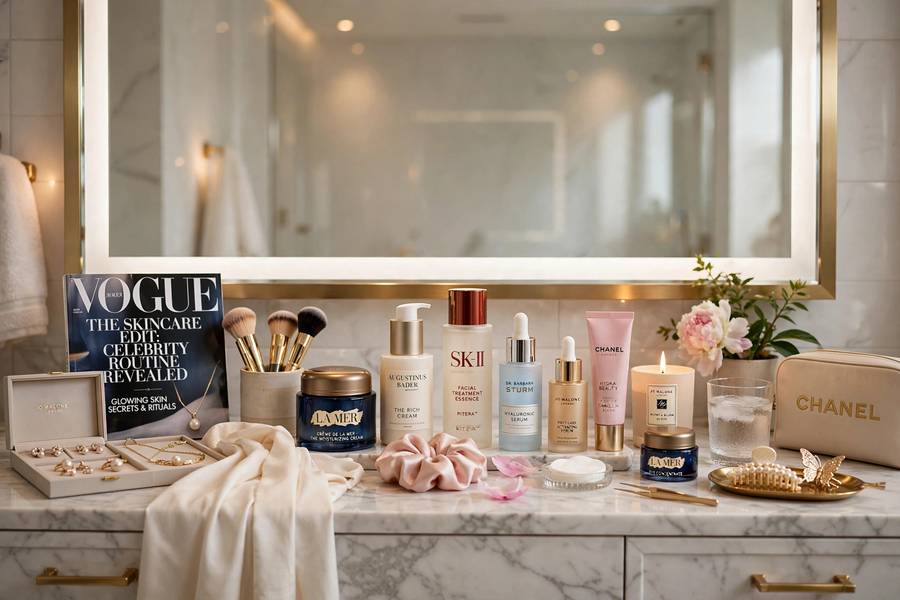
Every awards season, the same cycle plays out. A star glows on the red carpet, a journalist asks for their skincare secret, and the answer is always the same: “I just drink lots of water and use coconut oil.” Nobody — nobody — gets camera-ready skin from coconut oil. I cover the business behind celebrity images for a living, and skincare is one of the most profitable illusions in the industry. Let me show you what’s actually happening.
Because here’s the truth most beauty editors won’t say plainly: a celebrity skincare routine is only partly about products. It’s about money, access, timing, and an entire industry of specialists whose names never appear in the credits. The cream is the least interesting part.
Table of Contents
- The Routine You Hear About (The PR Version)
- The Routine That Actually Exists
- The Specialists Nobody Names
- The Endorsement Machine: Why Every Star Has a Skincare Line
- What Dermatologists Say Stars Do vs. What They Sell
- The Water-and-Coconut-Oil Lie (and Why It Persists)
- What You Can Actually Take From Celebrity Skincare
- Frequently Asked Questions
The Routine You Hear About (The PR Version)
The standard celebrity skincare interview follows a script so predictable you could set your watch by it:
- Cleanse — with a drugstore cleanser, allegedly. (It’s never a drugstore cleanser.)
- Tone — rose water, something “simple.”
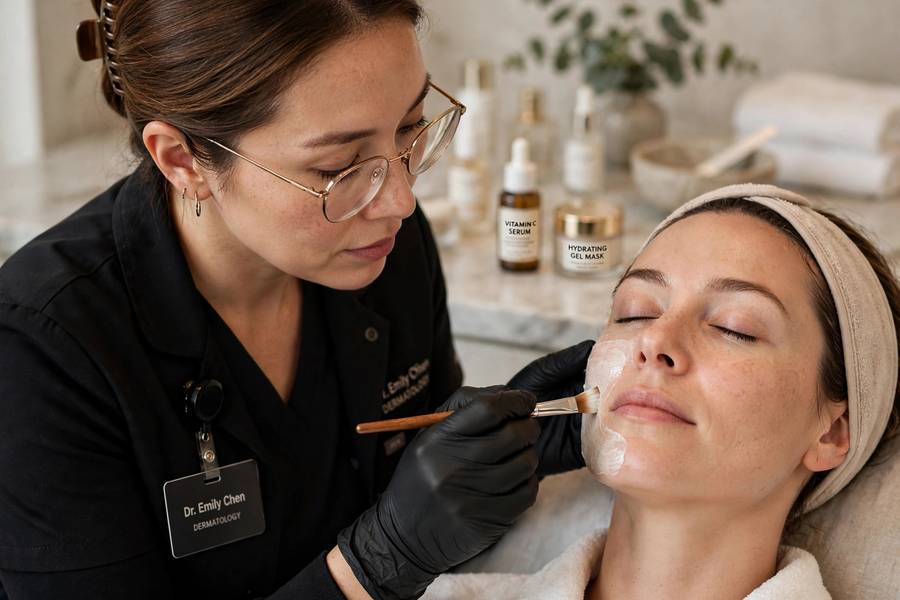
- Serum — a vitamin C serum “my facialist recommended.” (The facialist is on retainer.)
- Moisturize — sometimes their own brand’s moisturizer, always their own brand’s moisturizer if they have one.
- Sunscreen — the one honest part of every routine, because dermatologists have drilled it into them.
It’s a fine routine, honestly. It’s also about 15% of the story. What you don’t hear about: the quarterly laser appointments, the injectables, the LED beds, the oxygen facials before every public appearance, the fact that their “facialist” is a dermatologist-adjacent professional who costs more per session than most people spend on skincare in a year.
The Routine That Actually Exists
Let me build the real picture, based on what dermatologists who work with public figures actually describe (anonymously, because NDAs are standard in this business):
Daily basics. Yes, they cleanse, moisturize, and wear sunscreen. So do millions of people. The basics genuinely matter — no amount of expensive machinery outruns skipping sunscreen. This part isn’t a lie.
Prescription-strength actives. Retinoids (prescription tretinoin, not the gentler retinol you buy off the shelf), prescription-strength vitamin C and hydroquinone compounds — prescribed by dermatologists and adjusted regularly. The difference between prescription and over-the-counter actives is the difference between a scalpel and a butter knife. Both are knives. Only one does surgery.
In-office procedures. Chemical peels, microneedling, laser resurfacing, radiofrequency treatments, HydraFacials — on a schedule. A-list faces often do monthly or quarterly maintenance treatments at med spas or dermatology clinics. Before major events (premieres, awards, magazine covers), the cadence accelerates: a facial 48-72 hours before, sometimes an oxygen treatment the morning of.
Injectables. Botox, fillers, and newer biostimulators are routine maintenance for a large share of working actors — and not just the ones you’d guess. The goal at the top level is invisibility: you should look rested, not “done.” The celebrities whose work is obvious are the ones whose practitioners are mediocre, not the ones doing the most.
Nutrition and lifestyle support. Private chefs, sleep optimization, trainers — skin is downstream of all of it. When someone says their secret is “sleeping well,” they’re not wrong; they’re just omitting that they have a team making sleep well possible.
The Specialists Nobody Names
Behind every famously glowing face is a small army. The roster typically includes:
- A dermatologist — often a board-certified one with a private practice catering to public figures. They handle prescriptions, lasers, and the medical side.
- A facialist — frequently on retainer or paid per appearance cycle. The famous ones charge four figures per session and are booked out for months.
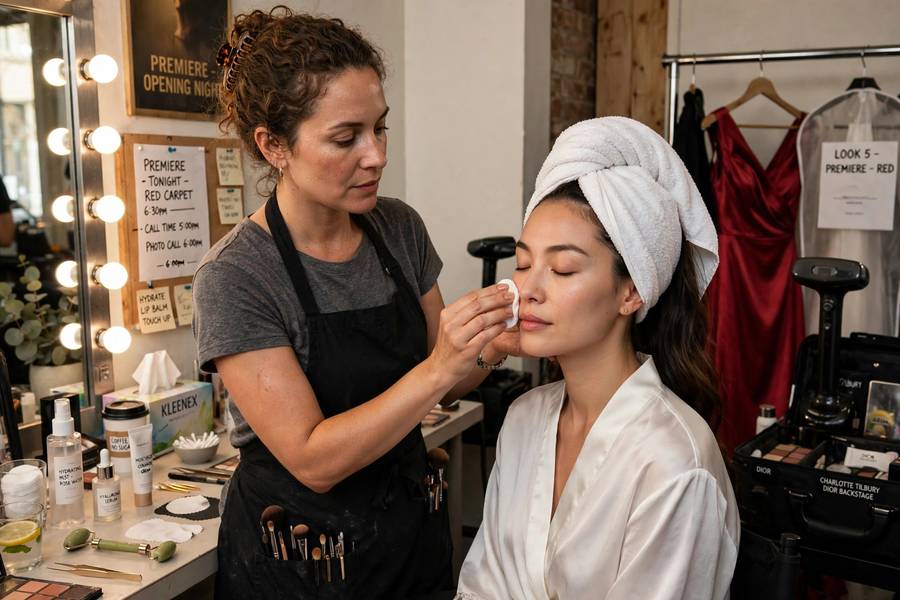
- A makeup artist who understands skin — the best red-carpet skin is often 40% prep, 60% makeup technique. Skin-prep specialists are the unsung heroes of every awards show.
- Sometimes an aesthetician embedded with the glam team — traveling with the star for press tours and shoots.
NDAs are standard. You will rarely hear a specific celebrity confirm who does their Botox. The specialists themselves rarely name clients — discretion is their entire business model. Which is why the “coconut oil” answers persist: the people who know can’t talk, and the people who talk are paid to sell you something.
The Endorsement Machine: Why Every Star Has a Skincare Line
This is where my coverage gets interesting, because celebrity skincare isn’t just personal — it’s a business vertical.
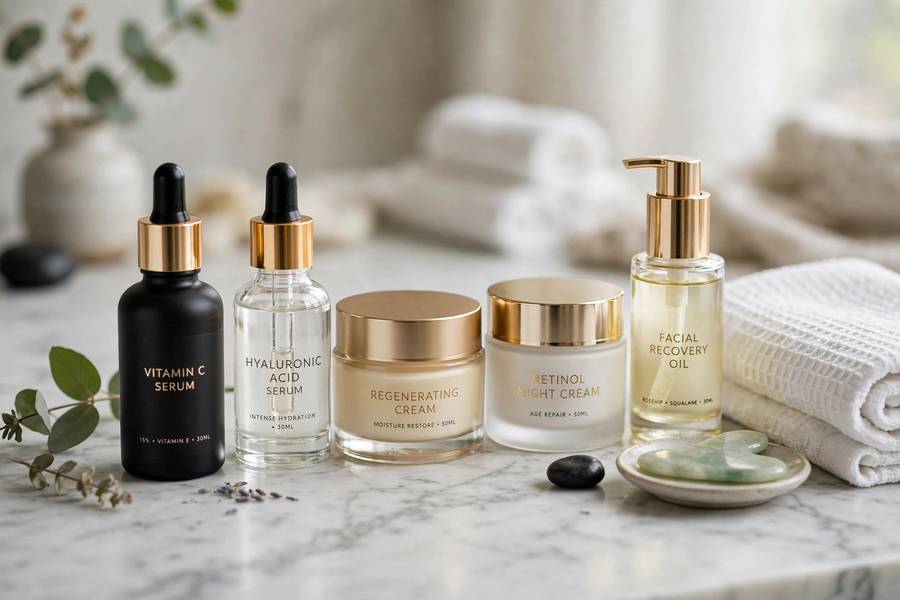
Launch economics: a celebrity skincare brand typically launches with a hero product (a serum, a moisturizer), priced premium, distributed through Sephora/Ulta or DTC. The star’s face is the marketing; a contract manufacturer often makes the formulas; a licensing or equity partner handles operations. The star may be genuinely involved in product development or may have approved three formulas from a lab’s existing catalog. Both happen. Only one gets admitted.
The margins are enormous — skincare routinely runs 80%+ gross margins — which is exactly why every celebrity with a Q-score gets pitched one. It’s the modern celebrity endorsement model evolved: instead of being paid to hold someone else’s cream, you own the cream and capture the margin.
Should you buy them? Judge the formula, not the face. Some celebrity lines have genuinely good products (developed with real chemists). Some are repackaged white-label formulas at 5x markup. The INCI list (ingredients list) doesn’t care whose name is on the box. Neither should you.
What Dermatologists Say Stars Do vs. What They Sell
Here’s the uncomfortable split, confirmed by multiple dermatologists who treat public figures:
What they do: sunscreen daily, prescription retinoids, in-office lasers and peels, injectables, strict sleep and nutrition, and — critically — they started young and never stopped. Consistency over decades beats any single product.
What they sell: a cream. Because you can’t sell “started tretinoin at 28 and got quarterly lasers for fifteen years” in a 30-second ad. You can sell a $68 jar.
The gap between those two lists is the entire business model of celebrity beauty. I’m not saying the creams don’t work — moisturizers moisturize, and good ones do it well. I’m saying the cream is the smallest variable in the equation, marketed as the whole equation.
The Water-and-Coconut-Oil Lie (and Why It Persists)
Why do stars keep giving answers that are obviously incomplete? Three reasons, all rational:
- NDAs and discretion. Admitting to specific procedures invites scrutiny and headlines. “Water and genetics” ends the conversation.
- Brand protection. If you’re selling a $68 moisturizer, you can’t say the real secret was a $3,000 laser. The product line needs the routine narrative to hold.
- The relatability premium. Audiences reward stars who seem “just like us.” Admitting to a six-figure annual skin budget breaks the spell. Talent agents understand this calculus perfectly — relatability is an asset, and assets get managed.
So the lie persists because everyone in the chain benefits from it: the star stays relatable, the brand stays sellable, the dermatologist stays discreet, and the magazine gets its quote. The only loser is the reader who buys the coconut oil expecting red-carpet skin.
What You Can Actually Take From Celebrity Skincare
Strip away the marketing and the machinery, and the genuinely transferable lessons are refreshingly boring:
- Sunscreen, every day. The single highest-ROI skincare habit in existence. Dermatologists are unanimous. Stars actually do this one.
- Retinoids work. If your skin tolerates them, they’re the most evidence-backed anti-aging topical in dermatology. Get a dermatologist’s guidance rather than guessing at strengths.
- Consistency beats intensity. The stars with the best skin at 50 started at 30 and never stopped. A simple routine you follow beats a 12-step routine you abandon.
- Sleep and diet show up on your face. Unsexy, true, free.
- Procedures are tools, not miracles. Lasers and peels do real things — but they’re multipliers on top of basics, not replacements for them.
You don’t need a celebrity’s budget. You need a dermatologist’s advice (one visit beats a year of guessing), sunscreen discipline, and the patience to let actives work for months, not days. That’s the routine. It was never the coconut oil.
Frequently Asked Questions
Beyond the basic cleanse-moisturize-sunscreen steps stars describe publicly, real celebrity skincare routines typically include prescription retinoids, regular in-office treatments (lasers, peels, microneedling), injectables, and a team of dermatologists and facialists — most of it undisclosed due to NDAs.
Sometimes, but the endorsed cream is usually the smallest part of their routine. Dermatologists who treat public figures report that prescription actives, in-office procedures, and lifestyle factors matter far more than any single over-the-counter product.
Three reasons: NDAs and a desire for privacy around procedures, protecting their own product lines (you can’t sell a $68 cream by crediting a $3,000 laser), and the relatability premium — audiences reward stars who seem low-maintenance.
Judge the formula, not the face. Some celebrity lines are developed with real cosmetic chemists and contain good ingredients; others are white-label formulas marked up heavily. Read the ingredients list and compare it to non-celebrity alternatives at the same price.
Daily sunscreen, prescription retinoids under a dermatologist’s guidance, consistent routines over years, good sleep, and patience — actives take months to show results. These boring basics are what actually drive the results.
There’s no single figure, but between dermatologist visits, quarterly in-office treatments, retainer facialists, and premium products, A-list annual skincare spending commonly reaches five or six figures — far beyond what product endorsements suggest.