
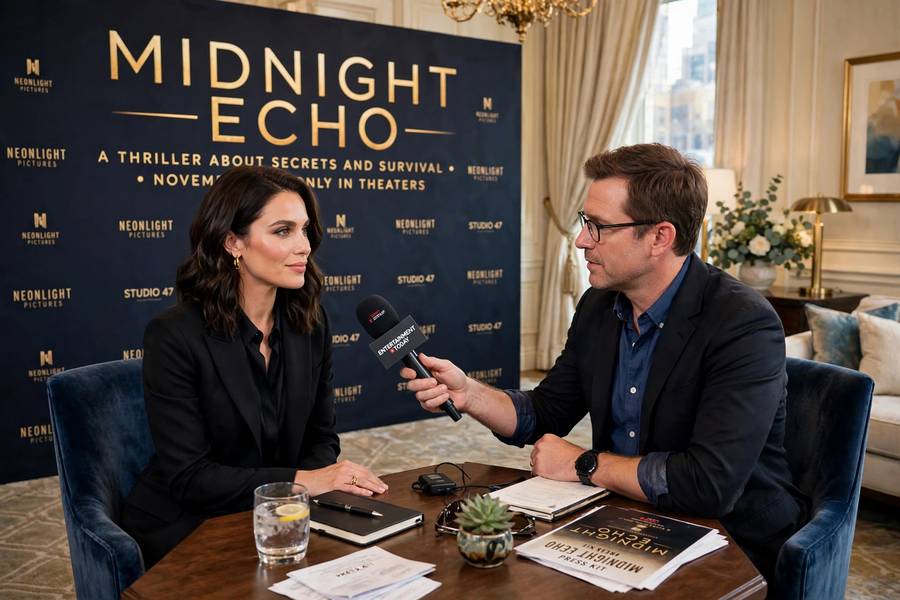
Every few weeks, somewhere in Los Angeles, a luxury hotel floor gets taken over by a single movie. Journalists shuffle from suite to suite in timed slots. A famous actor sits in the same chair for six hours, answering the same five questions with fresh enthusiasm each time. I covered these for years. So what is a press junket, exactly? It’s the film industry’s most efficient publicity machine: a studio flies dozens of journalists to one location, houses the cast in hotel suites, and runs a tightly choreographed assembly line of interviews — all to promote a single release.
Table of Contents
- What Is a Press Junket, Exactly?
- Anatomy of a Junket Day
- Why Studios Love the Junket Format
- The Junket From the Star’s Side
- The Junket From the Journalist’s Side
- When Junkets Go Wrong
- The Junket Era Is Changing
- Frequently Asked Questions

What Is a Press Junket, Exactly?
The word “junket” originally meant a pleasure trip — and the format keeps a ghost of that meaning. A studio picks a film, books out a hotel (in LA it’s usually the Four Seasons, the London, or the Ritz-Carlton), and invites press from around the world. Flights, hotel, meals: all covered by the studio. In exchange, each journalist gets a set number of interview slots — typically 4 to 8 minutes per cast member — plus access to a group press conference and sometimes the premiere.
The economics are straightforward. Instead of flying a star to forty cities, the studio flies forty journalists to one star. One grueling weekend generates hundreds of interviews, TV segments, print features, and now social clips, all landing in the two weeks before release. It’s publicity at industrial scale.
The term covers a few variants: the classic hotel junket, the set visit (press flown to the actual filming location, usually months before release), and the premiere junket (interviews on the red carpet itself). But the hotel version is the archetype — the one that built the modern celebrity interview economy.
And yes, before you ask: the ethics of it are exactly as murky as they sound. The studio pays for everything. The journalist’s job is to be independent. Those two facts sit in the same room all weekend, smiling at each other.
Anatomy of a Junket Day
Here’s how a standard junket day actually runs, hour by hour:
Morning: the roundtables. Print and online journalists are grouped at tables of six to eight. A cast member rotates through, spending 15–20 minutes per table. The format is conversational, but the math is brutal: with eight journalists and twenty minutes, you get maybe two questions each. Everyone’s recording; everyone’s smiling; the publicist hovers.
Midday: the one-on-ones. TV outlets and major publications get private slots — 4 to 8 minutes alone with the star. This is where the usable broadcast clips come from. The star has done this fourteen times already today. The good ones make number fifteen sound like number one.
Afternoon: the press conference. The full cast and director on a dais, a moderator, a room of journalists with microphones. These are the least revealing and most quotable events — everything said here is on the record and on message.
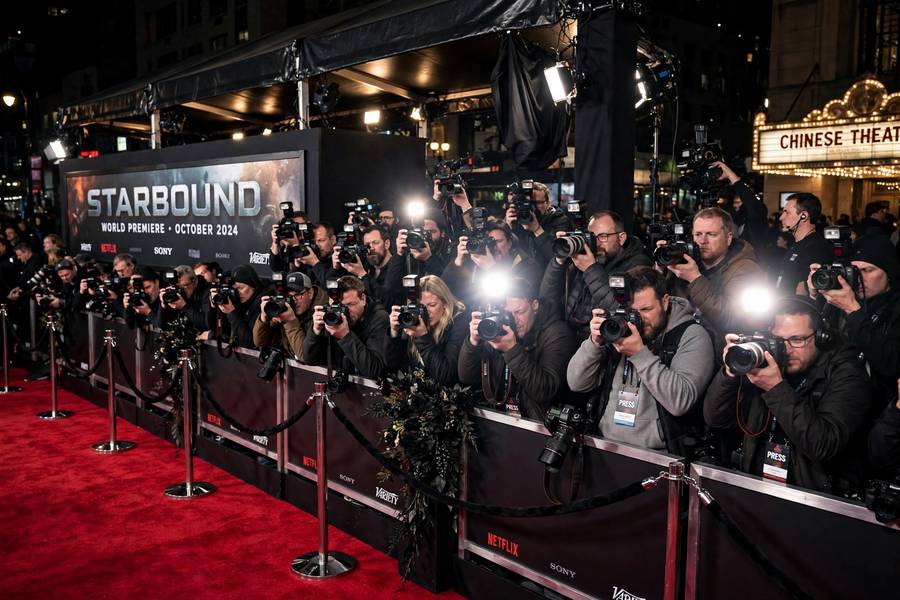
Evening: the premiere or screening. Sometimes the junket includes the film’s premiere that night, which means the red carpet becomes another interview gauntlet — 90 seconds per outlet, shouted questions over screaming fans.
Behind all of it: the publicist with the clipboard, the handler who ends interviews with a cheerful “last question!”, and the list of off-limits topics that every journalist received in advance. Ask about the divorce, the feud, the flop — and you’ll find your future invitations have quietly stopped arriving.
Why Studios Love the Junket Format
From the studio’s perspective, the junket is close to a perfect machine:
Efficiency. One weekend, one location, hundreds of pieces of coverage. No travel for the talent, no scheduling forty separate press tours. The cost — hotels, flights, catering for a hundred journalists — is a rounding error next to a $200 million marketing budget.
Control. The studio sets the terms: who gets access, how long the slots run, which topics are off-limits, and (crucially) the embargo dates that determine when everything publishes. It’s publicity with guardrails.
Volume of content. The modern junket doesn’t just produce interviews — it produces clips. A single eight-minute interview gets chopped into a dozen social videos, quote cards, and reaction GIFs. The junket is a content factory, and every journalist in the room is an unpaid shift worker.
The whole apparatus exists because of a simple truth about how movies are made: the film is only half the product. The other half is the two-week window where the entire culture is supposed to be talking about it. The junket manufactures that window.
The Junket From the Star’s Side
I once watched a very famous actor do twenty-two interviews in a single day and remain genuinely charming in all of them. I asked his publicist how. “He treats it like a performance,” she said. “Different audience every eight minutes.”
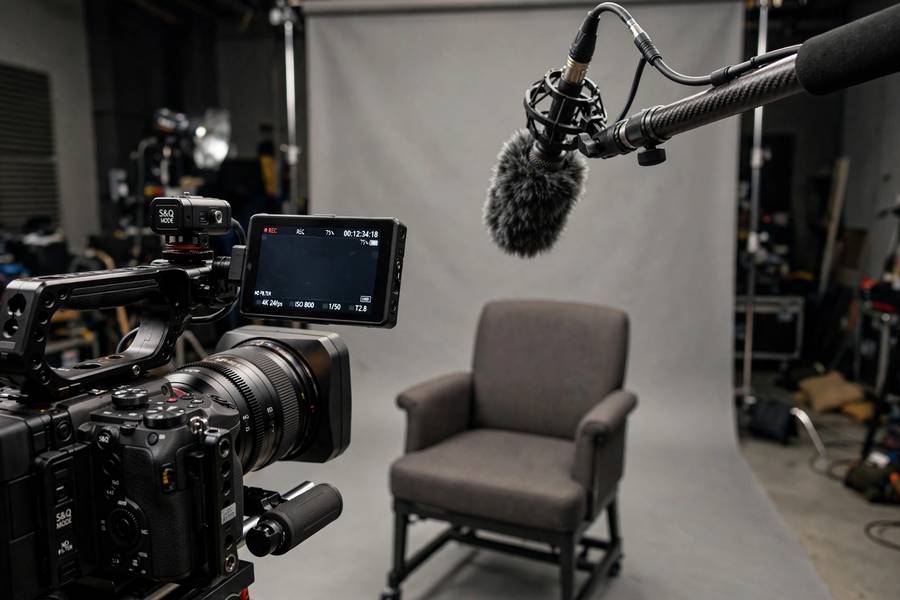
That’s the job. The star arrives, sits in the designated chair, and performs enthusiasm on loop. The questions repeat — “What drew you to this role?”, “What was it like working with [co-star]?”, “Can you describe your character in three words?” — and the answers must sound spontaneous every time. The best at it (Tom Cruise is the industry’s gold standard; he treats every junket like opening night) make it look effortless. The worst visibly deflate by hour three.
The psychological toll is real and rarely discussed. Imagine answering “So tell me about the movie” forty times while a stranger watches the clock. Imagine being asked about your personal life by someone who’ll be gone in six minutes. The stars who handle junkets well tend to share a trait: they treat journalists like scene partners rather than interrogators. The ones who don’t… well, that’s where the viral disaster clips come from.
There’s also the contractual reality. Promo tours aren’t optional — they’re written into the deal. A lead actor on a studio film typically owes a set number of junket days, talk show appearances, and premiere events. Refusing is breach of contract. The junket is work, full stop, and the smartest stars approach it the way they’d approach a difficult shoot: professionally, and with an exit strategy.
The Junket From the Journalist’s Side
Now the other side of the table — because I’ve sat there too, and it’s weirder than it looks.
The access is real but shallow. You get the star, in person, asking your questions. That’s genuinely valuable. But eight minutes isn’t a conversation; it’s a transaction. You walk in with three questions, you get through two and a half, and the publicist is already standing. The skill is in making those minutes count — asking the one question nobody else thought of.
The free trip problem. The studio pays for your flight and hotel. Every journalist in the building knows this creates, at minimum, the appearance of obligation. The reputable outlets handle it with disclosure and professional distance; the less reputable ones handle it by writing puff pieces. The audience can usually tell which is which.
The competition is invisible but fierce. A hundred journalists, all interviewing the same people about the same movie. Your editor wants something different. So you’re listening to the roundtable, hearing the same answers everyone else is getting, and trying to find the one unguarded moment — the laugh, the pause, the answer that went slightly off-script — that makes your piece the one people actually read.
The embargo clock. Everything is embargoed until a specific date and time. You file your piece, it sits, and then at 6am Pacific on release week, a hundred articles go live simultaneously. It’s a strange way to do journalism — more like a coordinated launch than reporting — but it’s the water everyone swims in.
When Junkets Go Wrong
The junket’s tight choreography means that when it breaks, it breaks memorably:
The hostile interview. Every few years, a clip goes mega-viral: a star snapping at a journalist, a journalist asking something outrageous, an interview that curdles on camera. These moments are catnip for the internet because they show the machinery malfunctioning — the polished promo surface cracking to reveal the stressed humans underneath.
The Junket Era Is Changing
Here’s the part the studios don’t say out loud: the classic junket is fading, and everyone knows it.
The pandemic broke the habit. When COVID shut down travel, junkets went virtual — Zoom interviews from living rooms, no hotels, no handlers hovering just off-camera. The studios discovered that virtual junkets cost a tenth as much and generated nearly as much coverage. Many never fully went back.
The audience moved. The eight-minute TV interview slot that justified the whole apparatus doesn’t command the audience it used to. The celebrity endorsement economy now runs on social clips, podcast appearances, and the star’s own channels. A celebrity with 50 million followers doesn’t need a journalist as an intermediary — they are the media.
The talent has leverage. A-list stars increasingly skip the full junket circuit, doing a handful of prestige appearances (a long-form podcast, one magazine cover) instead of forty identical interviews. The mid-tier press — the outlets that depended on junket access — feel this the most.
But it won’t die. The junket survives because it does something nothing else does: it concentrates the entire promotional apparatus into one controllable burst. For a big release, that burst still matters. The format is shrinking, going hybrid, losing its monopoly — but the hotel suites will keep filling up, at least for the movies that need them.
What we’re watching is a slow unbundling: the interview, the clip, the premiere, the social moment — all separating into their own channels. The junket was the bundle. The future is à la carte.
Frequently Asked Questions
A press junket is a studio-organized publicity event where journalists are flown to one location — usually a hotel — for a concentrated schedule of interviews with a film’s cast and director, typically lasting a weekend and timed before the release.
The studio pays for everything: journalists’ flights, hotels, and meals. In exchange, outlets commit to coverage, usually under embargo until a set date. This arrangement is standard but creates ongoing ethical debate in entertainment journalism.
One-on-one TV interviews usually run 4 to 8 minutes. Print roundtables give each cast member 15 to 20 minutes with a table of six to eight journalists. Stars may do twenty or more interviews in a single day.
They’re a hybrid: real access under controlled conditions. Topics are often restricted in advance, time is extremely limited, and the studio funds the trip. Good journalists can still extract genuine moments, but the format is built for promotion first.
Usually yes — promotional duties including junkets, talk shows, and premieres are written into actors’ contracts for studio films. Refusing can constitute breach of contract. Agents negotiate the specific obligations during deal-making.
Yes, but shrinking. Virtual junkets proved cheaper during the pandemic, stars increasingly prefer a few prestige appearances over dozens of identical interviews, and social media has reduced reliance on press intermediaries. The format persists mainly for major releases.