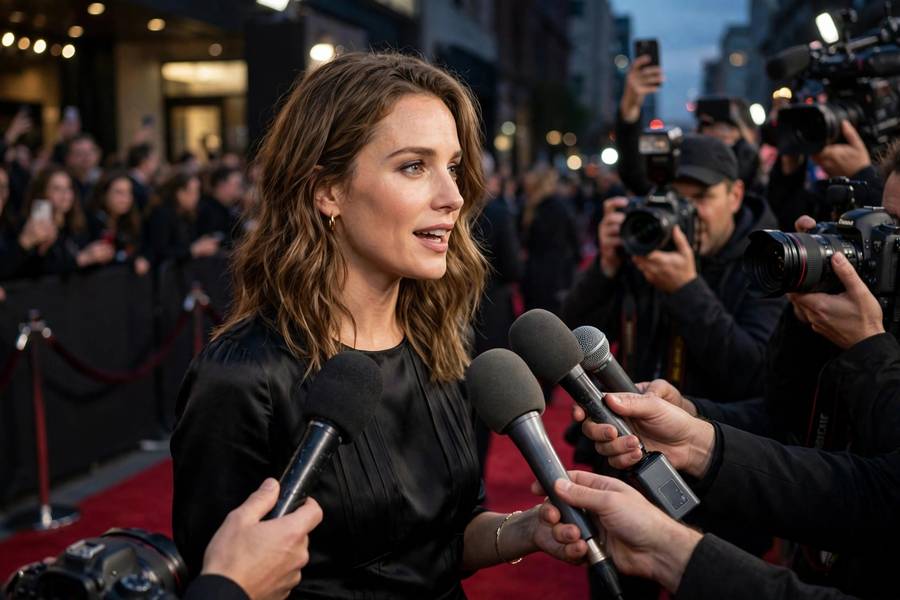
A press tour is the multi-city, multi-week promotional campaign where a film’s stars travel from interview to interview — talk shows, junkets, premieres, podcasts, TikToks — selling the movie to the public. When you see an actor on five talk shows in one week, that’s a press tour.
It looks glamorous. It’s actually one of the most grueling, strategically choreographed operations in entertainment — part marathon, part theater, part war. I’ve covered these for years, and the gap between the breezy 4-minute interview and the machine behind it is enormous. Let me take you inside.
Table of Contents
- What a Press Tour Actually Is
- The Anatomy: What a Tour Really Looks Like
- The Junket: Hollywood’s Strangest Ritual
- Talk Shows, Podcasts, and the Viral Hunt
- Who Pays and What It Costs
- The Strategy: What Tours Are Really Selling
- When Press Tours Go Wrong
- Frequently Asked Questions
What a Press Tour Actually Is
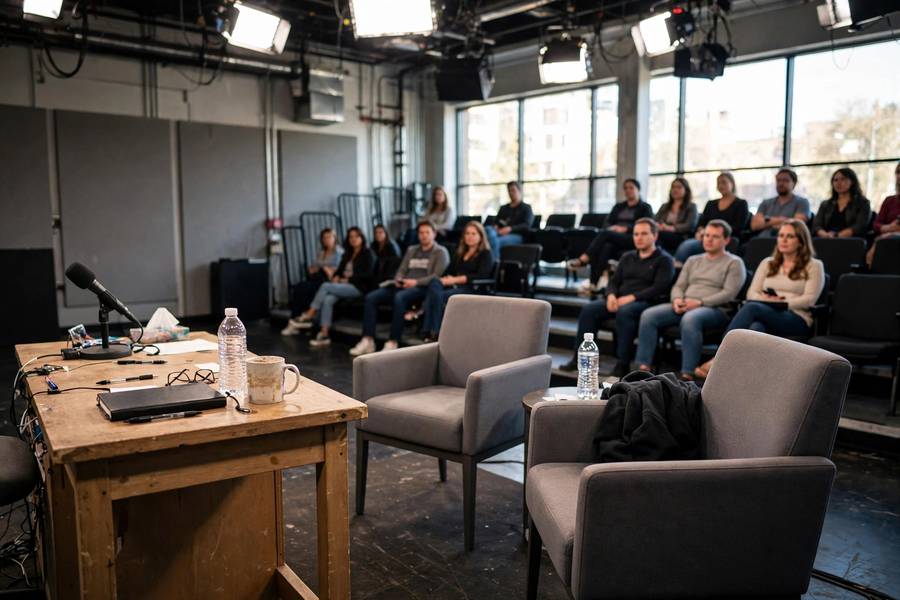
A press tour is a coordinated series of media appearances by a film’s cast (and sometimes director) in the weeks before release, designed to generate coverage and audience awareness.
The timing is precise: typically 2-4 weeks before opening, peaking in the final 7-10 days. Studios spend $20-100M+ marketing a major film; the press tour is the earned media engine inside that spend — coverage they don’t directly pay for (though they pay plenty to enable it).
The contractual part matters: actors are obligated. Promotion requirements are baked into contracts — a set number of days, specified appearances. The breezy “so happy to be here!” energy is, in part, a professional obligation being fulfilled on 4 hours of sleep. Keep that in mind and the whole spectacle makes more sense.
The Anatomy: What a Tour Really Looks Like
A major film press tour, day by day:
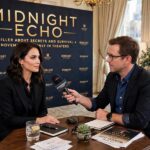
Week 1-2: The junket. Cast assembles in Los Angeles (or London). Days run 8am-6pm: roundtable interviews with press from around the world, 4-6 minutes each, 30-50 journalists a day. Same questions, same answers, all day. Actors develop what I call “junket brain” — a pleasant autopilot that can discuss the film charmingly while mentally elsewhere.
Week 2-3: Talk shows and features. Fallon, Kimmel, Colbert — the late-night circuit. Morning shows. Magazine covers (shot months earlier, timed to release). Podcast appearances, increasingly. Each stop is negotiated: which stories they’ll tell, what’s off-limits.
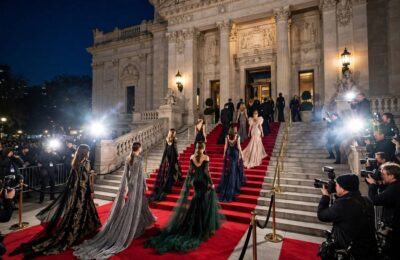
Premieres. The red carpet events — LA, London, sometimes Tokyo or Mexico City. These are productions: arrivals choreographed, interviews slotted in 3-minute windows, photographers positioned. The “spontaneous” red carpet moment was scheduled.
The digital layer (new). TikTok challenges, Instagram takeovers, YouTube interview formats (hot wings, lie detectors, autocomplete games), meme-able moments engineered for clipping. A single viral clip can outperform a week of traditional press — so tours now design for virality.
International. For global releases: London, Paris, Berlin, Tokyo, Seoul, Mexico City, São Paulo. Each market gets localized angles. The cast flies commercial-to-private on schedules that would break most humans.
A lead actor on a major tour might do 100+ interviews in three weeks. Let that number sit for a moment.
The Junket: Hollywood’s Strangest Ritual
The press junket deserves its own section because it’s genuinely bizarre:
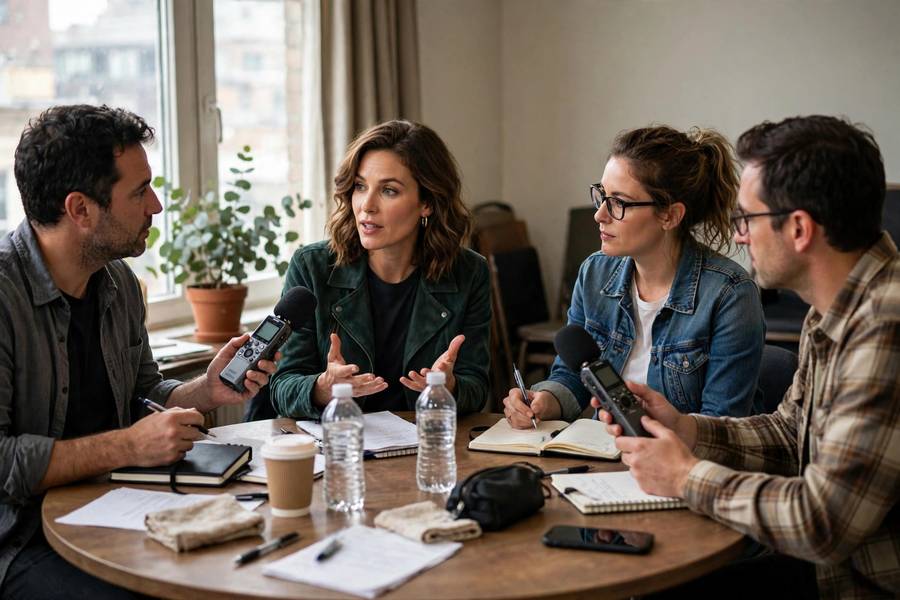
Dozens of journalists fly in (traditionally at the studio’s expense — yes, really; the ethics of this are debated endlessly). They’re housed in a hotel. The cast rotates through: each journalist gets a few minutes with each star, often at small round tables with 3-4 other reporters.
The questions repeat. “What drew you to this role?” gets asked 200 times. The answers become performances — polished, consistent, charming. Experienced junket journalists try to break the pattern with one unexpected question; experienced stars deflect with practiced warmth.
The economics are circular and everyone knows it: studios fund the junket, journalists get access, outlets get content, studios get coverage. It’s not corruption exactly — it’s cooperation, and the audience is the product being moved through the system. The honest outlets disclose the arrangement; the content is what it is.
What junkets reveal: stars are skilled laborers in the attention economy. The ability to be interesting about the same film for the 90th time is a genuine professional skill, and the good ones make it look effortless. It isn’t.
Talk Shows, Podcasts, and the Viral Hunt
The modern tour’s center of gravity has shifted:
Late-night remains the prestige stop — but the real prize is the clip. A 6-minute segment exists to produce 45 viral seconds. Bookers, publicists, and hosts all know this; the “spontaneous game” was workshopped.
Podcasts (long-form) are where actors actually reveal things — 90 minutes can’t be faked the way 4 minutes can. Smart publicists now steer clients to respected interviewers for the “real” conversation, balancing the viral hits.
The viral hunt has changed tour behavior: stars now prepare meme-able moments, rehearse the funny story, even coordinate with co-stars on bits. Authenticity is manufactured — which sounds cynical until you realize the audience wants the bit. The transaction is honest: entertainment for attention.
What’s dying: the print feature as kingmaker. Magazine covers still matter for prestige, but a TikTok clip reaches 10x the audience. The power migration from editors to algorithms is the biggest structural shift in film promotion in decades.
Who Pays and What It Costs
The money, because that’s where I live:
Studio marketing budgets for major films: $50-150M+ globally. The press tour is a fraction of that but a critical one — talent travel, hotels, stylists, glam teams, security, premiere events, junket hosting.
The hidden costs: stylists ($5k-20k+ per appearance for top stars), glam squads traveling with talent, private aviation between cities, security details. A top star’s tour wardrobe alone can run six figures.
Who pays the talent? The actors aren’t paid extra for the tour — it’s contractual. Their teams (publicists, stylists) are paid by the actor. The studio covers logistics.
ROI logic: a successful tour generates hundreds of millions of media impressions. Against a $100M marketing budget, the tour’s few million in costs is efficient — if the film connects. If the film is bad, no tour saves it. Marketing can open a film; only the film can sustain it.
The Strategy: What Tours Are Really Selling
Look past the logistics and every tour sells three things:
1. Awareness. “This movie exists, on this date.” Still the primary job, especially for non-franchise films.
2. Liking. Audiences see movies starring people they like. The tour manufactures liking: the funny story, the humble anecdote, the charming co-star dynamic. You’re not just learning about the film — you’re being sold on spending two hours with these humans.
3. Narrative. Every tour has a story: the comeback, the passion project, the unlikely friendship, the grueling shoot. The narrative gives press something to write beyond “movie exists.” The best tour narratives are true-ish and endlessly repeatable.
The meta-product: in the franchise era, tours also sell the brand’s health — “the cast loves each other, the universe is thriving.” A visibly miserable press tour (it happens) can genuinely damage a $200M asset. Which is why “junket brain” exists: the show must go on, smiling.
For the endorsement-adjacent machinery, see what a celebrity endorsement actually involves — tours and endorsements run on the same likability economics.
When Press Tours Go Wrong
The failure modes are spectacular precisely because the machine is so controlled:
The viral disaster. One bad answer, clipped and decontextualized, eclipses weeks of work. Media training exists to prevent this; it fails regularly because humans are human at hour 14 of junket day.
Co-star tension, visible. When cast members clearly dislike each other, every joint appearance becomes a body-language decoding event. The internet notices everything.
The overexposure backlash. Too much tour can breed contempt — audiences tire of seeing the same face everywhere. There’s a saturation point, and crossing it turns promotion into annoyance.
Saying nothing, repeatedly. The over-trained star who answers every question with platitudes becomes a meme of emptiness. Audiences can smell the media training; the sweet spot is prepared spontaneity.
Skipping the tour. Rare, but some stars minimize promotion as a brand statement. It works for the established; for newcomers, it’s career malpractice — the tour is part of the job.
The through-line: tours are high-wire acts. The control is extensive but never total, and the moments that break through — good or bad — are the uncontrolled ones.
More industry machinery in our Celebrity coverage.
Frequently Asked Questions
A press tour is a coordinated series of media appearances — talk shows, junkets, premieres, podcasts — by a film’s cast in the weeks before release, designed to generate coverage and audience awareness. Actors are contractually obligated to participate.
A press junket is an event where studios host journalists (often covering travel) for brief roundtable interviews with a film’s cast — typically 4-6 minutes per journalist, dozens per day. It’s the highest-volume, most repetitive part of film promotion.
Typically 2-4 weeks before a film’s release, peaking in the final 7-10 days. Major global releases add international legs (London, Tokyo, etc.). A lead actor might do 100+ interviews across the tour.
Not separately — promotion is a contractual obligation built into their film deal. The studio covers tour logistics (travel, hotels, events); actors pay their own teams (stylists, publicists, glam).
Contractual obligation plus self-interest: tours drive the box office that determines their next salary. They generate awareness, build audience liking for the cast, and create the viral moments modern film marketing depends on.