How to Do Lunges Properly: Form Guide for Real Results

Here’s a number from my years as a trainer: I’d estimate 70% of the lunges I watch in gyms are wrong enough to miss the benefits and earn the person knee pain instead. The lunge isn’t complicated — but the details matter enormously. Let me walk you through proper form, the mistakes I see daily, the variations worth your time, and how to actually program them.
Why Lunges Deserve a Spot
No-excuses case for the lunge:
Unilateral strength. Each leg works independently. This fixes the imbalances bilateral exercises (squats, leg press) hide — your strong leg can’t compensate for the weak one.
Real-world movement. Walking, running, climbing stairs — life is a series of single-leg movements. Lunges train the pattern you actually use.
Glute and quad development. Done right, lunges hammer the glutes, quads, and adductors while challenging balance and core stability. It’s a lot of muscle for one exercise.
No equipment needed. Bodyweight lunges are brutally effective. Add dumbbells when they get easy. This is bodyweight exercises at their best — no gym required.
Balance and stability. The split stance challenges proprioception in ways machines never will. Older clients especially benefit — fall prevention starts with single-leg competence.
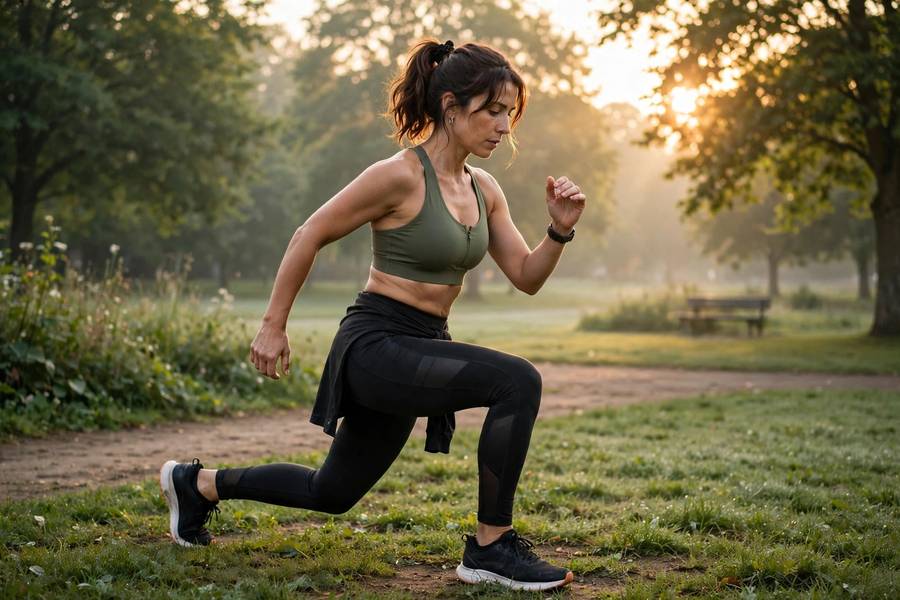
The Basic Lunge: Step by Step
Let’s build the standard forward lunge from zero:
-
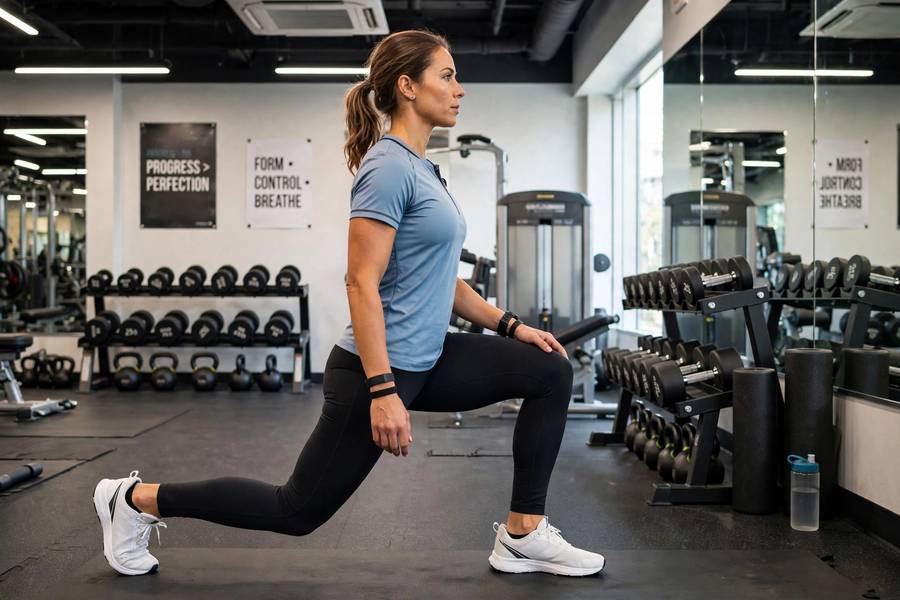
Stand tall. Feet hip-width apart, chest up, core braced like someone’s about to poke your stomach. Arms at sides or hands on hips.
-
Step forward. Take a generous step — longer than you think. About 2-3 feet for most people. You should feel stable, not stretched.
-
Descend straight down. This is the key cue most people miss: think down, not forward. Lower your body vertically until both knees are at roughly 90 degrees.
-
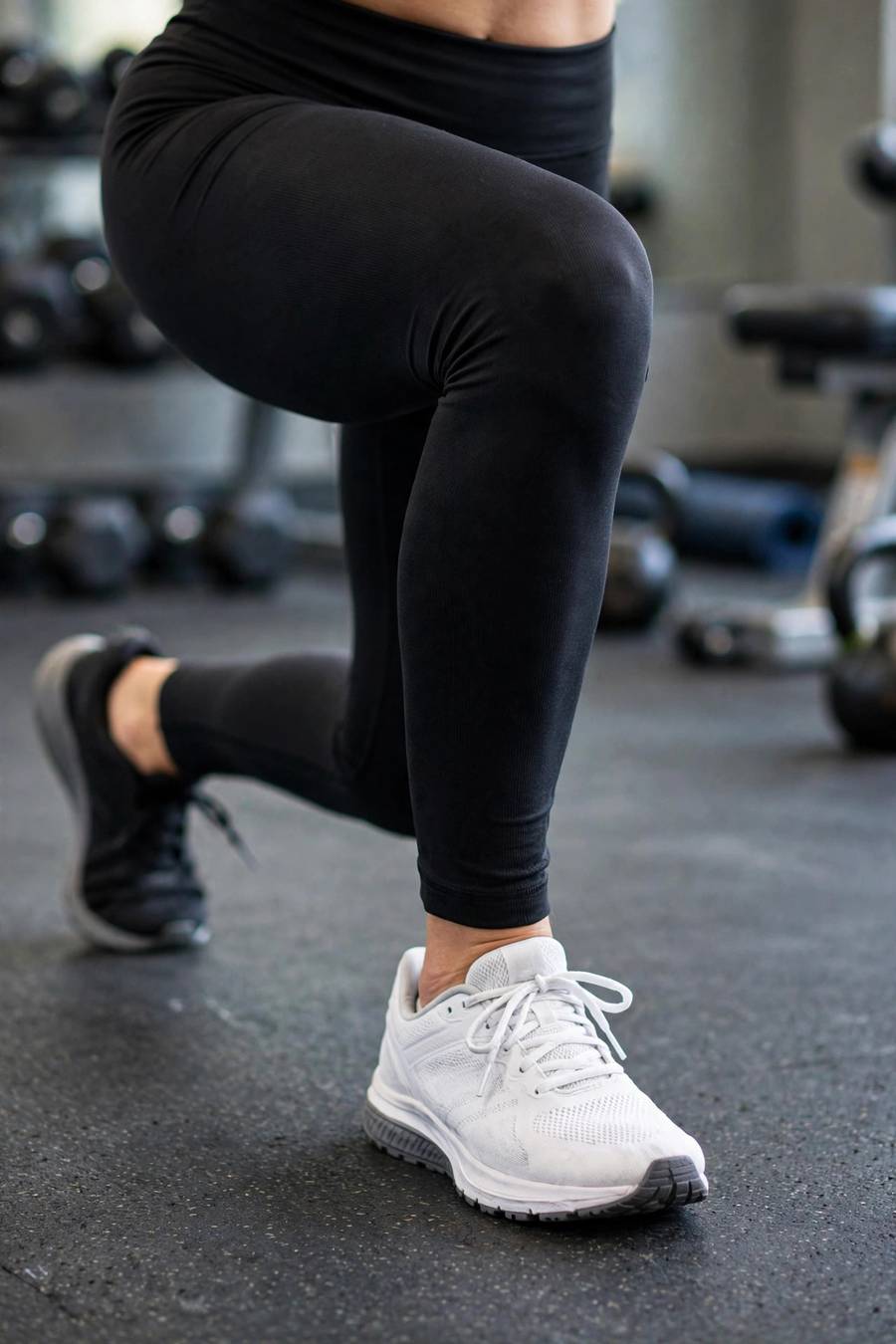
Check positions. Front knee over (not past) the ankle. Back knee hovering just above the floor. Torso upright — a slight forward lean is fine, collapsing forward is not.
-
Drive up through the front heel. Push the floor away, bringing the back foot forward to return to standing. That’s one rep.
-
Alternate or repeat. Either alternate legs each rep or do all reps on one leg then switch. Both work — alternating is better for conditioning, same-side is better for strength focus.
Tempo: 2 seconds down, brief pause, 1 second up. No bouncing.
The 5 Form Cues That Matter Most
If you remember nothing else, remember these:
1. “Elevator, not escalator.” Your body goes straight down. If your front knee shoots forward over your toes, you’re pushing forward instead of dropping down.
2. “Proud chest.” Chest up, shoulders back. The moment your torso collapses forward, your lower back takes over and your glutes check out.
3. “Quiet back knee.” The back knee should kiss the floor, not slam it. Control the descent — the eccentric (lowering) phase is where the muscle-building happens.
4. “Screw the front foot.” Imagine screwing your front foot into the floor (without actually rotating). This engages the glute and keeps the knee tracking correctly.
5. “Long step.” Short steps jam the front knee forward and limit range of motion. When in doubt, step longer.
Common Mistakes (I See These Daily)
Knee caving inward. The front knee collapses toward midline. Fix: think “knee over pinky toe,” reduce range of motion until you can control it, strengthen glute medius.
Torso tipping forward. Usually from tight hip flexors or weak core. Fix: shorten the step slightly, brace harder, and stretch hip flexors regularly.
Bouncing off the back knee. Using the floor for momentum. Fix: hover — if you can’t, you’re going too deep for your current strength.
Steps too short. The #1 beginner mistake. It turns the lunge into an awkward knee-bender. Fix: deliberately overstep for a week until long feels normal.
Holding breath. People brace by holding their breath through whole sets. Fix: exhale on the way up, inhale on the way down. Breathing isn’t optional.
Rushing. Lunges done fast are lunges done badly. If you can do 30 fast lunges, you can’t do 10 slow ones — and the slow ones are the ones that count.
Lunge Variations Worth Doing
Once the basic lunge is solid, these are the variations I actually program:
Reverse lunge. Step backward instead of forward. Easier on the knees (less forward shear), great for beginners and anyone with knee sensitivity. My default recommendation for most clients.
Walking lunge. Continuous forward movement. Adds a conditioning element and challenges balance more. Needs space — a hallway or backyard works.
Lateral lunge. Step to the side. Hits the adductors and glutes in a different plane. Most people are weak here — that’s exactly why to do them.
Bulgarian split squat. Back foot elevated on a bench. The king of single-leg exercises — brutal, effective, humbling. Master regular lunges first.
Curtsy lunge. Back leg crosses behind. Great glute medius emphasis. Keep it controlled — the rotation adds complexity.
Jump lunge. Explosive switch in the air. Advanced only, and hard on joints. Earn this one.
What I’d skip: Most circus variations (lunge with overhead press and a twist on a Bosu ball). Complexity isn’t effectiveness.
How to Program Lunges
Beginners: 2-3 sets of 8-10 reps per leg, twice a week, bodyweight. Focus entirely on form.
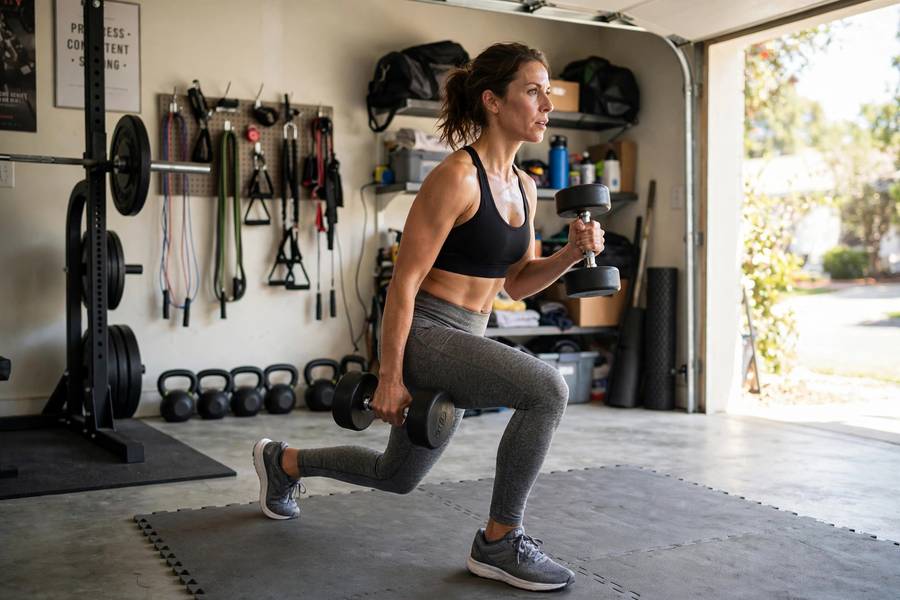
Intermediate: 3-4 sets of 10-12 per leg, adding dumbbells when bodyweight gets easy. Twice weekly.
Advanced: Bulgarian split squats or weighted walking lunges, 3-4 sets of 8-12, plus a lighter reverse-lunge day for volume.
Placement in workout: After your main compound lift (squats/deadlift) as an accessory, or as the main lower-body movement on a bodyweight day. Don’t do heavy lunges before heavy squats — your legs will file a complaint.
Progression: Add reps first, then weight, then harder variations. The best time to exercise matters less than just showing up consistently.
Knee Pain and Lunges
The question I get most: “Lunges hurt my knees — should I stop?”
First: Pain is information, not a stop sign. Sharp pain = stop and assess. Dull ache that improves as you warm up = often manageable.
Common fixes: – Switch to reverse lunges (less knee stress) – Shorten range of motion temporarily – Check the cues above — most knee pain comes from form, not the exercise – Strengthen the muscles around the knee (terminal knee extensions, step-ups)
See someone if: Pain is sharp, there’s swelling, it doesn’t improve in 2-3 weeks of modified training, or it affects daily life. I’m a trainer, not a doctor — persistent pain needs professional eyes.
The truth: Properly performed lunges protect knees long-term by building the muscles that stabilize them. Avoiding them forever because of fixable form issues is the wrong trade.
Frequently Asked Questions
Stand tall, take a long step forward, and lower your body straight down (think elevator, not escalator) until both knees are at 90 degrees. Keep your chest proud, front knee over the ankle, back knee hovering above the floor. Drive up through the front heel. Use a 2-seconds-down, 1-second-up tempo with no bouncing.
Slightly past is fine for most people — the “never past toes” rule is overstated. What matters more: the knee tracks in line with the foot (no caving inward) and your weight stays mid-foot to heel, not on your toes. If your heel lifts, your step is too short.
Properly performed lunges protect knees by strengthening the stabilizing muscles. Most lunge-related knee pain comes from form issues (knee caving, short steps, torso collapse) — fixable problems. Switch to reverse lunges for less knee stress, and see a professional for sharp pain, swelling, or pain lasting beyond 2-3 weeks.
Beginners: 2-3 sets of 8-10 reps per leg, twice weekly, bodyweight. Intermediate: 3-4 sets of 10-12 per leg with dumbbells. Focus on slow, controlled reps — 10 good lunges beat 30 rushed ones. Add reps first, then weight, then harder variations like Bulgarian split squats.
Forward lunges step ahead and emphasize the quads slightly more; reverse lunges step back, creating less forward knee stress — making them better for beginners and sensitive knees. Both build the same muscles. I default most clients to reverse lunges and add forward/walking variations as they advance.
Yes — lunges are excellent glute builders when done right. Key factors: a long step (more hip extension = more glute), driving through the front heel, keeping the torso upright, and controlling the descent. For maximum glute emphasis, try Bulgarian split squats and focus on feeling the glute stretch at the bottom.