
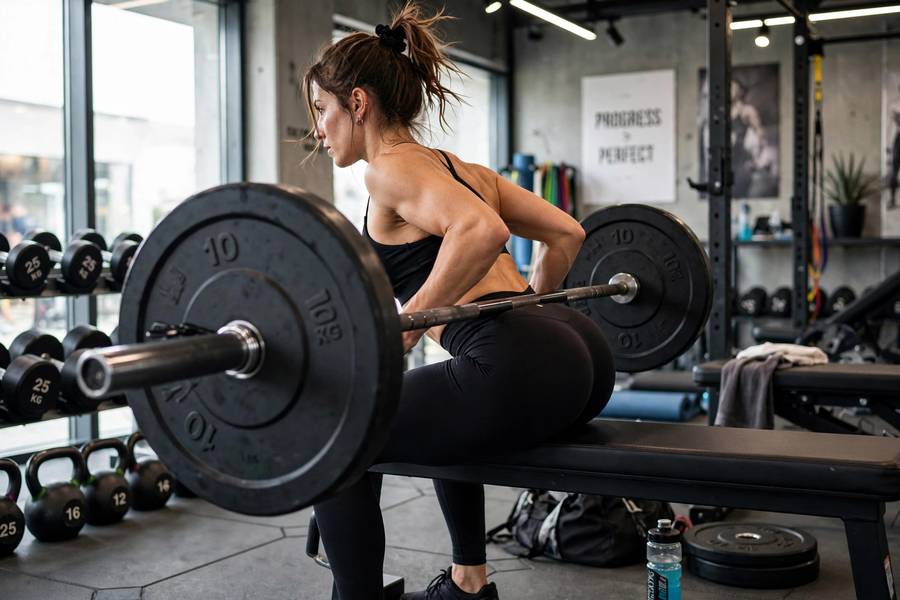
The hip thrust went from obscure to everywhere in about a decade, and for once the hype is deserved. If glute strength matters to you — and it should, whether you care about performance, posture, or aesthetics — the hip thrust is the most effective glute builder we have. The glutes are the biggest muscle in your body, and most people’s are asleep from years of sitting.
But walk into any gym and you’ll see hip thrusts done badly: tiny ranges of motion, backs hyperextended, necks craned, weights bounced. The movement looks simple, which tricks people into thinking form doesn’t matter. It matters enormously — the difference between a great hip thrust and a bad one is the difference between glute growth and a sore lower back.
Here’s how to do it right.
Table of Contents
- Why the Hip Thrust Works So Well
- Setup: Bench, Bar, and Position
- Step-by-Step Execution
- Breathing and Bracing
- Common Mistakes (and Fixes)
- Bodyweight and Beginner Variations
- Advanced Variations
- Programming for Glute Growth
- Hip Thrust vs. Squat vs. Deadlift
- Frequently Asked Questions
Why the Hip Thrust Works So Well
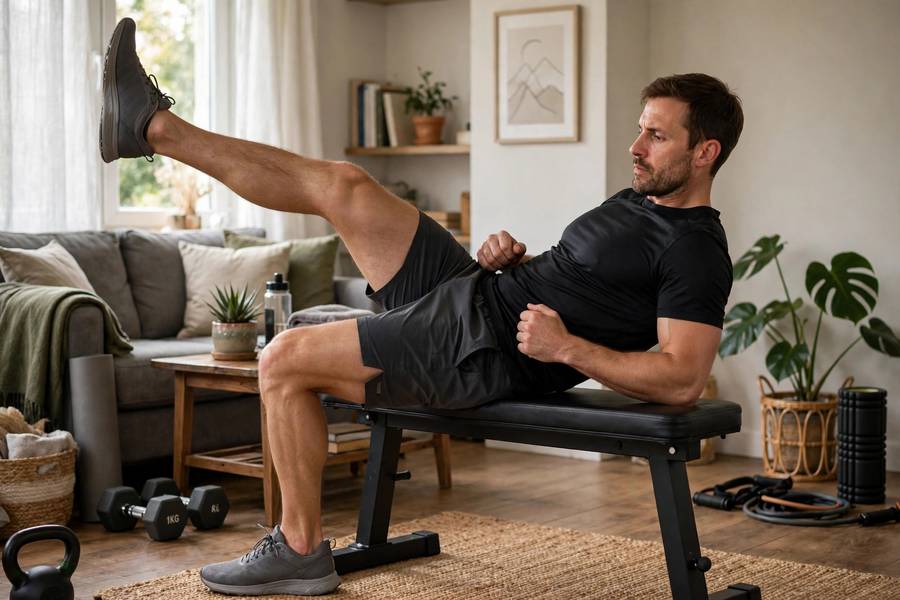
The gluteus maximus is strongest in hip extension — driving your hips forward. The hip thrust loads exactly this pattern through a full range, with peak tension at the top where the glutes are fully shortened. Squats and deadlifts are great, but their glute tension peaks at the bottom; the hip thrust complements them perfectly by overloading the lockout.
Strong glutes aren’t just aesthetic. They’re your body’s engine for sprinting, jumping, and climbing — and the key stabilizer for your lower back. Weak glutes force the lower back to compensate, which is why so many desk workers with “back problems” actually have glute problems. Wake the glutes up and the back pain often fades.
Setup: Bench, Bar, and Position
Get this right before you lift anything:
Bench height: 13–16 inches — your shoulder blades rest on the edge. Too high and you can’t get full range; too low and the setup feels cramped. A standard flat bench works; in a pinch, a sturdy couch or box works for building muscle at home.
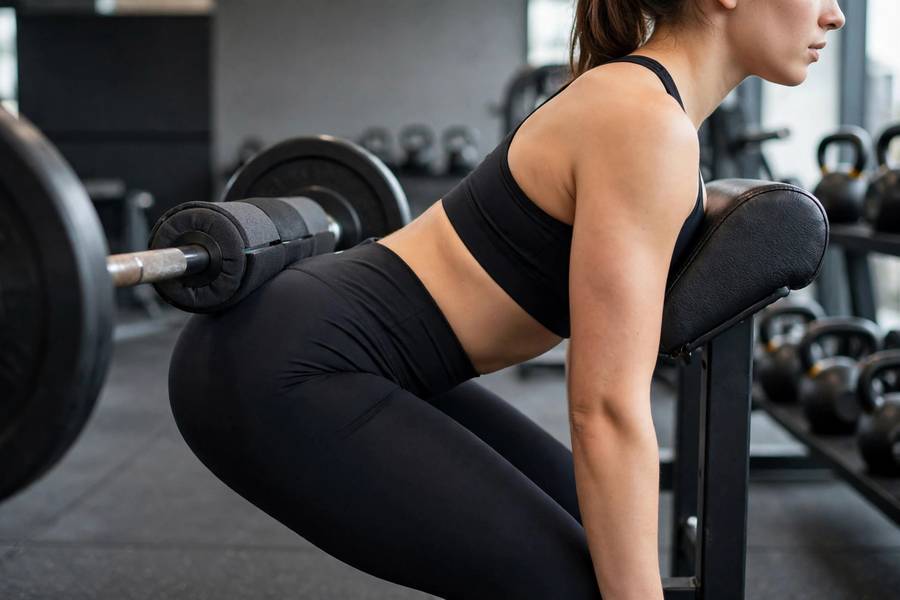
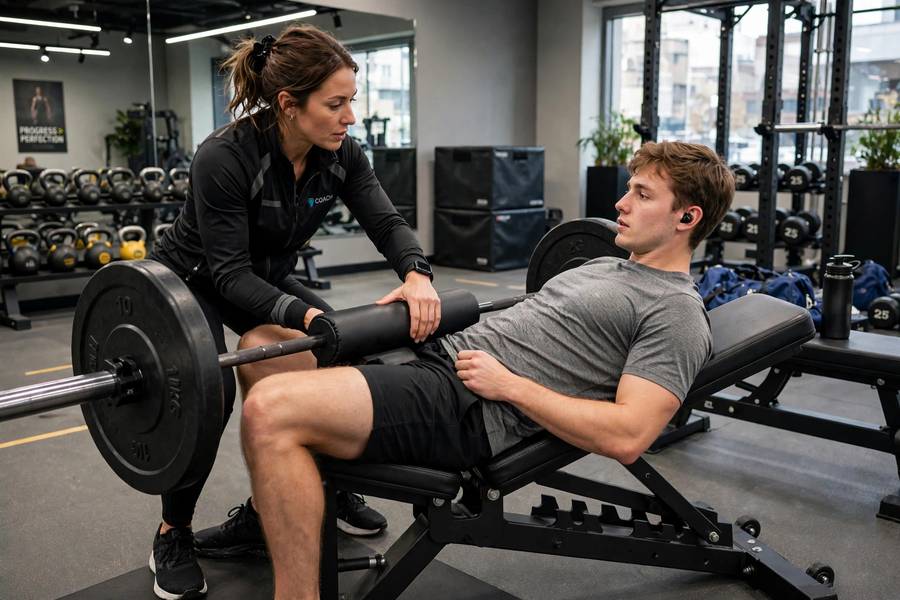
Bar position: across your hip crease (where your legs meet your torso), never on your stomach or thighs. Use a thick bar pad or folded towel — heavy hip thrusts without padding are miserable.
Foot position: feet flat, roughly shoulder-width, positioned so your shins are vertical at the top of the rep. Too far forward and hamstrings take over; too close and quads dominate. Adjust until you feel it in your glutes.
Upper back: shoulder blades on the bench edge, chin tucked (look forward, not at the ceiling — craning the neck is the most common setup error).
Step-by-Step Execution
- Start seated on the floor, back against the bench, barbell over your hips.
- Brace your core — think ribs down, abs tight. This protects your lower back throughout.
- Drive through your heels, extending your hips upward. Think “push the floor away” rather than “lift the bar.”
- Squeeze your glutes hard at the top. Your body should form a straight line from shoulders to knees — no more. Pause one full second.
- Lower under control until your butt nearly touches the floor. Don’t bounce.
- Repeat. Keep the chin tucked and ribs down the entire set.
The top position is everything. If you’re not consciously squeezing your glutes at lockout, you’re leaving half the benefit on the table. One-second pauses transform this exercise.
Breathing and Bracing
Inhale at the bottom, brace hard, exhale as you drive up. The brace matters more than the breath pattern — your core must be rigid to transfer force from legs to bar without your lower back collapsing.
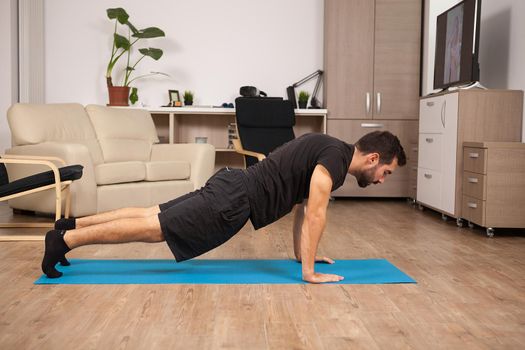
Think of your torso as a solid plank from shoulders to hips. If your ribs flare and lower back arches at the top, you’ve gone too far — stop the rep at neutral spine, even if that means slightly less range. Range with a neutral spine beats extra range with hyperextension every time. The same bracing principle applies to doing planks correctly — rigid torso, no sagging.
Common Mistakes (and Fixes)
Hyperextending the lower back. The #1 mistake. Your back should never arch past neutral. Fix: tuck ribs down, squeeze glutes (not lower back) at the top, and reduce range if needed.
Tiny range of motion. Quarter-rep hip thrusts with massive weight impress no one and build nothing. Full range — butt near floor to full lockout — or it doesn’t count.
Feet too far forward. Turns it into a hamstring exercise. Move feet back until shins are vertical at the top.
Neck craned back. Looking at the ceiling hyperextends the spine chain. Chin tucked, eyes forward.
Bouncing off the floor. Momentum steals the hardest part of the rep (the bottom). Control the descent, pause briefly, drive up.
Rushing. Hip thrusts respond to tempo. Two seconds up, one-second squeeze, two seconds down. Time under tension builds glutes; bouncing builds nothing.
Bodyweight and Beginner Variations
No barbell? No problem. The movement pattern matters more than the load:
- Glute bridges (shoulders on floor): the regression. Master 20 clean reps before progressing.
- Single-leg glute bridges: doubles the load per leg and exposes imbalances.
- Bodyweight hip thrusts (shoulders on bench): the full movement pattern, unloaded.
- Single-leg hip thrusts: seriously challenging — most people never need weight beyond this.
- Banded hip thrusts: a resistance band above the knees adds glute-med activation and prevents knee cave.
These are perfect bodyweight exercises for home training. Many lifters keep bodyweight variations in their warm-up forever — they’re excellent glute activators before heavy lower-body work.
Advanced Variations
Once bodyweight is easy and form is dialed:
- Barbell hip thrusts: the main event. Load progressively like any big lift.
- Paused hip thrusts: 3-second squeeze at the top. Brutal and effective.
- 1.5 reps: full rep + half rep = one. Doubles time under tension.
- B-stance hip thrusts: one foot forward, one back as a kickstand. Near-single-leg loading with balance support.
- Deficit hip thrusts: feet elevated slightly for greater range of motion.
Programming for Glute Growth
Beginners: 3 sets of 12–15 reps, bodyweight or light, twice weekly. Master the pattern.
Muscle growth: 3–4 sets of 8–12 reps, challenging weight, twice weekly. This is the sweet spot for most people.
Strength: 4–5 sets of 5–8 reps, heavy, with full rest. Yes, you can go heavy on hip thrusts — experienced lifters move serious weight.
Pair hip thrusts with a knee-dominant movement (squats, lunges) and a hinge (deadlifts, RDLs) for complete lower-body development. Glutes need 48 hours between hard sessions like any muscle.
Progress by adding weight when you can complete all reps with a full one-second squeeze at the top. The squeeze is non-negotiable — it’s the difference between going through the motions and actually building glutes.
Hip Thrust vs. Squat vs. Deadlift
They’re teammates, not competitors:
- Squats load glutes in the stretched position (bottom) and build overall leg mass.
- Deadlifts hammer glutes and hamstrings through the hinge pattern with massive loading.
- Hip thrusts overload glute lockout with peak tension at full contraction.
The combination covers the glutes through every range. If you could only pick one for glute-specific growth, the hip thrust wins on isolation — but the best programs use all three.
Warming Up for Hip Thrusts
Don’t load heavy hip thrusts cold. A quick 5-minute warm-up wakes up the glutes and protects your back:
- Glute bridges × 15 — bodyweight, slow, with a squeeze at the top
- Bodyweight hip thrusts × 12 — full range, shoulders on bench
- Clamshells × 12 per side — activates the glute medius, which stabilizes your knees
- Leg swings × 10 per leg — loosens the hip flexors, which are usually tight from sitting
Then do 1–2 light warm-up sets of the loaded movement before your working weight. Warm glutes fire harder and safer — you’ll feel the difference in the first working set.
Frequently Asked Questions
Yes — they’re among the most effective glute exercises because they load hip extension through full range with peak tension at lockout, where the glutes work hardest. Combined with progressive overload, they build significant glute muscle.
Your feet are probably too close to your body. Move them forward until your shins are vertical at the top of the rep. Also focus on driving through your heels and consciously squeezing your glutes at lockout.
Done correctly, no — they often help back pain by strengthening glutes. Done with hyperextension (arching past neutral), yes. Keep ribs down, chin tucked, and stop at a straight line from shoulders to knees.
Start with bodyweight until form is perfect, then add load progressively. Intermediate lifters often hip thrust their bodyweight or more for reps; advanced lifters go much heavier. Form and the top squeeze matter more than the number.
Bodyweight glute bridges daily are fine as activation. Loaded hip thrusts need 48 hours recovery like any resistance training — 2–3 hard sessions per week is the productive range.
Hip thrusts elevate your shoulders on a bench for greater range of motion; glute bridges keep shoulders on the floor. Bridges are the easier regression — master them first, then progress to thrusts.