What Is Smart Casual Dress Code? How to Nail It Every Time

Of all the dress codes in existence, none causes more quiet panic than this one. Smart casual — but what is smart casual dress code, exactly? Too dressed up and you look stiff; too relaxed and you look like you did not try. Let me decode what smart casual dress code really means, because once you understand its logic, it becomes the easiest dress code of all — and honestly, the chicest.
I am Isabella, and here is my definition: smart casual is polished ease. It is the art of looking intentional and put-together without formality. Think elevated everyday — the outfit that works for a nice dinner, a creative workplace, or a gallery opening. Let us break it down piece by piece.
What Is Smart Casual Dress Code? The Core Concept
Smart casual sits precisely between business casual and casual. It borrows polish from the formal side (tailoring, quality fabrics, considered details) and comfort from the casual side (no suits required, personality welcome). The key word is balance:
- Smart = refined, intentional, well-fitted. You look like you made an effort.
- Casual = relaxed, comfortable, personal. You do not look like you are heading to a board meeting.
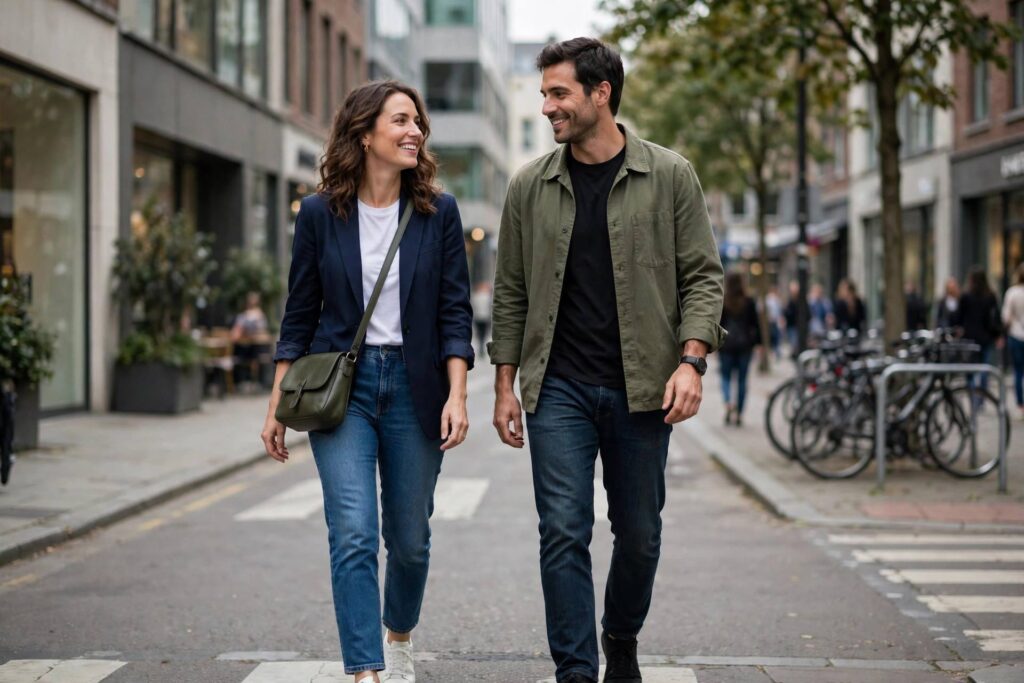
The formula I give everyone: take a casual outfit and elevate one or two elements — or take a dressy outfit and relax one or two elements. Jeans + blazer. Tailored trousers + elegant knit. A simple dress + polished accessories. That tension between relaxed and refined is smart casual.
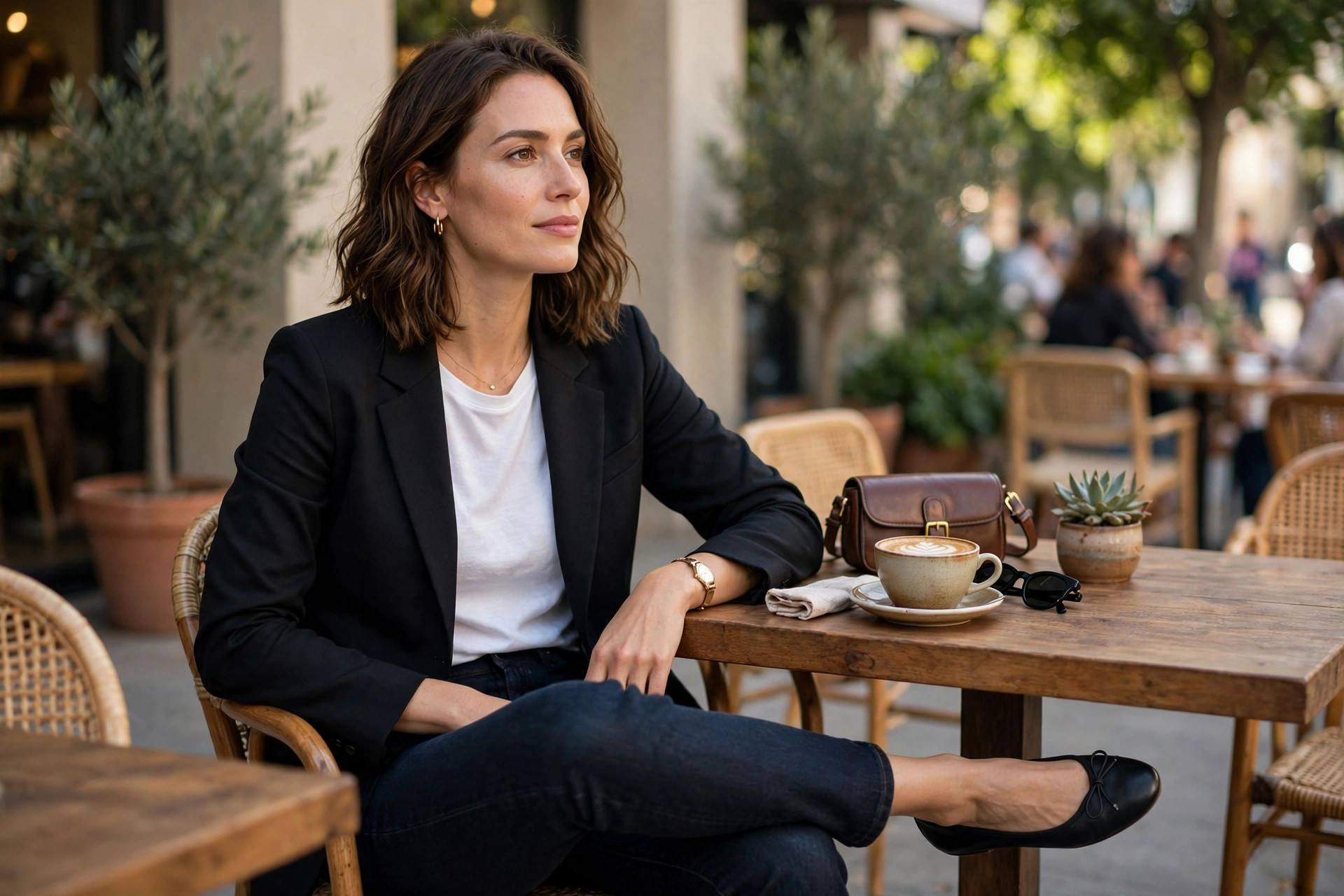
Smart Casual for Women: What to Wear
The winning pieces
- Bottoms: dark-wash jeans (no distressing), tailored trousers, midi skirts, elegant culottes
- Tops: silk blouses, quality knits, crisp shirts, refined sweaters — tucked or half-tucked for polish
- Layers: blazers, structured cardigans, tailored jackets, elegant wraps
- Dresses: shirt dresses, wrap dresses, knit midi dresses — unfussy but polished
- Shoes: loafers, elegant flats, block heels, clean white sneakers (minimalist only), ankle boots
- Accessories: structured handbag, simple jewelry, a silk scarf, a quality watch
Five foolproof outfit formulas
- Dark jeans + silk blouse + blazer + loafers
- Tailored trousers + fine knit sweater + ankle boots
- Wrap midi dress + structured cardigan + block heels
- Midi skirt + tucked-in crisp shirt + elegant flats
- Dark jeans + turtleneck + tailored coat + white sneakers
Smart Casual for Men: What to Wear
The winning pieces
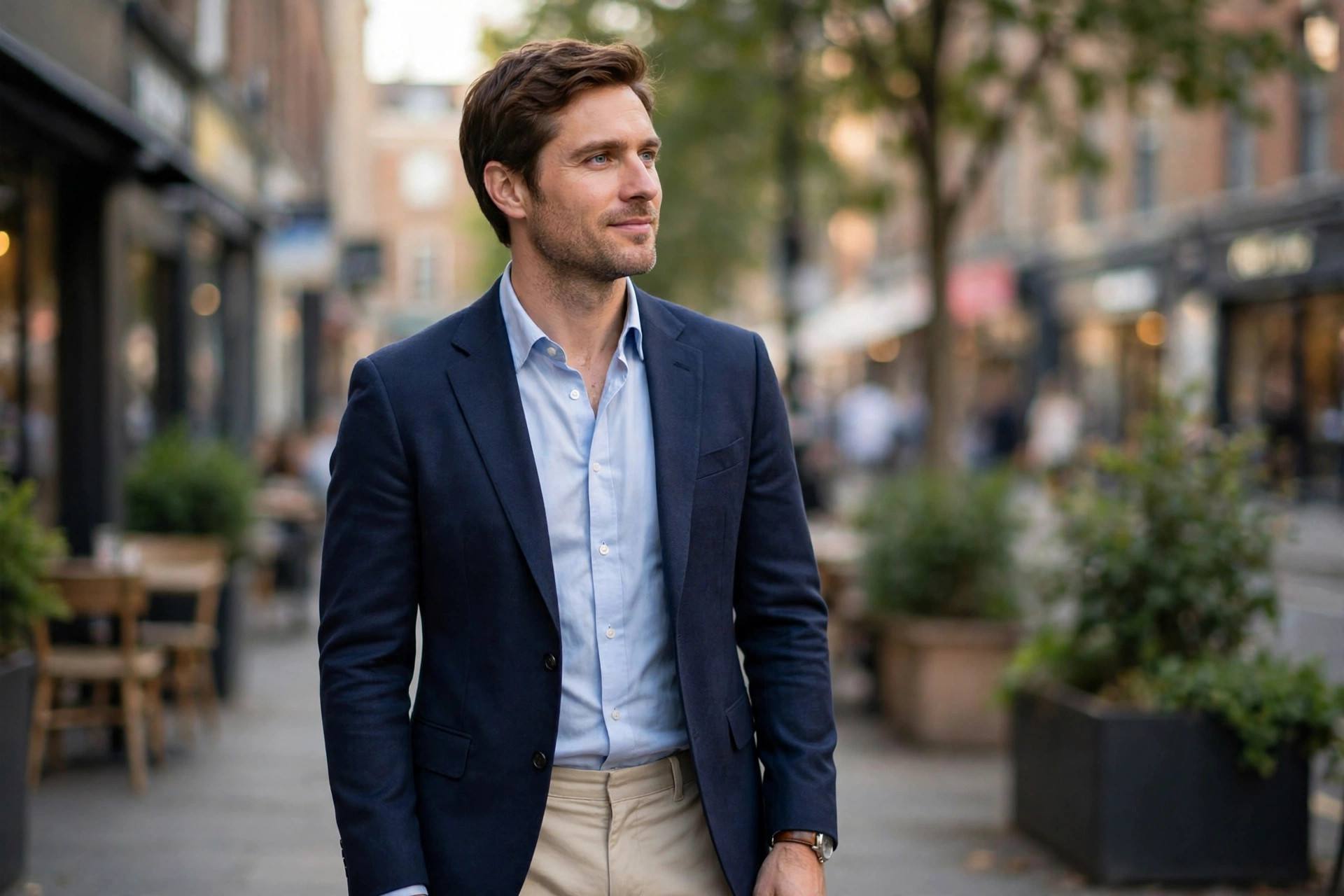
- Bottoms: dark jeans, chinos, tailored trousers — always well-fitted, never baggy
- Tops: collared shirts (button-down, polo), quality crew-neck or quarter-zip sweaters, henleys in fine fabrics
- Layers: unstructured blazer, bomber or Harrington jacket, fine-gauge cardigan
- Shoes: loafers, derby shoes, Chelsea boots, clean minimalist sneakers
- Accessories: leather belt, quality watch, subtle pocket square if wearing a blazer
Five foolproof outfit formulas
- Dark jeans + Oxford shirt (sleeves rolled) + unstructured blazer + loafers
- Chinos + crew-neck sweater + Chelsea boots
- Tailored trousers + polo + bomber jacket + clean sneakers
- Dark jeans + henley + Harrington jacket + derby shoes
- Chinos + button-down + quarter-zip sweater + loafers
What NOT to Wear: Smart Casual Mistakes
The fastest way to miss the mark:
- Too casual: gym clothes, flip-flops, cargo shorts, graphic tees, ripped jeans, athleisure worn as athleisure
- Too formal: full suits, tuxedos, cocktail gowns, ties (a tie usually pushes an outfit past smart casual into business territory)
- Too sloppy: wrinkled clothes, scuffed shoes, ill-fitting anything — smart casual forgives informality, never sloppiness
- Too trendy: head-to-toe extreme trends read as trying too hard; let one trend piece accent a classic base
- Ignoring context: smart casual for a creative agency differs from smart casual for a wedding rehearsal dinner — read the room
When in doubt, lean slightly smarter. Being the best-dressed person in a smart-casual setting is never a crime; being the most underdressed always stings.
Smart Casual by Occasion
The office
In creative and modern workplaces, smart casual is often the daily uniform. Keep a blazer at your desk — it instantly elevates any outfit for surprise meetings. Observe what senior people wear and match that energy.
Dinners and restaurants
Upscale restaurants with a smart-casual code want you polished but comfortable. The jeans-plus-blazer formula is your best friend. Check the restaurant’s photos online — the clientele in them tells you everything.
Events and parties
Cocktail-adjacent events labeled smart casual: elevate with richer fabrics (silk, velvet accents), a statement accessory, and dressier shoes. You want festive polish, not boardroom energy.
Daytime social
Brunches, gallery visits, daytime parties: lighter colors, comfortable shoes (you will be standing), and layers for temperature changes. Effortless is the goal — looking like you did not overthink it, even though you did.
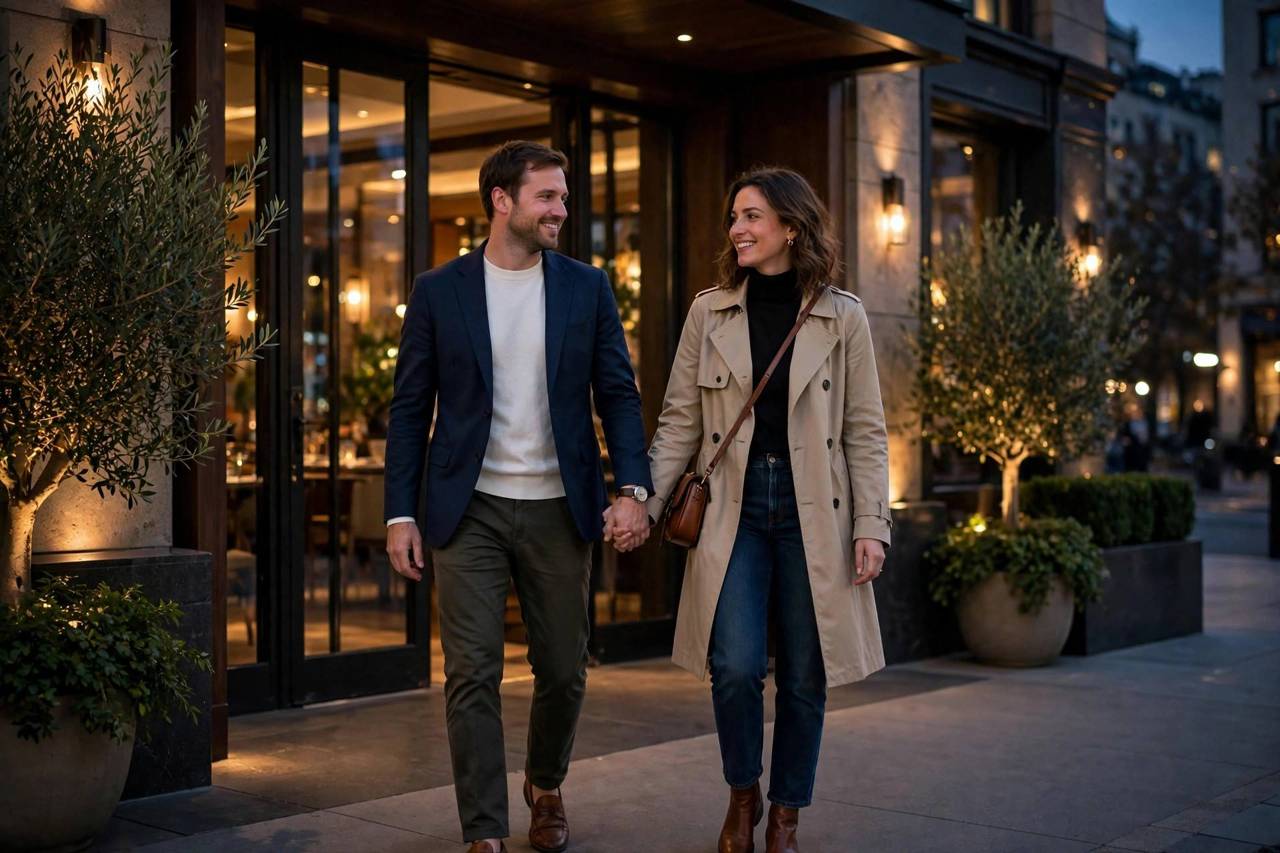
Fabrics and Fit: The Invisible Rules
Two things matter more than any specific garment:
- Fabric quality: smart casual lives or dies on fabric. A cheap blazer ruins the effect; a well-made knit elevates everything. Prioritize natural fabrics and good construction — they read as “smart” even in casual silhouettes.
- Fit: everything should skim the body — not tight, not sloppy. Get trousers hemmed, sleeves the right length, shoulders sitting correctly. Fit is free elegance.
Grooming completes the picture: neat hair, clean shoes, pressed clothes. Smart casual is a head-to-toe impression, not just an outfit.
Smart Casual vs. Business Casual: The Difference
People confuse these constantly. The distinction: business casual is workplace dressing without a suit — still professional, still office-bound (khakis and polos live here). Smart casual is broader and more fashionable — it includes dark jeans, trend pieces, and personal style that business casual would consider too relaxed. If business casual is “professional without a suit,” smart casual is “stylish without formality.” An invitation saying smart casual gives you more freedom, not less — use it.
Building a Smart-Casual Capsule
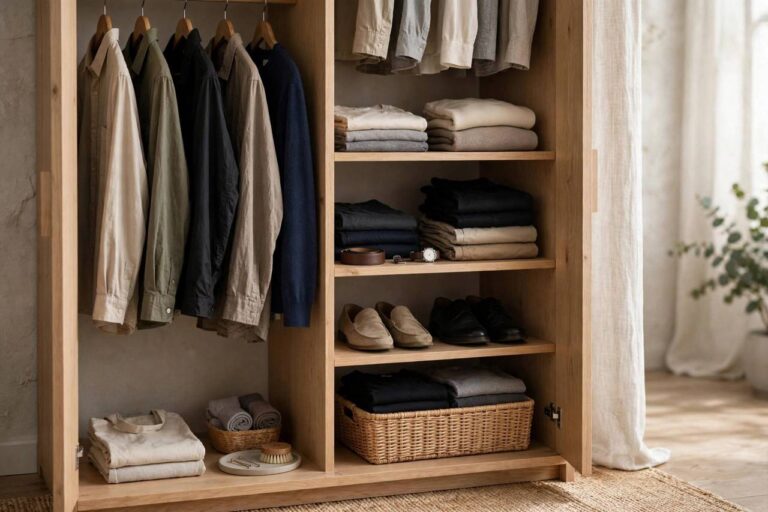
The smartest move? Build a small rotation of interoperable pieces: dark jeans, tailored trousers, 3–4 quality tops, two layers (a blazer and a knit jacket), and three shoe options. Everything mixes. This mini-capsule handles 90% of smart-casual invitations without a second thought. For the full method, see our capsule wardrobe guide — the same principles of intentional, versatile dressing apply beautifully here.
Smart Casual Across the Seasons
The dress code stays constant; the fabrics and layers shift with the weather. Spring: light layers rule – a trench over a knit, loafers without socks (or invisible ones), fresh colors. Summer: breathability is everything – linen shirts, cotton trousers, elegant sandals or loafers, and lighter palettes. Avoid shorts unless the venue is explicitly relaxed; smart casual rarely includes them. Fall: the golden season for smart casual – textured knits, suede shoes, rich colors like burgundy and forest, a beautiful coat as the outfit’s anchor. Winter: embrace tailoring – wool trousers, turtlenecks under blazers, Chelsea boots, a proper overcoat. Winter smart casual is arguably the easiest version because layers do the elevating for you.
The 10-Piece Smart Casual Starter Wardrobe
If you are building from scratch, these ten pieces cover nearly every smart-casual situation. For women: dark jeans, tailored black trousers, a silk blouse, a fine-knit sweater, a midi skirt, a blazer, a wrap dress, loafers, block-heel ankle boots, and a structured handbag. For men: dark jeans, chinos, tailored trousers, two Oxford shirts, a crew-neck sweater, an unstructured blazer, a polo, loafers, Chelsea boots, and clean white sneakers.
Notice how everything interoperates – each top works with each bottom, each layer completes multiple outfits. That is intentional. Ten thoughtful pieces generate thirty-plus outfits, which means you will never again stand before your closet wondering what smart casual means. You will simply get dressed – beautifully, appropriately, and without a second thought.
Reading the Room: Context Clues That Matter
The same dress code flexes with context, and reading it correctly is the final skill. A startup’s smart casual runs relaxed – dark jeans and a blazer is plenty. A law firm’s client dinner labeled smart casual runs smarter – tailored trousers, never denim. Evening events skew dressier than daytime ones; venues with white tablecloths deserve more polish than rooftop bars.
When you cannot read the room in advance, deploy the universal safety net: dark trousers or dark jeans, a refined top, one polished layer, and your best shoes. This combination has never been wrong for smart casual in the history of the dress code. Add confidence – the true final accessory – and you will own every room you enter. Master this balance of polish and ease, and smart casual stops being a puzzle – it becomes your signature. After all, the best-dressed person in any room is rarely the most formal – it is the one who looks effortlessly, intentionally themselves. That is the true secret of smart casual: it is not a dress code at all, but a mindset – polished, relaxed, and entirely your own. Wear it well, always, with total confidence.
FAQ
What is smart casual dress code for a woman?
Polished but relaxed: dark jeans or tailored trousers with a silk blouse or quality knit, plus a blazer or structured layer and elegant shoes (loafers, flats, block heels). Midi dresses and refined jumpsuits also work. Avoid anything too formal (gowns, suits) or too casual (gym wear, ripped jeans).
What is smart casual dress code for a man?
Dark jeans or chinos with a collared shirt or fine-gauge sweater, plus an unstructured blazer or quality jacket and loafers, derbies, or clean minimalist sneakers. Skip the tie and the full suit — those push into business formal territory.
Are jeans OK for smart casual?
Yes — dark-wash, well-fitted, non-distressed jeans are a smart-casual staple for both women and men. The key is what you pair them with: elevate with a blazer, quality top, and polished shoes. Light-wash, ripped, or baggy jeans miss the mark.
Can I wear sneakers with smart casual?
Minimalist, clean sneakers (think classic white leather styles) work in modern smart-casual settings, especially creative ones. Avoid athletic running shoes, chunky trainers, or worn-out pairs. When uncertain about the venue’s vibe, choose loafers or boots instead.
What is the difference between smart casual and business casual?
Business casual is office-oriented professionalism without a suit (khakis, polos, button-downs). Smart casual is broader, more fashionable, and allows dark jeans, trend pieces, and personal expression. Smart casual gives you more stylistic freedom — it is about looking intentionally stylish, not just office-appropriate.