What Is Business Casual Dress Code? A Real-World Guide



What is business casual dress code? In plain terms, it is the middle ground between a full suit and weekend clothes: polished enough for the office, comfortable enough for real life. Think chinos or dress trousers instead of jeans, a collared shirt or blouse instead of a t-shirt, and closed-toe shoes instead of sneakers. The confusion comes from the fact that business casual means slightly different things at a law firm, a startup, and a school. This guide gives you the core rules that work everywhere, then shows you how to adjust for your specific workplace.
Here is the mindset that makes it click: dress one small step above what the job requires. Business casual is not about fashion; it is about signaling that you take the work seriously. Nobody ever lost credibility for being the best-dressed person in a business-casual office, but plenty of people have undermined themselves by treating it as casual Friday every day.
What Is Business Casual Dress Code, Really?
Business casual grew out of workplaces relaxing their suit-and-tie rules without wanting to look sloppy. The result is a dress code defined more by what it excludes than what it includes. It excludes suits, ties, and formal business dress. It also excludes jeans, shorts, t-shirts, athletic wear, flip-flops, and anything you would wear to the gym or the beach. What remains is a wide but bounded range: neat, coordinated, professional clothing that you could wear to a client lunch without a second thought.
The tricky part is the range. At a conservative company, business casual might mean dress trousers and a button-down with no jacket, essentially a suit minus two pieces. At a relaxed tech company, it might mean dark chinos and a polo. When in doubt, start conservative and adjust down after you have seen what everyone else wears for a week. It is always easier to relax your look than to recover from showing up underdressed.
Business Casual for Men
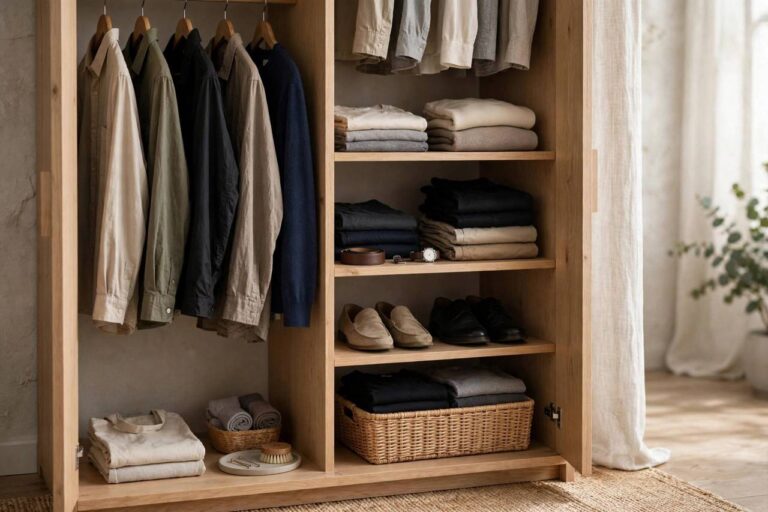
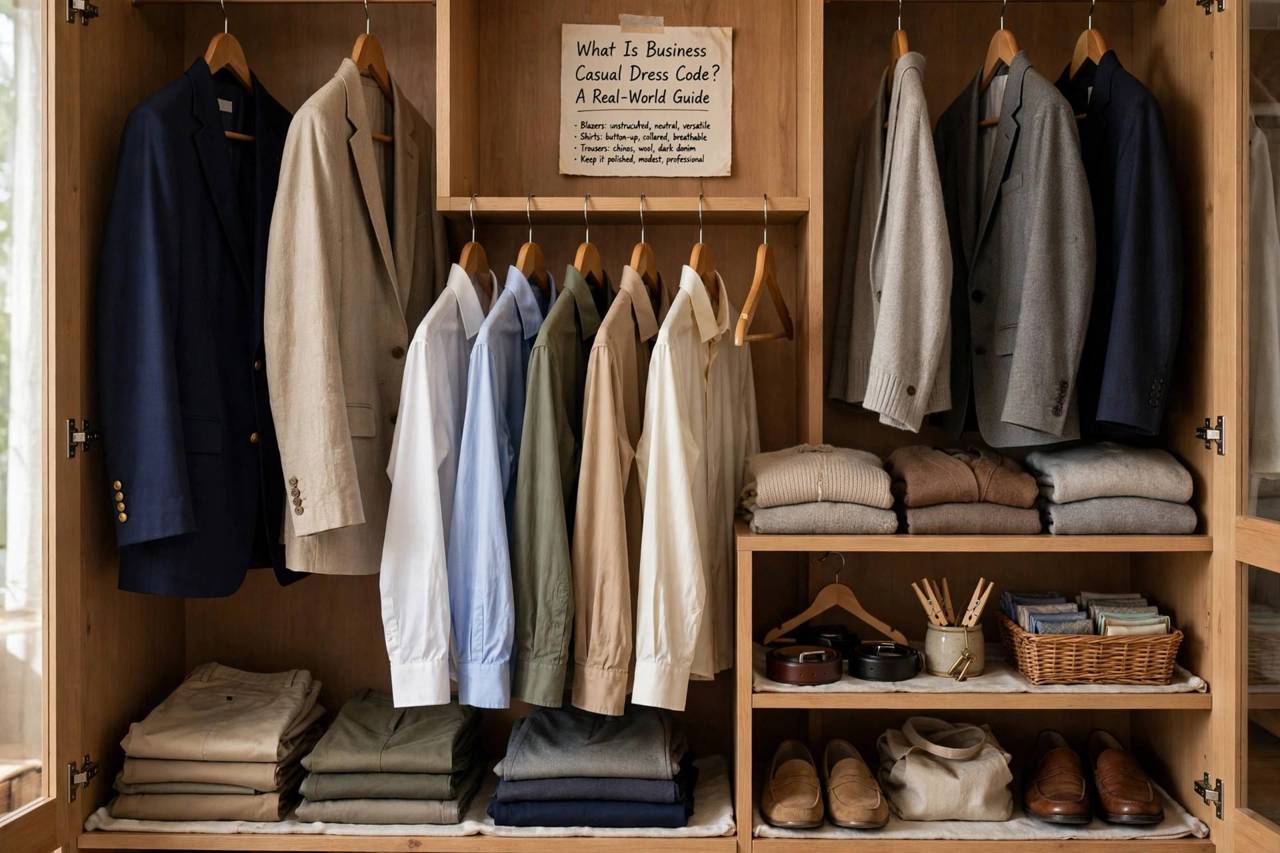
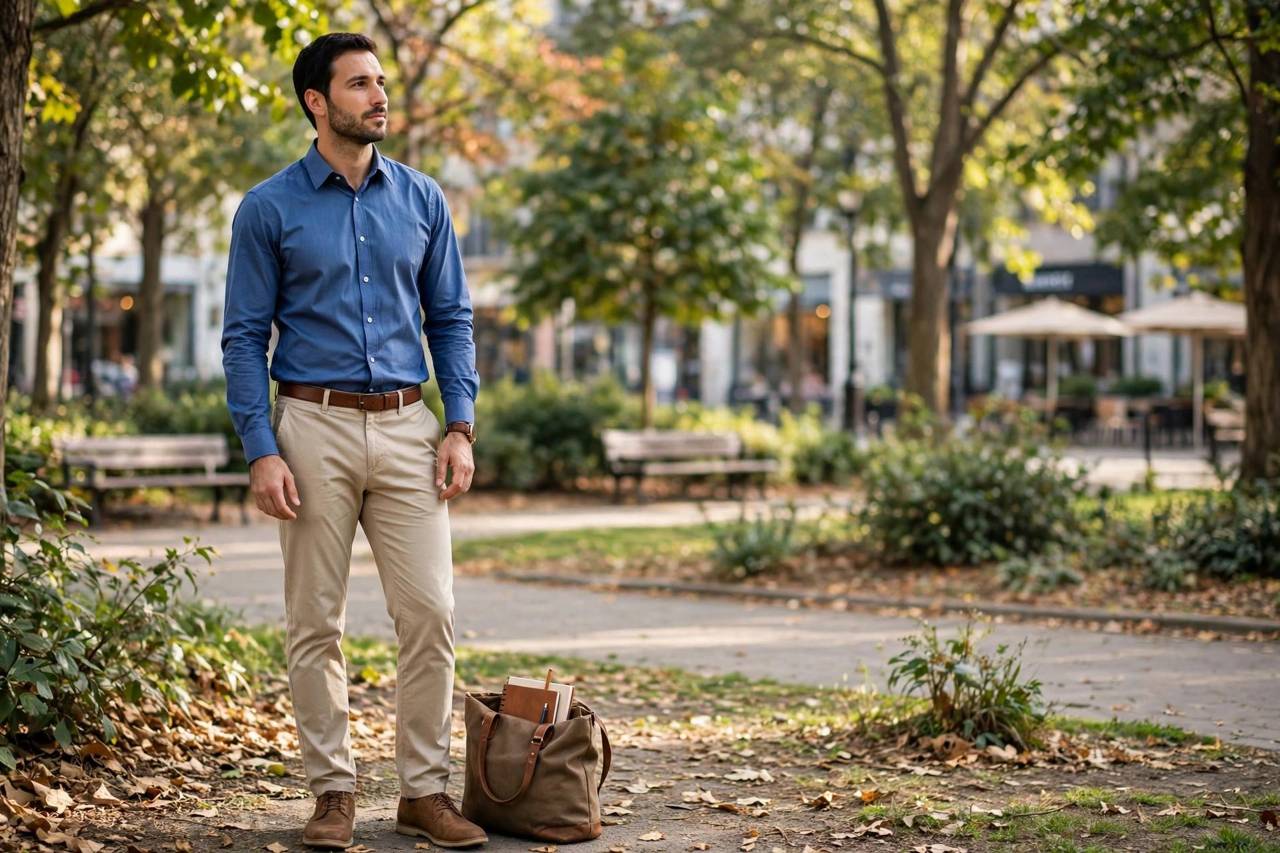
The foundation is simple: chinos or dress trousers in navy, gray, khaki, or black; a collared shirt, either button-down or polo, tucked in; and a belt that matches your shoes. Add a blazer or sport coat and you are at the sharp end of business casual, appropriate for presentations and client meetings. A sweater over a collared shirt works in cooler months. Shoes should be loafers, derby shoes, or clean minimal dress boots. Socks should cover the ankle; the no-sock look reads as weekend, not office.
Fit matters more than brand. Trousers that pool around your shoes or a shirt that billows like a sail will look sloppy regardless of price. Get trousers hemmed so they break once over the shoe, and choose shirts that sit cleanly at the shoulder. One well-fitting outfit beats three expensive ones that don’t.
Business Casual for Women
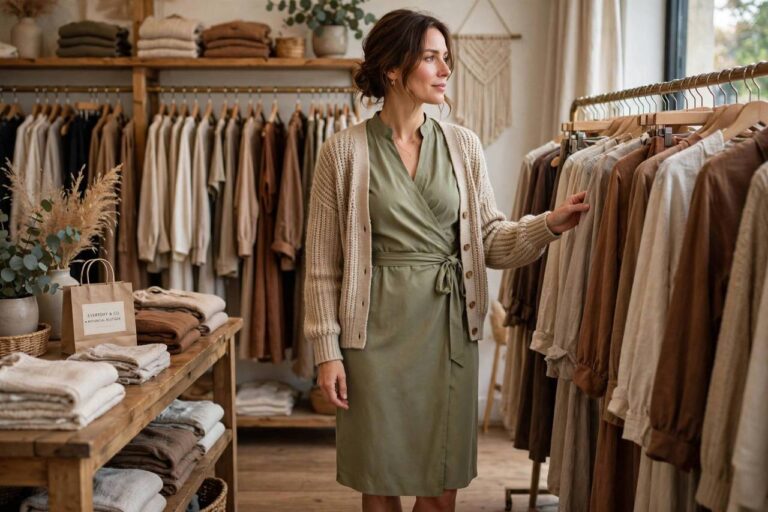
The options are broader: dress trousers, knee-length or longer skirts, or modest dresses with sleeves; blouses, knit tops, or collared shirts in solid colors or subtle patterns; and a blazer or cardigan to complete the look. Trousers should be full-length and tailored rather than tight; skirts should allow you to sit and move comfortably. Closed-toe flats, low heels, or loafers finish the outfit. Keep hemlines and necklines modest: if you have to wonder whether it is appropriate, it isn’t.
A simple formula that never fails: one structured piece (blazer, tailored trousers) plus one soft piece (knit top, blouse) plus clean shoes. That combination reads as intentional in any office. Accessories should be minimal and quiet; the outfit should say competent, not draw attention to itself.
What to Avoid: The Business Casual Don’ts
Some items are never business casual, no matter how nice the version. Jeans, even dark designer ones, unless your office explicitly allows them. T-shirts, including plain expensive ones. Shorts, athletic wear, and anything with visible gym branding. Flip-flops, casual sandals, and worn-out sneakers. Clothing with large logos, slogans, or graphics. Anything wrinkled, stained, or visibly worn out; business casual forgives a lot, but not neglect. And anything you would wear clubbing: the office is not the place to test boundaries.
The most common mistake I see is confusing business casual with smart casual. Smart casual is a half-step down: dark jeans allowed, more relaxed overall. If the invitation or handbook says business casual, leave the jeans at home until you have confirmed otherwise.
Shoes, Grooming, and the Details
Shoes make or break the outfit because people notice them more than you think. Keep them clean and in good repair; scuffed shoes drag down an otherwise perfect look. For men: loafers, brogues, or derby shoes in brown or black. For women: closed-toe flats, loafers, or low block heels. Grooming counts as part of the dress code: neat hair, trimmed nails, and minimal fragrance. You want to be remembered for your work, not your cologne.
Bags matter too. A structured tote, briefcase, or messenger bag completes the look; a gym duffel or a battered backpack undermines it. These details are small individually, but together they are the difference between looking put-together and looking like you tried.
Business Casual Across Industries
Context is everything. In finance, law, and consulting, lean toward the formal end: trousers, button-downs, blazers. In tech, media, and creative fields, you can relax: chinos, polos, knit tops. In education and healthcare administration, aim for approachable polish: nothing intimidating, nothing sloppy. When starting a new job, observe for a week and match the best-dressed person at your level, not the CEO and not the intern.
Remote work has its own version: what shows on camera. A collared shirt or neat top matters for video calls even if nobody sees your trousers. Keep a blazer on the back of your chair for surprise meetings. The camera forgives a lot, but it does not forgive a stained t-shirt.
Building a Business Casual Wardrobe on a Budget
You don’t need much. Five tops, three bottoms, one blazer, and two pairs of shoes create weeks of combinations. Buy in neutral colors first: navy, gray, white, black, and khaki all mix with each other. Add color later once the foundation works. A capsule wardrobe approach is ideal here, since business casual is essentially a small set of interchangeable pieces. Thrift stores and end-of-season sales are your friends; fit can be fixed cheaply by a tailor, but poor fabric cannot be fixed at all.
What Is Business Casual Dress Code for Job Interviews?
Interviews deserve the sharp end of business casual. When the invitation says business casual, wear the most polished version you own: dress trousers, a crisp button-down or blouse, a blazer, and your best shoes. The logic is simple: you have no information about the office yet, so you dress for the most conservative interpretation. Being slightly overdressed at an interview reads as respect; being underdressed reads as not caring. Once you have the job and have observed the office for a week, you can relax to match.
One exception: creative industries sometimes mean it when they say casual. Even there, interview polish wins. A designer in a blazer still looks like a designer; a candidate in a wrinkled t-shirt looks like someone who didn’t try. When the stakes are a job, err formal.
Seasonal Business Casual: Summer Heat and Winter Cold
Summer business casual is about fabric, not less clothing. Linen and lightweight cotton shirts, chinos instead of heavy wool trousers, and breathable shoes keep you professional without melting. Women can choose sleeveless blouses with a light cardigan for air-conditioned offices, and skirts in breathable fabrics. What doesn’t change with temperature: no shorts, no flip-flops, no tank tops. Heat is not a dress-code exemption.
Winter is easier: layering is naturally polished. A sweater over a collared shirt, a blazer over that, a proper coat on top, each layer adds structure. Dark boots that are clean and minimal work in most offices through winter. The winter mistake to avoid is the bulky outdoor gear worn all day; hang the parka up and let the office layers do the talking.
Business Casual Mistakes Even Smart People Make
A few traps catch almost everyone. The first is dressing for the job you want three promotions up: a full suit in a business-casual office doesn’t look ambitious, it looks unaware. The second is the Friday slide, where business casual quietly becomes weekend casual by Thursday afternoon; hold the line all week. The third is ignoring fit while overspending on brands, as if a logo could tailor a shirt. The fourth is forgetting that business casual includes grooming and shoes, not just clothes. And the fifth is treating the dress code as the ceiling rather than the floor. The code tells you the minimum; your judgment supplies the rest.
Quick Business Casual Checklist
Before you leave the house, run the thirty-second check. Are the clothes clean, unwrinkled, and free of pet hair? Do the shoes match the belt and look cared for? Is everything fitting the way it should, with nothing pulling, gaping, or pooling? Would you be comfortable if the CEO joined your lunch unexpectedly? If the answer to all four is yes, you have nailed business casual. It really is that simple once the wardrobe foundation is in place.
Frequently Asked Questions
Are jeans ever acceptable as business casual?
Only if your specific workplace says so. Traditional business casual excludes jeans. Some modern offices allow dark, well-fitting jeans with no distressing, but never assume; check the handbook or ask before wearing them.
Do men need to wear a tie for business casual?
No. A tie pushes an outfit into formal business territory. Business casual for men specifically means no tie; a collared shirt on its own is the standard.
Can women wear dresses as business casual?
Yes, as long as they are modest: knee-length or longer, with sleeves or worn with a blazer or cardigan. Shift dresses, shirt dresses, and knit dresses in solid colors all work well.
Are polo shirts business casual?
Yes, in most workplaces. A clean, well-fitting polo in a solid color with chinos or dress trousers is classic business casual. In conservative industries like finance or law, a button-down is safer.
What shoes count as business casual?
Loafers, derby shoes, brogues, clean minimal boots for men; closed-toe flats, loafers, and low heels for women. Sneakers only if they are minimal, clean, and your office explicitly allows them.