Best Fabrics for Summer Clothes: Stay Cool & Look Chic

There’s a special kind of misery in wearing the wrong fabric on a hot day — that clingy, swampy feeling by noon, the shirt that shows every drop of perspiration, the dress that looked breezy on the hanger and feels like a wetsuit by 2 p.m. Summer style isn’t just about silhouettes; it’s about textiles. Knowing the best fabrics for summer clothes is the difference between looking effortlessly cool and feeling miserably hot. Let’s talk fibers.

I’ll rank the best summer fabrics, warn you about the worst offenders, teach you how to read a fabric label like an insider, and show you how to build a summer wardrobe that actually breathes.
The Best Fabrics for Summer Clothes: Ranked
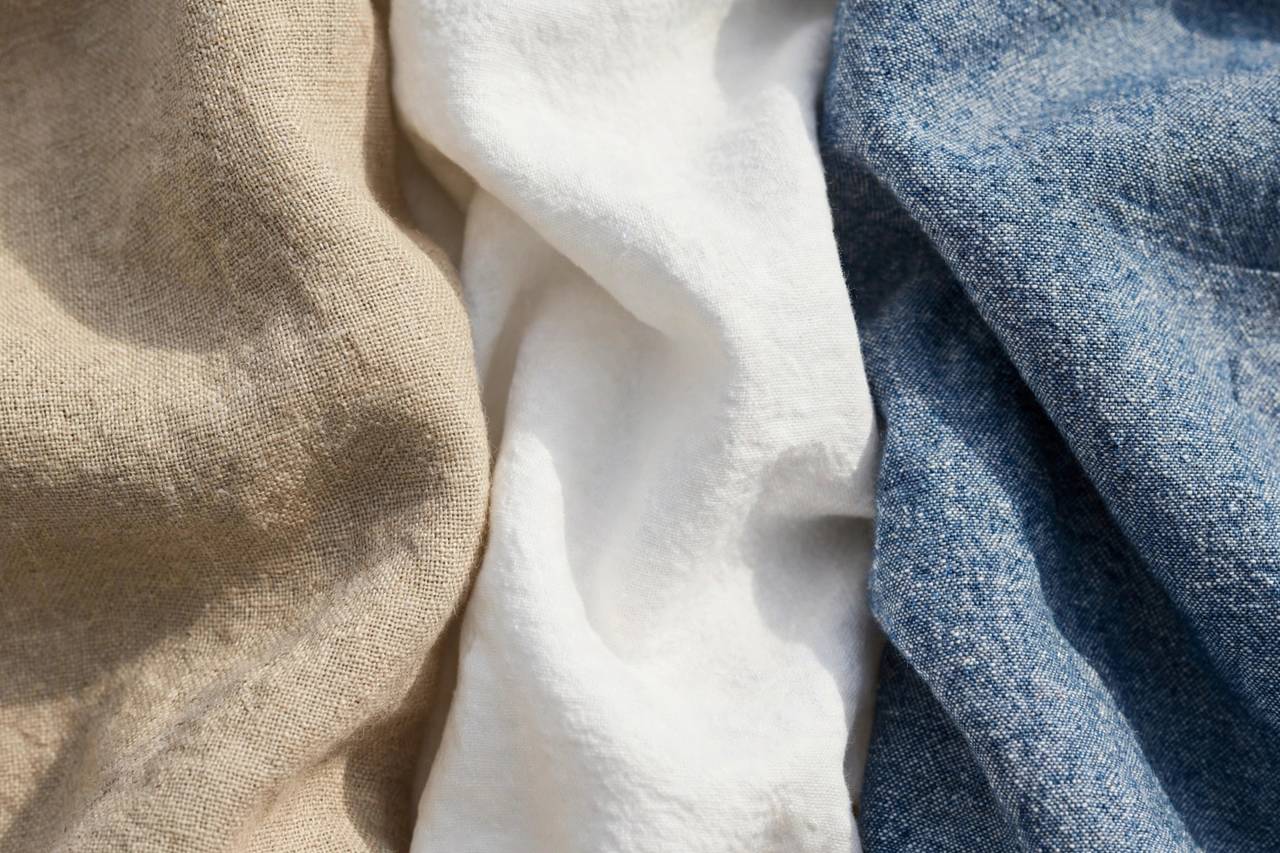
1. Linen — the undisputed queen. Made from flax, linen is exceptionally breathable, absorbs moisture without feeling damp, and dries quickly. Yes, it wrinkles — embrace it. Linen’s wrinkles are part of its charm, a sign of natural fiber and relaxed elegance. For maximum coolness, nothing beats it. Look for medium-weight linen over tissue-thin (which goes sheer and wears out fast).
2. Cotton — the reliable classic. Breathable, soft, affordable, easy to care for. Lightweight weaves (voile, batiste, seersucker) are the summer stars; heavy denim and canvas are not summer fabrics despite being cotton. Seersucker deserves special mention — its puckered weave holds the fabric off your skin, creating natural airflow. Genius textile engineering.
3. Chambray — denim’s summer cousin. Looks like lightweight denim, breathes like cotton (because it is cotton). All the casual polish of denim without the heat. A chambray shirt is one of the hardest-working pieces in a summer wardrobe.
4. Tencel/Lyocell — the modern marvel. Made from wood pulp in a closed-loop process, Tencel is silky, breathable, moisture-wicking, and resistant to wrinkles. It drapes beautifully and feels cool to the touch. The eco-credentials are a bonus — this is the fabric of the future, available now.
5. Silk (lightweight) — the luxury option. Breathable, temperature-regulating, and impossibly elegant. Save it for evenings — silk shows perspiration and needs care. But a silk camisole or blouse on a summer night is pure sophistication.
6. Bamboo viscose — the soft contender. Very soft, breathable, with natural moisture-wicking properties. Quality varies by manufacturer, so feel before you buy — good bamboo fabric is a dream, cheap bamboo pills fast.
A few honorable mentions that didn’t make the main ranking but deserve your attention. Hemp is having a well-deserved renaissance — it’s more durable than cotton, softens beautifully with washing, breathes well, and has arguably the best environmental footprint of any natural fiber. It has a slightly rustic texture that works beautifully in casual summer pieces. Seersucker isn’t a fiber but a weave, and it’s genius: the puckered texture holds the fabric away from your skin, creating tiny air channels. That’s why a seersucker suit feels cool in southern summers — it’s architecture, not just material. And chambray, often confused with denim, is a lightweight plain weave that’s essentially summer’s answer to the jeans look without the jeans heat.
The Worst Summer Fabrics (Avoid These)
Polyester (non-performance). The #1 summer villain. Cheap polyester doesn’t breathe — it traps heat and moisture against your skin. (Performance polyester engineered for activewear is a different story; it’s the fashion polyester in blouses and dresses that’s the problem.)
Nylon. Similar issues — low breathability, heat-trapping. Fine for swimwear (it’s supposed to get wet), terrible for a summer workday.
Heavy synthetics and blends. That “cotton-feel” blouse that’s actually 100% polyester? The label doesn’t lie even when the marketing does. Always check.
Leather and faux leather. Obviously not breathable. Save it for cooler months — or accept the consequences stylishly.
Thick denim. Beloved, but heavy denim in high heat is a commitment. If you must, look for lightweight or stretch denim in lighter washes.
How to Read a Fabric Label Like an Insider
The label tells the truth the salesperson won’t. Here’s how to decode it:
Fiber content first. Look for high percentages of natural or breathable fibers — 100% linen, 100% cotton, or blends where the natural fiber dominates. “Cotton blend” that turns out to be 60% polyester is not your friend.
Weave matters as much as fiber. Even good fibers can be woven too tightly for summer. Hold the fabric up to light — if you can see light through it, air passes through too. Voile, gauze, and seersucker weaves are summer-optimized by structure.
Weight tells the story. Lightweight fabrics (you’ll feel it immediately) for day heat; medium weights for evenings. If a “summer dress” feels substantial on the hanger, it will feel oppressive at noon.
Touch test. Good summer fabric feels cool to the touch initially and doesn’t cling. Press it against your inner wrist — the most heat-sensitive test spot. If it feels warm or sticky in the store’s air conditioning, imagine it in August sun.
Building a Breathable Summer Wardrobe
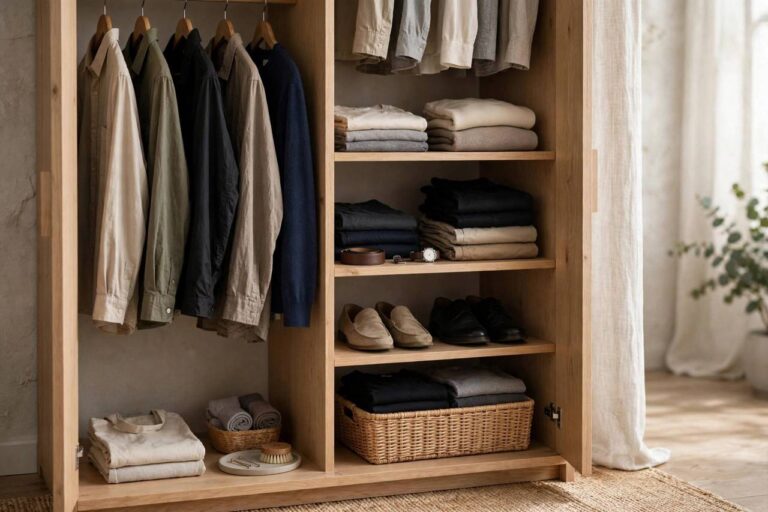
You don’t need much — you need the right things. A summer capsule built on breathable fabrics:
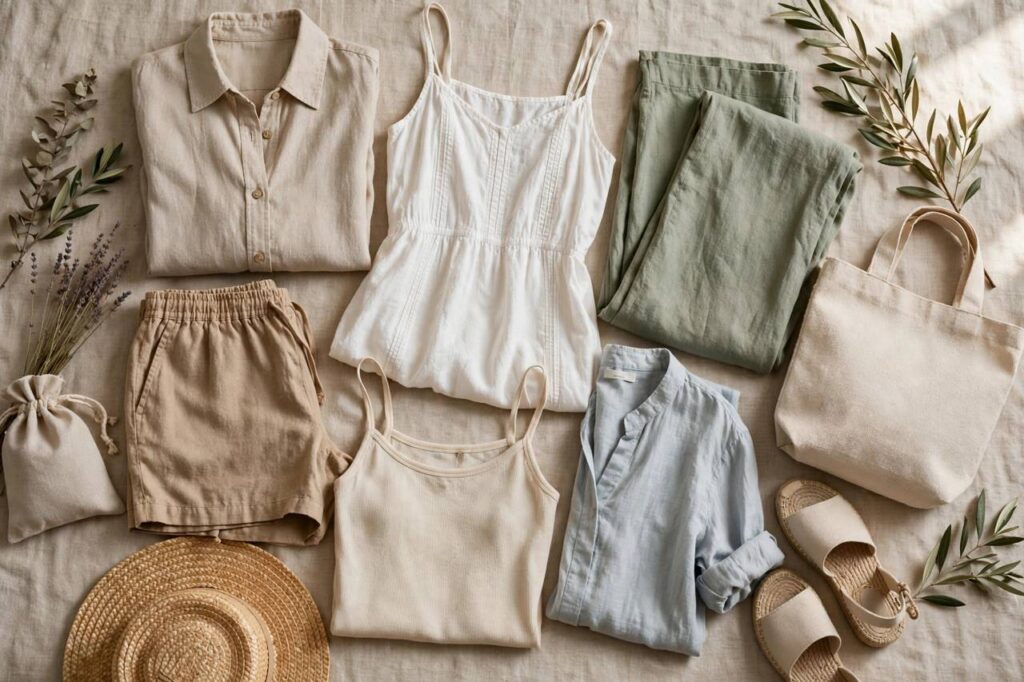
- 3-4 tops in linen, cotton voile, or Tencel — white, plus colors you love
- 2 bottoms — linen trousers or shorts, a breezy cotton skirt
- 1-2 dresses in breathable weaves — the one-and-done summer outfit
- 1 lightweight layer — a cotton or linen overshirt for air-conditioned interiors and cool evenings
- 1 chambray shirt — the hardest-working piece you’ll own
Stick to light colors — they reflect heat while dark colors absorb it. This isn’t just folk wisdom; it’s physics, and it’s visible in thermal imaging. A white linen shirt and a black polyester shirt in the same sun are different thermal universes.
And fit matters as much as fabric: slightly loose cuts allow airflow between fabric and skin, which is where cooling actually happens. Body-skimming, not body-gripping — the air gap is doing the work. This is the same philosophy behind a well-built capsule wardrobe wardrobe: fewer, better pieces in fabrics that work as hard as you do.
Let me give you the summer fabric shopping checklist — the five-second tests I run in fitting rooms. The scrunch test: ball the fabric in your fist for five seconds, then release. If the wrinkles fall out quickly, it’ll survive a day of wear; if they stay, you’ll look rumpled by lunch. The light test: hold it up to the light. If you can clearly see through it, it’s either too sheer for its intended use or too thin to last — unless it’s meant to be layered. The hand test: press the back of your hand against the fabric. Cool to the touch and smooth means good heat conduction (a promising sign); warm and plasticky means it’ll trap heat. And the stretch test: pull gently and release. Good recovery means the garment keeps its shape; saggy recovery means baggy knees and elbows by afternoon. Thirty seconds of testing in the store saves you from a closet full of regrets.
Caring for Summer Fabrics
Linen: machine washable, gets softer with every wash. Embrace the wrinkles or iron while slightly damp. Line-dry when you can — sun naturally freshens linen.
Cotton: easy care, but lightweight cottons can shrink — wash cool and avoid high dryer heat.
Tencel: wash cool, avoid high heat. Holds up beautifully with gentle care.
Silk: hand wash or delicate cycle, dry away from direct sun. Worth the effort for the pieces you love most.
Good summer fabrics reward good care with years of service. Buy the best you can afford in the pieces you wear most — cost-per-wear on a perfect linen shirt you reach for all summer is pennies. Dress for the heat with intelligence, and summer becomes your best-dressed season instead of your most miserable one.
Fabric Blends: The Best of Both Worlds
Purists will tell you 100% natural fibers or nothing. The textile industry, quietly, disagrees — some of the best summer fabrics on the market right now are blends, engineered to keep the breathability of natural fibers while fixing their weaknesses. Here’s what to look for on the label.
Cotton-linen blends are the headline act. You get linen’s airflow and texture with cotton’s softness and significantly less wrinkling. A 55/45 or 60/40 linen-cotton split is the sweet spot — it still reads as linen (that beautiful slubby texture) but survives a day of wear without looking like you slept in it. If you love the look of linen but hate the maintenance, this is your fabric.
Tencel (lyocell) blends are the insider favorite. Tencel is made from wood pulp in a closed-loop process, and it does three remarkable things: it wicks moisture better than cotton, it resists wrinkles better than linen, and it has a fluid drape that makes everything look expensive. A Tencel-linen or Tencel-cotton blend gives you a garment that looks polished at 8 AM and still looks polished at 8 PM. When you see fashion editors raving about a “miracle” summer fabric, it’s usually Tencel-based.
A touch of elastane (2-5%) in an otherwise natural fabric is not the enemy. It adds just enough stretch for comfort and shape retention without affecting breathability. The key word is touch — once synthetics climb past 10-15% of the blend, breathability starts to suffer noticeably.
What to be wary of: “linen-look” polyester, which has the texture of linen and the breathability of a plastic bag. Check the actual fiber content, not the marketing name. And be skeptical of any “cooling technology” claims on fully synthetic fabrics — some of it is legitimate engineering, but none of it breathes like an actual natural fiber.
FAQ
What is the best fabric for hot summer weather?
Linen is the best overall — exceptionally breathable, moisture-absorbing, and quick-drying. Lightweight cotton (voile, seersucker), chambray, and Tencel are also excellent summer choices.
Is cotton or linen better for summer?
Linen edges out cotton for breathability and moisture handling, but both are excellent. Linen wrinkles more (embrace it); cotton is easier to care for. For maximum coolness choose linen; for versatility choose cotton.
What fabrics should you avoid in summer?
Non-performance polyester, nylon, heavy synthetics, leather, and thick denim — they trap heat and moisture. Always check the label: a ‘cotton-feel’ blouse that’s mostly polyester will be miserable in heat.
Does linen wrinkle too much for summer clothes?
Linen wrinkles — that’s its nature and part of its relaxed elegance. Choose medium-weight linen over tissue-thin, embrace the lived-in look, or iron while slightly damp if you prefer crispness.
What colors are best for summer clothes?
Light colors — white, pastels, light neutrals — reflect heat while dark colors absorb it. Combined with breathable fabrics and slightly loose fits, light colors make a measurable difference in comfort.
Is silk good for summer?
It’s complicated — silk is a natural fiber that’s lightweight and feels cool initially, but it’s not very absorbent, so it shows sweat easily and can feel clammy in real heat. Silk blends (silk-cotton, silk-linen) perform much better for summer than pure silk. Save your pure silk pieces for summer evenings and air-conditioned occasions rather than midday heat, and know that silk requires more delicate care than your workhorse summer fabrics.