Generative Design in the Automotive Industry: Lighter Cars, Faster

A kilogram saved in a car is worth roughly fifty dollars over the vehicle’s life in fuel or battery savings — and that’s the conservative estimate. Multiply by the thousands of parts in a vehicle and the millions of vehicles a platform produces, and weight reduction becomes one of the most valuable optimization problems in manufacturing. This is why the automotive industry was among the first to take generative design seriously: the economics are brutally clear, and the parts are produced at volumes where a few percent of improvement is worth fortunes. For the fundamentals, see what generative design is.
Why Carmakers Cared First
The automotive industry adopted generative design early for three reasons that all point the same direction: volume, weight sensitivity, and cost pressure. A part that saves fifty grams and five cents matters enormously when you make two million of them a year. The industry’s entire engineering culture is built around squeezing performance from commodity materials at massive scale — which is exactly the problem generative methods solve.
There’s also the development timeline. A new vehicle program runs three to five years, and the design phase is where costs get locked in. Generative studies fit naturally into the early concept phase: explore broadly when changes are cheap, converge when tooling commitments loom. The industry didn’t have to invent a new workflow for generative design; it slotted into the stage-gate process that already existed.
And the regulatory pressure keeps rising. Emissions standards, EV range targets, and safety requirements all push in directions that favor optimization. When the law says your fleet must average a certain efficiency, every kilogram the algorithm finds is a kilogram your engineers don’t have to argue about in meetings.
The Parts That Changed: Brackets, Mounts, and Nodes
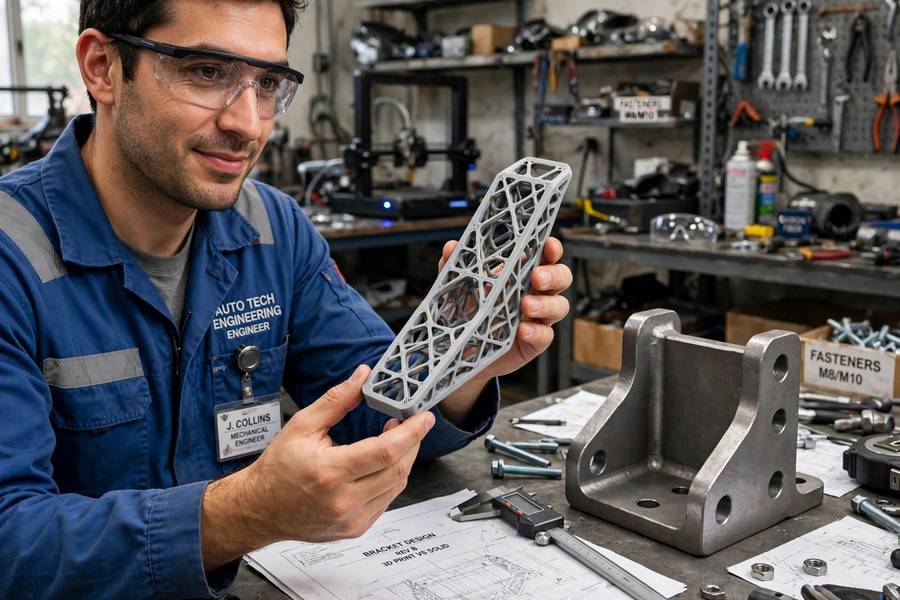
The first wave of automotive generative design hit the unglamorous parts: brackets, mounts, pedal assemblies, seat structures, suspension nodes. These are the parts nobody sees and everybody depends on — they hold things in place, carry loads, and traditionally got designed as solid chunks of metal with generous safety margins.
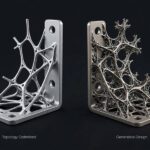
The generative versions look nothing like the originals. A seat bracket goes from a stamped steel plate to an organic lattice. An engine mount sheds a third of its weight. A suspension node — the complex joint where several members meet — gets redesigned as a single optimized form instead of an assembly of plates and welds. The performance numbers are consistent across these cases: 30 to 40 percent weight reduction with equal or better stiffness.
What changed for the engineers is the starting point. Instead of beginning with last year’s part and modifying it, they begin with the load cases and let the algorithm propose forms. The institutional knowledge — what worked, what failed — gets encoded in the constraints rather than the geometry. It’s a different kind of engineering memory, and the senior engineers I’ve spoken to describe the transition as uncomfortable and then, eventually, liberating.
Electric Vehicles: Where Every Gram Is Range
Electric vehicles supercharged the automotive case for generative design, because in an EV, weight translates directly into the metric customers care about most: range. A lighter vehicle needs a smaller battery for the same range, or goes farther on the same battery — and batteries are the most expensive component in the car. How electric vehicles work makes the physics clear; generative design attacks the economics.
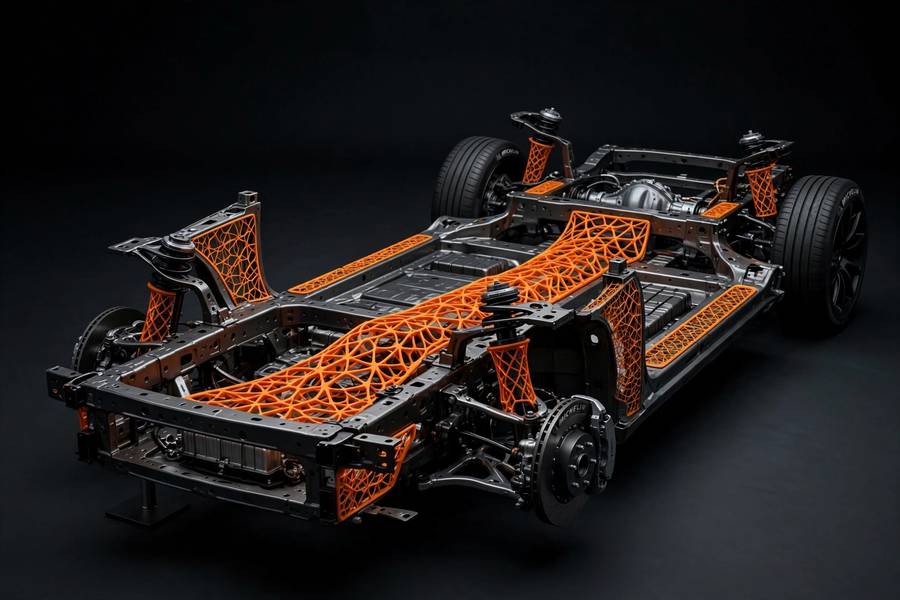
EVs also changed which parts get optimized. Battery enclosures — massive structural boxes that must protect the cells in a crash while staying light — are prime generative candidates. Motor housings, inverter mounts, and the structural members of the skateboard platform all get the treatment. The battery box alone can weigh hundreds of kilograms; shaving ten percent off it is worth more than optimizing every bracket in the car combined.
There’s a second-order effect too. Lighter structures let engineers downsize other components: smaller brakes, lighter suspension, less cooling. Weight reduction compounds — the industry calls it mass decompounding — and generative design feeds it at every level. A kilogram saved in the structure can cascade into several kilograms saved elsewhere.
Crash Structures and the Safety Constraint
Here’s where it gets serious. Crash structures — the crumple zones, rails, and reinforcements that manage energy in a collision — are the most regulated parts of the car. Generative methods are being applied here, but with constraints that would make a bracket study look simple: the part must deform in a specific, controlled way, absorb a specific amount of energy, protect specific occupant spaces, and pass physical crash tests that cost a fortune each.
The approach is cautious and layered. Generative studies explore concepts; detailed simulation validates them; physical testing confirms them. Nobody ships a generative crash rail on simulation alone. But the method is finding real gains: structures that absorb more energy per kilogram, load paths that engage more of the vehicle’s structure, designs that perform well across multiple crash scenarios instead of being tuned to one test.
The regulatory angle matters. Crash standards are written around performance, not geometry — the law says the car must protect occupants, not that the rail must look a certain way. That performance-based framing is exactly what generative methods need. As long as the part passes the tests, the algorithm’s alien-looking solution is as legal as the conventional one.
Consolidation: Fewer Parts, Simpler Assembly
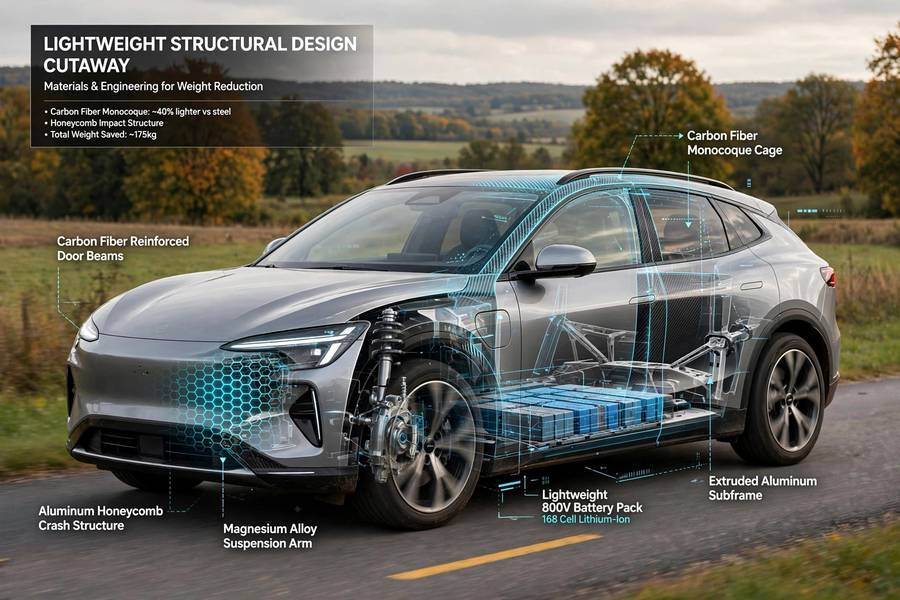
One of the most economically powerful applications isn’t weight reduction at all — it’s part consolidation. Traditional manufacturing builds complex assemblies from many simple parts: stampings, brackets, fasteners, welds. Generative design, paired with additive manufacturing or advanced casting, can replace an assembly of twenty parts with a single optimized component.
The savings compound: fewer parts means fewer suppliers, fewer fasteners, fewer assembly steps, fewer failure modes, less inventory. A consolidated part might weigh the same as the assembly it replaces and still be worth doing for the supply chain simplification alone. This is the application that gets manufacturing executives excited — it attacks cost structure, not just mass.
The constraint is manufacturing reality. Consolidated parts need processes that can make complex geometry at automotive volumes and costs — which is why this application is growing alongside advances in large-format 3D printing, high-pressure die casting of complex forms, and hybrid processes. The design method and the manufacturing method are evolving together, each enabling the other.
From Concept to Production Line
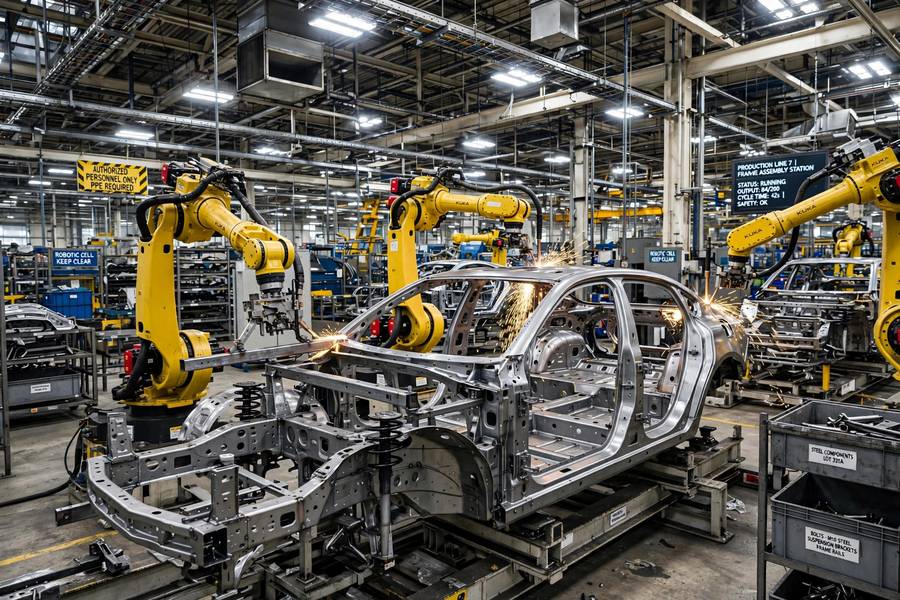
The honest account of how generative parts reach production: the study produces candidates, engineers select and interpret them, the chosen form gets rebuilt as production CAD, tooling gets designed around it, prototypes get tested, and only then does it ship. The generative output is never the production file. The gap between “optimized concept” and “part a supplier can quote” is real engineering work — months of it.
What’s changing is how much of that gap is being automated. Better generative tools output cleaner geometry. Manufacturing constraints are being built into the studies. Suppliers are developing the capability to quote and produce generative forms. The pipeline is maturing, and each generation of tooling shortens the distance from study to street.
The timeline also matters for expectations. A generative bracket study takes days; getting the part into a production vehicle takes years. The technology is fast; the industry is slow. Both facts are true simultaneously, and anyone promising otherwise is selling the study, not the car.
The Suppliers Leading the Charge
The interesting action isn’t only at the big automakers — it’s in the supplier base. Companies that make the brackets, mounts, and structural components have adopted generative methods as a competitive weapon: win the contract by offering the lighter, cheaper, better-performing part. When a supplier can show an OEM a generative redesign that saves weight and cost simultaneously, that’s a bid-winning story.
This creates a diffusion pattern: the methods spread through the supply chain faster than through any single company’s engineering org. A supplier serving five automakers applies generative techniques across all five programs, cross-pollinating the knowledge. The result is that generative design’s automotive footprint is larger than any single automaker’s press releases suggest — it’s in the parts bins, not just the concept cars.
What Is Still Hard
Honest accounting. Generative methods still struggle with: multi-physics problems where structural, thermal, and NVH (noise, vibration, harshness) requirements interact in ways the study doesn’t capture; cost modeling accurate enough to trust the “cheaper” candidates; the organizational challenge of getting conservative engineering cultures to trust algorithmic forms; and the simple fact that most automotive parts are still made by stamping and casting, which constrain geometry more than the algorithms would like.
The trajectory is clear, though. Every year the manufacturing constraints loosen, the cost models improve, and another cohort of engineers grows up fluent in the methods. The question isn’t whether generative design belongs in automotive — it’s already there. The question is how far up the complexity ladder it climbs, from brackets to body structures to the whole vehicle. My bet: further than the skeptics think, slower than the vendors promise. As usual.
And it’s worth noting the parallel track: while generative methods reshape the parts, how self-driving cars work is reshaping what the vehicle is. The car of the next decade gets lighter and smarter simultaneously — two revolutions sharing one chassis.
Frequently Asked Questions
Carmakers use generative design to create lighter brackets, mounts, seat structures, battery enclosures, and crash components. Typical results are 30-40% weight reduction with equal or better performance, plus part consolidation that simplifies assembly.
In EVs, weight directly affects range, and batteries are the most expensive component. Lighter structures mean smaller batteries for the same range. Generative optimization of battery enclosures, motor housings, and platform structures compounds into significant range and cost gains.
Yes, with strict constraints. Generative methods explore crash structure concepts that are then validated through detailed simulation and physical crash testing. Regulations are performance-based, so algorithm-designed parts are legal as long as they pass the required tests.
Part consolidation replaces assemblies of many simple parts with single optimized components, enabled by generative design and advanced manufacturing. It reduces suppliers, fasteners, assembly steps, and failure modes, simplifying the supply chain.
The study itself takes days, but production integration takes years. The generative output must be rebuilt as production CAD, tooled, prototyped, and tested before it ships in a vehicle. The technology is fast; automotive development cycles are slow.
Keep reading: