How Does AI Text to Speech Work? The Simple Explanation

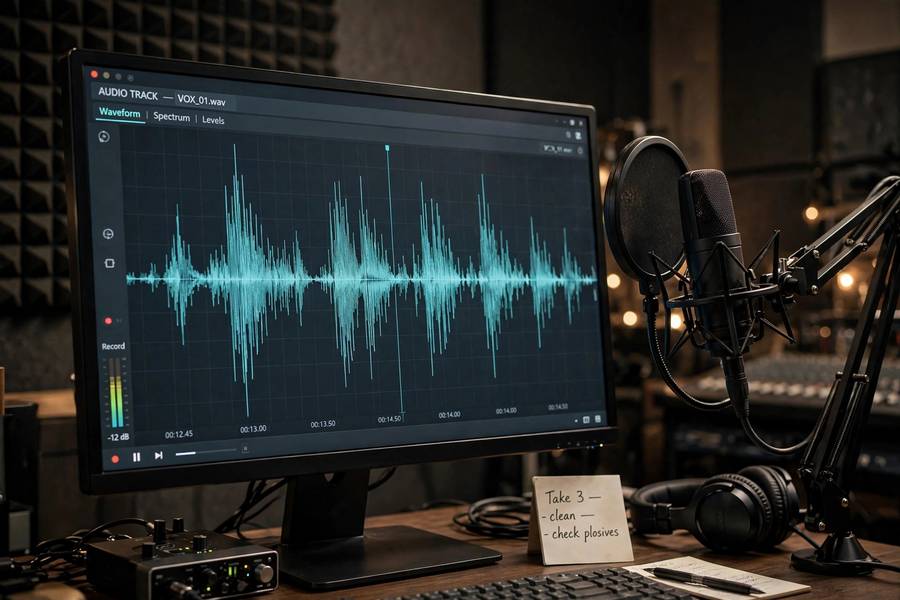
The first time I heard a modern AI voice, I didn’t believe it was synthetic. It paused in the right places. It emphasized the right words. It even sounded faintly amused at its own joke. Compare that to the robotic voices of a decade ago — the ones that pronounced every syllable with the enthusiasm of a parking meter — and you hear one of the quietest revolutions in technology. AI text to speech went from novelty to near-human in about five years, and most people have no idea how it happened.
The short version: AI text to speech works by learning, from thousands of hours of human speech, how written words should sound — then generating new audio that follows those learned patterns. The long version is more interesting, because the pipeline from text to waveform involves several clever stages, each solving a problem you wouldn’t think of until you tried. This guide walks through the whole thing in plain language. For the broader foundations, see my guide on how text to speech works.

The Old Way: Robotic Voices and Why They Sounded Bad
Before AI, text to speech used two main tricks, and both sounded terrible. Concatenative synthesis chopped up recordings of a human voice into tiny pieces — individual sounds — and glued them together to form new sentences. Imagine cutting words out of a magazine to write a ransom note, but with sound. The result was intelligible but choppy, with audible seams where the pieces joined and bizarre intonation because the pieces came from different original sentences.
Formant synthesis went the other direction: no human recordings at all, just mathematical models of the human vocal tract generating sound from rules. This produced the classic robot voice — think early GPS navigators or Stephen Hawking’s famous voice box. Perfectly intelligible, completely inhuman, and oddly charming in retrospect.
Both approaches shared a fundamental limitation: they assembled speech from parts rather than understanding it as a whole. Human speech isn’t a sequence of independent sounds — it’s a continuous flow where every sound is shaped by its neighbors, by the sentence’s meaning, by emotion. Rule-based systems couldn’t capture that continuity. AI could, because AI learns from complete examples instead of following assembly instructions.
Step One: Understanding the Text
The pipeline starts with text analysis — converting written words into a rich representation of what needs to be said and how. This is harder than it looks, because written text is full of ambiguities that humans resolve unconsciously.
First, text normalization: converting non-word elements into speakable form. “Dr. Smith paid $1,250.50 on 10/11/2026” becomes “Doctor Smith paid one thousand two hundred fifty dollars and fifty cents on October eleventh twenty twenty-six.” Dates, currencies, abbreviations, numbers — each needs context-dependent interpretation. Is “Dr” doctor or drive? Is “10/11” October 11th or November 10th? The system makes its best guess from context, and this is one of the places errors still creep in.
Then linguistic analysis: breaking the text into phonemes (the individual sounds of speech), identifying word stress, phrase boundaries, and sentence structure. English is especially tricky — “read” is pronounced differently in “I read daily” versus “I read yesterday,” and only context disambiguates. The system also marks up prosody targets: which words get emphasis, where pauses fall, whether the sentence rises (a question) or falls (a statement). This markup is the bridge between the text and the sound.
Step Two: Predicting How It Should Sound
Here’s where the AI earns its keep. Given the analyzed text, a neural network predicts the acoustic details — essentially a blueprint of the sound, specifying pitch, timing, and energy for every fraction of a second. This blueprint is called a mel spectrogram: a visual representation of sound frequencies over time, like a detailed musical score for the voice.
Older neural systems did this in a rigid, step-by-step way that sometimes produced glitches — repeated words, skipped words, weird pauses. Modern systems use more flexible architectures (with names like diffusion models and flow matching, if you enjoy jargon) that generate the whole blueprint coherently. The key insight: instead of predicting one sound at a time and hoping the sequence works out, the model considers the entire utterance’s flow.
This stage is also where voice identity lives. The model has learned many voices during training, and a voice embedding — a compact mathematical description of a particular voice’s characteristics — steers the prediction toward that voice. Want the same text in a different voice? Swap the embedding. Want to clone a specific voice? That’s a specialized version of this same mechanism, and it raises its own questions (more on those in my comparison of text to speech and voice cloning — actually, let me just say the ethics there deserve their own article, which I’ve written separately).
Step Three: Generating the Audio
The mel spectrogram is a blueprint, not sound — it describes what the audio should look like, but it’s not yet a waveform your speakers can play. The final stage, called the vocoder, converts the blueprint into actual audio waveforms: the rapid pressure variations that become sound.
Vocoders used to be the bottleneck — slow, computationally expensive, and a source of that faintly metallic quality in early neural voices. Modern neural vocoders generate high-fidelity audio fast enough for real-time use, which is why your smart speaker answers instantly instead of after an awkward pause. The quality bar here is essentially “indistinguishable from a studio recording,” and the best systems clear it.
One elegant detail: the whole pipeline is trained end to end on real human speech. The system learns by trying to reproduce thousands of hours of recordings — text in, audio out — and adjusting until its output matches. It’s the same learning-by-example principle behind how ChatGPT works, applied to sound instead of words. And like language models, TTS systems break text into smaller pieces first — the same idea as how tokenization works in text AI.

Where the AI Learning Happens
The training data is the unsung hero. Modern TTS models train on enormous datasets of recorded speech paired with transcripts — audiobooks, podcasts, voice acting, conversational recordings — spanning many speakers, accents, and emotional registers. The model isn’t programmed with rules about intonation; it discovers the patterns by studying enough examples.
This is why data diversity matters so much. A model trained mostly on American audiobook narration will default to that style — measured, clear, slightly formal. Getting natural conversational speech, emotional range, or specific accents requires training data covering those varieties. The recent leap in voice quality came largely from scaling up both the data and the models, the same scaling story that transformed text AI.
It also explains the technology’s limitations and biases. Underrepresented accents and languages get worse quality — not because of any technical barrier, but because the training data is thinner. The fix is more diverse data, and it’s an active area of work across the industry.
Why Modern Voices Sound Human
The human-likeness comes down to prosody — the music of speech. Pitch rises and falls, rhythm speeds and slows, emphasis lands on the meaningful words, pauses segment thoughts. Old systems treated prosody as decoration applied after the fact. AI systems learn it as integral to the speech itself, because they train on complete human utterances where prosody and meaning are inseparable.
Context is the secret ingredient. When the model processes a full sentence (or paragraph), it knows which word is the punchline, which clause is an aside, where the speaker is building to a point. That understanding shapes the delivery — the slight pause before the key revelation, the emphasis on the contrast word. It’s not perfect, but it’s the difference between reading words and speaking meaning.
Emotion control is the frontier. Current systems can dial basic emotional tones — cheerful, serious, empathetic — and the best can follow emotional arcs through a narrative. What’s still hard: genuine spontaneity, the micro-variations that make human speech feel alive rather than performed. We’re close enough that most listeners can’t tell in most contexts, which is both impressive and worth thinking about.
The Mirror Image: Speech to Text
AI text to speech has a twin: speech recognition, which goes the other direction (audio in, text out). The two technologies share DNA — both use neural networks trained on massive speech datasets, both deal with the messy relationship between sounds and words. But they’re different problems. Recognition must handle the infinite variability of real human speech — accents, mumbling, background noise. Synthesis starts from clean text and generates idealized speech.
They meet in the middle in voice assistants: your request goes through speech recognition to become text, gets processed, and the answer comes back through text to speech. Understanding how voice recognition works completes the picture — the two directions together are what make talking to machines feel natural.
What AI Voices Still Get Wrong
For all the progress, the failures are instructive. Long-form content reveals the limits: AI narration of a full audiobook can sound subtly monotonous over hours, missing the emotional architecture that a human narrator builds across chapters. Complex texts — poetry, dialogue with multiple characters, anything with irony — still trip up the prosody prediction. The model understands the words but not always the performance the words need.
Pronunciation of unusual names, technical terms, and mixed-language text remains hit-or-miss. And there’s an uncanny quality some listeners detect — not robotic, but too smooth, too consistent, lacking the tiny imperfections (breath sounds, micro-hesitations) that signal humanity. Ironically, engineers now add artificial imperfections to make voices sound more real, which tells you something about where we are.
The practical advice: for most applications — announcements, assistants, accessibility, short-form content — current quality is excellent. For long-form creative work where performance matters, humans still win. Know which game you’re playing.
Where You Encounter This Every Day
You hear AI text to speech constantly without noticing, which is the technology’s greatest compliment. Voice assistants answering questions. GPS navigation directions. Automated customer service lines. Audiobook narration (increasingly). Accessibility screen readers. Video narration on social media. Announcements in airports and train stations. The TikTok voice that narrates half the internet.
This invisibility is worth pausing on. A technology that went from “obviously a robot” to “wait, was that a person?” in five years, now embedded in daily life — that’s the AI story in miniature. Understanding how it works doesn’t just satisfy curiosity; it’s literacy for a world where synthetic voices are everywhere and getting better. The next frontier — real-time voice conversion, emotional dubbing, personalized voices — is already arriving. The parking-meter voice is history. What replaces it is up to us to shape wisely.
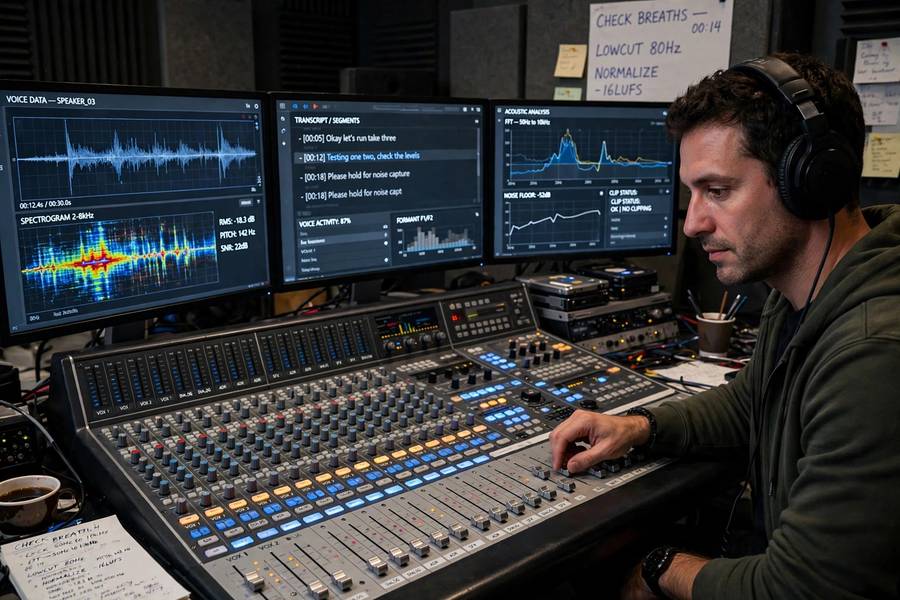
Frequently Asked Questions
AI text to speech works in three stages: text analysis (normalizing text and marking pronunciation and emphasis), acoustic prediction (a neural network generates a detailed sound blueprint called a mel spectrogram), and vocoding (converting the blueprint into playable audio waveforms). The AI learns each stage from thousands of hours of human speech.
Modern AI voices capture prosody — the pitch, rhythm, and emphasis patterns of natural speech — because they learn from complete human utterances rather than assembling speech from parts. Training on massive, diverse speech datasets lets the models reproduce the musical flow that older rule-based systems couldn’t.
Old TTS used concatenative synthesis (gluing recorded sound fragments together) or formant synthesis (mathematical vocal-tract models), producing choppy or robotic voices. AI TTS uses neural networks trained on real speech to generate fluid, natural-sounding audio from scratch.
Text analysis (normalizing numbers, dates, and abbreviations; marking phonemes, stress, and pauses), acoustic modeling (neural network predicts pitch, timing, and energy as a mel spectrogram), and vocoding (converting the spectrogram into actual audio waveforms).
Long-form emotional arcs in audiobooks, poetry and irony, unusual names and technical terms, mixed-language text, and genuine spontaneity. Current voices can sound subtly too smooth over hours of narration — impressive, but still distinguishable from human performance in demanding contexts.
Keep reading: