What Is a Roguelike Game? A Gamer’s Plain-English Guide

You die. You lose everything. You start over from the beginning, and somehow you immediately want to go again. If that loop sounds miserable, you have never played a good roguelike. If it sounds weirdly exciting, welcome. You are asking what is a roguelike game, and the answer opens up one of the most creative and replayable genres in gaming. It also explains why some of the most beloved indie games of the last decade all share the same DNA.
If you have ever asked what is a roguelike game, this guide has you covered. Understanding the answer unlocks one of the most creative and replayable genres in gaming, and it explains why some of the most beloved indie games of the last decade all share the same DNA.
Where the Name Comes From
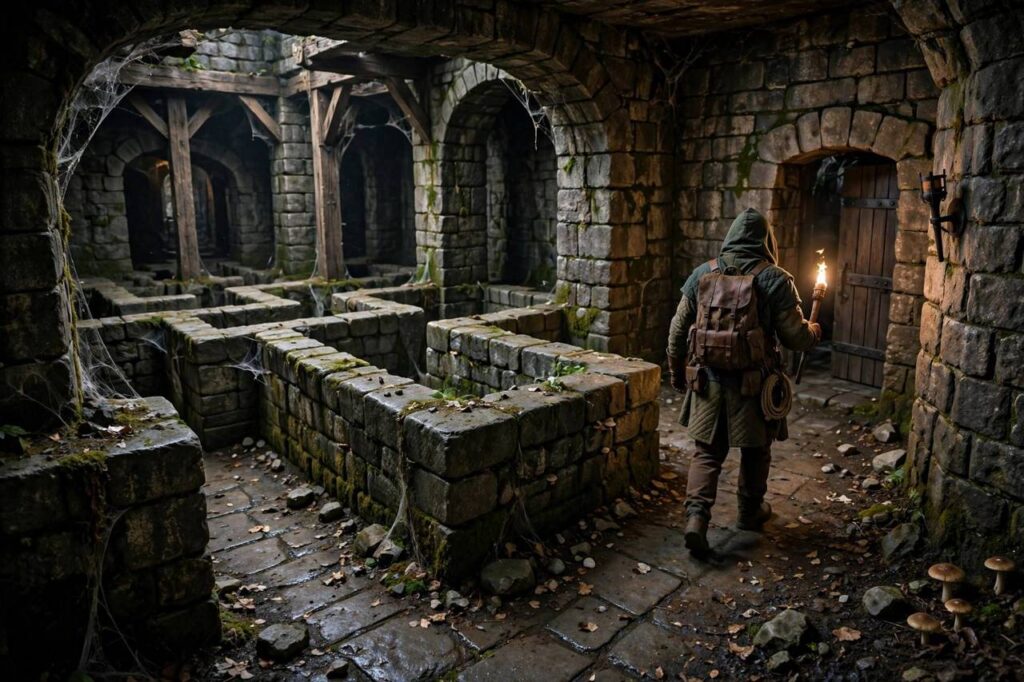
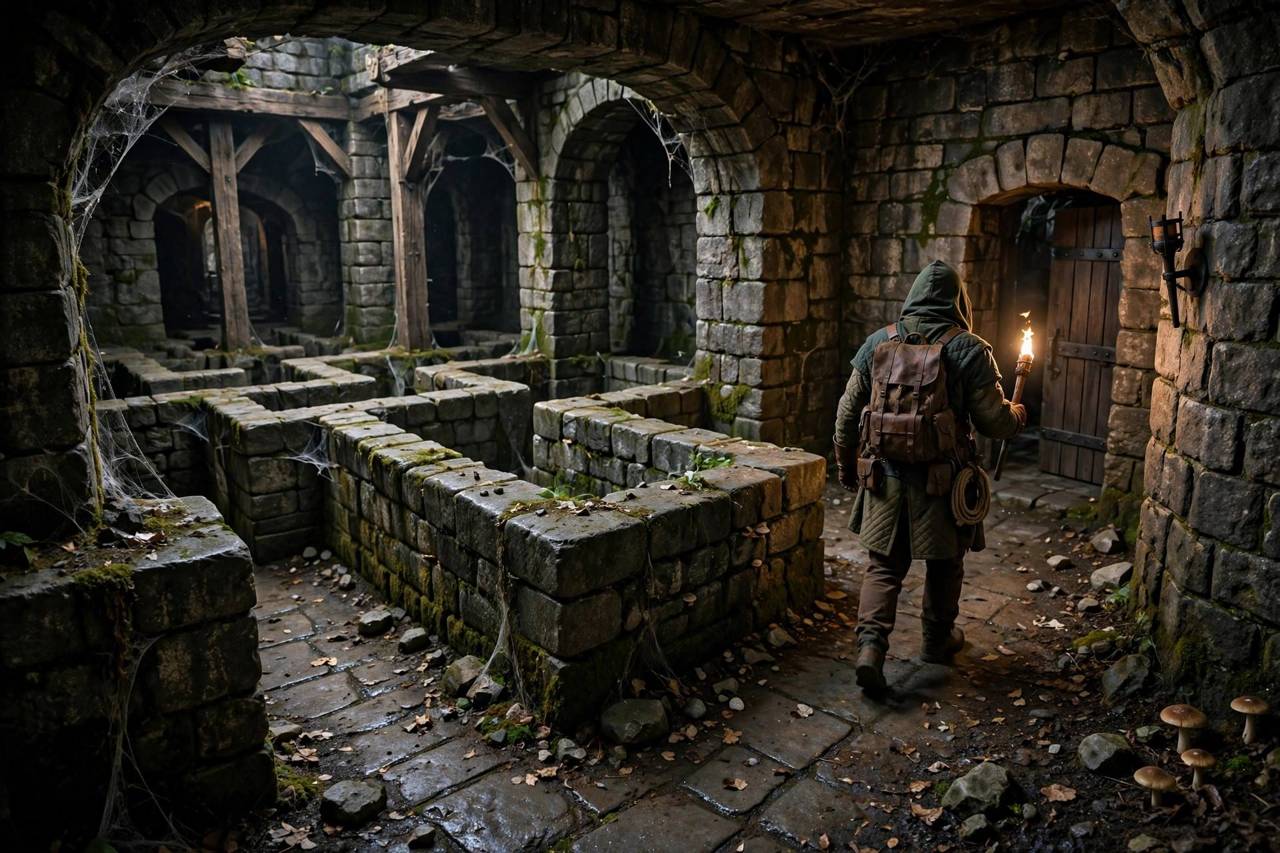
Rogue was a 1980 computer game where you explored a dungeon represented by text characters. Every time you played, the dungeon layout was randomly generated, and when your character died, the save was deleted. You started over with nothing. That combination, random dungeons plus permanent death, was the entire genre seed.
For decades, games that copied this formula were niche curiosities with ASCII graphics and brutal difficulty. Then indie developers rediscovered the design. They kept the core ideas but wrapped them in modern art, tighter controls, and clever twists. Games like The Binding of Isaac, Spelunky, FTL, and later Hades and Slay the Spire took the roguelike skeleton and built some of the most celebrated games of their generations on it.
The genre’s history is part of a bigger story about how video games are made. Roguelikes are popular with small teams partly because procedural generation lets a handful of developers create effectively infinite content. A clever system replaces hundreds of hand-designed levels.
The Three Pillars: Permadeath, Procedural Generation, and Mastery
Permadeath is the famous one. When you die in a roguelike, the run ends. Your character, your items, your progress through that dungeon, all gone. This sounds punishing, and it is, but it changes how you play in a way nothing else does. Every decision carries weight. You play carefully, you think ahead, and victories feel genuinely earned because the game never promised you would survive.
Procedural generation means the game builds each run from randomized pieces: dungeon layouts, enemy placement, item drops, sometimes even the rules themselves. No two runs play the same. This is what gives roguelikes their legendary replayability. You are not memorizing a level. You are learning to read situations and adapt, which is a deeper and more durable skill.
The third pillar is the one people miss. Roguelikes are games about player mastery, not character power. You do not win because your numbers got bigger. You win because you got smarter. The knowledge carries between runs even though the character does not. Your fiftieth attempt succeeds because of everything the first forty-nine taught you. That learning curve is the genre’s real progression system.
Roguelike vs. Roguelite: What Is the Difference
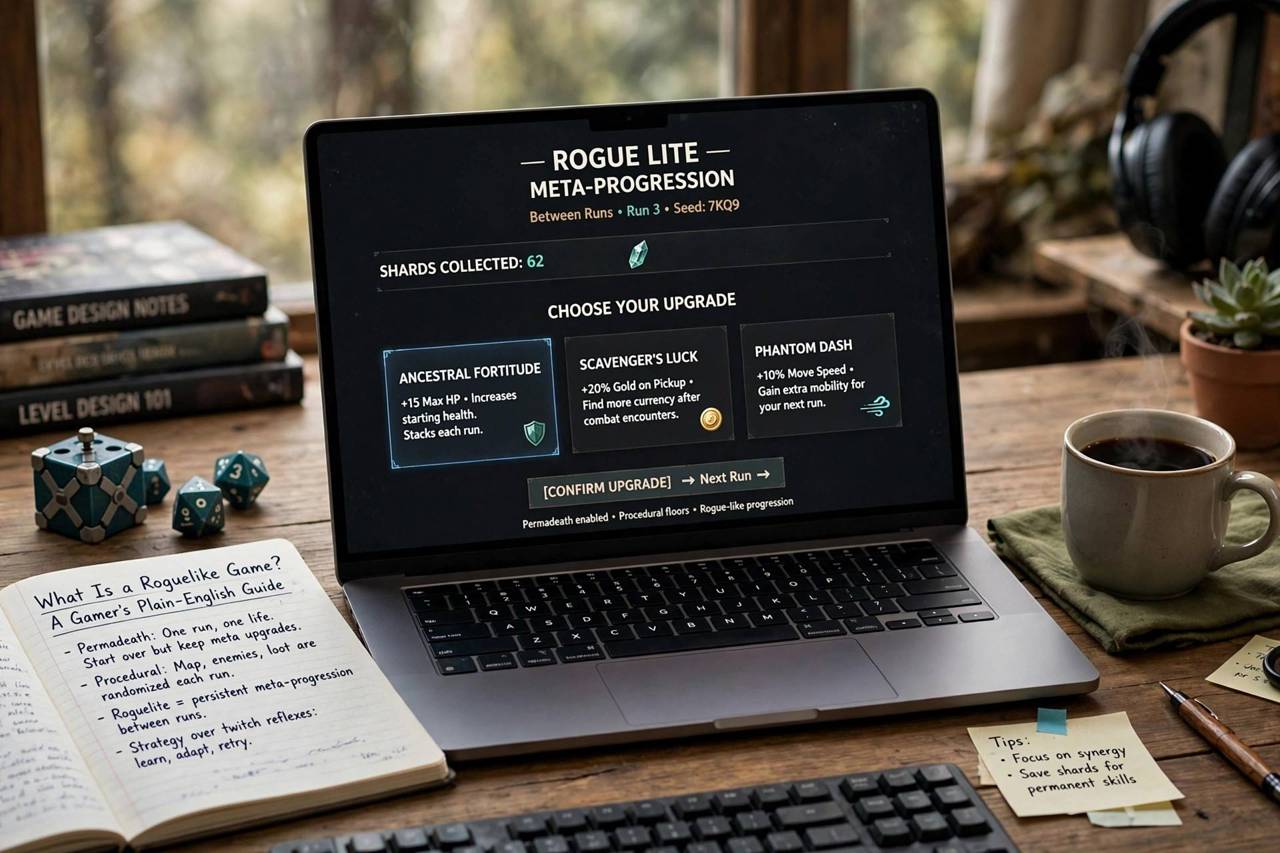
Here is where the terminology gets messy. Purists reserve roguelike for games with true permadeath and no persistent upgrades: every run starts from absolute zero. Roguelite describes games that borrow the structure, random runs and permanent death within a run, but let you keep some progress between attempts, like unlocked characters, upgraded stats, or new starting items.
Hades is the famous example of a roguelite. You die constantly, but each death advances the story and unlocks upgrades that make the next run slightly easier. Dead Cells, Rogue Legacy, and Slay the Spire work similarly. The meta-progression softens the punishment and gives every failed run a consolation prize.
Does the distinction matter? For buying decisions, a little. If you want the pure, unforgiving experience, look for roguelike. If you want the structure with a gentler learning curve, roguelite is your friend. Most players end up loving both. The internet will argue about the labels forever, but the games are what count.
Why Roguelikes Are So Addictive
The one more run effect is real, and it has a design explanation. Each run is short enough that starting over feels cheap, but different enough that it never feels repetitive. Death stings just enough to matter but not enough to quit, because the next run might have the perfect item combination. Psychologists call this variable reward, and slot machines use the same trick, except here the reward is earned through skill.
The genre also respects your time in a way long RPGs do not. A run lasts twenty minutes to an hour. You can play one run on a lunch break and feel like you accomplished something. There is no fifty-hour commitment, no save file guilt. This makes roguelikes perfect second games, the thing you play between bigger titles.
And they age beautifully. A hand-crafted linear game is finished once you memorize it. A roguelike is never finished, because the combinations never repeat. Players return to decade-old roguelikes the way chess players return to the board. The game is the system, and the system does not get old.
The Best Roguelikes to Start With
If you are new, start with Hades. It is the friendliest entry point ever made: gorgeous art, a story that advances through death, combat that feels incredible, and difficulty options that let you tune the challenge. It teaches the genre’s pleasures while sanding off its sharpest edges.
For card game fans, Slay the Spire is essential. It turns deck-building into a roguelike run, and it is dangerously replayable. For platforming fans, Dead Cells blends roguelike structure with tight action combat. For traditionalists who want the real thing, look at Caves of Qud or Tales of Maj’Eyal, modern games in the classic ASCII-descended mold.
Spelunky deserves a special mention as the game that proved roguelike design works in platformers. Its systems interact in surprising ways, and its daily challenge mode created a whole community ritual. Whatever genre you love, there is probably a roguelike version of it now, which tells you how flexible the design really is.
Playing Roguelikes on Any Device
The genre has escaped the PC. Most major roguelikes are on consoles, and many run beautifully on handhelds, which suit the short-run structure perfectly. Mobile has a growing roguelike scene too, with several excellent ports and originals designed for touch screens.
Streaming technology is opening more doors. Because roguelikes are not graphically demanding compared to big-budget shooters, they stream well even on modest connections. If you are curious about how cloud gaming works, roguelikes are a great test case: low latency requirements, short sessions, and easy to pick up on any screen in the house.
What Is a Roguelike Game? Common Myths Debunked
Now that the definition is clear, let us clear up what is a roguelike game is not. Myth one: roguelikes are all brutally hard. Classic ones are, but modern roguelites like Hades include difficulty options and persistent upgrades that make them genuinely welcoming. The genre has a learning curve, not a wall.
Myth two: roguelikes have no story. Some are pure systems, but many weave narrative into the death loop itself. Hades tells its story through repeated deaths. Returnal builds mystery across runs. The structure turns out to be a storytelling tool, not an obstacle to one.
Myth three: every run feeling random means skill does not matter. Randomness creates the situations, but skill decides the outcomes. Watch an expert play a roguelike and the difference from a beginner is obvious within minutes. They read rooms faster, manage resources better, and know which risks are worth taking. The randomness is the test. Mastery is the answer.
Myth four: losing all progress makes the genre a waste of time. This misunderstands what progress means here. Your character resets, but you do not. Every death teaches something: an enemy pattern, an item synergy, a route through a level. Players describe the moment a hard roguelike clicks as one of gaming’s best feelings, and it only happens because the failures built the knowledge.
The Future of the Genre
Roguelike design keeps spreading into new territory. We have roguelike deck-builders, roguelike city-builders, roguelike farming games, even roguelike elements in big-budget action titles. The design ideas, procedural variety plus meaningful failure, turned out to be portable across almost every genre.
The next frontier is probably hybridization. Developers are blending roguelike runs with persistent worlds, multiplayer structures, and narrative campaigns in ways that stretch the definition further. Purists will keep arguing about labels. Everyone else will keep playing, because the core loop, die, learn, try again, is one of the most satisfying in all of games.
If this is your first exposure to the genre, start tonight. Pick up Hades, give it three runs, and pay attention to what each death teaches you. By the third attempt you will feel the click, that moment when the systems make sense and the failures start feeling like tuition. That feeling is the whole genre in miniature, and it never really gets old.
Frequently Asked Questions
What is a roguelike game in simple terms?
A roguelike is a game where every playthrough is randomly generated, death permanently ends the run, and you improve by learning the game’s systems rather than by leveling up a character. You die, start over, and try again smarter.
What is the difference between roguelike and roguelite?
Roguelikes have true permadeath with no persistent upgrades between runs. Roguelites keep the random runs and in-run permadeath but let you unlock permanent upgrades, characters, or story progress that carry across attempts, making them more forgiving.
Is Hades a roguelike or roguelite?
Hades is a roguelite. Death ends each run, but you keep story progress, unlock permanent upgrades, and build relationships between attempts. It uses roguelike structure with meta-progression layered on top.
Why is it called a roguelike?
The name comes from Rogue, a 1980 dungeon crawler with randomly generated dungeons and permanent death. Games that copied its design were called Rogue-like, and the term stuck as the genre grew.
Are roguelikes hard for beginners?
Classic roguelikes are famously difficult, but modern roguelites like Hades are very beginner-friendly, with difficulty options and persistent upgrades that ease you in. Start with a roguelite and work backward to the harder stuff.