Best Video Games for Beginners: Where to Start in 2026

So you want to start gaming, but every game looks like it requires a PhD and reflexes of a caffeinated squirrel. I get it — modern games can be intimidating from the outside. But here’s the secret: some of the best gaming experiences ever made are also the most welcoming. These are the best video games for beginners — games with gentle learning curves, zero judgment, and that magical quality where “just 30 more minutes” turns into 3 a.m.
I’ll explain what makes a game beginner-friendly, recommend the best starting points by platform and taste, and give you the mindset tips that turn a curious newcomer into a lifelong gamer.
What Makes a Video Game Beginner-Friendly?
Not all “easy” games are good for beginners, and not all beginner games are easy. The best starter games share these traits:
- Teaches as you play. The best beginner games introduce mechanics one at a time through gameplay, not through a 20-minute tutorial lecture. You learn by doing, and doing is fun from minute one.
- Failure is cheap. Generous checkpoints, no harsh penalties for dying, the ability to retry instantly. Beginners need room to experiment without punishment.
- Clear goals. You always know what to do next. Open-ended “figure it out yourself” games are wonderful later — terrible first.
- Readable controls. A few buttons doing intuitive things beats twelve buttons doing context-sensitive things. Complexity can come later.
- Respect for your time. Save anywhere, short sessions that feel complete, no grinding required to have fun.
Avoid as first games: competitive online shooters (you’ll be matched against people with 5,000 hours), complex strategy games with 200-page manuals, and horror games (not because they’re hard — because fear isn’t fun when you’re also learning controls).
Best Video Games for Beginners: The Starter List
Stardew Valley. The ultimate cozy starter. Farm, fish, mine, befriend villagers — at your own pace, with zero fail states. It teaches gaming fundamentals (inventory, quests, progression) so gently you don’t notice you’re learning. Available on everything.
Minecraft (Creative/Peaceful mode). Start in Creative mode where nothing can hurt you and you have infinite blocks. It’s digital LEGO — pure creativity, zero pressure. Switch to Survival when you’re curious. The best-selling game ever for a reason.
Portal / Portal 2. A puzzle game that teaches its brilliant mechanics one concept at a time, wrapped in genuinely funny writing. Short, perfect, and it makes you feel smart. One of the best-designed learning curves in gaming history.
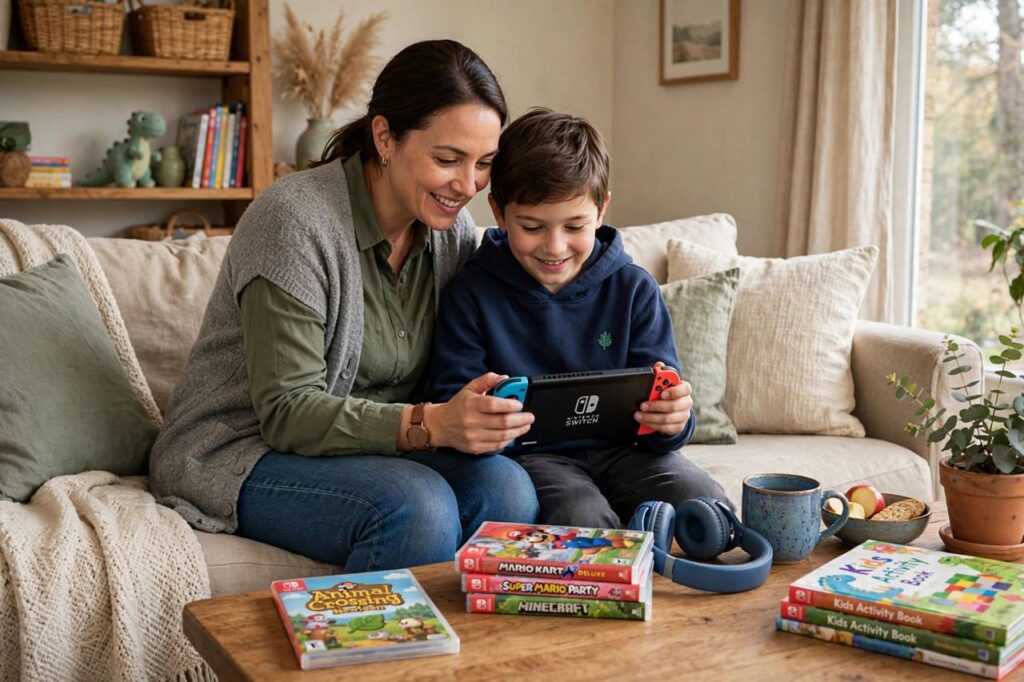
Mario Kart 8 Deluxe. The great equalizer — simple enough for anyone to finish a race, with items that keep things competitive regardless of skill. The perfect “gaming with friends/family” starter. Losing is fun here, which is a rare and precious quality.
Animal Crossing: New Horizons. No enemies, no timers, no losing. Decorate an island, catch bugs, chat with animal neighbors. It’s gaming as relaxation, and it’s converted millions of non-gamers.
The Legend of Zelda: Breath of the Wild. Slightly more ambitious, but its genius is freedom — go anywhere, try anything, and the game rewards curiosity over skill. If you want an epic adventure as your first big game, this is the one.

Best Beginner Games by Platform
Nintendo Switch: the beginner’s best friend. Mario Kart 8, Animal Crossing, Super Mario Odyssey (joyful 3D platforming with forgiving design), and Luigi’s Mansion 3 (charming, gentle puzzles). The Switch’s pick-up-and-play nature matches beginner needs perfectly.
PlayStation/Xbox: look for story-driven single-player games — they respect your pace. Great starters: the LEGO games (any of them — funny, simple, cooperative), Spyro Reignited (cheerful collecting platformer), and Stardew Valley. Avoid jumping straight into the big competitive multiplayer titles.
PC: the most options, slightly more setup friction. Stardew Valley, Portal 2, and Minecraft are all perfect PC starters. If your computer struggles, speeding up a slow computer tips help — and honestly, most beginner-friendly games run fine on modest hardware, which is another reason they’re great starters.
Mobile: the lowest barrier of all. Monument Valley (gorgeous puzzles), Alto’s Odyssey (meditative snowboarding), and Stardew Valley (yes, it’s on mobile too). Touch controls are intuitive for total newcomers.
Quick platform reality check for the truly undecided: if you already own a decent laptop, start on PC — it’s free to try (tons of great free games), and a mouse is the most intuitive pointing device ever made. If you want the couch experience, a Nintendo Switch is the most beginner-friendly console ever built: the games are welcoming, the controller is simple, and you can play handheld in bed. PlayStation and Xbox are fantastic but their biggest exclusives tend to assume more gaming literacy — great second step, slightly intimidating first step. And mobile? Legit option. Games like Monument Valley and Balatro prove phones can deliver real gaming experiences, and you already own the hardware.
Beginner Tips That Actually Matter
Lower the difficulty without shame. Difficulty settings exist to be used. “Story mode” or “easy” isn’t cheating — it’s calibrating the game to your current skill. The fun is the point, not the badge.
Remap controls if something feels wrong. Most games let you change button layouts. If jumping on an awkward button is ruining your fun, move it. Comfort is not optional.
It’s okay to look things up. Stuck for 20 minutes isn’t noble, it’s boring. Guides, wikis, and YouTube tutorials are part of modern gaming culture — even veterans use them. The goal is having fun, not suffering in silence.
Play with patient people. Your first multiplayer experiences should be with friends who teach, not randoms who rage. Cooperative games (Stardew Valley multiplayer, LEGO games, It Takes Two when you’re ready) are infinitely better starters than competitive ones.
Take breaks. Frustration is information — it means you need a pause, not that you’re bad at games. The boss that’s impossible at midnight is easy after sleep. Every gamer learns this eventually; learn it early.
Two more tips that beginners always underestimate. First: remap your controls guilt-free. Default control schemes are designed for average hands and average preferences — you are neither. If crouching on a thumbstick click feels awful, change it. If the jump button feels wrong, move it. Every modern game lets you remap, and playing with comfortable controls will improve your experience more than any amount of “getting used to it.” Second: use the accessibility and difficulty options without shame. They’re there because developers want you to finish their game, not because they’re pity features. Aim assist, generous checkpoints, story mode — these exist so you can enjoy the game instead of fighting it. The only wrong way to play is the way that makes you quit.
Where to Go Next
Once you’ve finished a few starter games, you’ll know what you like — and that’s when gaming gets really exciting. Love Stardew’s chill progression? Try Terraria or Dave the Diver. Love Portal’s puzzles? Try The Witness or Baba Is You. Love Mario Kart’s chaos? Try the party game world. Love Breath of the Wild’s freedom? The entire open-world genre awaits.
Your taste is the compass; these starter games just taught you how to read it. And if you ever get curious about what’s behind the screen — how video games are made is a fascinating look at how the games you love come to life. Welcome to gaming. You’re going to love it here.
The Best Beginner Genres (and Which to Avoid for Now)
Not all game genres are created equal for newcomers. Picking the right genre matters more than picking the right specific game — it’s the difference between “this is amazing” and “I don’t get it” in the first hour.
Start here — the beginner-friendly genres:
- Cozy games. Stardew Valley, Animal Crossing, Spiritfarer. No fail states, no reflexes required, no one yelling at you. You farm, you decorate, you vibe. These games taught millions of non-gamers that gaming can be relaxing, and they’re the perfect on-ramp.
- Narrative adventures. Games like Life Is Strange or Firewatch play more like interactive movies — you explore, make choices, and follow a story. The controls are simple because the point is the story, not the challenge.
- Puzzle games. Portal, Tetris Effect, The Witness. Pure problem-solving at your own pace. Nobody’s shooting at you while you think, which makes them ideal for learning how games “feel” without pressure.
- Turn-based strategy. Civilization, XCOM, Into the Breach. The game waits for you. You can take ten minutes to decide your move, google what a mechanic means, grab a snack — the game doesn’t care. Turn-based is the most beginner-respecting design in all of gaming.
Avoid for now — not forever, just not first:
- Competitive shooters (Call of Duty, Valorant). You’ll be matched against people with thousands of hours. It’s brutal, it’s fast, and other players are not patient teachers.
- Soulslikes (Elden Ring, Dark Souls). Famously difficult by design. Amazing games — come back when you’ve got the basics down and want a real challenge.
- Complex MOBAs (League of Legends, Dota 2). Hundreds of characters, deep strategy, and a community with a reputation for being rough on newcomers. There’s a reason “just play bot games for a month” is standard advice.
The through-line: your first games should respect your time and your learning curve. Challenge is fun once you have the vocabulary for it — but vocabulary comes first.
FAQ
What is the best video game for a complete beginner?
Stardew Valley is the most universally recommended starter — gentle learning curve, no fail states, available on every platform. Minecraft in Creative mode and Animal Crossing are equally welcoming alternatives.
What video games are easy for non-gamers?
Look for games with simple controls, clear goals, and forgiving failure: Mario Kart 8, Stardew Valley, Animal Crossing, Portal, and mobile games like Monument Valley. Avoid competitive online games as a first experience.
Should beginners play on easy mode?
Absolutely. Difficulty settings exist to calibrate the game to your skill level. Playing on easy or story mode isn’t cheating — it’s how you have fun while learning, and you can always increase difficulty later.
What is a good first video game for adults?
Portal 2 (brilliant puzzles, funny, short), Stardew Valley (relaxing, deep), and The Legend of Zelda: Breath of the Wild (epic but freedom-focused) are all excellent adult-friendly starters that respect your intelligence.
How do I get better at video games as a beginner?
Play games slightly above your comfort level, take breaks when frustrated, look up guides without shame, remap controls for comfort, and play with patient people. Skill comes from relaxed, consistent play — not grinding through misery.
Is it too late to start gaming as an adult?
Not even slightly — the average gamer is in their mid-30s, and the industry now makes more games for busy adults than for anyone else. Cozy games, narrative adventures, and mobile puzzlers are all designed for people with jobs and limited time. The ‘gamers are teenagers’ stereotype is about two decades out of date. Your reflexes might not match a 16-year-old’s, but your patience, problem-solving, and appreciation for a good story are all advantages.