How to Host a Game Night for Adults (That’s Actually Fun)

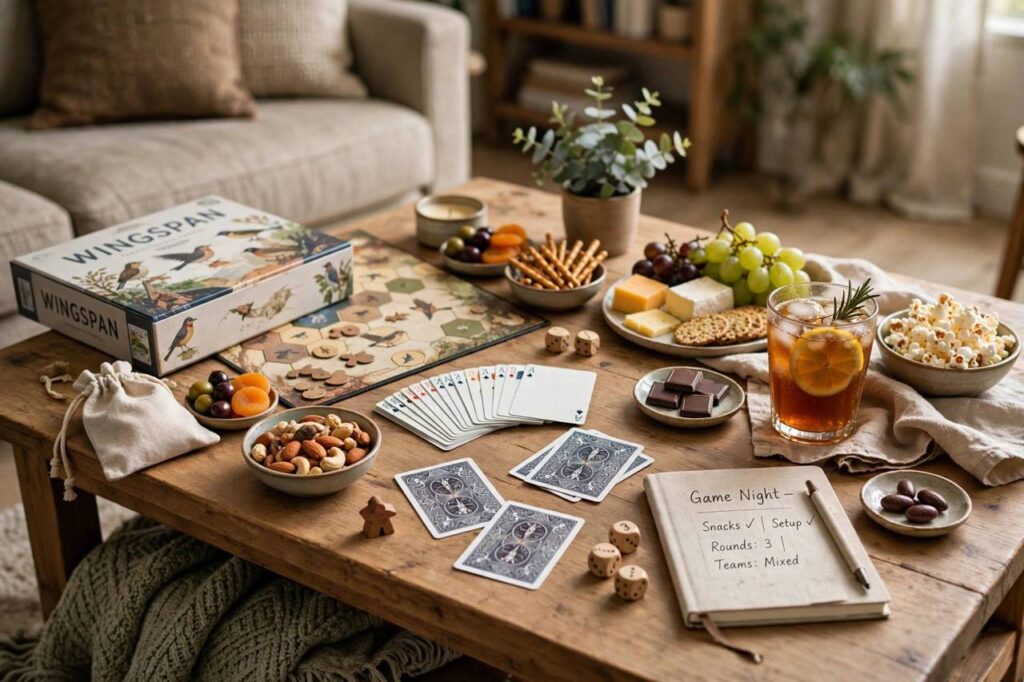
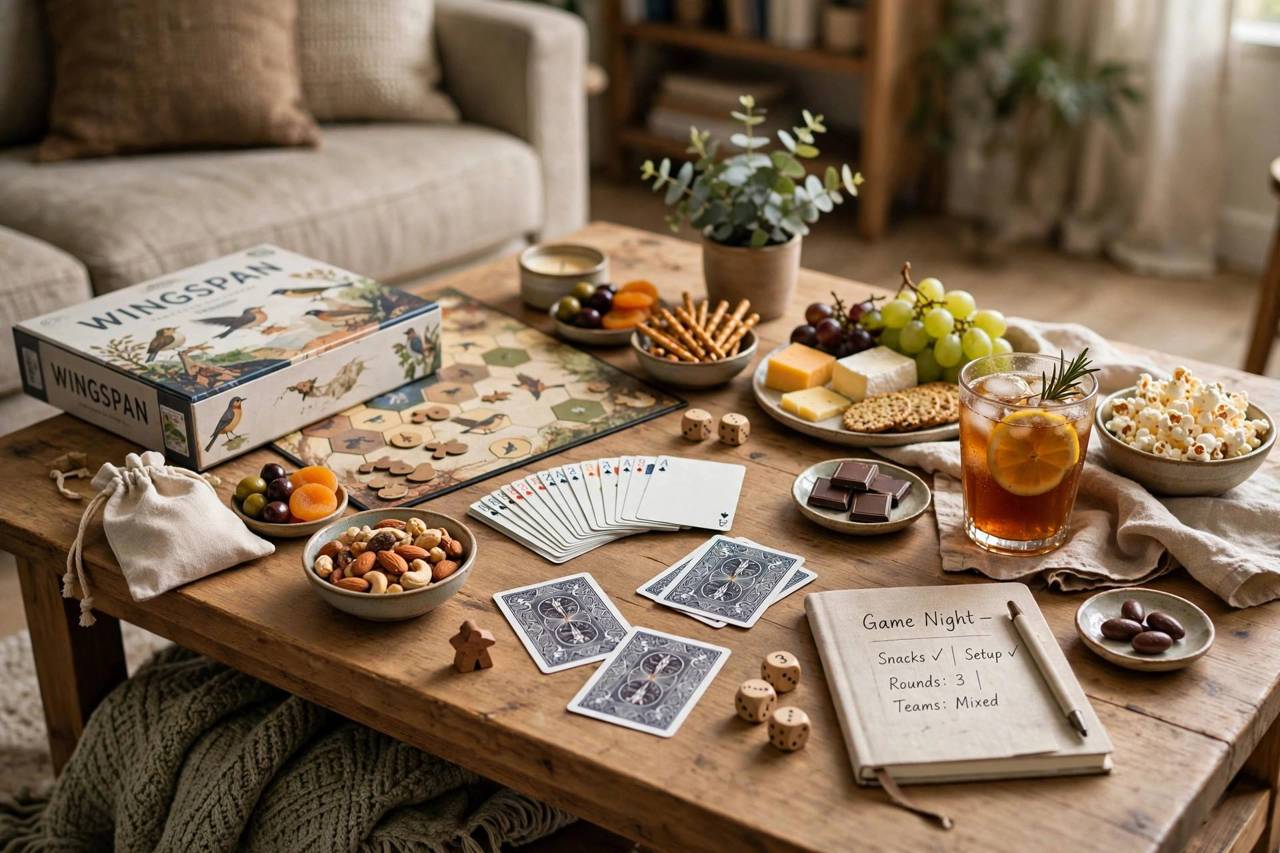
There’s a special kind of disappointment in a game night that fizzles by 9 p.m. — someone’s explaining rules for forty minutes, half the table is on their phones, and the energy just… evaporates. I’ve hosted dozens of game nights, and I’ve bombed enough of them to know exactly what separates the legendary ones from the forgettable ones. Here’s how to host a game night for adults that people actually talk about the next day.
The secret isn’t owning the most games. It’s curation: the right games, for the right group, in the right order, with the right fuel. Think of yourself less as a host and more as a DJ — reading the room, pacing the energy, and knowing when to switch the track.
How to Host a Game Night for Adults: Know Your Table
Before you pick a single game, think about who’s coming. Game nights fail most often from a mismatch between the games and the gamers. A table of competitive strategists will be bored by party games; a table of casual socializers will mutiny halfway through a three-hour rules explanation.
Size your guest list deliberately. Four to six players is the sweet spot for most great games — enough for social dynamics, few enough that nobody waits forever for a turn. Eight-plus works only for party games designed for crowds. And be honest about the vibe: is this a “we take games seriously” group or a “games are an excuse to hang out” group? Both are valid. They need completely different game selections.
Consider experience gaps, too. If half your guests have never played anything heavier than Uno, don’t open with the game that has a 40-page rulebook — no matter how much you love it. The golden rule of hosting: the best game is the one everyone at the table can enjoy, not the one you most want to play. You can always schedule a separate heavy-games night with your hardcore group.
The Game Lineup: Order Matters More Than Selection
Plan your evening like a setlist: opener, headliner, encore. The opener should be fast (under 30 minutes), easy to learn (teachable in five minutes), and social — something that gets people laughing and talking. Great openers: Codenames, Wavelength, Just One, or Skull. The opener’s job isn’t to be the best game of the night; it’s to warm up the table.
The headliner is your main event — the meatier game, 60 to 90 minutes, the one people will remember. This is where you match the game to the group: Ticket to Ride or Azul for mixed groups, Catan or Wingspan for the strategy-curious, something heavier for the veterans. Teach it well (more on that below) and give it the prime slot when energy is highest — usually right after food.
The encore is for whoever’s still standing: something light, funny, and low-stakes to wind down. Wits & Wagers, Telestrations, or a round of Love Letter. Never try to start a second heavy game at 11 p.m. — that’s how game nights end with someone fake-yawning and everyone resenting the host.
Bring backups, but don’t overdo it. Three planned games plus one or two alternates is plenty. A shelf of twenty options creates decision paralysis; a tight shortlist creates momentum.
Teaching Rules Without Killing the Mood
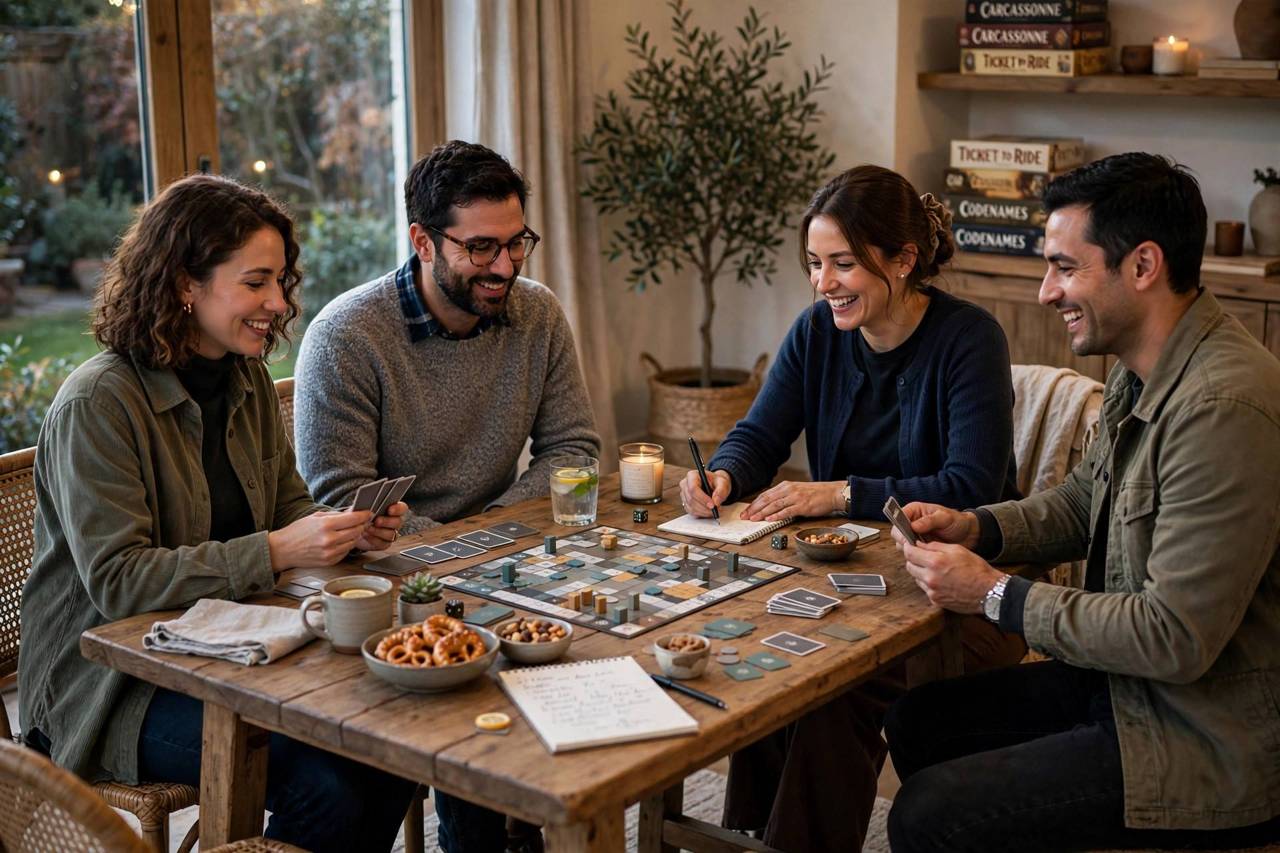
Here’s the number one skill of a great game night host: teaching a game in under ten minutes without making anyone’s eyes glaze over. The method that works: explain the goal first, then the turn structure, then the key rules — and start playing immediately. Details can be clarified as they come up.
“The goal is to have the most points when the deck runs out. On your turn you do one of three things…” — that’s the template. Lead with what players are trying to do, because rules only make sense in the context of the goal. Save edge cases and exceptions for when they actually arise; front-loading them is how you lose the table.
Do a practice round when it helps. For games with any complexity, playing two or three open turns where everyone can see each other’s cards and ask questions removes the fear of messing up. And set the expectation explicitly: “We’ll probably get a rule wrong the first time — that’s fine, we’ll fix it next game.” Permission to be imperfect keeps casual players from checking out.
One more host superpower: learn the game yourself before the night. Watching a rules video the day before, or better yet playing a solo practice round, means you teach confidently instead of reading the manual aloud while everyone waits. Your preparation is invisible, but its absence is glaring.
Food, Drinks, and the Logistics Nobody Talks About
Game night food has one iron rule: nothing that greases up the components. Nobody wants to draw cards with pizza fingers. Finger foods that are clean to handle — pretzels, popcorn in individual bowls, veggie trays, wrapped candies — beat elaborate spreads every time. If you’re doing a real meal, serve it before the gaming starts or during a proper break, not mid-game.
Drinks are part of the fun, but pace them with the games. A signature cocktail or a themed drink adds occasion-feel; just keep in mind that heavy drinking and complex strategy games are natural enemies. Save the serious pours for the party-game portion of the evening. And always have good non-alcoholic options visible — sparkling water, sodas, mocktails — without making it a thing.
The unglamorous logistics: have enough seating where everyone can reach the table comfortably. Clear the play area before guests arrive — nothing kills momentum like pausing to move laundry off the couch. Keep the game boxes’ lids and inserts handy for quick cleanup between games. And have a phone-charging spot away from the table, which subtly discourages mid-game scrolling. The hosting instincts are the same ones you’d use hosting a dinner party — a prepared host is an invisible host.
Reading the Room and Saving a Dying Night
Even well-planned nights can wobble. The host’s real job is noticing early and adjusting. Signs of trouble: side conversations multiplying, phones appearing, someone asking “how much longer is this?” These are data, not insults — the game isn’t landing, and that’s information.
The fix is almost always to switch, not to push through. “Let’s call this one here and try something quicker” is a perfectly fine sentence. Have your lighter backup ready for exactly this moment. Shortening a game — playing to fewer points, calling it after a set number of rounds — is also legitimate. The goal is a good evening, not completing a game out of obligation.
End on a high note, deliberately. When the energy peaks during a great game, that’s your moment to start winding down, not to launch another hour-long epic. People remember the peak and the ending; make both good. A night that ends with everyone laughing at 11 is infinitely better than one that drags to 1 a.m. out of inertia.
And give yourself grace when it doesn’t click. Some nights the chemistry just isn’t there — wrong mix, wrong week, someone had a bad day. A flat game night isn’t a failed friendship; it’s a single evening. The hosts people love aren’t the ones who never bomb. They’re the ones who keep inviting, keep adjusting, and eventually host the night everyone talks about for years. Your group will forgive a flat evening; they won’t forgive never being invited again.
Game Night Variations Worth Trying
Once the classic format is working, a few variations keep things fresh. The tournament night runs a single quick game — Sushi Go, Love Letter, Cockroach Poker — across multiple rounds with a running leaderboard and a silly trophy. It gives competitive groups a structure for their energy and produces a champion worth teasing until next time.
The cooperative night flips the script: everyone against the game. Pandemic, The Crew, or an escape-room-in-a-box title turn the table into a team, which is perfect for groups with mixed skill levels — nobody feels targeted, and the shared victories (and hilarious defeats) bond people fast. Co-op games are also the best choice when the group includes non-gamers, since experienced players naturally coach rather than crush.
The themed night adds occasion-feel with minimal effort: murder mystery in a box, a casino night with poker chips and mocktails, or a decade-themed evening where the games, music, and snacks all match. Themes give guests something to talk about before the night and remember after it — and they photograph well, which never hurts.
And don’t overlook the video game night for the right crowd. Party video games — the right ones are social, physical, and hilarious to watch — can anchor an evening as well as any board game. The hosting principles don’t change: curate for the group, teach quickly, keep the energy moving. The medium is secondary to the company.
Frequently Asked Questions
What are the best board games for an adult game night?
For mixed groups: Codenames, Wavelength, Ticket to Ride, Azul, and Just One are reliable openers and headliners. Match complexity to your guests — casual groups want party games, serious gamers want strategy.
How many people should I invite to a game night?
Four to six is the sweet spot for most games. Larger groups (8+) work only with party games designed for crowds. Fewer than four limits your game options significantly.
How long should a game night last?
Plan for 3–4 hours: a quick opener, one main game, and a light closer. Ending while energy is still high beats dragging on — people remember the peak, not the duration.
What food should I serve at a game night?
Clean finger foods that won’t grease up game components: pretzels, popcorn, veggie trays, wrapped snacks. Serve real meals before gaming starts or during a proper break, not mid-game.
How do I teach a board game quickly?
Explain the goal first, then the turn structure, then key rules — and start playing. Save edge cases for when they arise, do a practice round for complex games, and learn the game yourself beforehand.