Best Board Games for Family Night: 18 Picks Everyone Will Love

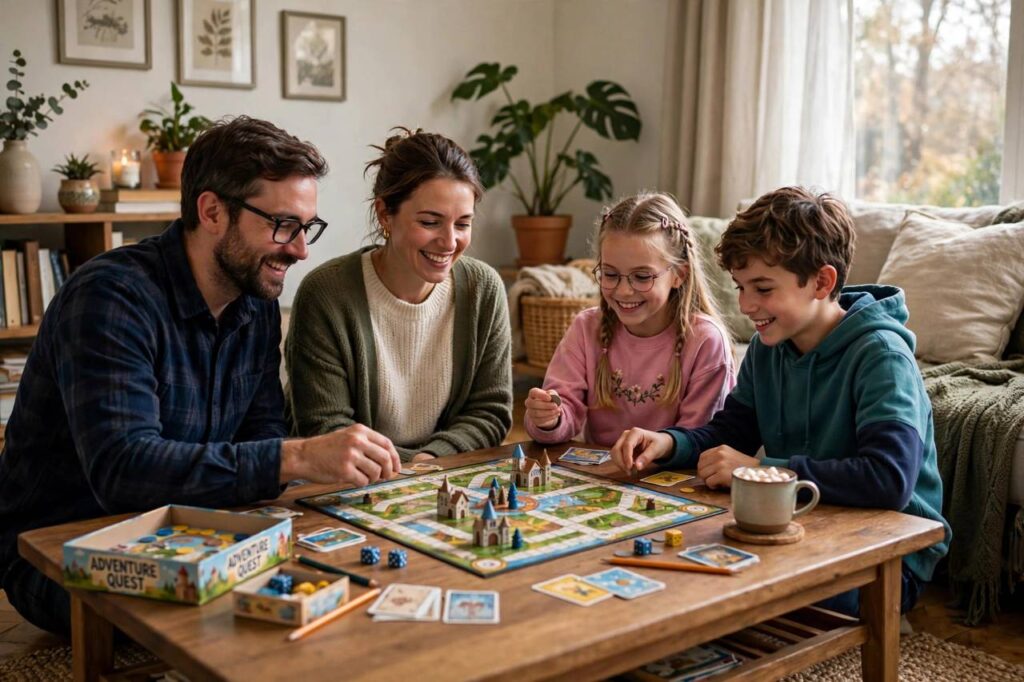
Here is my hot take: the best board games for family night are not the ones with the fanciest miniatures or the deepest strategy. They are the ones that get everyone, from your competitive teenager to grandma, laughing at the same table. After years of hosting game nights and testing dozens of titles with my own family, I have cracked the code on what actually works. Let us build your family game shelf.
Best Board Games for Family Night: What Makes a Great One?
Before the picks, the strategy behind them. A family-night winner needs four things. Fast setup: if it takes 30 minutes to learn, half the table has checked out. Plays in under an hour: attention spans are real, especially with kids. Scales across ages: the 8-year-old should have a real chance, not a pity win. Generates moments: the best games create stories you retell later, the impossible comeback, the betrayal nobody saw coming.
My golden rule: the first game of the night should be learnable in five minutes. You can go deeper later once everyone is warmed up and having fun. Lead with laughter, follow with strategy.
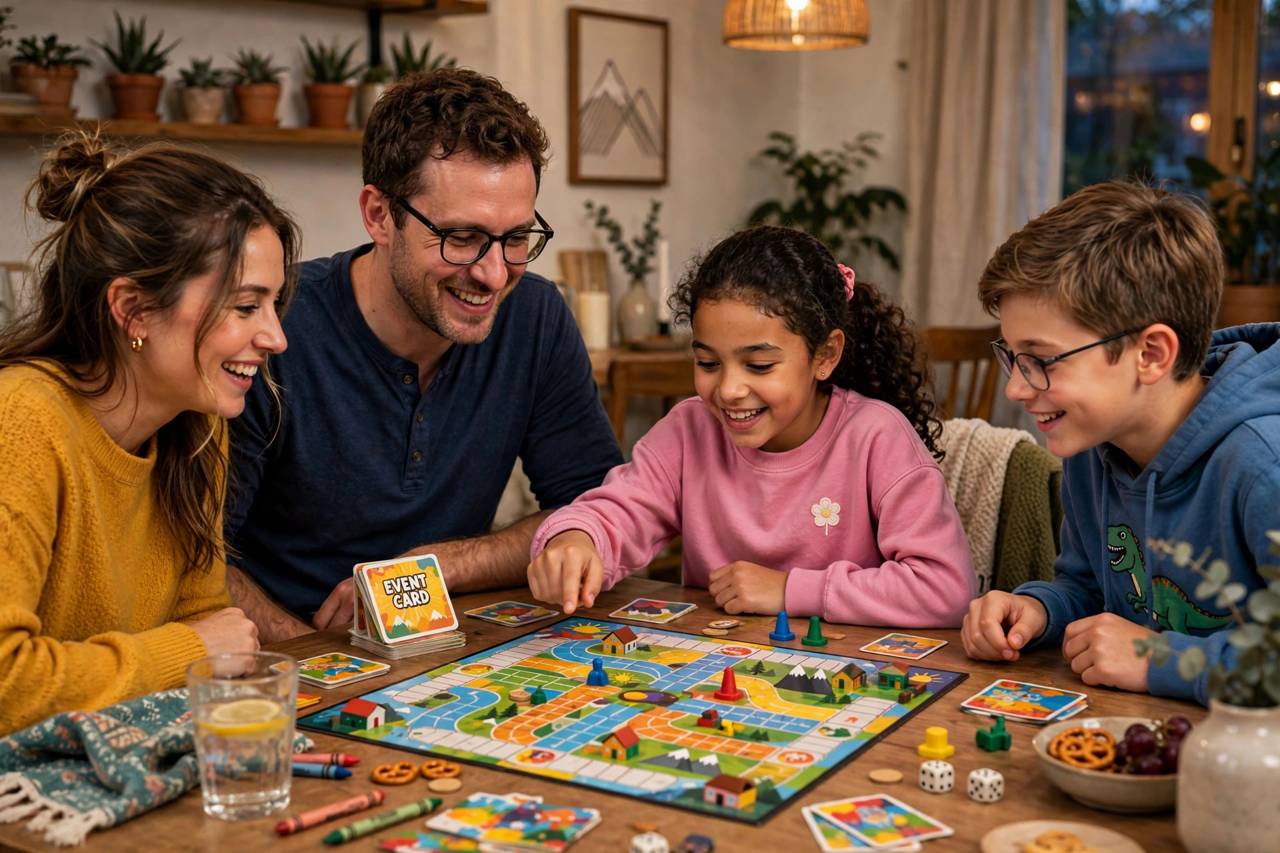
Quick Party Games: Instant Laughs
Start here. These play in 20 to 30 minutes and need almost no explanation:
Codenames. Two teams, one spymaster giving one-word clues. It is a word game that somehow becomes a shouting match about whether “bridge” connects “river” and “dentist.” Brilliant with teens and adults, and there is a pictures version for younger kids.
Wavelength. One player gives a clue on a spectrum between two opposites, like hot versus cold, and the team guesses where the target hides. It sparks hilarious debates about how your family sees the world.
Just One. A cooperative party game where everyone writes one-word clues, but duplicates get erased. Simple, clever, and the groans when two people write the same obvious clue are comedy gold.
Telestrations. Telephone meets Pictionary. Draw, guess, pass, repeat, and watch your original prompt devolve into beautiful nonsense. With kids, this one causes actual tears of laughter.
Light Strategy: Real Games, Zero Homework
Once the table is warmed up, these offer genuine strategic depth without a rulebook the size of a novel:
Ticket to Ride. Claim railway routes across the map with colored train cards. The rules take five minutes to teach, but the route-blocking mind games keep adults engaged for years. The gateway game for a reason.
Carcassonne. Draw a tile, place a tile, claim features with your little meeples. Gentle, thinky, and weirdly soothing. Great for players who like puzzles more than conflict.
Splendor. Collect gems, buy cards, attract nobles. An engine-building game with poker-chip components that feel fantastic. Teens who claim to hate board games often convert on this one.
Azul. Draft beautiful tiles to decorate a palace wall. It looks like art, plays like chess-lite, and the tactile tiles are irresistible.
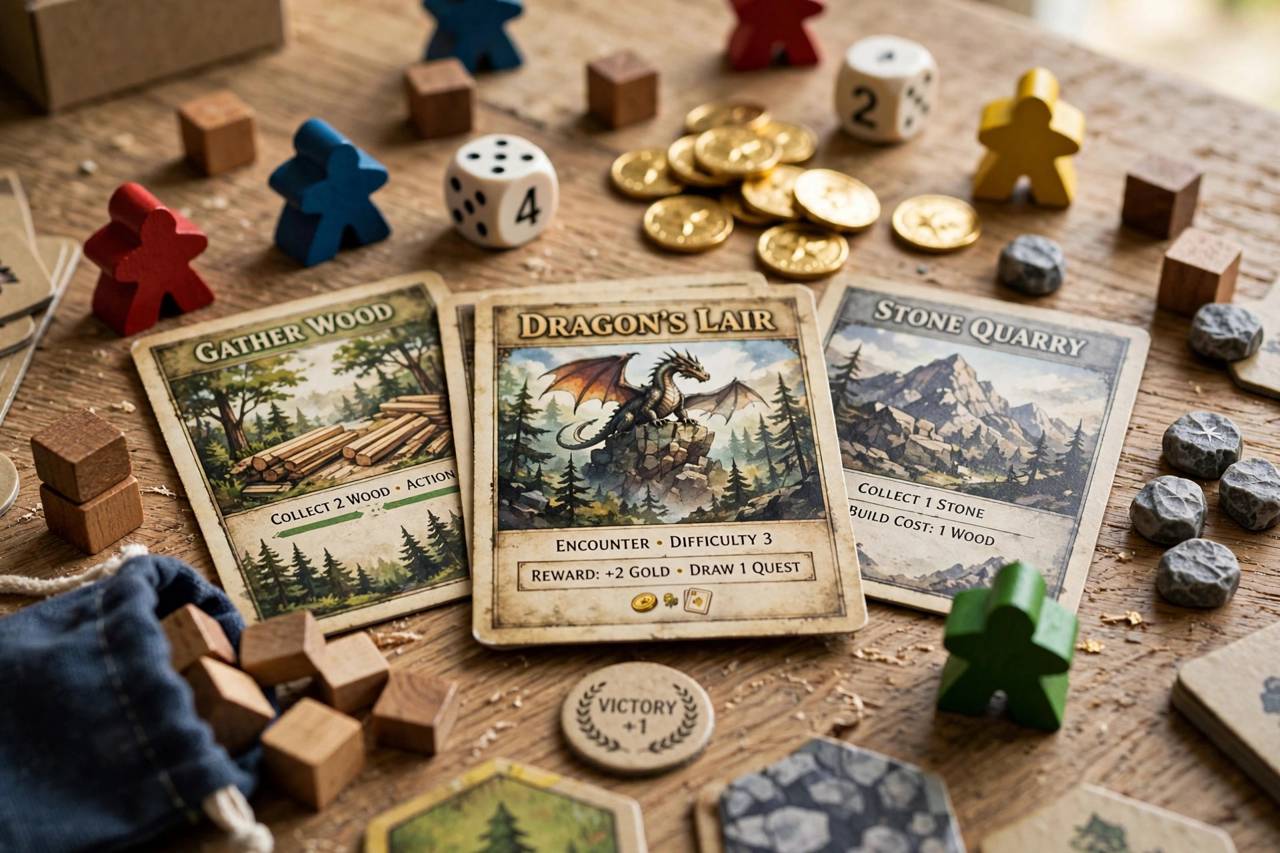
Cooperative Games: Win Together, Lose Together
Co-op games are secret weapons for mixed-age families because nobody gets eliminated and everyone puzzles together:
Pandemic. The classic: work as a team of specialists to cure diseases before they overrun the world. Losing together is weirdly bonding, and winning feels like a genuine team triumph.
Forbidden Island. A simpler, shorter co-op perfect for younger kids. Collect treasures from a sinking island before it disappears. Tense, quick, and beautifully illustrated.
The Crew. A cooperative trick-taking game in a tiny box. If your family plays any card games at all, this one will click instantly, and the mission structure gives you 50 levels of escalating challenge.
Classics, Done Right
Some classics earn their place, with a few house rules:
Catan (with the 45-minute variant). Trading, building, and the eternal agony of being one sheep short. Play to 7 points instead of 10 for a snappier family game.
Risk (skip it, play Small World instead). Controversial, but Risk overstays its welcome with families. Small World delivers the area-control fun in a fraction of the time with way more personality.
Scrabble (try Bananagrams for speed). If Scrabble’s slow pace loses the kids, Bananagrams keeps the wordplay but plays in real time. Same brain workout, triple the energy.
Best Picks by Age Group
Ages 5 to 7: Outfoxed (a cooperative Clue-like mystery), Rhino Hero (a dexterity card-stacking game), and My First Stone Age. Short, tactile, no reading required.
Ages 8 to 12: Ticket to Ride: First Journey, Codenames: Pictures, Forbidden Island, and King of Tokyo (giant monsters, dice-chucking chaos).
Teens and adults: Codenames, Splendor, Azul, Pandemic, and Wavelength. These are the games that make teens voluntarily put their phones down, which might be the highest praise possible.
Grandparents at the table: Carcassonne, Azul, and Telestrations. Easy to learn, no twitch reflexes required, and genuinely competitive across generations.
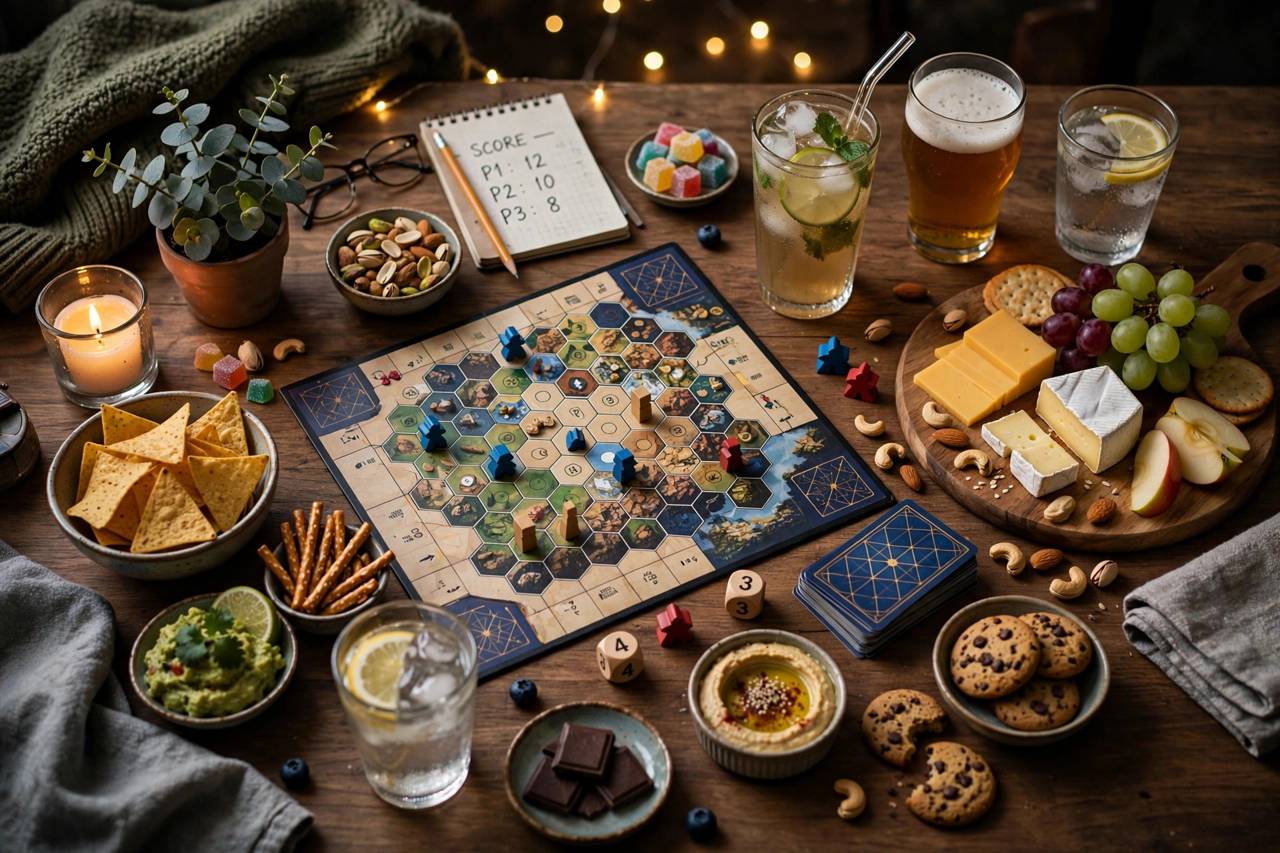
Hosting Tips for a Legendary Family Game Night
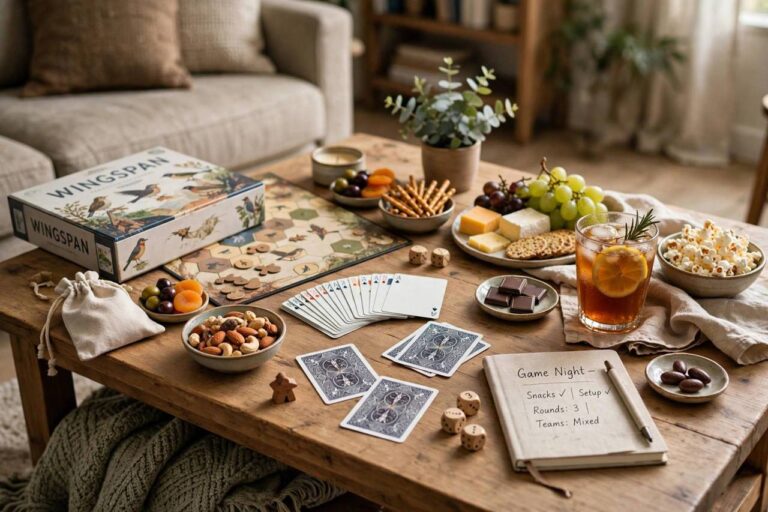
Start with snacks ready. Nobody learns rules well while hungry. Set out the snacks before the first box opens.
Teach by playing, not lecturing. Explain the goal and one turn, then start. Teach the rest as situations arise. A five-minute teach beats a fifteen-minute rules speech every time.
Let the youngest pick first. Buy-in skyrockets when kids choose the game. Rotate the chooser each week.
Embrace the chaos. Someone will misread a rule. Someone will get absurdly lucky. Roll with it. The goal is the evening, not the rulebook.
End on a high. Quit after a great game, not after a draining one. Leaving everyone wanting more is how weekly game nights are born.
Building Your Family Game Shelf on a Budget
You do not need 50 games. A well-chosen shelf of six to eight titles covers every family-night scenario, and you can build it gradually without spending a fortune. Here is my strategic buying order.
Game one: the party starter. Buy Codenames or Telestrations first. Under $20, plays big groups, instant laughs. This is the game that proves to skeptics that game night is fun.
Game two: the gateway strategy. Ticket to Ride is the classic second purchase. It is often on sale, teaches in five minutes, and has expansions that refresh it for years. One gateway game is worth five mediocre ones.
Game three: the co-op. Forbidden Island is inexpensive and perfect for younger kids; Pandemic costs a bit more and suits teens and adults. Co-ops change the emotional texture of game night entirely.
Game four: the beautiful object. Azul or Splendor. These are the games guests notice on the shelf and ask about. Gorgeous components create their own gravity.
Buy used where you can. Board games have fantastic resale markets, and a used copy with punched cardboard plays identically to a new one. Thrift stores are goldmines for classic titles. And before buying anything over $40, check if your local library has a game collection; many now lend board games just like books.
When to Introduce Heavier Games
Every family gamer eventually asks: when do we try the big ones? The sprawling epics with the three-hour playtimes. My answer: when your family starts finishing gateway games early and asking “is there more?” That curiosity is the signal, not age.
Bridge games ease the transition. Catan’s Seafarers expansion, Ticket to Ride: Europe, or Pandemic Legacy Season 1 add campaign-style progression without overwhelming complexity. Legacy games, where the board permanently changes between sessions, are magical for families because they create an ongoing story you share across weeks.
A word of caution from experience: do not jump from Ticket to Ride straight to a four-hour epic. The leap in rules overhead will burn out casual players. Add complexity one mechanism at a time: worker placement one month, deck-building the next. Think of it like leveling up in a video game. The grind is the fun, as long as each step feels achievable.
And remember the cardinal rule of heavy games with family: the teach is part of the evening. Budget 20 minutes, use a tutorial video together, and play the first round open-handed with advice allowed. Nobody remembers who won the first game of something complex. Everybody remembers whether it was fun to learn.
Two More Hosting Tips Worth Knowing
Keep a “shelf of shame” rescue plan. Every family has a game that flopped. Instead of letting it gather dust, try it once more with different players or a rules video refresher. Some games need the right group, not a better game. If it flops twice, donate it proudly and move on.
Track your plays. A simple note on the fridge, game name and date, turns game night into a tradition you can see growing. Kids especially love looking back at a season of plays, and it helps you notice which games deserve a permanent spot and which were one-night stands.
Key Takeaways
The best board games for family night are quick to learn, play in under an hour, and create memorable moments across ages. Start the evening with a fast party game like Codenames or Telestrations, then go deeper with Ticket to Ride, Azul, or a co-op like Pandemic. Match picks to your youngest players, teach by playing, and always end on a high note. Do that, and family game night stops being a scheduled obligation and becomes the thing everyone looks forward to.
FAQ
What is the best board game for a family with young kids?
Outfoxed, Rhino Hero, and Forbidden Island are excellent for ages 5 to 8: short, cooperative or gentle, and no complex reading. For ages 8 and up, Ticket to Ride and Codenames: Pictures are ideal step-ups.
What board game is good for large families?
Party games scale best: Telestrations plays up to 8, Wavelength handles big groups, and Just One works with any number. For strategy with more players, try 7 Wonders, which plays 7 without downtime.
How long should family game night last?
Plan for 60 to 90 minutes with younger kids, up to two hours with teens and adults. Two or three short games usually beats one long game for keeping energy high.
What if my family does not like competitive games?
Go cooperative. Pandemic, Forbidden Island, and The Crew let everyone win or lose together, which removes sore-loser dynamics entirely while keeping all the fun.
How do I get teenagers interested in board games?
Pick games with real decisions and social energy: Codenames, Wavelength, Splendor, or King of Tokyo. Let them invite a friend, keep phones face-down as a house rule, and start with something genuinely fun rather than “educational.”
Keep Reading
- Best Board Games for Family Game Night (By Age Group)
- How to Host a Game Night People Will Beg You to Repeat
- How to Elope Without Offending Family: A Sensitive Guide