Best Board Games for Family Game Night (By Age Group)

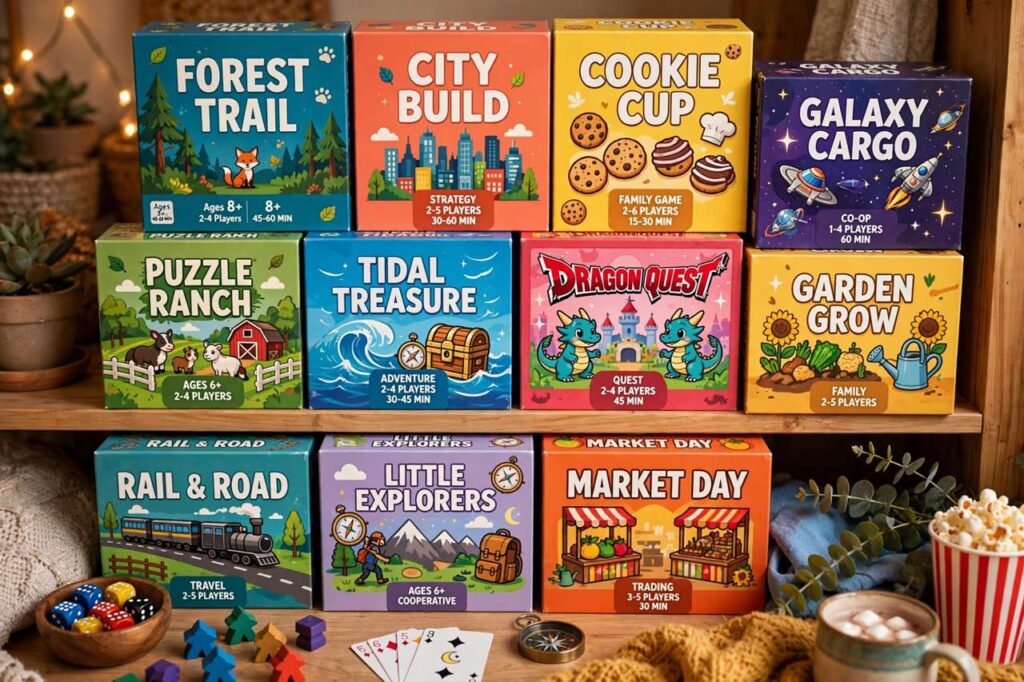
Here’s my hot take: the best family game nights aren’t about the game. They’re about the moment your quiet teenager trash-talks grandma over a card game, or your six-year-old’s victory dance after a lucky roll. The game is just the excuse. But the right game makes those moments happen way more often — and the wrong one ends with someone crying and someone else on their phone. So let’s find the best board games for family game night: games that actually work across ages, don’t take three hours to learn, and get requested again.
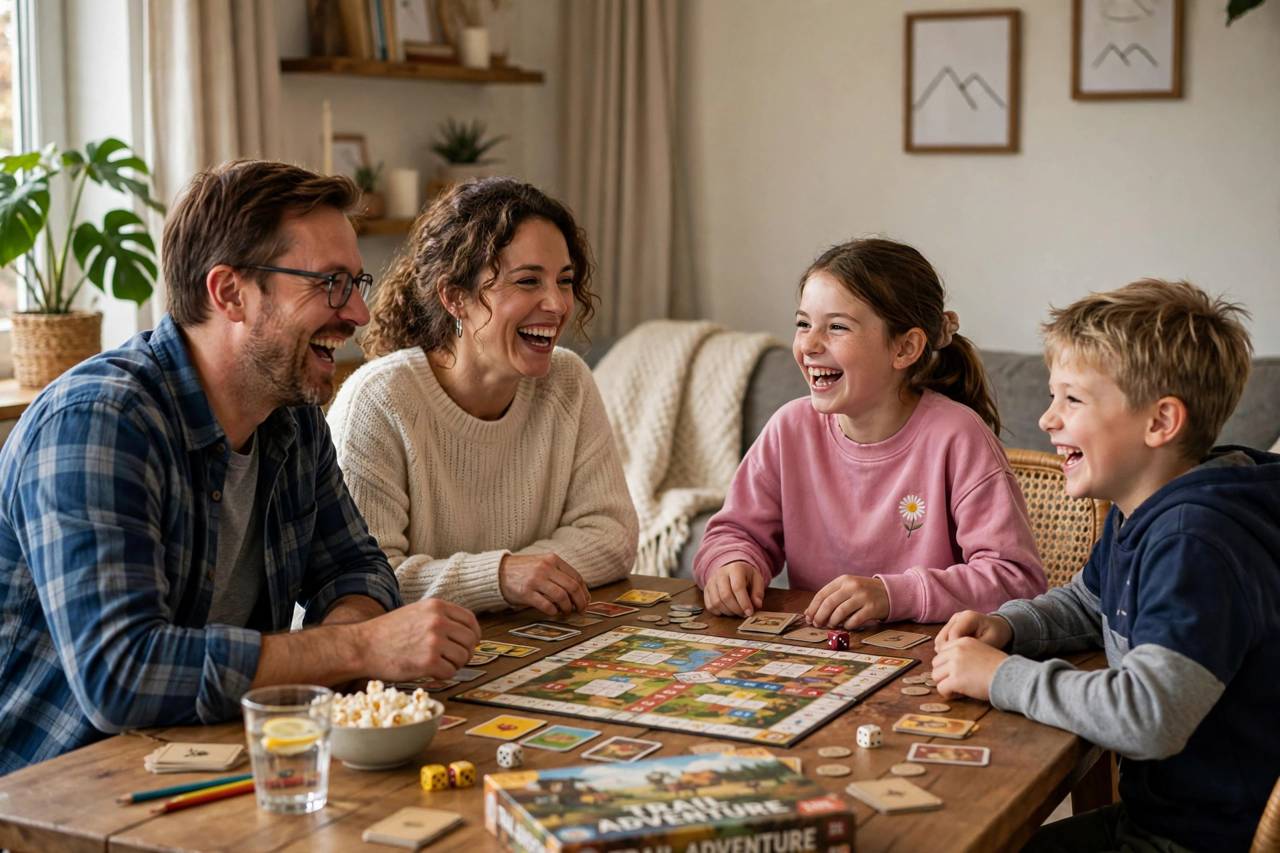
I’ve played hundreds of board games with every age group imaginable. These are the ones that consistently deliver — organized by what your family actually needs.
What Makes a Great Family Game Night Game
Before the list, the criteria. A great family game night game needs: rules you can teach in 5 minutes (if setup takes longer than the first round, you’ve lost the kids); plays in 30-60 minutes (the sweet spot before attention fades); works for mixed ages (a 7-year-old and a 70-year-old should both have a real chance); some luck, some skill (pure luck is boring for adults, pure skill crushes the kids); and built-in funny moments (the games you remember are the ones that made you laugh).
Player elimination is the enemy — nobody wants to sit out for 40 minutes while everyone else finishes. And “take that” mechanics (directly attacking other players) are risky with young kids or competitive relatives. Choose accordingly.
Best Board Games for Family Game Night: All-Around Picks
Ticket to Ride. The gold standard family gateway game. Collect cards, claim train routes across the map, connect your cities. The rules take five minutes to teach, every age can play meaningfully, and it hits the perfect luck-skill balance. If your family plays one new board game, make it this one.
Codenames. A word-based team game where one player gives one-word clues to help their team find their secret agents. Brilliant across generations — grandparents shine with vocabulary, kids shine with creative leaps. Endlessly replayable and genuinely hilarious.
Splendor. Collect gems, buy cards, build an engine. It’s quietly strategic (adults stay engaged) but simple enough for kids around 8+. The poker-chip components feel amazing, which matters more than you’d think.
Azul. Draft beautiful tiles and build a mosaic. Simple rules, gorgeous pieces, and a satisfying puzzle that works for ages 8 to 80. The tactile joy of placing tiles keeps everyone at the table.
Best Games for Families With Young Kids (Ages 4-8)
Outfoxed! A cooperative clue game where players work together to find which fox stole the pie. No one loses, everyone contributes, and kids love the little detective gadgets. Cooperation means no tears — everyone’s on the same team.
My First Stone Age. A simplified worker-placement game where kids gather resources and build huts. It secretly teaches planning and resource management while feeling like an adventure. Ages 5+ handle it easily.
Rhino Hero. Stack cards to build a wobbly tower while moving the little rhino hero up. It’s Jenga meets Uno — physical, silly, and over in 15 minutes. Perfect as a warm-up game.
Sleeping Queens. A card game designed by a six-year-old (really), with queens, kings, knights, and dragons. Simple, quick, and kids genuinely love the theme. Great for the youngest gamers.
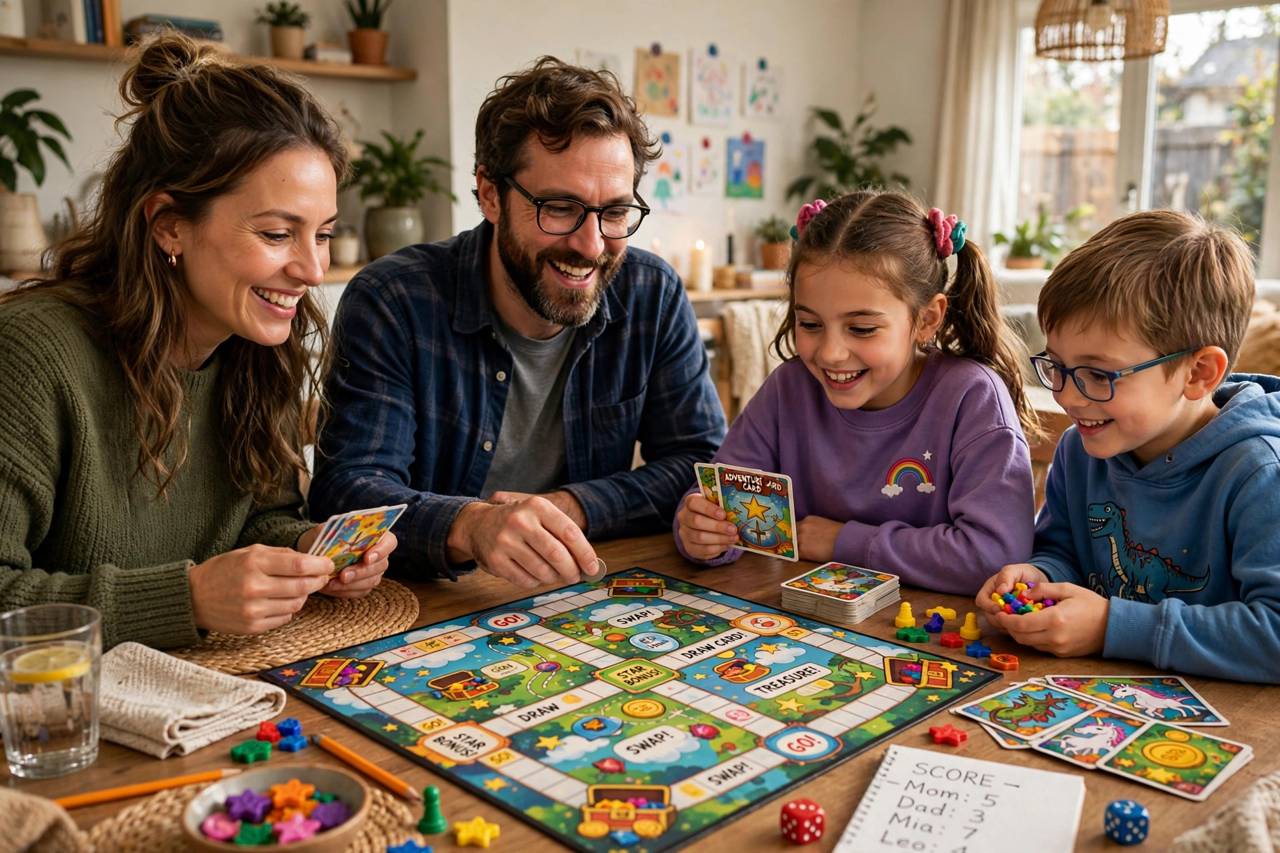
Best Games for Teens and Tweens
Catan. The classic for a reason: trading, building, and just enough competition to get teens invested. Games run 60-90 minutes — perfect for a dedicated game night. The trading phase creates legendary family negotiations (and betrayals).
Wavelength. A party game about reading minds — one player gives a clue on a spectrum (hot-cold, good movie-bad movie) and the team guesses where the target is. Generates incredible debates and reveals how differently your family thinks. Teens love it.
The Crew. A cooperative trick-taking game with a space theme. Small, cheap, and surprisingly deep — teens who think card games are boring change their minds fast. The mission structure means you can play “just one more” for an hour.
Just One. Cooperative party game: everyone writes a one-word clue, duplicates get cancelled, and the guesser guesses. Simple, fast, funny — and the cancelled-clue moments are comedy gold.
Best Quick Games (20 Minutes or Less)
Sometimes you don’t have an hour. These deliver maximum fun per minute:
Love Letter. Sixteen cards, fifteen minutes, endless bluffing. The whole game fits in a tiny pouch — keep it in a drawer for instant game nights.
Sushi Go! Adorable card-drafting about building the best sushi meal. Kids love the art, adults love the strategy, and it plays in 20 minutes flat.
Skull. Bluffing with coasters — dead simple, wickedly psychological. Better with teens and adults; the mind games are the whole point.
Cockroach Poker. Pass cards and bluff about what’s on them. Hilarious, quick, and the bluffing creates unforgettable table moments.
Quick games are also perfect openers — start with one while dinner settles, then move to the main event. If you’re planning the whole evening, hosting tips apply just as well to game nights as dinner parties: good snacks, good lighting, phones away.
How to Run a Game Night People Actually Come Back To
Rotate who picks. Let a different family member choose each time — ownership keeps everyone invested, and you’ll discover games you’d never have picked.
Teach, don’t lecture. Explain the goal first, then the 2-3 core actions, then start playing — teach edge cases as they come up. Nobody retains a 15-minute rules lecture.
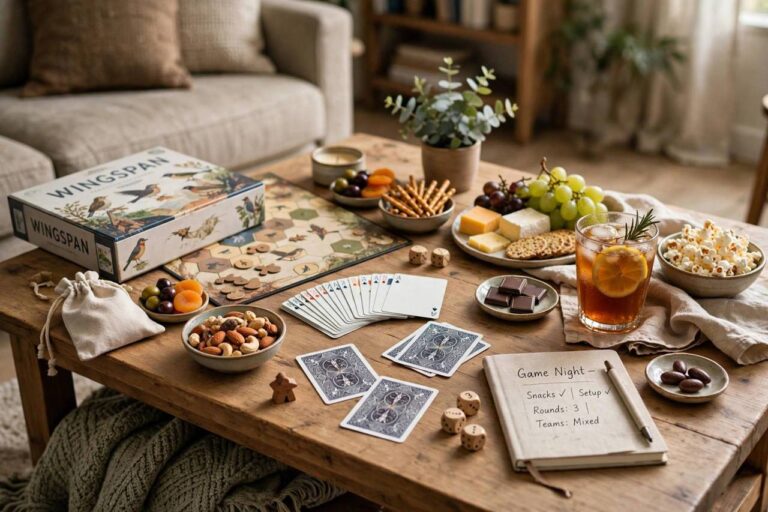
Snacks matter. Finger foods that don’t grease up the components (this is why game-night popcorn is a controversial choice). Keep drinks in spill-safe containers away from the board.
Keep it regular but low-pressure. Weekly or biweekly works; the ritual matters more than the frequency. And let people skip without guilt — a game night that feels like an obligation stops being fun fast.
End on a high. Quit while everyone’s still having fun rather than squeezing in “one more game” until someone’s miserable. Leave them wanting next time.
For families with kids who love active play too, summer bucket list ideas for kids activities pair nicely with a game night for a full family day — and honestly, the families I know with the best game-night traditions treat it as sacred, protected time. No phones at the table, everyone present, everyone playing. That’s the real game.
Two more things that separate game nights people return to from ones that fizzle: snacks strategy and the mercy rule. On snacks — serve things you eat with one clean hand. Popcorn, pretzel sticks, veggie cups. Nothing greasy, nothing that requires two hands, nothing that leaves orange dust on cards. Your game collection will last years longer. And the mercy rule: agree upfront that any game can be called at the halfway point if it’s clearly not working. Forcing a miserable game to its bitter end is how game nights die. “This isn’t clicking — let’s switch” should be a guilt-free sentence in your house.
Best Cooperative Games (For Families Where Someone Always Cries When They Lose)
Every family has one: the kid (or let’s be honest, the adult) who takes losing personally. The evening goes from fun to tense in one bad dice roll. Cooperative games fix this completely — everyone plays as a team against the game itself, so you win together or lose together, and nobody’s the villain.
Forbidden Island is the perfect starter co-op. Your team is trapped on a sinking island, grabbing treasures and getting to the helicopter before it all goes under. It plays in 30 minutes, the rules take five minutes to teach, and the rising tension as tiles sink is genuinely thrilling. If your family likes it, Forbidden Desert is the slightly spicier sequel.
Pandemic is the classic for a reason — your team of specialists races to cure diseases before they overwhelm the world. It’s a bigger step up in complexity, best for ages 10+, and it creates those amazing moments where the whole table leans in to plan one critical turn. Fair warning: it can trigger a “quarterback” problem where one confident player bosses everyone around. The house rule that fixes it: no telling other players what to do on their turn. Suggestions allowed, orders banned.
Horrified is the sleeper hit nobody expects to love. You play as heroes fighting classic movie monsters — Dracula, Frankenstein, the Invisible Man — each with their own defeat conditions. The theme sounds intense but it’s genuinely family-friendly, and the “oh no, the monster moved” moments get the whole table yelling. Great for families with teens who think they’re too cool for board games.
Mysterium is co-op with a twist: one player is a ghost who can’t speak, giving the rest of the team dreamlike picture clues to solve their own murder. It’s Dixit meets Clue, it’s beautiful on the table, and the ghost role is perfect for a creative family member who loves being mysterious.
FAQ
What is the best board game for family game night?
Ticket to Ride is the most reliable all-around pick — 5-minute rules, works for ages 8 to 80, and plays in about an hour. For word lovers, Codenames; for strategy-curious families, Splendor or Azul.
What board games are good for mixed ages?
Look for games with simple rules but meaningful decisions: Ticket to Ride, Azul, Splendor, and cooperative games like Outfoxed! (young kids) or The Crew (teens). Avoid player elimination and heavy ‘take that’ mechanics with young kids.
How long should family game night last?
Aim for 1-2 hours total. Start with a quick 15-20 minute game as a warm-up, then play one main 45-60 minute game. End while everyone’s still having fun rather than pushing until someone’s miserable.
What are good board games for a 6 year old?
Outfoxed!, My First Stone Age, Rhino Hero, and Sleeping Queens are all designed for young kids — cooperative or luck-friendly, quick to learn, and genuinely fun rather than dumbed-down.
How do I get my family interested in board games?
Start with something easy and fun (not the complex strategy game you love), keep the first session short, rotate who picks the game, and make it about togetherness — good snacks, phones away, no pressure. The ritual matters more than the game.
How do I teach a new board game without boring everyone?
The golden rule: never read the rulebook aloud. Set up the game, explain the goal in one sentence (‘we’re building train routes to score points’), then teach the rules as you play the first round — ‘on your turn you can do one of these three things.’ Start playing within five minutes of opening the box. People learn games by doing, not by listening, and a slightly messy first round beats a perfect twenty-minute lecture every time.