Best Cooperative Board Games for Adults

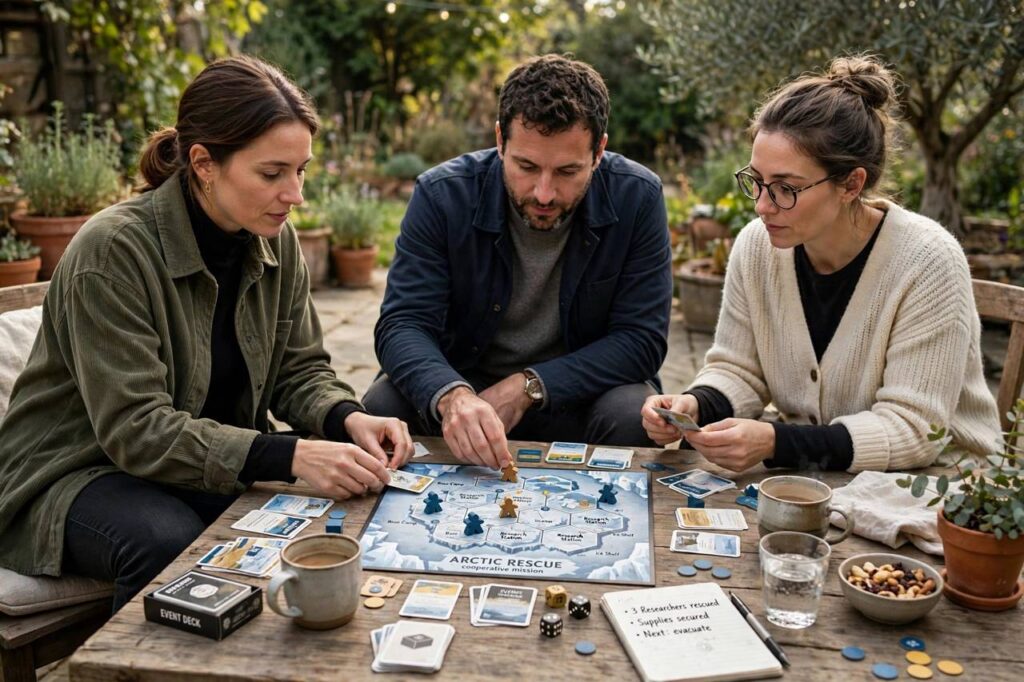
Competitive board games end with someone flipping the table — metaphorically, usually. Cooperative games end with everyone either cheering or groaning together, and that shared fate changes the whole dynamic of game night. The best cooperative board games for adults are not kids’ games with the edges sanded off; they are tense, clever, genuinely challenging puzzles where the table wins or loses as one. Here are ten worth your shelf space, from quick card games to full campaign epics.
What Makes a Co-op Game Great
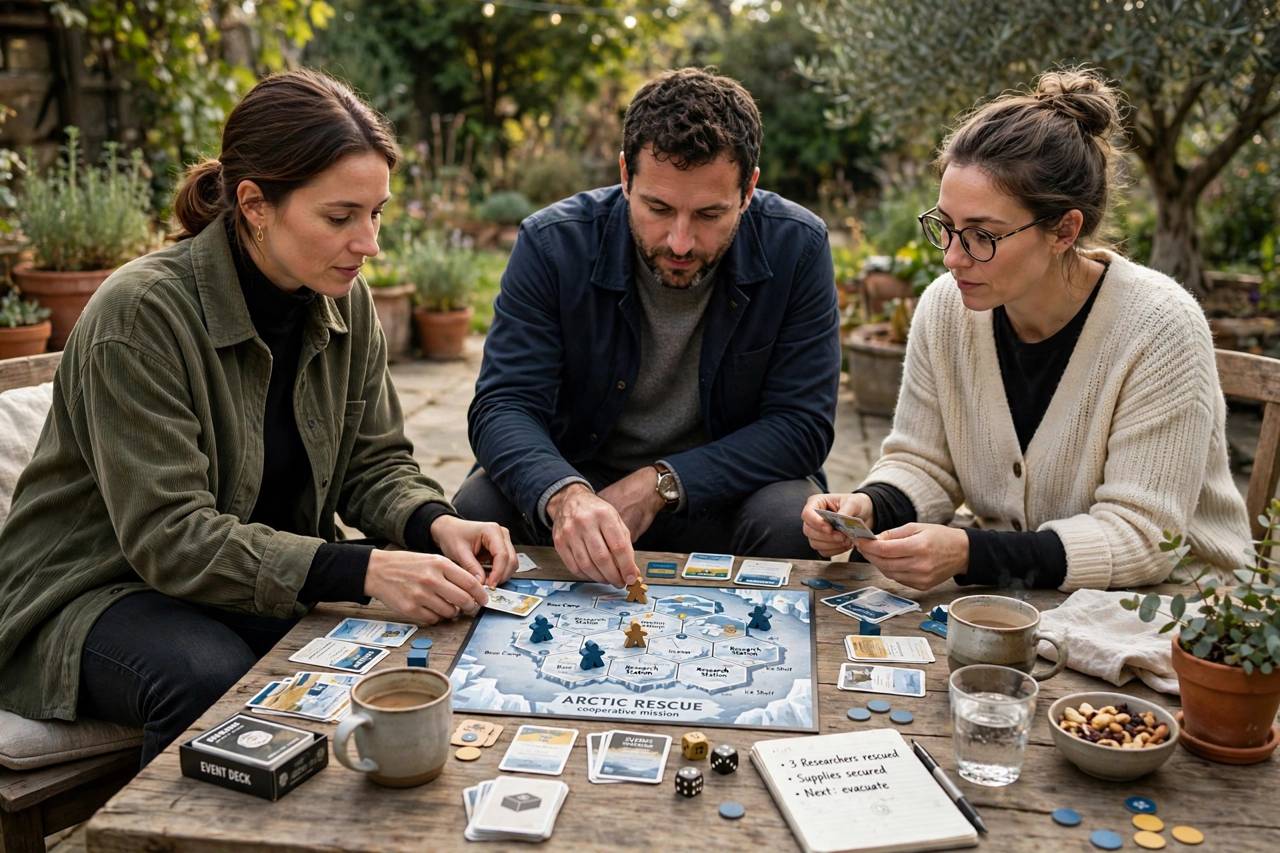
Before the list, a quick note on what separates good co-op games from forgettable ones. The best ones give every player meaningful decisions — no one should be sitting around waiting for their turn to matter. They scale tension well, so the final rounds feel desperate rather than predetermined. And they handle the “alpha player” problem, where one experienced person starts dictating everyone’s moves. Games with hidden information, simultaneous decisions, or limited communication rules solve this elegantly by making bossiness mechanically impossible.
Quick and Easy: Under an Hour
The Crew: Mission Deep Sea. A trick-taking card game — yes, like the stuff your grandparents played — rebuilt as a cooperative space mission. Fifty missions of increasing difficulty, plays in twenty minutes, and it will make you rethink everything you assumed about card games. The limited-communication rules mean you have to read your partners’ minds, which is the entire fun.
Hanabi. You hold your cards facing outward — everyone sees your hand except you. Through careful clues, the group must play cards in the right order to build fireworks displays. It is a pure communication puzzle, plays in under half an hour, and generates the best “oh no” moments in gaming.
Just One. A party-style word game where everyone writes a one-word clue to help the guesser, but duplicate clues get erased. Simple, hilarious, and the rare co-op game that works with up to seven players without dragging.
Medium Weight: The Sweet Spot
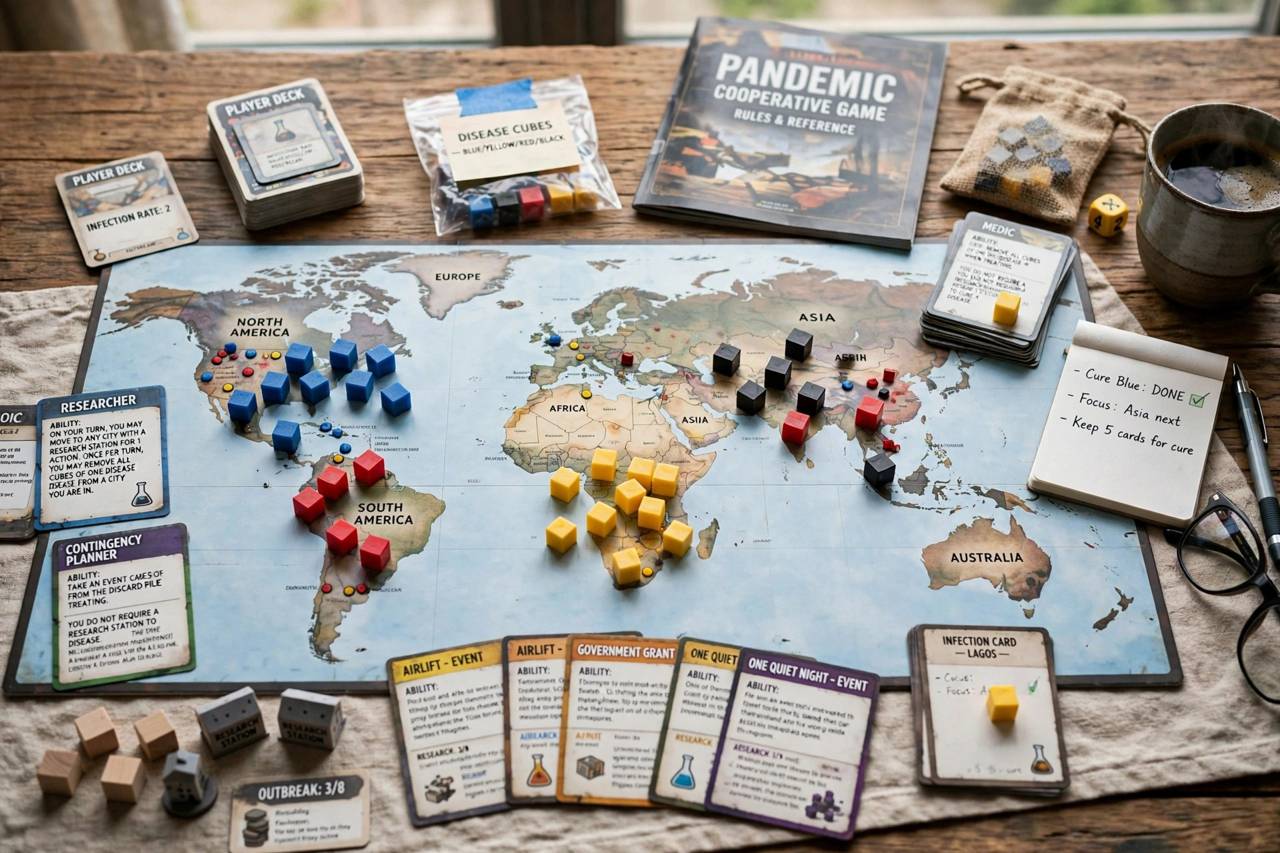
Pandemic. The classic that put modern co-op gaming on the map: the team races to cure four diseases spreading across the world map before outbreaks overwhelm it. Straightforward rules, real tension, and a difficulty that scales with your skill. Start here if you are new to the genre.
Spirit Island. You play as island spirits defending your land from colonizing invaders — a thematic inversion of the usual conquest game, and mechanically one of the richest co-ops ever designed. Complex, deeply satisfying, and the rare game where losing teaches you something every time.
Horrified. The Universal Monsters — Dracula, Frankenstein, the Invisible Man — are loose in a town, and your team must defeat them together. Accessible rules, great theme, and it plays in about an hour. Perfect for groups that want atmosphere without a rules lecture.
Epic Campaigns: For Committed Groups
Gloomhaven: Jaws of the Lion. The streamlined entry point to the most acclaimed co-op campaign in board gaming. A branching fantasy story, tactical card-driven combat, and characters that evolve across dozens of sessions. The tutorial scenarios teach the game as you play, which removes the usual barrier.
Arkham Horror: The Card Game. A living card game of Lovecraftian investigation where your deck is your character and the story adapts to your choices — including your failures. Campaign play means consequences carry forward, and the narrative ambition is unmatched in the genre.
Hidden Gems Worth Hunting Down
The Mind. No talking, no signaling — just play numbered cards in ascending order by sensing when your moment comes. It sounds impossible and feels like telepathy when it works. Twenty minutes, tiny box, unforgettable.
Flash Point: Fire Rescue. Your team is a fire crew rescuing victims from a burning building that gets worse every turn. Genuinely tense, strongly thematic, and the fire-spread mechanics create a different puzzle every game — no two sessions play alike.
Best Cooperative Board Games for Adults: Quick Picks
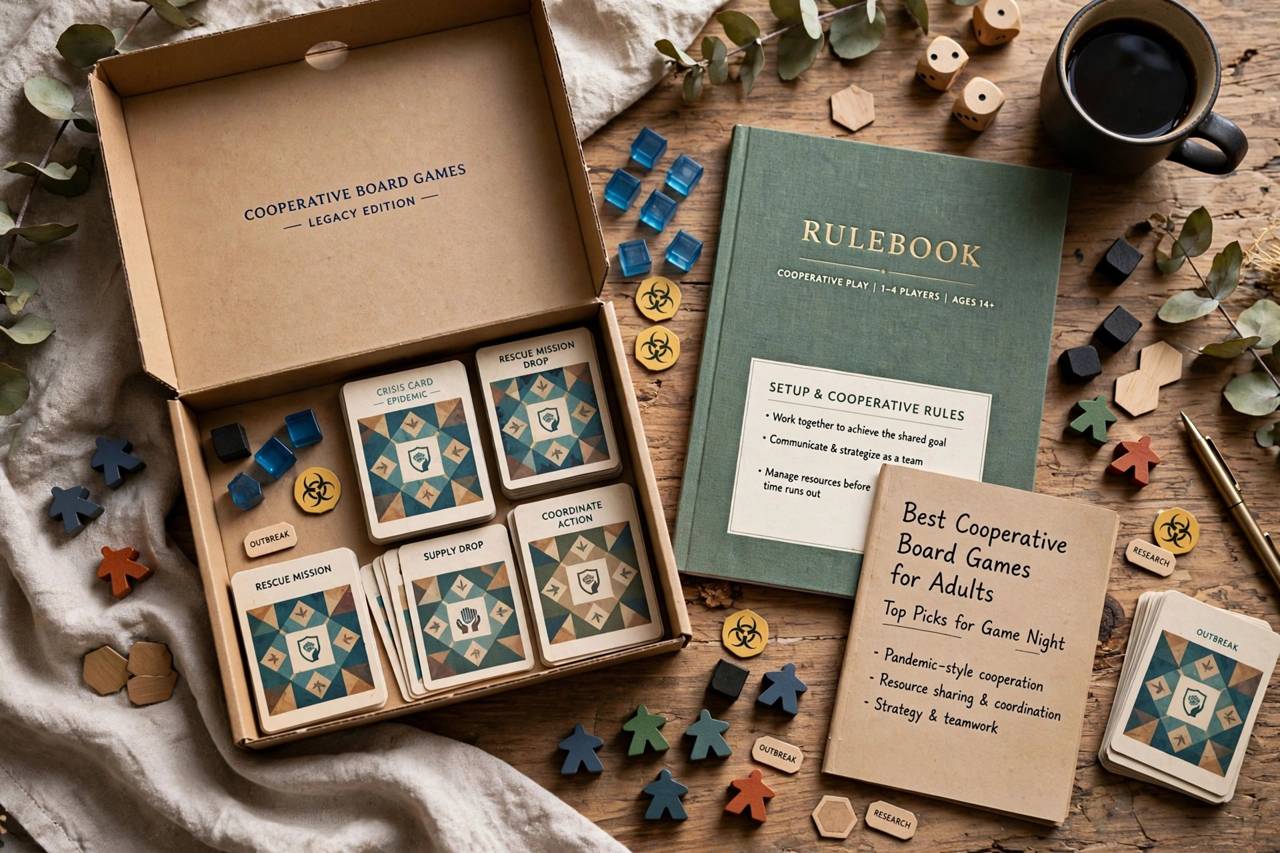
Short on time? Here is the cheat sheet. Best first co-op game: Pandemic — the classic, intuitive, and still great. Best quick game: The Crew — twenty minutes, endlessly replayable. Best party co-op: Just One — works up to seven, always funny. Deepest strategy: Spirit Island — a bottomless puzzle for serious gamers. Best theme: Horrified — Universal Monsters, accessible rules. Best campaign: Gloomhaven: Jaws of the Lion — months of adventure. Best two-player: Arkham Horror: The Card Game — built for pairs. Weirdest delight: The Mind — silent telepathy in a tiny box.
Teaching a Co-op Game Without Losing the Table
Co-op games have a teaching advantage: since everyone is on the same team, you can learn together instead of one person lecturing. The best approach: set up the game, explain the goal and how you win or lose (two minutes), explain what a turn looks like (three minutes), then start playing and teach the edge cases as they come up. “We’ll learn the rest as we go” is not laziness — it is the correct pedagogy.
Resist the urge to explain every rule upfront. Nobody retains a twenty-minute rules lecture, and half the rules will not make sense until they matter. Start the first game on the easiest difficulty, play openly (show your cards, discuss options), and treat game one as a tutorial. The second play — when everyone actually understands the systems — is when the game gets good. This is normal and expected, not a failure. Most beloved co-op games only reveal their depth after two or three sessions, so judge a game on its third play, not its first.
One more tip for the experienced player at the table: ask questions instead of giving orders. “What are you thinking?” keeps everyone engaged; “Do this” turns the game into a solo activity with an audience. The whole point of cooperative play is shared decision-making — protect it.
Co-op Games for Date Night and Small Groups
Co-op games are secretly ideal for two players — no awkward competition, just a shared puzzle. 7 Wonders Duel has a cooperative variant; Patchwork is competitive but gentle. For true co-op at two: The Crew scales beautifully, Arkham Horror: The Card Game was practically designed for pairs, and Spirit Island at two players is a deep, thinky evening. For couples new to the hobby, start with Forbidden Island — simpler than Pandemic, same DNA, plays in thirty minutes — and graduate from there.
Where to Buy and What to Avoid
Buy from a local game store when you can — the staff recommendations are worth more than any review, and many stores have demo copies you can try before committing. Online, stick to reputable retailers; counterfeit board games are a real problem on marketplace sites, with flimsy components and missing pieces. Avoid buying expansions before playing the base game — half of all expansions ever purchased sit unplayed. And be honest about your group’s appetite: the heaviest, most acclaimed game on this list is worthless if it never leaves the shelf because nobody wants to learn it. The best game is the one that gets played, and a $25 card game played twenty times beats a $100 epic played once.
How to Choose for Your Group
Match the game to the group’s patience, not just its taste. New gamers: start with The Crew, Just One, or Horrified. Thinkers who love puzzles: Spirit Island or Arkham Horror. A regular group that meets weekly: commit to a Gloomhaven campaign. And if one person tends to quarterback every decision, pick games with hidden information or no-communication rules — your group will thank you, and the games are better for it.
Co-op Games Worth Watching: What’s Next
The genre keeps growing. Legacy-style campaign games — where the board permanently changes as you play — have brought a new audience to co-op, with titles building multi-session stories that remember your decisions. Cooperative deck-builders blend the solo-engine satisfaction of deck-building with team play. And app-assisted games now handle the bookkeeping that used to bog down complex co-ops, letting the table focus on decisions while a phone or tablet runs the enemy AI. If you are buying your first co-op game this year, the golden age timing is on your side: more choice, better design, and lower entry barriers than the genre has ever had.
The Alpha Player Problem: A Deeper Fix
Worth one more word on the hobby’s most discussed issue. The alpha player — the experienced gamer who effectively plays everyone’s turn — ruins co-op games, and the fixes go beyond game selection. Groups that thrive set an explicit norm: advice only when asked. Some use a timer per decision to keep momentum. Others rotate the “captain” role so leadership is shared. And the nuclear option that works surprisingly well: play the first few games of anything new with open hands and full discussion, then switch to hidden information once everyone knows the systems — competence removes the need for quarterbacking. A good co-op group is built, not found.
Frequently Asked Questions
What is a cooperative board game?
A cooperative (co-op) board game is one where all players work together against the game itself — beating a scenario, solving a puzzle, or surviving a threat — instead of competing against each other. Everyone wins or loses together.
What is the best cooperative board game for beginners?
Pandemic is the classic starting point: clear goal, intuitive rules, and real tension. The Crew and Horrified are also excellent first co-op games, especially for groups new to modern board gaming.
Are cooperative board games fun for just two players?
Yes — many co-ops shine at two players, including The Crew, Arkham Horror: The Card Game, and Spirit Island. Some, like Just One, need larger groups, so check the player count before buying.
How do you stop one player from taking over a co-op game?
Choose games with hidden information or limited-communication rules (Hanabi, The Crew, The Mind), which make quarterbacking mechanically difficult. Groups can also agree on a no-advice house rule.
What is the difference between cooperative and competitive board games?
In competitive games, players oppose each other and one person wins. In cooperative games, everyone shares a goal and the group collectively wins or loses against the game’s systems.