How to Remember What You Read: A Science-Backed System

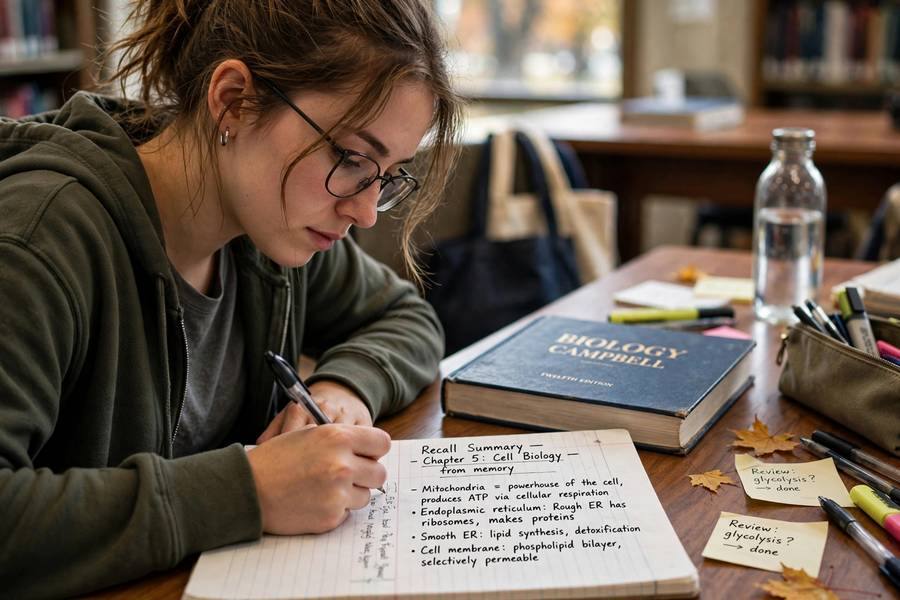
Most people read the way they watch rain hit a window — it passes over the surface and is gone by morning. I know, because my students describe the same frustration: they read the chapter, understood it at the time, and remember almost nothing a week later. This is not a memory problem. It is a strategy problem, and learning science has a clear answer for it.
The answer is retrieval practice: remembering happens not when information goes in, but when you pull it back out. This guide gives you a complete, practical system — before, during, and after reading — built on what research actually shows works.
Fair warning: this system asks more of you than highlighting does. That is exactly why it works — memory is built by effort, and I will show you where to spend yours.
In this guide:
- Why You Forget (It's Normal)
- Before Reading: Set Up for Memory
- During Reading: Encode Actively
- After Reading: Lock It In
- Putting It Together: The Full System
- Spaced Repetition Without the Overwhelm
Why You Forget (It's Normal)
Forgetting is the brain's default setting, and it follows a predictable curve: without review, you lose the majority of new information within days. This is not a flaw — your brain is filtering for what seems important, and a single passive read does not qualify. Understanding this removes the shame students feel about forgetting; it is biology, not stupidity. how to learn a new language faster
Re-reading feels productive but barely moves the needle, because fluency is not memory. When you re-read, the text feels familiar, and your brain mistakes that familiarity for knowledge. This 'fluency illusion' is why students walk into exams confident and walk out stunned. how to study for final exams
The way out is desirable difficulty: learning sticks when retrieval takes effort. Every technique below works by making your brain work to recall — and that work is precisely what builds the memory.
Before Reading: Set Up for Memory
Prime with questions. Before opening the book, write down three questions you want answered — from the chapter title, the syllabus, or your own curiosity. Questions turn reading into a search, and your brain remembers what it was looking for far better than what it merely encountered.
Preview the structure in two minutes: headings, bold terms, summaries. This builds the mental framework that new facts attach to — memories need hooks, and structure provides them. Readers who preview consistently outperform those who dive in cold.
Connect to what you know. Spend sixty seconds asking what you already know about the topic. Even rough prior knowledge gives new information somewhere to dock. This is why the same chapter is 'hard' in September and 'obvious' in November — the knowledge base grew.
During Reading: Encode Actively
The pause-and-recall is the single highest-impact reading habit I teach. At each section break, close the book and restate the key ideas in your own words — aloud or in writing. If you cannot, re-read now. This converts passive exposure into an active memory trace, and it takes seconds.
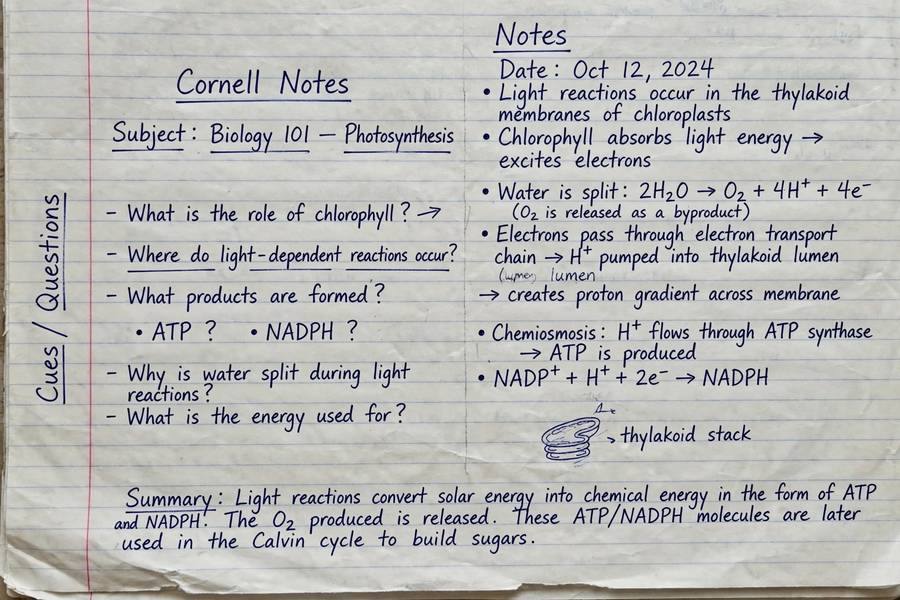
Take notes by hand in your own words, not by copying. Copying is transcription; paraphrasing is thinking. Cornell-style notes work well: main notes on the right, cue questions on the left, summary at the bottom. The cue column becomes your self-testing tool later.
Generate examples and analogies. When you read an abstract concept, force yourself to attach a concrete example — preferably a weird or personal one. Bizarre, emotional, and self-relevant examples stick; abstract definitions evaporate. 'Mitochondria is the powerhouse of the cell' is forgettable; your own analogy is not.
After Reading: Lock It In
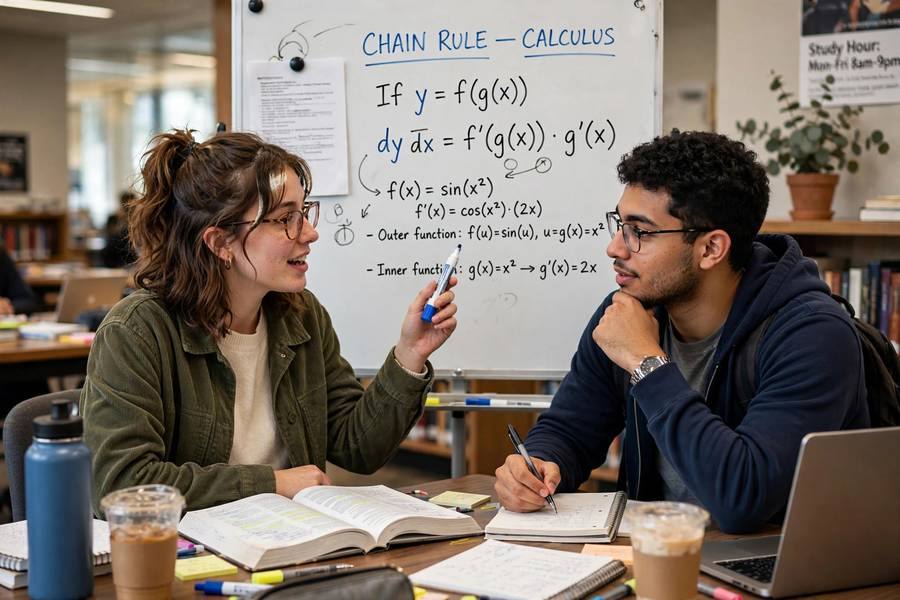
The 24-hour recall is non-negotiable in my coaching: within a day, spend ten minutes writing down everything you remember from the reading without looking. Then check against the text and note gaps. This single session does more for retention than any amount of highlighting.
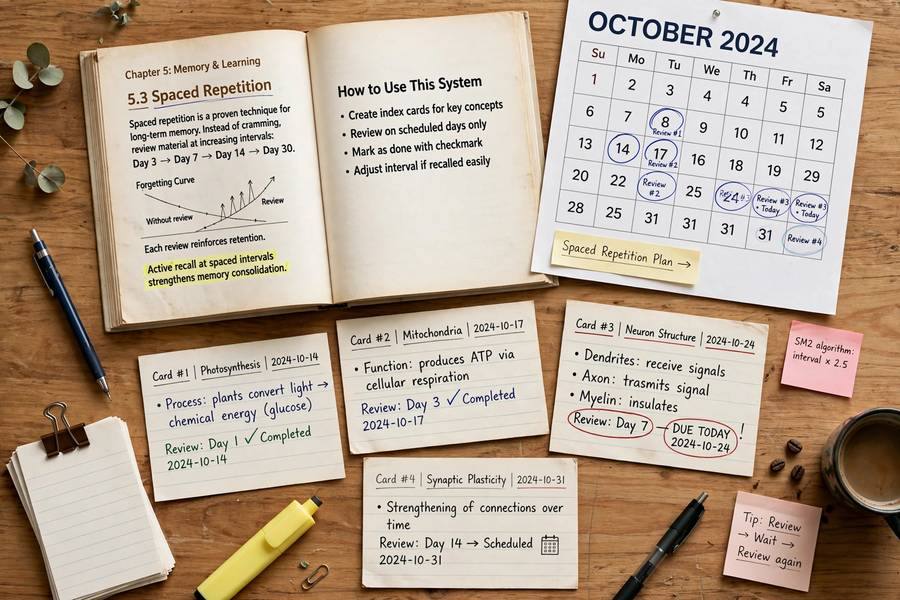
Space your reviews: recall again after three days, then a week, then a month. Each successful retrieval strengthens the memory and stretches the interval. A simple system — a notebook, an app, dated review cards — beats the fanciest spaced-repetition software used inconsistently.
Teach it to someone. Explaining a chapter to a friend, a study partner, or even an empty room forces organization and exposes gaps instantly. The 'protégé effect' is real: we learn material more deeply when we prepare to teach it. Study groups work best when members take turns teaching, not when everyone re-reads together. how to prepare for the GRE
Putting It Together: The Full System
Here is the complete loop I give students. Before: questions, preview, connect (5 minutes). During: pause-and-recall at breaks, paraphrase notes, generate examples. After: 24-hour written recall, spaced reviews at 3 days / 1 week / 1 month, teach someone before the exam.
Start with one course, not all of them. Run the full loop on your hardest subject for two weeks and compare your quiz performance to other subjects. Students who do this experiment invariably expand the system — the results convince better than I can.
Expect it to feel slower at first. Active reading takes more time per page than passive reading — and then you discover you only need to read the chapter once, while re-readers need three passes. The tortoise wins this race by a large margin.
Spaced Repetition Without the Overwhelm
Spaced repetition software like Anki has a fearsome reputation among students — deserved, because most use it wrong. The right way is boring: make cards only from material you have already understood, keep cards atomic (one fact per card), and phrase them as questions you will actually be asked. Twenty new cards daily beats two hundred crammed before exams.
The card-making is the learning. Converting a chapter into good questions forces the deep processing that builds memory — students who make careful cards and never review them still outperform students who review sloppy cards. Do not outsource card creation to pre-made decks until you have made your own for at least a month.
Keep sessions short and daily: fifteen to twenty minutes, every day, no exceptions. The algorithm schedules reviews at the optimal moment — but only if you show up. Missed days create backlogs, backlogs create dread, dread creates abandonment. Protect the streak above all.
Delete ruthlessly. Cards you always get right are learned — suspend them. Cards that are confusing are badly written — rewrite or delete them. A deck that grows forever becomes a burden; a pruned deck stays a tool. Monthly deck hygiene takes ten minutes and saves the system.
Use spaced repetition for facts, not understanding. It is perfect for vocabulary, dates, formulas, and definitions — and useless for essays, arguments, and procedures, which need practice, not recall. Students who Anki everything burn out; students who Anki the right things accelerate. what active recall is and how to use it
Start with one subject for two weeks before expanding. The habit matters more than the coverage, and a working system in one course convinces you to expand far better than a collapsing system in five.
One more technique worth adding: interleaving. When reviewing, mix topics rather than studying one chapter exhaustively before the next — alternate between subjects or chapters. It feels harder, and that difficulty is the point: interleaving builds the discrimination skill exams actually test.
Sleep is a memory technique, not just rest. Review important material in the evening and sleep on it — consolidation happens overnight, and morning recall will surprise you. All-nighters destroy exactly the process that makes memories permanent.
Finally, accept that forgetting is data: when you cannot recall something, that gap tells you precisely what to restudy. Students who treat failed recall as failure avoid testing themselves; students who treat it as diagnosis test constantly and learn fastest. The gap is the gift.
Because passive reading does not create durable memories — your brain filters single exposures as unimportant. Retrieval practice (recalling without looking) signals importance and builds lasting memory.
Barely. Highlighting feels productive but creates a fluency illusion — familiarity mistaken for knowledge. Underlining key points is fine as a marker, but only self-testing builds memory.
Within 24 hours — a ten-minute written recall of everything you remember, then checking gaps against the text. Follow with reviews at roughly 3 days, 1 week, and 1 month.
Yes, if the notes paraphrase in your own words — copying does little. Notes with cue questions double as self-testing tools, making them worth the investment.
Preview with questions, pause-and-recall at section breaks, paraphrase notes, do a 24-hour written recall, space your reviews, and teach the material to someone before the exam.
Completely normal — without retrieval practice, forgetting most of a single read is the brain's default. The system in this guide exists precisely because passive reading does not stick.
Re-reading feels productive but is one of the weakest memory strategies because it creates familiarity without retrieval. Instead, close the book and try to recall the main points from memory — this effortful retrieval is what builds durable memory. If you draw a blank, glance back briefly, then test yourself again. Two rounds of active recall beat five passive re-reads every time, and take less total time.