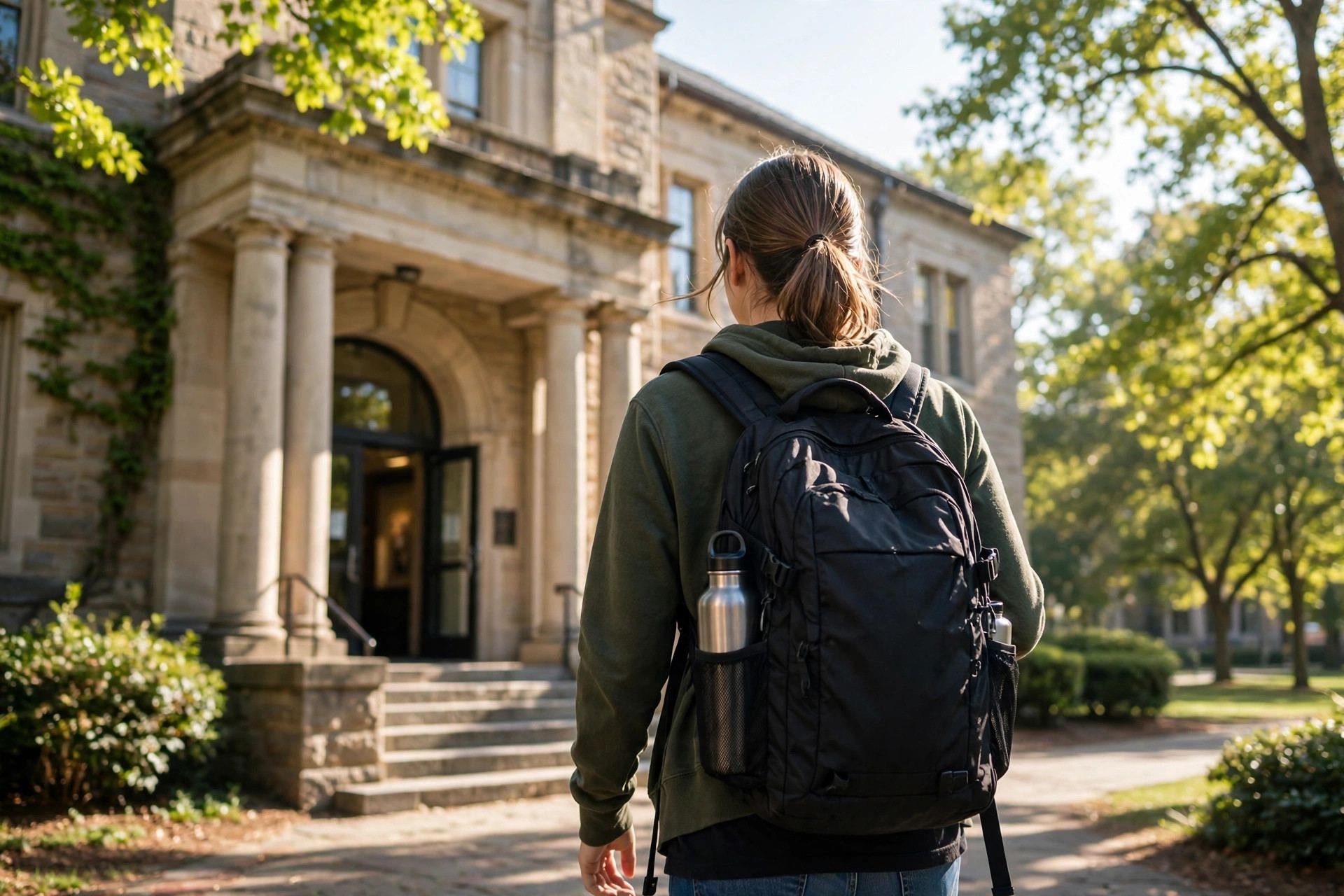

Every December and May, the same panicked message: “Rachel, I have four finals next week and I haven’t started. Am I doomed?” My answer was always the same: no — but we need a plan, now.
Years of tutoring taught me: studying for finals isn’t about hours. It’s about method. Smart studiers consistently beat long studiers, and it wasn’t close.
My students’ plan: honest about what works, what doesn’t, and what to do if you’re starting late. No “just believe in yourself” fluff — actual tactics, in order.
Why Cramming Feels Productive (But Isn’t)
The uncomfortable truth most students live in: re-reading notes and highlighting the textbook feels like studying. Familiar, comfortable, and mostly a waste of time.
“Passive” strategies: eyes move, highlighter runs dry, brain skips the hard work of retrieving and reconstructing knowledge. The cruel part: passive review creates fluency. Material looks familiar, so you feel you know it — then the exam demands an answer from scratch, and familiarity evaporates. Psychologists call this the illusion of competence. It’s ended more academic careers than difficulty ever did.
Cramming isn’t useless — it can carry a low-stakes quiz. But finals test deep, durable understanding across weeks of material. The night-before marathon dumps information into short-term memory, which deserts you under exam pressure. “Known” something at 2am and blanked at 9am? You’ve met this phenomenon personally.
The good news: the methods that work aren’t harder, just different. They feel harder at first — which is why most students avoid them.
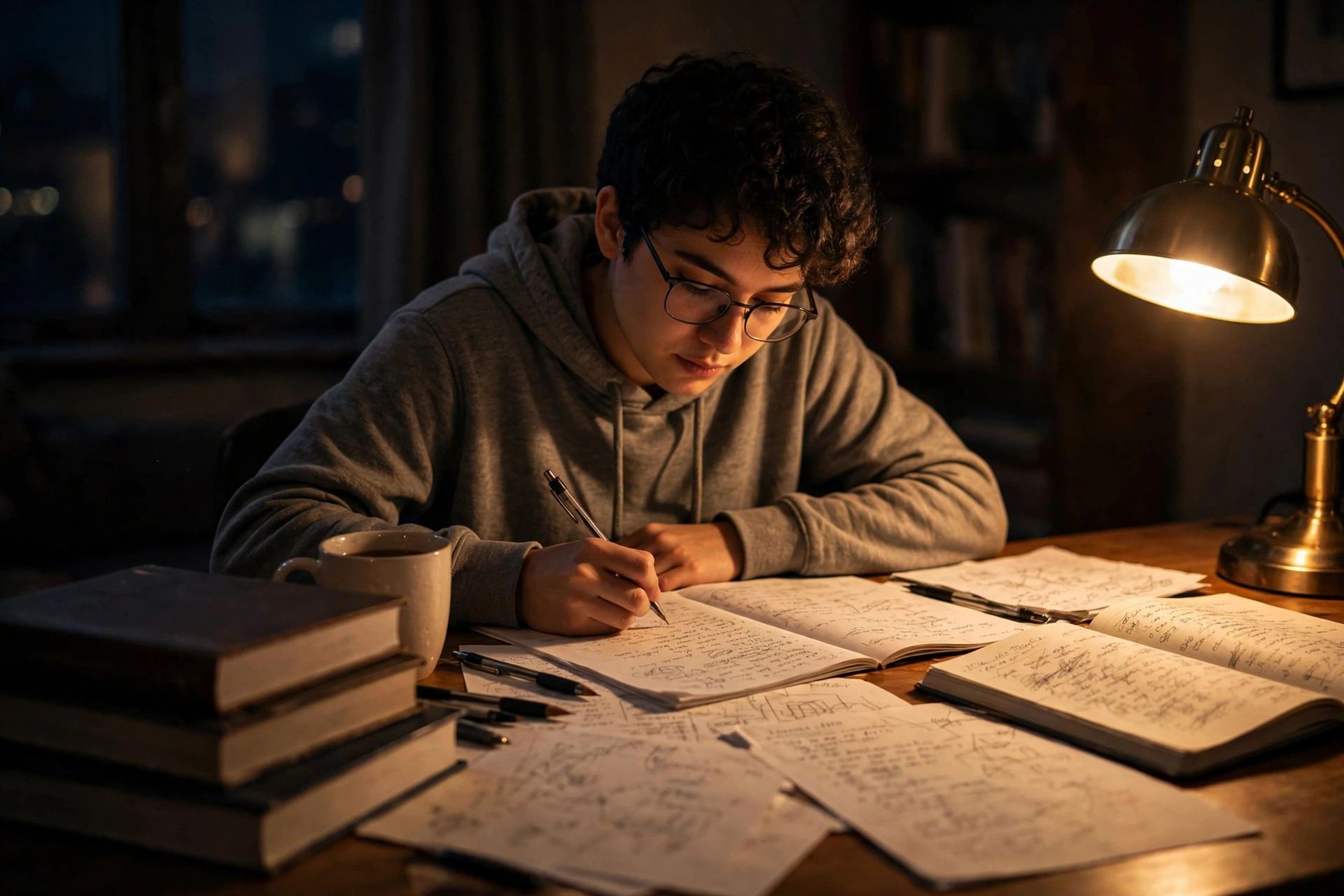
The Two Methods That Actually Work
Take nothing else, take these two. Decades of learning research keep converging on the same pair — I watched them transform my students’ results.
Active recall. Don’t re-read — test yourself. Close the book, explain the concept out loud. Flashcards. Practice questions from memory. Every retrieval strengthens the pathway. Slow and frustrating is learning happening. Reading feels smooth because nothing is happening.
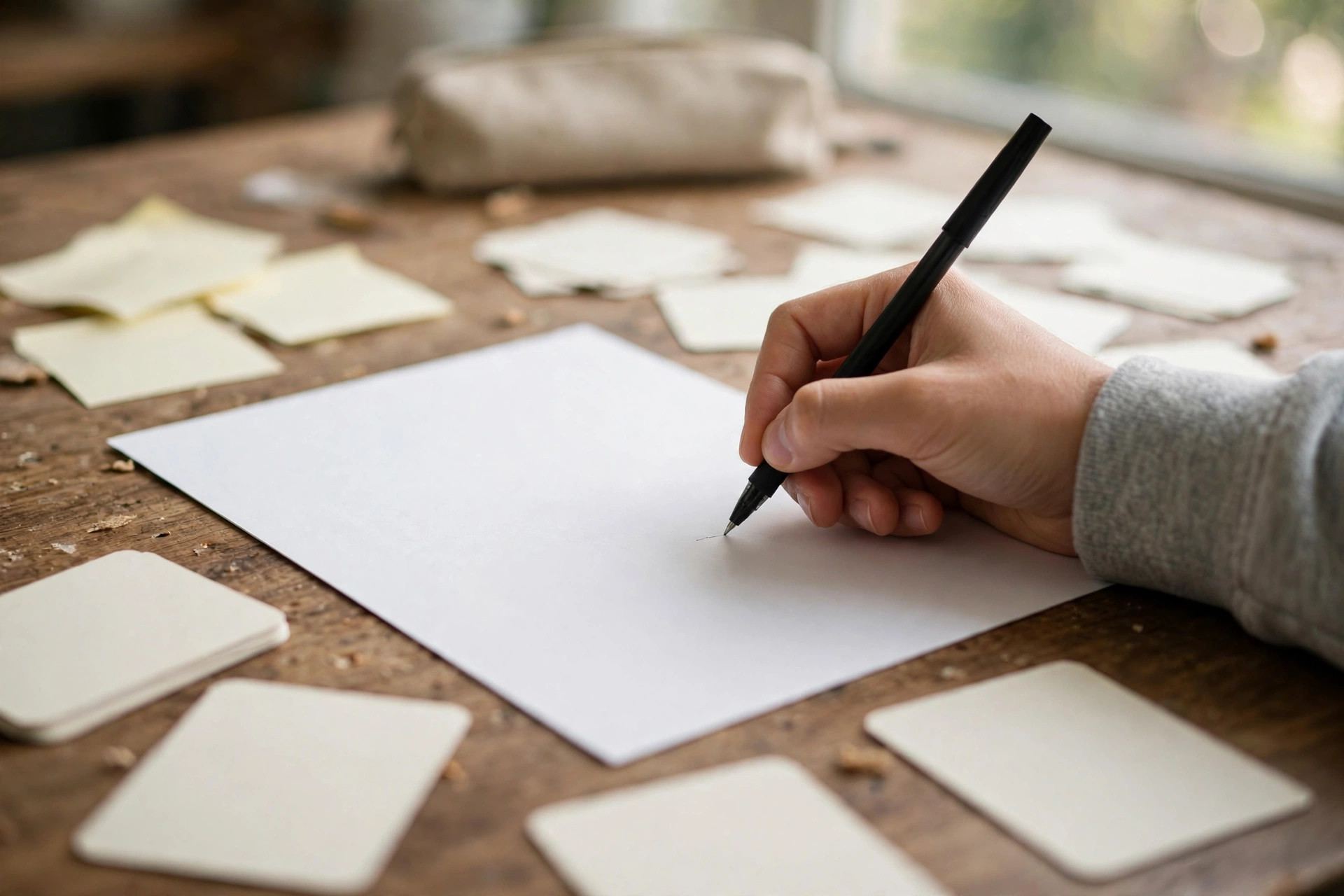
My favorite: the blank-page method. After studying a topic, write everything you remember on a blank sheet. Check against your notes, fill gaps in a different color. The colored parts are your real study list — the rest you already know.
Spaced repetition. Your brain forgets on a curve — fast at first, then slower. Review at increasing intervals (a day, three days, a week later); each review resets the curve and the memory lasts longer. Why starting early beats cramming: spacing needs time.
No fancy apps needed, though they help. When you learn something, schedule three reviews — tomorrow, in three days, next week. Calendar them. Students who did this consistently said the same thing: “I walked into the final and the answers were just… there.” That’s spaced repetition’s quiet work.
Build Your Exam-Week Map: Triage by Weight and Date
Before studying a single page, make a map. Panic studying — grabbing whatever feels urgent — is how students spend six hours on a 10% quiz and ninety minutes on a 40% final. Triage first.
List every exam: date, grade weight, honest 1-10 confidence. Allocate hours proportionally to weight ÷ confidence. A 40%-weight exam where you’re at a 3 deserves far more than a 15%-weight exam where you’re at an 8. Cold-blooded — and how you maximize GPA.
Block days into sessions with real breaks — 50 on, 10 off works for most. Assign specific topics to blocks (“Tuesday 2-4pm: Biology chapters 7-9, active recall”). Vague plans (“study biology Tuesday”) dissolve into phone-scrolling. Specific plans get done.
Protect your downtime deliberately. Zero rest in exam week produces a zombie, not a scholar. Protecting your downtime isn’t laziness — it’s strategy, because an exhausted brain can’t consolidate memory no matter the hours.
How to Study One Chapter in 45 Minutes
My session protocol, for almost any subject:
Minutes 0-5: Preview. Skim headings, bold terms, summaries, end-of-chapter questions. A mental scaffold — your brain learns faster knowing what’s coming. Don’t skip it; everything after sticks better.
Minutes 5-30: Active pass. Read a section, close the book, explain it aloud in your own words — like teaching a friend. Hit every end-of-section question from memory before checking. Write the blank-page summary. The hard, valuable part. Feeling easy? You’re slipping into passive reading — catch yourself.
Minutes 30-40: Target the gaps. Return to what you couldn’t explain. These gaps are gold — the exact questions most likely to cost you points. One flashcard or one-line summary each.
Minutes 40-45: Schedule the review. Note your revisit dates (tomorrow, +3 days, +7 days), move on. Done beats perfect — 45 active minutes beats three highlighted hours.
Math and problem subjects too? Yes — one change: “explain aloud” becomes “solve from scratch.” Reading a solved example is passive; covering the solution and reproducing it is active. Same principle, different muscle.
Past Papers: Your Secret Weapon
Past exams or practice tests are your single highest-value study material. Past papers first, textbook second.
Why? Exams are patterns. Professors reuse question styles, favorite topics, difficulty levels year after year. A past paper shows exactly what “knowing the material” looks like to your examiner — very different from the textbook’s emphasis.
Use them right: simulate real conditions. Timed, no notes, no phone. Grade yourself brutally, study only what you got wrong. One of my students went from C to A- in organic chemistry doing almost nothing but timed past papers for two weeks. The textbook barely left the shelf.
No past papers? Make your own: turn chapter headings into questions, swap practice sets with classmates, use end-of-chapter problems as a mock exam. Format matters less than discipline — retrieval under pressure is the training.
The 24 Hours Before the Exam
The day before: consolidation, not new learning. Fresh material now creates anxiety without knowledge — your brain needs the time to organize what it has.
Morning: one final active-recall pass over your weakest topics (the colored gaps). 2-3 hours max.
Afternoon: light review only — flashcards, formula sheets, key dates. Then stop. Seriously: stopping is part of the plan. Students who studied until midnight consistently underperformed the ones who stopped at dinner.
Evening: pack everything — pens, calculator, ID, water, snacks. Lay out clothes, set two alarms, decide route and timing. Morning logistics stress is a completely avoidable score-killer — I’ve seen it rattle good students into bad exams.
Night: sleep. Real sleep, 7-8 hours. Non-negotiable — trust your former tutor: the all-nighter is the single most self-destructive thing you can do before a final.
Exam-Day Tactics That Calm Your Nerves
Nerves are normal — they mean you care. The goal isn’t zero anxiety; it’s keeping anxiety from hijacking your thinking. My routine:
Arrive early, settle in. Rushing triggers your stress response; a stressed brain retrieves poorly. Get there early, breathe, calm down.
Read the whole exam first. Five minutes scanning every question. Two benefits: your subconscious starts on the hard ones while you answer easy ones, and you avoid time-allocation disasters (like 40 minutes on a 10-point question).
Answer what you know first. Build momentum, bank points. For anything that blanks: skip it, move on, trust it’ll surface later — it usually does once the blank-pressure eases.
Show your work, always. Partial credit is real — professors want to give it to you. A wrong final answer with correct reasoning often earns most of the points. Blank space earns zero.
Watch the clock in thirds. First third: confident answers. Second third: the harder ones. Final third: review and skipped questions. When the final third starts, stop solving and start checking — most students lose more points to careless errors than to hard questions.
Sleep, Food, and Breaks: The Biology of Memory
I promised the sleep science, because students never believe me without it. Memory consolidation — moving what you studied into durable long-term storage — happens primarily during sleep, especially deep sleep. Skip sleep to study more and you’re literally skipping the step that makes studying work. Like downloading files and never installing them.
The research is unambiguous: students sleeping 7-8 hours outperform equally prepared students sleeping 4-5, on every kind of test. The all-nighter doesn’t just fail to help — it actively harms recall, reasoning, and emotional regulation. You walk in tired, anxious, measurably dumber than at midnight. Please don’t.
Food matters less dramatically: eat real meals — your brain burns enormous energy studying. Exam morning: protein plus complex carbs, nothing experimental. Stay hydrated; even mild dehydration impairs concentration.
Breaks aren’t slacking; they’re part of the protocol. The brain consolidates during downtime — that’s why answers pop into your head in the shower. I encouraged my students to keep an exercise routine that fits a study schedule during exam weeks: even a 20-minute walk between sessions sharpens focus for the next one. Move your body, rest your mind, come back sharper.
Starting Late? The 3-Day Rescue Plan
Three days, multiple exams, growing dread. I’ve coached students through exactly this. Not ideal, but salvageable. The triage:
Day 1 — Map and attack the biggest exam. Build your triage map (weight × confidence, from above). All today on your highest-priority exam: active recall, highest-yield topics only. Skip anything under 5% of the grade. Not aiming for an A — maximum points per hour.
Day 2 — Second exam + past papers. Morning: high-yield active recall for exam two. Afternoon: timed past papers for both. Evening: review only wrong answers. Full night’s sleep — no negotiating.
Day 3 — Consolidate and rest. Morning: flashcards and formula sheets, light review. Afternoon: stop. Walk, eat, pack, sleep early. Rested with 70% solid beats exhausted with 90% half-learned.
What not to do: don’t try to learn everything (you can’t), don’t pull all-nighters (see above), don’t spend day one making color-coded schedules. Simple on purpose — when time is short, execution beats optimization.
After the Last Exam: The Reset
When the final ends, stop. Really stop. No replaying questions, no comparing answers (only anxiety about unchangeable things), no grade-worrying yet.
Do something restorative — sleep in, see friends, do nothing for a day. Your brain ran hot for weeks; it needs a cooldown. Burnout doesn’t respect the academic calendar — students who never reset carry exhaustion into next term.
Then, when ready, a 15-minute review: what worked? Where did the plan break down? Write it down for next term. Every exam season makes you a better studier if you capture the lessons — how my best students went from panicked freshmen to calm seniors. Not smarter. Just a system, refined over time.
You’ve got this — not because of a motivational poster, but because studying is a skill. Skills can be learned, practiced, improved. That’s my whole job, and I believe it completely. For more guides on learning well, explore the more education guides — learning shouldn’t feel like a punishment.
Frequently Asked Questions
Quality beats quantity: 4-6 focused hours of active studying beats 10 hours of passive re-reading. Study in 50-minute blocks with 10-minute breaks, and prioritize high-weight, low-confidence subjects. Beyond about 6-8 hours, returns diminish sharply — an exhausted brain stops consolidating memory.
Only marginally, and only for simple recall. Cramming loads short-term memory, which deserts you under exam pressure, and it sacrifices the sleep your brain needs to consolidate memories. Spaced, active study over several days consistently outperforms last-minute cramming in research and in my tutoring experience.
Active recall combined with spaced repetition. Test yourself from memory instead of re-reading (blank-page summaries, flashcards, practice questions), and review material at increasing intervals — a day later, three days later, a week later. Past papers under timed conditions are the highest-value supplement.
Shrink the task until starting feels trivial — commit to just 10 minutes, or just opening the book to the right page. Use specific, scheduled blocks rather than vague intentions, study with a focused friend for accountability, and tackle your hardest subject first while willpower is fresh. Motivation usually follows action, not the other way around.
No. Memory consolidation happens during sleep, so skipping sleep skips the step that makes studying stick. Research consistently shows well-rested students outperform sleep-deprived ones on every test type. A full 7-8 hours of sleep before the exam will do more for your score than those extra hours of midnight studying.
Two to three weeks is ideal — it gives spaced repetition time to work. One solid week with a good plan is very workable. Even three days can be salvaged with strict triage: focus only on high-weight topics, use active recall and past papers, protect your sleep, and skip anything worth under 5% of the grade.