What Is Common Core Math? A Parent-Friendly Explanation


If you have ever stared at your child’s math homework and thought, “Why are there boxes and number lines? Just carry the one!” you are not alone. Millions of parents have had that exact moment, all asking the same question: what is Common Core math? Here is the reassuring truth: your child is learning the same math you learned. What is different is the path they take to get there. This guide explains what Common Core math actually is, why it looks unfamiliar, and how you can help without relearning everything yourself.
What Is Common Core Math, Exactly?
Common Core math is a set of educational standards, not a textbook or a teaching method. Released in 2010, the Common Core State Standards for Mathematics describe what students should know at each grade level, from kindergarten through 12th grade. They do not dictate how teachers must teach it. That distinction matters, because most of what frustrates parents is the “how,” which comes from curriculum publishers, not the standards themselves.
The standards were designed to fix a real problem: before Common Core, math expectations varied wildly from state to state, and American students were falling behind internationally. The goal was consistency and depth. Instead of racing through dozens of topics superficially each year, students go deeper into fewer concepts, building genuine understanding layer by layer.
Most states adopted the standards, though a handful later withdrew or rebranded them. The ideas behind them, however, have influenced math teaching nearly everywhere, so even if your state does not use the name “Common Core,” your child is probably learning math in this style.

Why Does It Look So Different From How We Learned?
Here is the heart of the confusion. Most of us learned math as a set of procedures: line the numbers up, carry the one, bring down the zero. We could get the right answer without understanding why the procedure worked. Common Core asks students to understand the why first, then learn efficient procedures on top of that understanding.
Take 47 + 28. The old way: stack them, 7+8=15, write 5 carry 1, and so on. A Common Core approach might break it into 47 + 20 = 67, then 67 + 8 = 75, using a number line or “friendly numbers.” It looks longer on paper, but the child is practicing mental math flexibility, the skill adults actually use when estimating a tip or comparing prices.
Those drawings that baffle parents, the boxes, arrays, and number bonds, are visual models. They are scaffolding. Just like training wheels, they are meant to come off once the concept clicks. A child who truly understands that multiplication is repeated addition, because they have drawn the arrays, will handle algebra far more confidently later.
The Standards by Grade Band
Kindergarten to Grade 2: Foundations. Counting, place value, and the meaning of addition and subtraction. First graders work with numbers to 100; second graders tackle place value to 1,000 and the beginnings of measurement. Everything is concrete and visual.
Grades 3 to 5: The big building years. Multiplication and division (grade 3), fractions in depth (grades 3-5), and multi-digit operations. This is where those unfamiliar methods appear most. Fraction understanding here predicts algebra success later, which is why the standards linger on it.
Grades 6 to 8: Ratios, rates, and pre-algebra. Students connect arithmetic to algebra: ratios and proportional thinking, negative numbers, expressions and equations, basic geometry and statistics. By eighth grade, they are solving linear equations.
High school: Focused pathways. The standards organize high school math into conceptual categories: number and quantity, algebra, functions, modeling, geometry, and statistics and probability. Schools arrange these into traditional courses (Algebra I, Geometry, Algebra II) or integrated sequences.
Notice the progression: each band assumes mastery of the last. That is why falling behind in fractions in fourth grade echoes for years, and why patient, steady support matters so much. If your child wants to strengthen fundamentals, our guide on how to get better at math has practical strategies that complement classroom learning.
Common Core Math Methods, Translated for Parents
Let us decode the techniques you are most likely to see on homework:
Number bonds. Diagrams showing how numbers break into parts (7 = 4 + 3). They build the flexible thinking behind mental math.
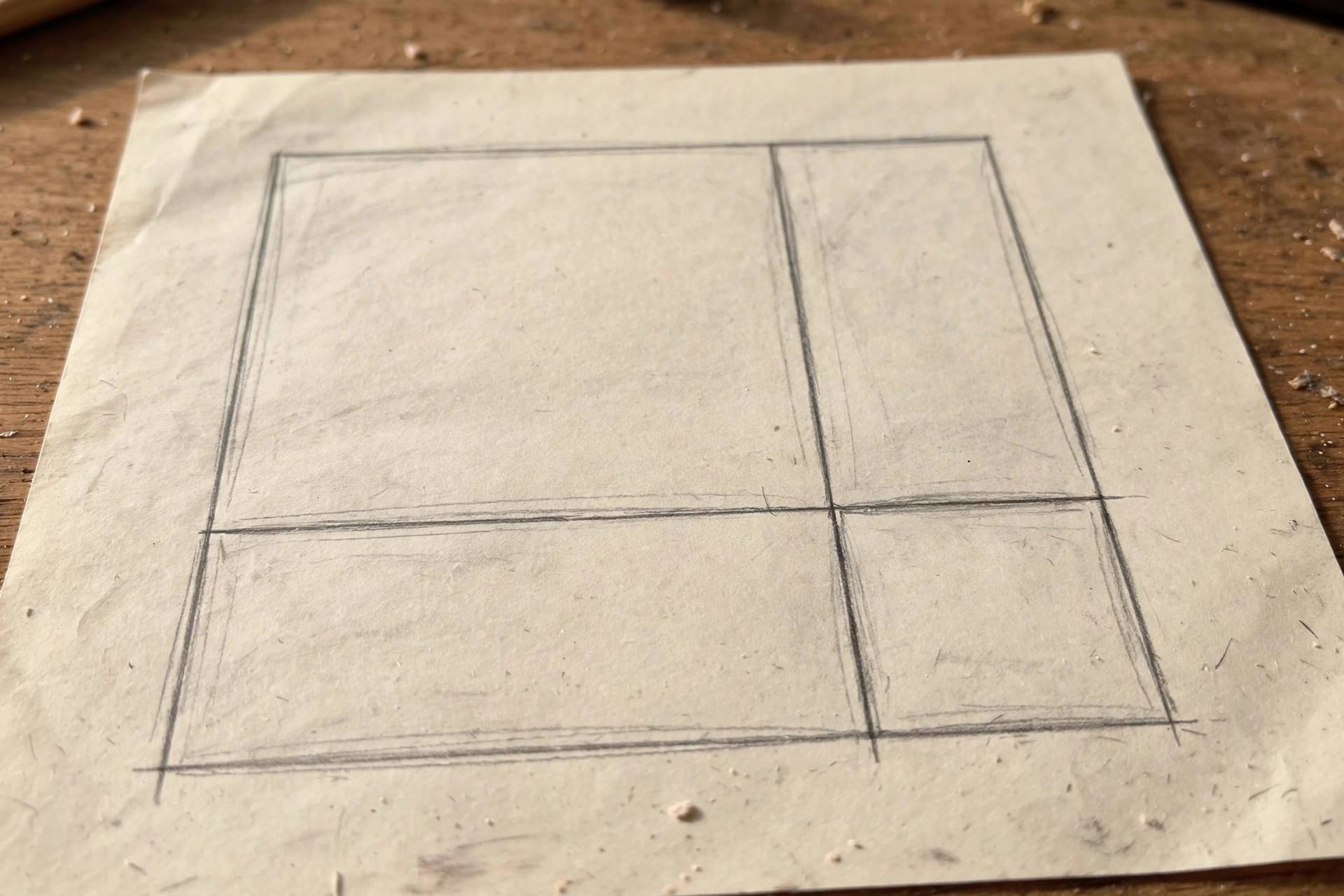
Area models for multiplication. Instead of just memorizing 13 x 12, students draw a rectangle split into 10+3 by 10+2 and find partial products. It looks elaborate, but it is literally a picture of the distributive property they will use in algebra.
“Make a ten” for addition. For 9 + 6, students think 9 + 1 + 5 = 15. This teaches composing and decomposing numbers, the foundation of all mental math.
Tape diagrams (bar models). Rectangular bars representing quantities in word problems. They turn confusing word problems into pictures, which is genuinely powerful.
None of these replace standard algorithms. The standards actually require students to learn efficient procedures too. The visual methods are the on-ramp, not the destination.
The Controversies, Addressed Honestly
Common Core has been one of the most debated education policies in decades, and you deserve a straight answer about the criticisms. Some are fair, some are misunderstandings.
Fair criticism: rollout was rocky. Many districts adopted new curricula and tests simultaneously with little teacher training. When instruction is shaky, students suffer regardless of the standards’ quality. Implementation matters enormously.
Fair criticism: homework became parent-proof. When methods differ from what parents learned, families cannot help as easily. Schools should have done far more to bridge that gap with parent guides and videos.
Misunderstanding: “They don’t teach the standard algorithm anymore.” They do. The standards explicitly call for fluency with standard algorithms by specific grades. Visual methods supplement; they do not replace.
Misunderstanding: “It’s all about feelings, not answers.” Getting the right answer still matters enormously. The difference is that students are also asked to explain their reasoning, which deepens learning and exposes misconceptions early.
My honest take as an educator: the standards’ emphasis on deep understanding is sound, and the research behind it is strong. But standards are only as good as their teaching, so your energy is better spent supporting your child’s specific classroom experience than debating the policy.
How Parents Can Actually Help (Without Relearning Math)
You do not need to master the new methods to be a great math supporter. Here is what works:
Ask your child to teach you. “Show me how your teacher does it” is magic. Explaining solidifies your child’s understanding, and you learn the method without a textbook.
Focus on effort and reasoning, not just answers. Ask “How did you think about that?” instead of only checking the final number. This mirrors what the standards value.
Use math in real life. Cooking (fractions!), shopping (percentages!), telling time, estimating distances. Real-world math builds number sense faster than worksheets.
Build study skills alongside math skills. Organized notes make a huge difference as math gets harder. The Cornell notes method is a simple system students can use for any subject, and our tips on how to study for final exams help when test season arrives.
Stay positive about math. Research consistently shows that parents’ math anxiety transfers to children. “I was never good at math either” feels sympathetic but can lower expectations. Try “This looks tricky, let’s figure it out together” instead.

A Worked Example: Two Ways to Solve 36 x 14
Nothing clarifies the Common Core approach like watching it work. Let us solve 36 x 14 both ways, side by side, the way you learned and the way your child is learning.
The standard algorithm (your way): Stack 36 over 14. Multiply 4 x 6 = 24, write 4, carry 2. Multiply 4 x 3 = 12, plus 2 = 14. First row: 144. Then the tens row: 1 x 6 = 6, write 6 with a zero placeholder, 1 x 3 = 3. Second row: 360. Add: 144 + 360 = 504. Fast, compact, and completely mysterious about why it works. Most of us memorized the steps, including the “add a zero” rule, without ever understanding that the zero represents multiplying by ten.
The area model (your child’s way): Draw a rectangle. Split one side into 30 + 6 and the other into 10 + 4. Now you have four smaller rectangles: 30 x 10 = 300, 30 x 4 = 120, 6 x 10 = 60, and 6 x 4 = 24. Add the partial products: 300 + 120 + 60 + 24 = 504. Same answer.
Now look at what the area model reveals. Those four partial products are exactly what the standard algorithm computes, just hidden inside carried digits and placeholder zeros. The “144” in your method is 120 + 24. The “360” is 300 + 60. The area model is not a different math; it is the same math with the covers pulled off.
This is the entire philosophy in one example. A student who has drawn area models understands why the standard algorithm works, which means they can reconstruct it if they forget, adapt it to decimals and algebra, and catch their own errors. “Does 504 make sense? Well, 36 x 14 is roughly 40 x 15 = 600, so 504 is plausible.” That estimation habit, built through visual models, is what separates students who survive higher math from those who memorize their way into a wall.
So when your child brings home a page of rectangles for a problem you could do in your head, resist the urge to say “just do it my way.” Their way is building something yours did not: a mental model of what multiplication actually is. The rectangles will disappear by middle school. The understanding stays.
Key Takeaways
Common Core math is a set of grade-by-grade standards emphasizing deep understanding over memorized procedures. The unfamiliar methods on homework, number bonds, area models, tape diagrams, are visual scaffolding designed to build number sense before efficient algorithms take over. The standards do still teach standard procedures; they just insist students understand why they work. As a parent, your most powerful moves are asking your child to explain their method, connecting math to everyday life, and keeping your own attitude positive. You do not need to relearn math. You just need to stay curious alongside your child.
FAQ
What is Common Core math in simple terms?
It is a set of standards describing what math students should learn in each grade, K through 12. It emphasizes understanding why math works, not just memorizing steps, going deeper into fewer topics each year.
Why is Common Core math so confusing for parents?
Because the teaching methods look different from the procedures most parents learned. The standards themselves only define goals; the unfamiliar homework methods come from curricula designed to build conceptual understanding first.
Do students still learn traditional math methods under Common Core?
Yes. The standards require fluency with standard algorithms. Visual methods like area models and number lines are scaffolding to build understanding before and alongside efficient procedures.
Is Common Core still used?
Most states still use the Common Core standards or closely adapted versions. A few states withdrew or renamed them, but the teaching approaches they inspired remain widespread.
How can I help my child with Common Core math homework?
Ask your child to teach you their method, focus on their reasoning rather than just answers, use math in daily life like cooking and shopping, and keep a positive attitude. You do not need to master the methods yourself.