
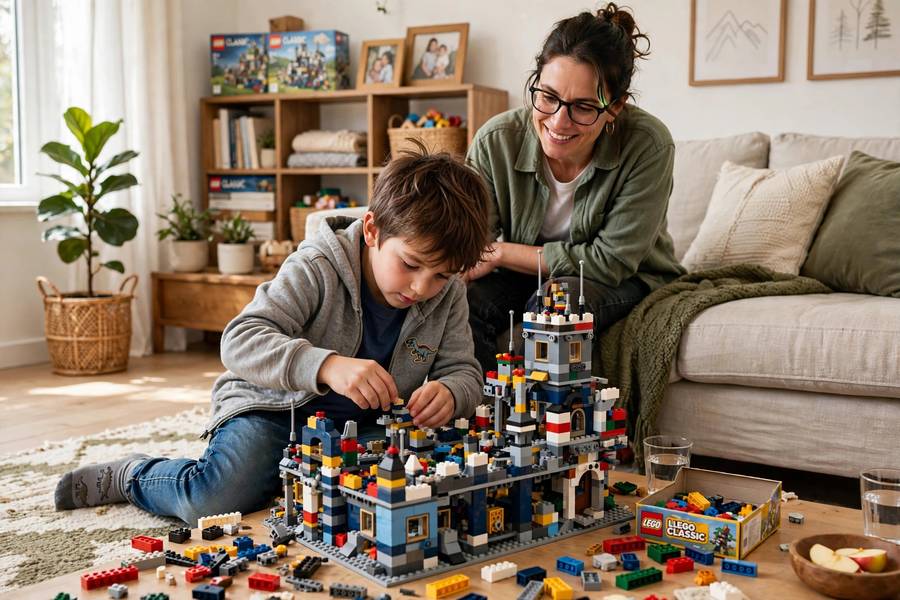
The first time a parent told me they were “unschooling” their kids, I pictured children running wild with zero education. Then I visited their home. The eight-year-old was deep into a self-directed project on bridges — building models, watching engineering videos, and peppering her dad with questions about load distribution. The twelve-year-old was running a small online shop and had taught himself spreadsheets to track inventory. Nobody was “doing school.” Everybody was learning furiously.
That is unschooling in a nutshell — and it is one of the most misunderstood approaches in education. Let me explain what it actually is, how it works day to day, where it succeeds, where it struggles, and how to tell if it might fit your family.
Table of Contents
- Unschooling Defined
- How Unschooling Works Day to Day
- Unschooling vs Homeschooling vs Traditional School
- The Case For Unschooling
- The Honest Concerns
- What Learning Looks Like Without Curriculum
- Making Unschooling Work: Practical Guidance
- Frequently Asked Questions
- The Legal Picture: A General Snapshot
- Record-Keeping: A Portfolio Template for Re-Entry
- A Week in the Life: Three Age Bands
- The College-Admissions Path for Unschoolers

Unschooling Defined
Unschooling is an educational philosophy where children learn through life — following their interests, asking questions, and pursuing projects — rather than through a set curriculum, formal lessons, or grades. The term was coined by educator John Holt in the 1970s, who argued that children are natural learners and that institutional schooling often damages that instinct.
The core belief: children do not need to be taught to learn; they need to be supported while learning. Just as babies learn to walk and talk without lessons, unschoolers argue, children learn reading, math, and science by living in a rich environment full of resources and engaged adults.
This is not “no education.” It is education without the school-shaped container.
How Unschooling Works Day to Day
Forget timetables. A typical unschooling day might look like this:
- Morning: A child wakes up and spends two hours building an elaborate city in a video game — practicing spatial reasoning, resource management, and (if playing with friends) collaboration.
- Midday: A trip to the grocery store becomes a math lesson (budgeting, comparing unit prices) and a reading lesson (labels, lists).
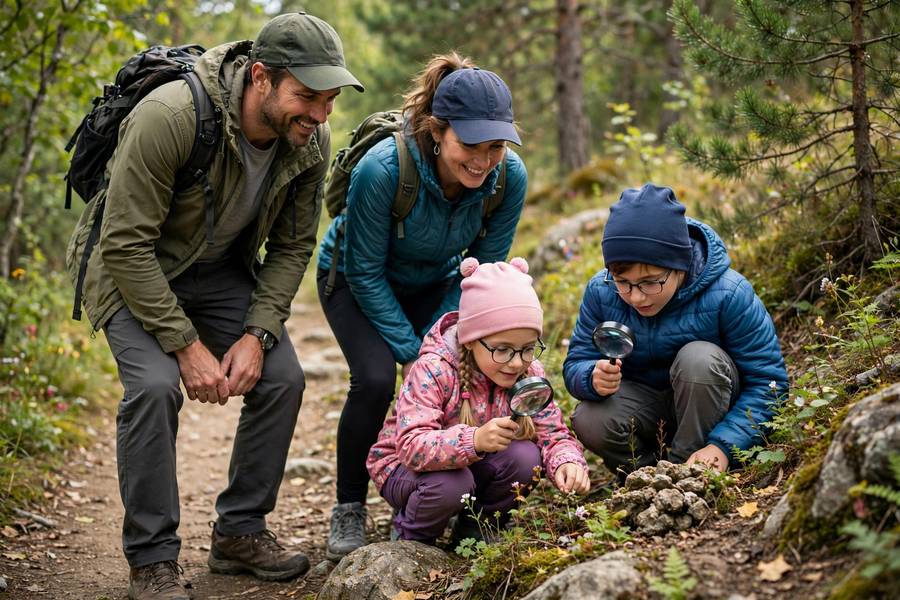
- Afternoon: The child falls down a rabbit hole about volcanoes after a documentary — watches three more videos, builds a baking-soda eruption, and asks to visit a science museum.
- Evening: Family reads aloud together; the child writes in a journal voluntarily.
Parents in unschooling families describe their role as facilitators, not teachers: providing books, tools, experiences, and outings; answering questions honestly; connecting children with mentors and communities; and trusting the process when learning looks nothing like school.
Unschooling vs Homeschooling vs Traditional School
| Traditional School | Homeschooling | Unschooling | |
|---|---|---|---|
| Curriculum | Standardized, mandated | Parent-chosen (often structured) | None — child-led |
| Schedule | Fixed timetable | Flexible but usually scheduled | No schedule |
| Assessment | Tests and grades | Varies (tests, portfolios) | None formal |
| Parent role | Supportive | Teacher | Facilitator |
| Socialization | Built-in peer group | Co-ops, activities | Community activities, mixed-age groups |
Note that Montessori education shares some DNA with unschooling (respect for the child’s pace, hands-on learning) while keeping more structure — some families blend approaches.
The Case For Unschooling
Intrinsic motivation stays intact. Unschooled children learn because they are curious, not because they will be tested. Research on self-determination theory backs this up: autonomy fuels deeper engagement.
Learning is efficient. Without busywork, unschoolers often cover in months what takes schools years — because they learn at their peak interest moment, when the brain is primed.
Real-world skills develop naturally. Time management (of their own days), pursuing questions independently, learning from failure — these emerge from the lifestyle itself.
Wellbeing. Many families report less anxiety, better sleep, and stronger family relationships after leaving high-pressure school environments.
Late bloomers thrive. Children who would be labeled “behind” in school often surge when allowed to develop on their own timeline — particularly in reading, where the normal range of readiness spans years.
The Honest Concerns
I would not be honest if I skipped these, because they are the reasons unschooling is not for everyone:
Gaps are possible. A child who never gets interested in, say, formal writing mechanics may reach sixteen with weak essay skills. Unschooling parents counter that motivated teens close gaps fast when they need to (for college, jobs) — and there is truth in that — but it requires the teen to want to close them.
It demands a lot from parents. Facilitating well means being present, resourcing constantly, tolerating mess and uncertainty, and resisting the urge to control. It is not the “easy” option.
Socialization needs effort. Without school’s built-in peer group, parents must actively build community: co-ops, clubs, sports, classes. It is very doable, but it does not happen by itself.
Regulation varies. Some regions require assessments or curriculum filings even for unschoolers. Know your local laws before committing.
College and careers need planning. Unschooled teens absolutely get into college — often with portfolios and nontraditional transcripts — but the path requires deliberate planning starting around age 14–15.
What Learning Looks Like Without Curriculum
Skeptics ask: “But how do they learn math?” The unschooling answer: the same way everyone learns what they need — by encountering it.
- Math appears in cooking, building, budgeting, games, and eventually in the teen who decides to learn algebra because they want to program or take a college entrance exam.
- Reading emerges from being read to, seeing print everywhere, and wanting to access stories and information. Most unschoolers read fluently; some just do it at five, others at nine.
- Science comes from nature, experiments, documentaries, and endless “why” questions taken seriously.
- Writing develops through journaling, messaging friends, and later through real purposes (college essays, work).
The pattern: need and interest drive learning, and learning driven that way sticks. It looks inefficient from the outside and feels inevitable from the inside.
Making Unschooling Work: Practical Guidance
If you are considering it:
- Deschool yourself first. Most new unschooling parents need months to stop thinking in school terms (“but are they at grade level?”). Read John Holt. Talk to experienced families.
- Rich environment, not rich curriculum. Books everywhere, art supplies, tools, museum memberships, nature access. The environment is the teacher.
- Follow the child, strewing strategically. Notice interests and “strew” related resources in their path — a book left on the couch, a documentary queued up. Do not force; invite.
- Build community early. Find local or online unschooling groups before you need them.
- Keep light records. Even where not required, a simple portfolio (photos, project lists, reading logs) helps with future transitions and reassures nervous grandparents.
- Plan the teen years. Around 14, start mapping paths: college (portfolio + tests), apprenticeships, entrepreneurship. Unschooling does not mean winging adulthood.
And whatever path you choose, the fundamentals of how children learn languages and other skills still apply — interest plus exposure plus practice.

The Legal Picture: A General Snapshot
The question every curious parent asks first: is this legal? The short answer is yes — homeschooling, the legal category unschooling falls under, is legal in all 50 states. The longer answer is that what the law asks of you varies enormously, so this section is a map of the terrain, not legal advice.
Roughly, states fall into a few postures:
- Notice states: you file a notice of intent (sometimes called an affidavit) with your district or state, often annually. This is the most common requirement.
- Record and assessment states: in addition to notice, you may need to keep attendance records, submit to periodic standardized testing, or have a portfolio reviewed by a certified teacher.
- No-notice states: effectively no required interaction with the school system at all — you simply begin.
I am deliberately not listing which state is which, because these laws do change and a blog post is the wrong place to get your legal facts. Check your state department of education’s homeschooling page directly, and look at the established national organizations that track state-by-state requirements — they maintain current summaries. And keep records regardless of what your state requires: attendance logs, work samples, a reading list. You will thank yourself at re-entry or college-application time, and in stricter states they may be required anyway.
Outside the United States, the picture varies by country — some treat home education as a parental right, others require registration or curriculum approval, and a few restrict it significantly. If you are outside the US, research your country’s rules before you begin, ideally with a local homeschooling association that knows the current enforcement reality, not just the statute.
Record-Keeping: A Portfolio Template for Re-Entry
“But what if we want to go back?” This is the worry that keeps parents up at night, and the answer is reassuringly practical: keep a portfolio, and re-entry becomes a conversation instead of a crisis. Schools evaluating a returning student mostly want to know one thing — can this child slot into a grade level? — and a well-kept portfolio answers that better than any transcript of guesses.
Here is a template that covers what schools, evaluators, and eventually colleges look for:
- Learning log: dated entries noting what they did, read, built, or discussed. Ten minutes a week is enough; consistency matters more than eloquence.
- Work samples: writing (unedited and revised), photos of projects and builds, screenshots of code or digital work, recordings of performances.
- Reading and media list: books finished, documentaries watched, courses completed, podcasts followed. This list grows into impressive evidence faster than you expect.
- Project summaries: one page per major project — the question they started with, the process, the outcome. This is where deep learning becomes visible.
- Outside validation: grades from any outside classes, tutor assessments, competition results, standardized test scores. Third-party evidence carries weight.
- Quarterly narrative: your one-page summary of growth that quarter — new skills, new interests, social development. Write it while the quarter is fresh.
Two habits make this sustainable instead of burdensome. First, date everything — undated work loses half its evidentiary value. Second, capture as you go: a phone photo of the bridge model today beats a reconstructed description in June. The families I have seen do this well treat it like a scrapbook with a purpose, not a compliance exercise, and many kids end up proud of the archive.
A Week in the Life: Three Age Bands
Unschooling has no timetable, but it does have rhythm. New parents often ask what a “normal” week looks like, so here are honest sketches at three age bands — drawn from real families, not idealized ones. Your week will differ, and that is the point.
Early elementary (about 5–8): rhythm over schedule. Mornings might hold read-alouds, nature walks, building projects, and art — the learning disguised as play. Afternoons: the library, the playground (swings and slides are a physics lab if you ask the right questions), cooking together (fractions you can eat). Evenings: stories, documentaries, bedtime math games. The parent’s job at this stage is environment and conversation: rich materials within reach, endless “why do you think that happens?”, and reading everything aloud. Formal “lessons” are rare; learning is constant.
Middle school (about 9–12): projects get longer. A month on Roman engineering, a self-published comic, a garden business with real customers. This is when many families add one or two outside structures — a co-op class, an online course, a mentor or club — while keeping the core child-led. Library hauls get serious, journals appear, and math often becomes the one semi-structured subject: many families use a math program a few times a week while everything else stays free-range. Friendships deepen around shared interests rather than shared homerooms.
Teens (13+): deep dives and real stakes. Coding portfolios, part-time jobs, internships, community college classes, travel, serious creative output — the week starts to look like a young adult’s life because it is one. The portfolio habit from the section above becomes a transcript-in-progress. Social life often runs through co-ops, workplaces, and interest communities, and parents consistently report it is richer than a single-grade peer group — though building it takes deliberate effort, which is the honest caveat from the concerns section above.
Notice what is missing at every age: bells, worksheets for their own sake, and learning scheduled by someone else’s calendar. Notice what is present: adults who pay attention, materials worth engaging with, and the time to follow a question until it is answered.
The College-Admissions Path for Unschoolers
Colleges admit unschoolers every year — including selective ones. Admissions offices care about evidence of readiness, and unschoolers can provide it in abundance. It just does not arrive as a standard transcript, so you translate.
- The portfolio as transcript. Narrative transcripts translate projects and deep dives into course equivalents with descriptions, hours, and outcomes. A year spent building and selling furniture becomes woodworking, small-business math, and design — documented honestly, it reads as more compelling than a B+ in “Intro to Business.”
- Standardized tests as anchors. A strong SAT or ACT score gives admissions a familiar data point alongside the unfamiliar portfolio. Many unschooling families treat test prep as a focused, finite project in the junior year — a few months of structured work, not a childhood of it.
- Community college dual enrollment. Real college courses with real grades on a real transcript — arguably the single strongest credential an unschooled teen can earn. It proves college readiness in the most direct way possible, and the credits often transfer.
- Letters from mentors. Employers, co-op instructors, internship supervisors, music teachers — adults who have watched your teen work hard over time. These carry at least as much weight as teacher recommendations because they describe real-world performance.
- The GED or HiSET as a diploma equivalent, where useful — some families use it as a clean administrative checkbox.
The through-line: start the paper trail early. The portfolio habits, outside classes, and mentor relationships from the teen years become the application — there is no separate “college prep phase” to bolt on at the end. Families who keep good records from age 13 or so find the application process surprisingly straightforward; families who start documenting at 17 find it stressful. The difference is just timing.
Frequently Asked Questions
Unschooling is learning without a set curriculum or formal lessons — children pursue their interests through real life, projects, and play, with parents acting as facilitators who provide resources and support rather than teachers delivering lessons.
In most places it falls under homeschooling law, which varies widely. Some regions require assessments or filings; others are hands-off. Always check your local regulations before starting.
Yes — through real-life need and interest rather than scheduled lessons. Reading typically emerges from being read to and wanting access to stories; math appears through cooking, building, games, and budgeting. Timelines vary more than in school.
Yes. Unschooled teens get into college with portfolios, nontraditional transcripts, and standardized test scores. It requires deliberate planning from around age 14–15, but admissions offices are increasingly familiar with the path.
Homeschooling usually keeps structure — parent-chosen curriculum, schedules, assessments. Unschooling drops the curriculum entirely: no set lessons, no timetable, no grades. The child leads; the parent facilitates.
Possible knowledge gaps, the heavy demands on parents’ time and mindset, needing to actively build social community, and planning teen transitions to college or careers. It is rewarding but not effortless.
Many do — not because the philosophy requires it, but because tests are useful credentials. Some states mandate periodic assessments for homeschoolers, and many families voluntarily use the SAT or ACT in the teen years as an objective anchor for college applications.
Through portfolios and narrative transcripts, SAT/ACT scores, dual-enrollment grades from community college, and letters from mentors and employers. Admissions offices evaluate evidence of readiness, and a well-documented unschooling record provides plenty of it.