How AI Developed Over the Decades: 1950s to 2020s

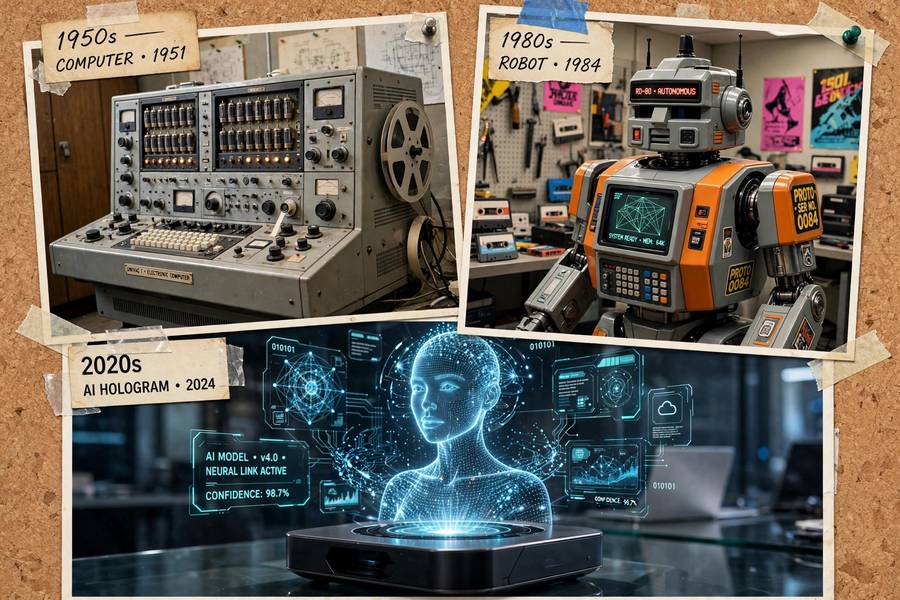
Every decade of AI history believed it was the decisive one. The 1950s thought intelligence would be solved in a summer. The 1980s thought expert systems would run the world. The 2010s thought deep learning was the final answer. Each decade was wrong about the timeline and right about something important. I find the decade-by-decade view the most honest way to understand where we are — it replaces the myth of steady progress with the reality of cycles, and cycles are more useful for thinking about the future.
Here’s how AI actually developed, decade by decade: what each era believed, built, and learned — milestones included. For the full narrative, see history of artificial intelligence.
1950s: The Founding Optimism
The belief: intelligence is computation, and computation is new — so machine intelligence should follow quickly. The Dartmouth proposal (1955) suggested two months of concentrated effort could make “significant advance.” Researchers estimated human-level AI within a generation.
What was built: the Perceptron (learning classifier), the Logic Theorist (theorem prover), IPL and Lisp (AI’s languages), Samuel’s checkers player (learning from experience). Astonishing foundations for a field that didn’t exist five years earlier.
What was learned: that demos are easy and generality is hard. Every 1950s success was narrow; the leap from “plays checkers” to “thinks” was assumed, not demonstrated. The decade’s optimism wasn’t foolish — the ideas were genuinely powerful — but the difficulty estimates were off by orders of magnitude.
The vibe: a group of brilliant young men (and it was almost entirely men) who’d just won a war with computation, certain the same methods would conquer mind. In retrospect, charming. At the time, completely serious.
1960s: First Programs, First Doubts
The belief: still optimistic, but reality intrudes. The programs get more interesting — and their limits more visible.
What was built: ELIZA (1966) — the chatbot that fooled everyone and horrified its creator. The General Problem Solver’s successors. SHRDLU (1970, but conceived in the 60s) — Winograd’s blocks-world program that seemed to understand language within its tiny domain. Robotics beginnings at Stanford and MIT.
What was learned: the first serious doubts. SHRDLU was the decade’s Rorschach test: optimists saw understanding; skeptics saw a trick that worked only because the domain was tiny. Minsky and Papert’s Perceptrons (1969) showed neural networks’ limits — correctly for single-layer, incorrectly generalized to all networks. The field’s first great “actually, this is harder than we thought” moment.
The vibe: the honeymoon ending. Still well-funded, still confident in public, but the researchers know the easy wins are over.
1970s: The First Winter
The belief: damaged. The grand promises of the 50s haven’t materialized, and the funders notice.
What happened: the Lighthill Report (1973) in the UK calls AI a failure; DARPA cuts academic AI funding in the US, demanding deliverables instead of dreams. Researchers stop saying “artificial intelligence” — it’s career poison. They say “informatics,” “pattern recognition,” “cognitive science.”
What was built (quietly): the foundations of what would later matter — early expert systems (DENDRAL, MYCIN), the Prolog language, Shakey the robot (SRI’s mobile robot that actually navigated rooms — genuinely impressive, largely ignored at the time). The winter wasn’t barren; it was just unfunded and uncelebrated.
What was learned: that funding follows hype, hype follows demos, and demos don’t scale. The researchers who survived learned patience and low profiles. Some of the deepest theoretical work happened here precisely because nobody was watching.
The vibe: academic exile. The true believers kept working in the cold, sustained by conviction rather than grants.
1980s: Expert Systems and the Second Spring
The belief: intelligence is knowledge — encode what experts know as rules, and machines become expert. The “knowledge engineering” paradigm.
What was built: MYCIN (infection identification), XCON (configuring DEC computers — saved the company millions), and hundreds of commercial expert systems. Japan’s Fifth Generation project bets national prestige on AI. AI companies go public. Funding flows like the 1950s again.
What was learned: that hand-encoded knowledge doesn’t scale. Every expert system worked brilliantly in its narrow domain and failed everywhere else. Building them was slow, maintaining them was hellish, and they couldn’t learn — every new situation needed a human to write new rules. The “knowledge acquisition bottleneck” became the decade’s epitaph.
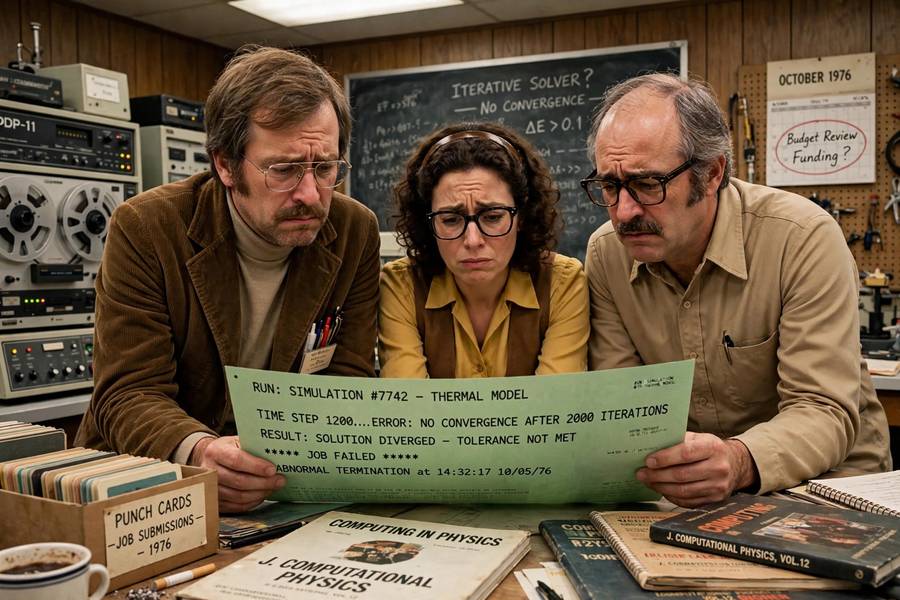
The winter returns (late 80s): the Lisp machine companies collapse, expert system startups fail, funding evaporates again. AI’s second winter. The pattern is now unmistakable: spring, overpromise, winter.
The vibe: corporate gold rush followed by ghost town. The researchers who’d seen the 70s recognized the cycle immediately.
1990s: The Quiet Decade
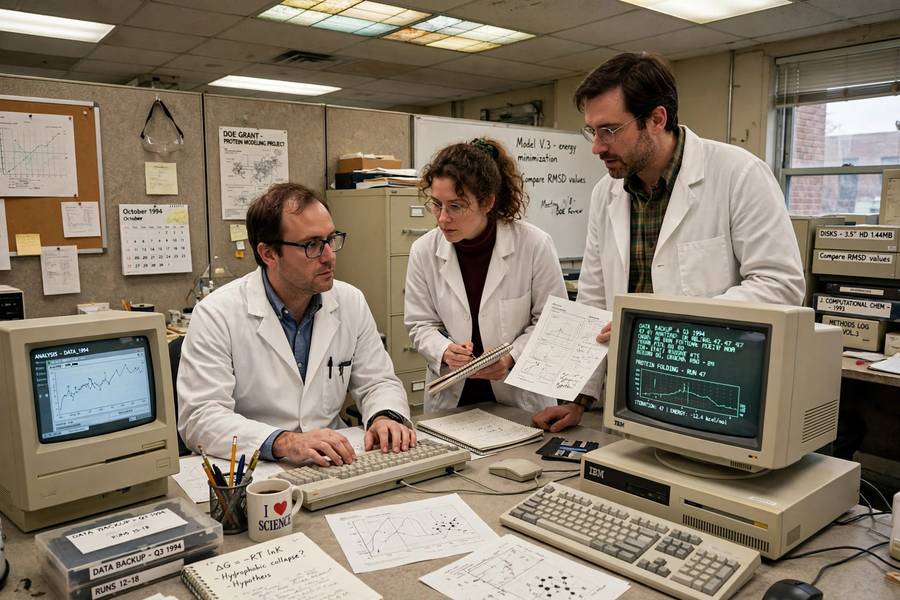
The belief: modest. Nobody promises human-level AI. The field rebrands around doing useful things rather than achieving intelligence.
What was built: the statistical revolution — speech recognition that works (Dragon, phone systems), computer vision for specific tasks, data mining, the web’s early recommendation systems. Deep Blue beats Kasparov (1997) — brute force plus chess knowledge, but the public sees a thinking machine. Support vector machines, Bayesian networks, hidden Markov models: the unglamorous toolkit that works.
What was learned: that boring reliability beats exciting demos. The 90s researchers — shunned by the AI label, working as “machine learning” or “pattern recognition” people — built the methods that would later conquer everything. Humility turned out to be a strategy.
The vibe: head down, publish or perish, no press conferences. The most productive decade in AI history, and almost nobody noticed.
2000s: The Data Decade
The belief: emerging — that data, not cleverness, is the key. A heretical idea that turns out to be right. (How AI models are trained shows why data became the fuel.)
What was built: the internet becomes the dataset. Google’s machine translation switches to statistical methods (2006) and immediately improves. Spam filtering, ad targeting, recommendation engines — ML goes industrial. ImageNet is assembled (2009). Deep belief networks (2006) restart neural network research quietly.
What was learned: Norvig’s dictum — “we don’t have better algorithms, we have more data” — becomes the decade’s thesis. Every old algorithm works better with 1000x more examples. The bottleneck was never intelligence; it was experience. This reframes the entire field: maybe you don’t need to program intelligence if you can grow it from data.
The vibe: pragmatic engineers outnumber philosophers for the first time. AI is becoming an engineering discipline rather than a scientific quest — a shift with enormous consequences.
2010s: Deep Learning Conquers All
The belief: that neural networks, scaled up, can do everything. After decades of marginalization, the connectionists are vindicated totally.
What was built: AlexNet (2012) — the Big Bang. Then the cascade: GANs generate images (2014), ResNets go 152 layers deep (2015), AlphaGo beats Lee Sedol (2016), Transformers arrive (2017), BERT and GPT show language mastery (2018–19). Each year brings a capability that was “ten years away” the year before. Machine learning becomes the history of AI, full stop — the learning paradigm triumphant. (See machine learning vs deep learning for what changed.)
What was learned: Sutton’s “bitter lesson” — general methods that leverage computation beat human-engineered knowledge, every time, eventually. Also learned: scale has sharp edges — the models are brilliant and biased, capable and uncontrollable, useful and inscrutable, all at once.
The vibe: gold rush bigger than the 1980s, but with real products this time. Every tech company becomes an AI company. Researchers become millionaires. The winters feel like ancient history — which is exactly what people thought in 1985.
2020s: The Generative Revolution
The belief: (current, so take with salt) that we’re building generally capable systems — and disagreement about whether that’s 5 or 50 years away.
What’s been built: GPT-3/4 and the LLM era (2020–22), ChatGPT’s interface breakthrough (Nov 2022) — 100M users in two months, diffusion models democratizing image generation, open-source models collapsing the moat, reasoning models that “think longer,” and now agents that act — the current frontier.
What’s being learned (in real time): that capabilities and understanding are separable (models do things their creators can’t fully explain), that alignment is hard (capable systems aren’t automatically safe or honest ones), and that the economic impacts are arriving faster than the institutional adaptations.
The vibe: the biggest spring in history, with the most at stake. The optimists see the path to transformative AI; the skeptics see the third great overpromise; the historians see the cycle and wait. All three might be right about different things.
What the Decades Teach Us
The cycle is real. Spring, overpromise, winter, quiet progress, spring. It’s happened three times. The current spring is bigger and more commercially grounded than previous ones — which might break the cycle, or might just make the correction bigger.
Demos deceive; deployments reveal. Every decade’s breakthrough looked more complete in the demo than in deployment. The gap between “impressive demo” and “reliable product” is where winters live.
The important work looks boring. Backprop in 1986, statistical methods in the 90s, data infrastructure in the 2000s — each era’s most consequential work was its least glamorous. If you’re looking for what matters now, look at what’s boring.
Ideas wait for their time. Neural networks (1943 idea, 2012 triumph), backprop (1986 idea, 2010s payoff), transformers (2017 paper, 2020s revolution). The history of AI is largely the history of old ideas meeting new scale.
The question changes. 1950s: can machines think? 1980s: can machines be experts? 2000s: can machines learn from data? 2020s: can machines be agents? Each decade’s question reframes the last one’s answers. The next decade will ask something we can’t yet formulate — and that, more than any prediction, is the honest forecast.

Frequently Asked Questions
In cycles: 1950s founding optimism, 1960s first doubts, 1970s first winter, 1980s expert-system spring and second winter, 1990s quiet statistical progress, 2000s data-driven ML, 2010s deep learning revolution, 2020s generative AI and agents. Each spring overpromised timelines; each winter produced the unglamorous work that enabled the next spring.
The expert systems boom: programs encoding human expertise as rules achieved commercial success (MYCIN, XCON), Japan launched the Fifth Generation project, and AI companies went public. Then expert systems proved brittle — expensive to build, impossible to maintain — triggering the second AI winter in the late 1980s.
It wasn’t slow — it was quiet. Researchers avoided the “AI” label and built reliable statistical methods (speech recognition, SVMs, Bayesian networks) as “machine learning.” The decade’s unglamorous, humble work created the toolkit that deep learning later scaled. Boring reliability beat exciting demos.
Deep learning’s triumph: AlexNet (2012) proved neural networks at scale, then came GANs, ResNets, AlphaGo, and Transformers (2017). The formula was old ideas (backprop from 1986) meeting new scale (GPUs + internet data). AI shifted from academic quest to engineering discipline to trillion-dollar industry within the decade.
It’s the biggest AI spring ever, with real capabilities and revenue — more grounded than past hype cycles. But history warns every spring overpromises timelines, and the pattern suggests corrections ahead. The honest position: transformative progress is real, some expectations will disappoint, and the most important current work probably looks boring.