10 Best American Road Trips in Fall (Foliage Routes 2026)

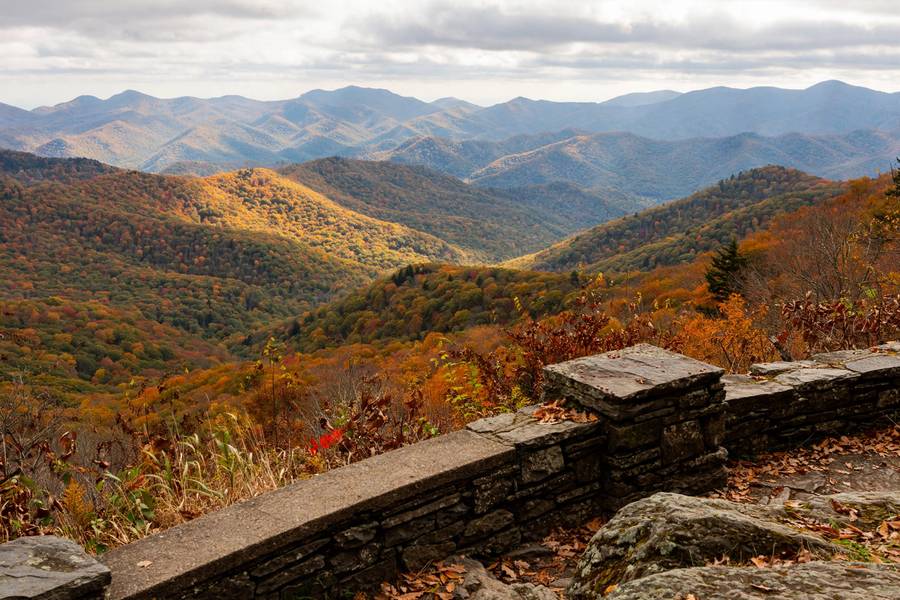
Fall is America’s greatest road trip season — the summer crowds evaporate, the prices drop, the light turns golden, and half the country erupts in color. I’ve driven fall routes for a decade, and the season has a way of making even familiar highways feel cinematic. The trick is timing: fall color is a moving target, and a week early or late is the difference between peak and bare branches.
These ten routes are the fall all-stars — the foliage drives, the desert openings, and the harvest-season tours. Each includes the route, the peak window, and the practical details. For the year-round ranking, see our best American road trips.
1. Blue Ridge Parkway: The Definitive Fall Drive
469 miles from Shenandoah to Great Smoky Mountains, and the single best fall road trip in America. The parkway was designed for this — ridgetop driving, an overlook every mile, tunnels through the mountains, and the color sweeping down the elevations over 6 weeks. The strategy: drive it in the direction of the peak (north-to-south in early October, south-to-north in late October — the NPS posts weekly color reports).
The stops: Mabry Mill (the most photographed spot on the parkway — the mill, the pond, the reflection), Linville Falls (the hike, the fall volume), Mount Mitchell (the highest peak east of the Mississippi — the spruce-fir forest, the views), and Asheville (the Biltmore — the estate in fall, the winery, the gardens). Stay in the parkway lodges (Pisgah Inn, Peaks of Otter — book months ahead) or the gateway towns.
Timing: early October (north — Shenandoah) through late October (south — Smokies). The 3–4 day drive, ~$800–1,100 for two. The midweek rule: October weekends on the parkway are packed; Tuesday–Thursday is the experience.
2. New England Loop: Vermont, New Hampshire, Maine
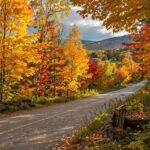
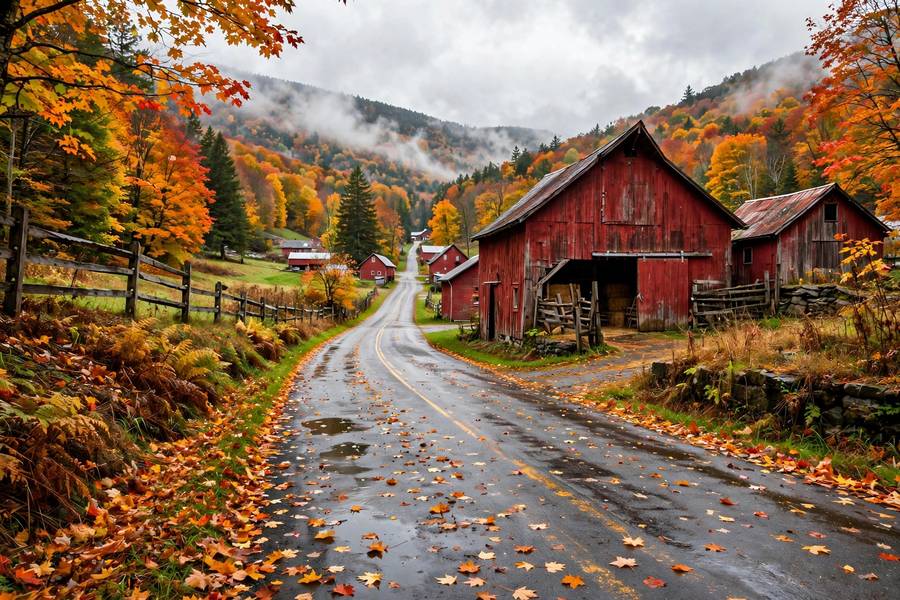
The pilgrimage: Boston → White Mountains (the Kancamagus Highway — 34 miles of the most concentrated color in America) → Green Mountains (Vermont’s Route 100 — the villages, the covered bridges, the farm stands) → Acadia (the coast + foliage combination) → Berkshires → back. 500–600 miles, 5–6 days, the second week of October (peak for the Whites and Greens).
The experiences beyond the driving: the cider donuts (the farm stands — they’re a food group in October), the Ben & Jerry’s factory (Waterbury, Vermont — the tour, the Flavor Graveyard), the covered bridges (the kissing bridges — Vermont has 100+), and the White Mountain hikes (the Arethusa Falls, the short ones with big payoffs). The lodging: country inns ($150–250/night — book 6+ months ahead, this is the hardest fall lodging in America).
Cost: ~$1,500–2,000 for two (5 days). The leaf-peeping premium is real — but so is the experience. The alternative: the Berkshires + Catskills (cheaper, closer for East Coasters, 80% of the color).
3. Utah’s Mighty Five in October
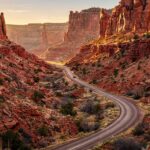
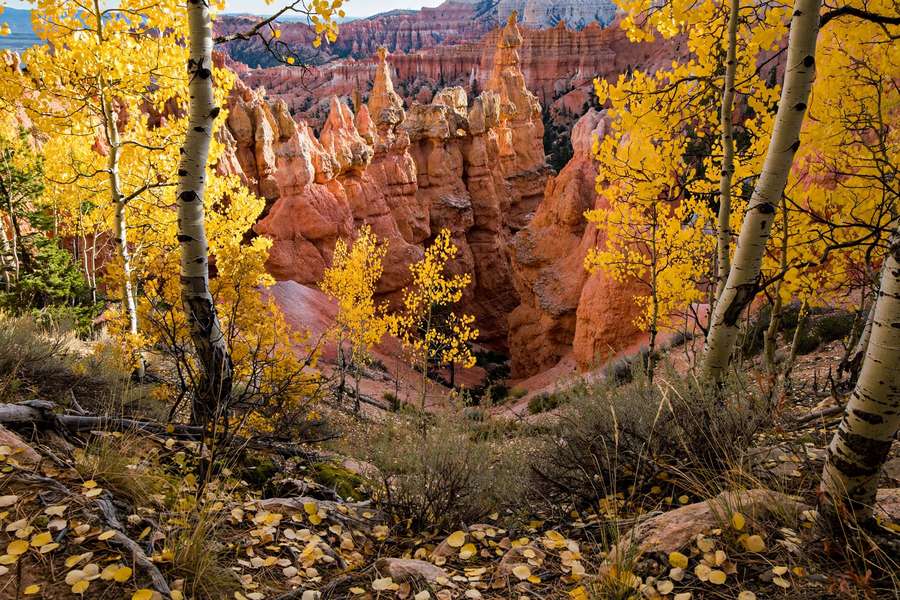
The desert’s best month: Arches, Canyonlands, Bryce, Zion, Capitol Reef — all in the 70s instead of the 100s, half the summer crowds, golden light, and (at Bryce’s 8,000 feet) the first snow dusting on red rock. The 750-mile loop from Las Vegas, 7 days, is the definitive fall desert trip. See our national parks road trip guide for the day-by-day.
The fall-specific magic: the cottonwoods turn gold along the rivers (the Zion Canyon floor, the Capitol Reef orchards — the park’s historic fruit orchards, pick-your-own in season), the aspens on the high roads (Boulder Mountain, the Aquarius Plateau), and the night skies (the long October nights — Bryce and Capitol Reef are Gold-tier Dark Sky Parks).
Logistics: the America the Beautiful pass ($80 — covers all five), lodging 3–4 months ahead (Springdale, Moab, Torrey — the gateway towns), and the layers (40-degree day-to-night swings — the fleece + shell system). ~$1,800–2,500 for two (7 days).
4–6. The Foliage Alternatives: Smokies, Ozarks, Columbia Gorge
Great Smoky Mountains (late October–early November): the longest foliage season in America — the elevation range (875–6,643 feet) stretches peak over 6 weeks. Cades Cove (the morning fog + red maples), the Blue Ridge Parkway’s southern end, and Cataloochee Valley (the elk bugling — the fall rut, the eerie calls at dawn). Free entry; October weekends are packed — go midweek. carry-on vs checked baggage
The Ozarks (late October–early November): the South’s secret — Arkansas’s Boston Mountains (the Pig Trail, Highway 23 — the motorcycle road that’s a foliage drive), the Buffalo River’s bluffs, and Missouri’s Ozark hardwoods. $100/night cabins, no crowds, real color. The fall trip for people who hate fall-trip crowds.
Columbia River Gorge (October): the waterfall alley in fall — Multnomah Falls with the maples, the Historic Highway’s viewpoints, and the Hood River fruit loop (the apples, the pears, the harvest stands). The Portland day trip or the overnight — the gorge in October is the Pacific Northwest’s best-kept fall secret.
7–8. Harvest Season: Napa and New Mexico
Napa/Sonoma (October): the crush’s tail — the harvest winding down, the vines turning gold, the wineries (the tasting rooms, the harvest events), and the hot air balloons (dawn over the valley, the fall color below). October is better than September (fewer crowds, still active, the color). The splurge: the balloon ride ($250–300 — the fall version is the one).
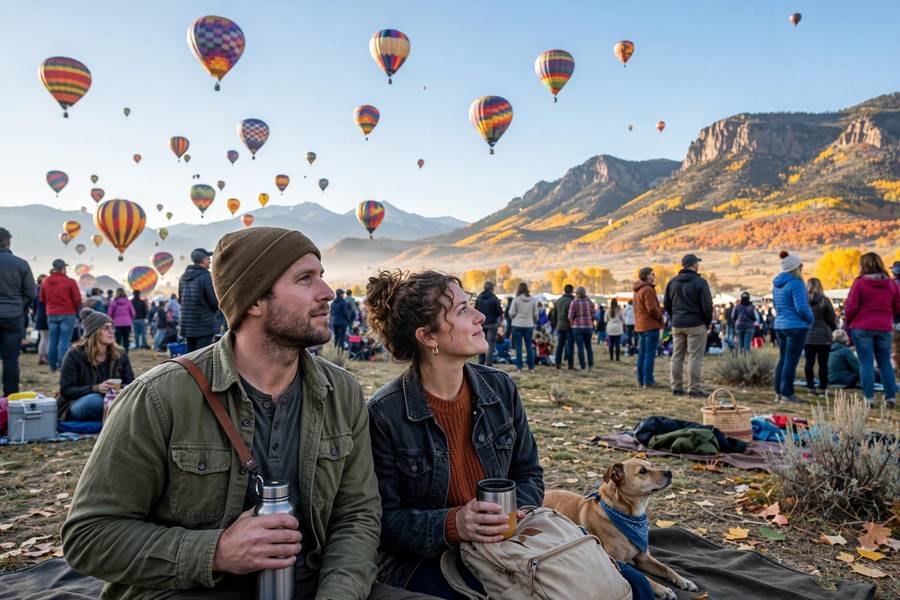
New Mexico (early October): the Albuquerque Balloon Fiesta (500+ balloons at dawn — the most photographed event in the Southwest, book a year ahead), Santa Fe’s aspens (the Sangre de Cristos in gold), Taos’s high-desert fall, and green chile season (the roastings — the smell of autumn in New Mexico). The most underrated fall destination in America — the combination of events, color, and culture is unmatched.
9–10. The Wildcards: Michigan’s UP and the Natchez Trace
Michigan’s Upper Peninsula (late September–early October): the earliest peak color in the Lower 48 — the Porcupine Mountains (the Lake of the Clouds overlook), Pictured Rocks (the cliffs + the fall forest), and Tahquamenon Falls (the root-beer falls — the tannin color, the largest falls east of the Mississippi). The fall trip for the adventurous — remote, wild, spectacular.
Natchez Trace Parkway (late October–November): 444 miles from Nashville to Natchez — the historic route, the fall color (the southern hardwoods peak late), the antebellum homes (the Natchez end), and the no-commercial-traffic rule (the parkway bans trucks — it’s the most peaceful drive in the South). The slow trip — 50 mph, the pullouts, the history. 3 days, ~$600–800.
Planning the Fall Road Trip: Timing, Booking, Packing
The foliage timing (the critical skill): the color moves south and downhill — New England (late September–early October north, mid-October south), Appalachians (mid–late October), Smokies (late October–early November), Ozarks/South (late October–November). The tools: the NPS weekly color reports, the state foliage hotlines, and the flexibility to shift by a week. A fixed-date trip should target the middle of the window, not the edge.
Booking: fall lodging books 3–6 months ahead (New England: 6+; Blue Ridge: 3–4; Utah: 3–4). The midweek hack (Tuesday–Thursday travel — the weekend crowds and prices vanish). The alternative lodging (the state park cabins, the gateway-town motels — the $100/night options that beat the $250 inns on value).
Packing: the layers (the 40-degree swings — fleece + shell + warm coat for New England mornings), the camera (the polarizing filter — the fall color pops), and the cooler (the farm stands, the cider, the apples — the trunk becomes a harvest market). The packing light system handles it — just calibrate for the cold mornings.
The Blue Ridge Parkway (469 miles, 3–4 days) — designed for fall driving, 6-week color window, overlooks every mile. The New England loop (Vermont + White Mountains) is the classic alternative; Utah’s Mighty Five is the desert pick.
Late September–early October (northern New England, Michigan UP), mid-October (New England south, Blue Ridge north), late October (Blue Ridge south, Smokies), late October–November (Ozarks, Deep South). The color moves south and downhill — follow the weekly reports.
New England: 6+ months (inns sell out). Blue Ridge/Utah/Smokies: 3–4 months. The midweek hack saves money and crowds — October weekends are the peak everywhere. National park gateway towns book first.
$150–250/day for two mid-range ($1,000–1,800 for a 5–7 day trip). New England runs higher ($1,500–2,000 — the inn premium); the Natchez Trace and Ozarks run lower ($600–800 — the cabin/motel value).
Layers (40-degree day-to-night swings are normal), a warm coat (New England mornings, desert nights), rain shell, camera with polarizing filter, cooler (farm stands), and comfortable walking shoes. The packing light system adapts — calibrate for cold mornings.