Decorating a Small Apartment on a Budget: 15 Big-Impact Ideas

My first apartment after college had beige walls, beige carpet, and a landlord who considered ‘decorating’ a suspicious activity. My budget was roughly the cost of a pizza per week. And yet, by the time I moved out, friends were asking who my decorator was. Decorating a small apartment on a budget is not about spending more; it is about spending strategically on the few things that change how a space feels: light, textiles, and one confident focal point per room. In this guide, I am sharing the fifteen highest-impact, lowest-cost ideas I have actually used across five small apartments, with real prices and honest notes on what is worth it. If you want the bigger picture first, my small apartment decorating ideas guide covers the overall approach; this is the budget playbook.
Start With Light: The Cheapest Transformation
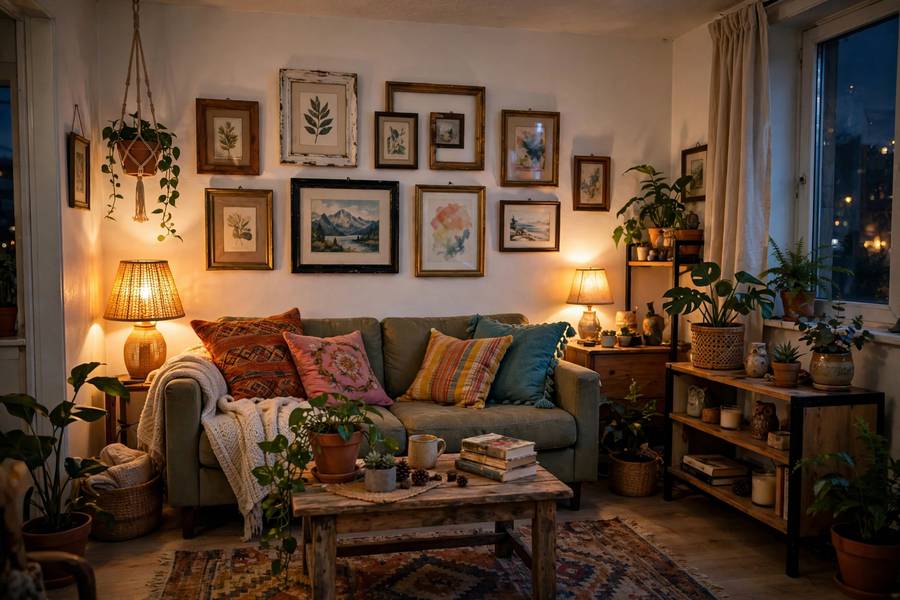
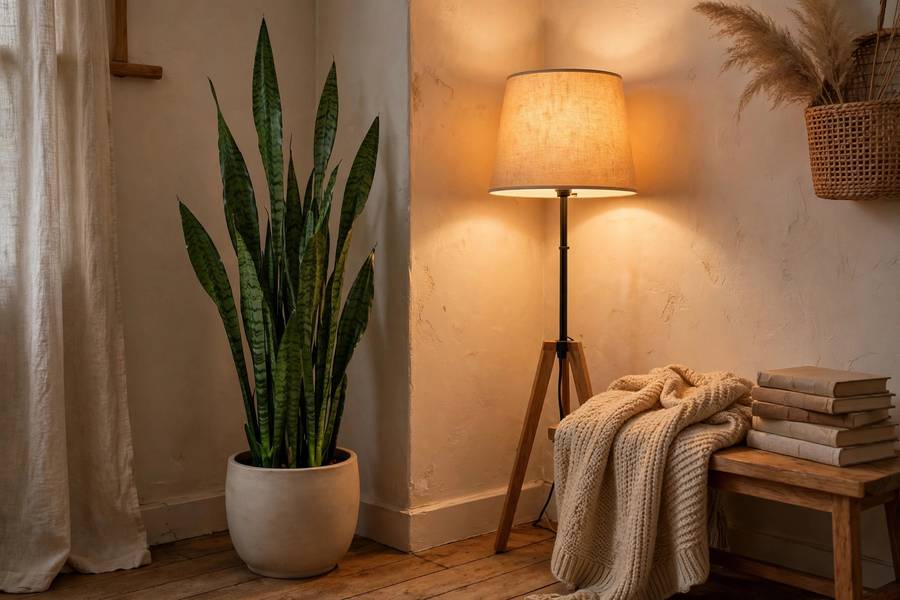
Nothing changes a small apartment like light, and it is nearly free to fix. Landlords install one sad overhead fixture per room and call it done; that single harsh light source is why so many rentals feel flat and depressing. My rule, learned across five apartments: every room needs three light sources at different heights. A floor lamp in the corner, a table lamp on a surface, and the overhead on a dimmer or simply left off. Warm bulbs only, 2700K, always. Cool white bulbs make a small space feel like a dentist’s office.
Thrift stores are full of lamp bases for a few dollars; a new shade costs less than a takeout dinner and makes a ten-dollar lamp look like a hundred-dollar one. String lights are not just for dorms when used deliberately: draped along a bookshelf or headboard, they add the warm glow that makes a small bedroom feel intentional. Total cost for transforming a room’s light: often under thirty dollars. No other decorating dollar works harder.
Textiles: Curtains, Rugs & Throws That Fake Expensive
Textiles are the budget decorator’s secret weapon because they add color, texture, and warmth for very little money, and they move with you. Curtains are the highest impact: hang them high and wide, with the rod mounted near the ceiling and extending well past the window frame. This one trick makes windows look twice as large and ceilings feel taller. I buy basic curtain panels on sale and hem them myself; floor-length curtains that puddle slightly look custom and cost a fraction of made-to-measure.
A rug defines zones in a small open space, which matters enormously in studio apartments where the bed, desk, and sofa share one room. A large rug under the front legs of your seating anchors a ‘living room’ that did not exist before. Layer a smaller vintage-style rug over a basic large one for the collected look designers charge thousands for. Throws and pillow covers in two or three coordinating colors tie it all together; covers, not new pillows, because covers cost a few dollars and store flat when you move.
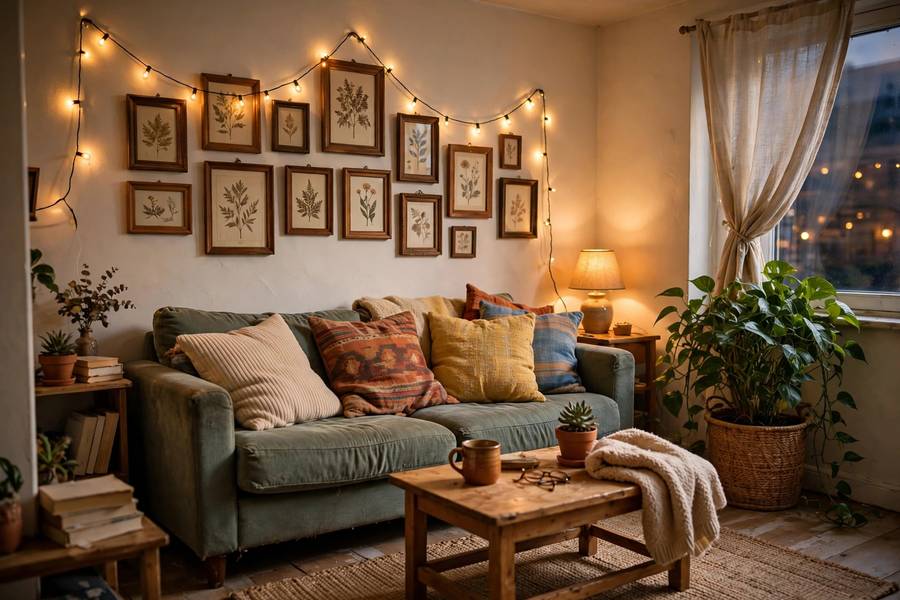
Shop textiles at thrift stores, end-of-season sales, and outlet sites. Natural fibers and simple patterns age better than trendy prints, which look dated within two years.
Walls Without Paint: Renter-Friendly Art & Mirrors
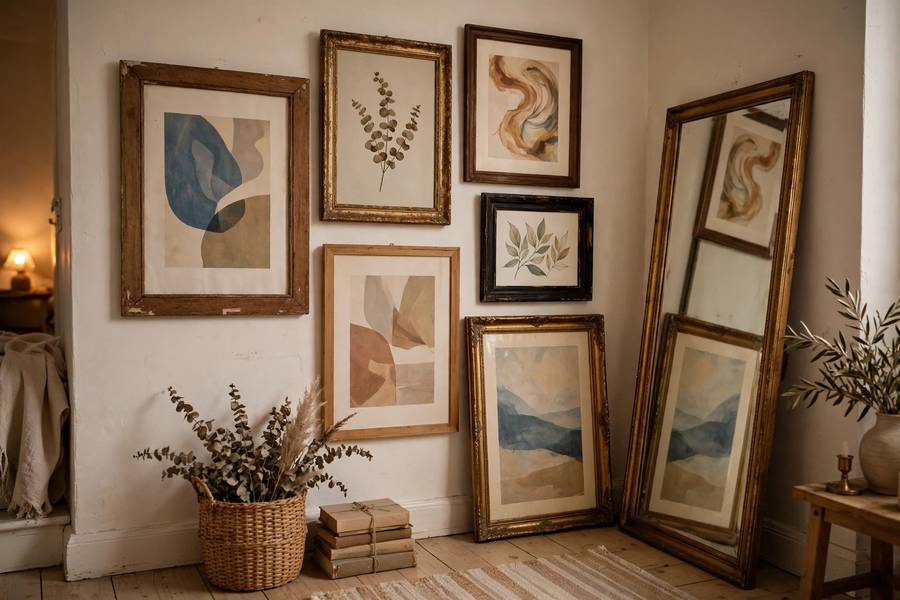
Most renters cannot paint, but bare walls are what make small apartments feel temporary and sad. The fix is art, hung with intention. My formula: one large piece per room beats ten small ones. A single big canvas or framed print gives a small room a focal point and a sense of confidence; a scattering of tiny frames reads as clutter. Thrift stores sell large frames for almost nothing; print free high-resolution art from museum public-domain collections and you have gallery walls for the cost of printing.
Mirrors are the small-space multiplier. A large mirror opposite a window doubles your natural light and visually doubles the room. I found a full-length mirror at a thrift store for eight dollars, leaned it against the wall opposite my living room window, and the room felt twice as bright instantly. Lean rather than hang when you are renting; it looks intentional and avoids wall damage. Peel-and-stick wallpaper on one accent wall is the bolder move: modern versions remove cleanly and a single wall transforms a room’s entire personality for under fifty dollars.
Furniture: Thrift, Rearrange & Multi-Task
The cheapest furniture upgrade is free: rearrange what you have. I redraw my furniture layout on paper twice a year, and almost every time I find a better arrangement. Float the sofa away from the wall, even by six inches; it makes a small room feel larger and more intentional. Angle a chair. Swap the bedroom and living room lamps. You will be amazed what a Saturday of moving furniture does for a space you thought was finished.
When you do buy, buy multi-tasking pieces. A storage ottoman is a coffee table, extra seating, and a blanket chest in one. A drop-leaf table seats two daily and six for dinner parties. Nesting side tables tuck away when you need floor space. Thrift stores, marketplace listings, and curbside finds furnish entire apartments for the cost of one retail sofa; solid wood pieces from decades past are better made than most flat-pack furniture and refinish beautifully. For keeping it all organized once placed, my guide to organizing a small apartment pairs perfectly with this one.
One honest warning: measure twice, especially doorways and stairwells. The beautiful thrifted armchair that does not fit through your door is not a bargain.
Plants: Life for Less Than Takeout
A thirty-dollar plant does more for a room than a three-hundred-dollar decor object. Plants add life, color, and shape at every height, and they make a space feel cared for in a way nothing else does. Start with the unkillable trio: pothos, snake plant, and ZZ plant. They tolerate low light, irregular watering, and beginner neglect with grace. I have moved the same pothos through four apartments; it is practically family now.
Style them deliberately: a tall plant in an empty corner, a trailing pothos on a high shelf, a cluster of three small pots at different heights on a side table. The pots matter more than the plants for the look; matching simple pots in one material make a five-dollar plant look like fifty. Propagate cuttings in water to multiply your collection for free, and check grocery stores, which often sell healthy small plants for less than garden centers. If your thumb is truly brown, one large high-quality faux plant in a beautiful pot beats a dead real one every time.
The $100 Room Refresh: My Exact Formula
Here is the budget refresh I have run in every apartment, room by room, for about a hundred dollars total. Warm LED bulbs throughout ($15). A large thrifted mirror or frame ($10). Curtain panels hung high and wide ($25 on sale). A washable rug that defines the space ($30 on clearance). Pillow covers and a throw in a cohesive palette ($20). That is it. Five moves, one weekend, and the room is transformed.
The deeper lesson from years of budget decorating: cohesion beats cost. A room of thrifted pieces in a consistent color palette looks designed; a room of expensive pieces in clashing styles looks like a storage unit. Pick two or three colors, repeat them in every room, and everything you own will look like it belongs together. For the full philosophy behind these tactics, my small apartment decorating ideas guide lays out the principles; and when you are ready to think long-term about owning less but better, my guide to minimalism changed how I furnish entirely.
Start free: rearrange furniture, declutter ruthlessly, and maximize natural light by cleaning windows and opening blinds. Then spend tiny amounts on warm LED bulbs, thrifted frames with free printable art, and propagated plant cuttings. Cohesion (a consistent color palette) makes even free changes look intentional.
Lighting first: three warm light sources per room instead of one harsh overhead. Then textiles: curtains hung high and wide, a rug that defines zones, and pillow covers in coordinating colors. These three categories transform a rental for under $100 total.
Use one large art piece per room (thrifted frames + free museum prints), a big mirror opposite the window to double light, peel-and-stick wallpaper on one accent wall, and textiles for color. Leaning mirrors and removable wallpaper avoid wall damage entirely.
Thrift stores for frames, lamps, mirrors, and solid wood furniture; end-of-season sales for textiles and rugs; online marketplaces for secondhand furniture; grocery stores for affordable plants. Buy pillow covers instead of pillows, and curtains on sale hemmed to floor length.
Cohesion is the secret: pick 2-3 colors and repeat them in every room. Hang curtains high and wide, use one large art piece per room instead of many small ones, match your plant pots, and keep surfaces uncluttered. Consistent palette + good lighting makes thrifted pieces look designer.