How to Start a Garden From Scratch: My First-Year Playbook

Starting a garden from scratch felt enormous to me. I had a patch of lawn, a vague dream of homegrown tomatoes, and no idea which end of the shovel was up. What I needed was not another glossy book showing perfect gardens; I needed someone to tell me what to do first, second, and third, in plain language, with honest warnings about the parts that go wrong. That is what this guide is. How to start a garden from scratch, broken into the actual sequence that works: pick the spot, prepare the soil, choose easy plants, plant at the right time, and keep everything alive through the season. I made the classic mistakes so you do not have to, and I will point them out as we go. For the broader overview, my guide on how to start a garden is the companion piece; this is the boots-on-the-ground playbook.
Phase 1: Pick Your Spot (Sun Beats Everything)
Everything in gardening flows from the site you choose, and one factor beats all the others: sun. Vegetables need six to eight hours of direct sunlight daily. Before you commit to a spot, watch it for three days, photographing it morning, midday, and evening. My ‘sunny all day’ first spot turned out to lose direct sun at 2 p.m. behind a neighbor’s maple, and my peppers sulked all season because of it.
Beyond sun, look for level ground with decent drainage (no puddles after rain), reasonably close to a water source, and convenient to your kitchen door. Convenience is not laziness; it is strategy. A garden you pass daily gets watered, weeded, and harvested. A garden at the far end of the property gets visited on weekends and quietly declines. Start small, one bed or a handful of containers, in the sunniest convenient spot you have. You can expand next year from a position of success.
Phase 2: Kill the Grass and Build the Bed
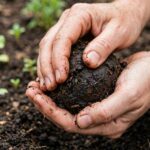
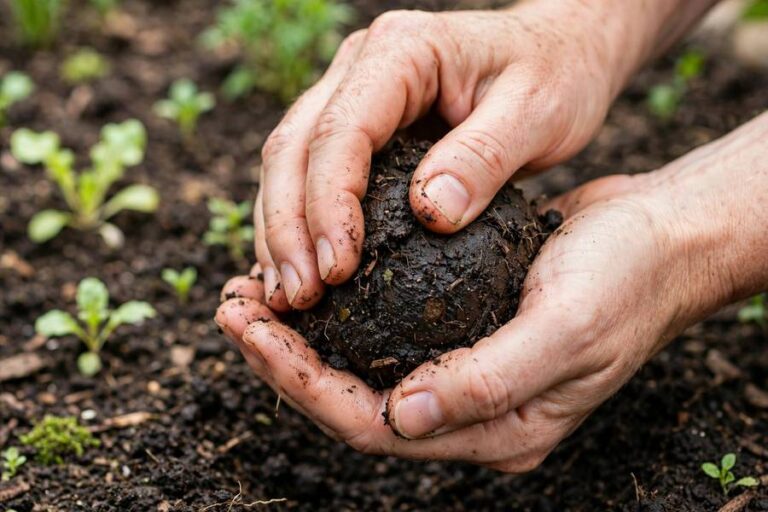
You have two good options for turning lawn into garden. The patient way: lay cardboard over the grass, wet it, cover with four inches of compost or mulch, and wait six to eight weeks. The grass dies, worms move in, and you plant directly into the compost layer. The fast way: strip the sod with a flat spade, flip it upside down in the bed bottom, and cover with soil and compost. I have done both; smothering is less work and better for the soil.
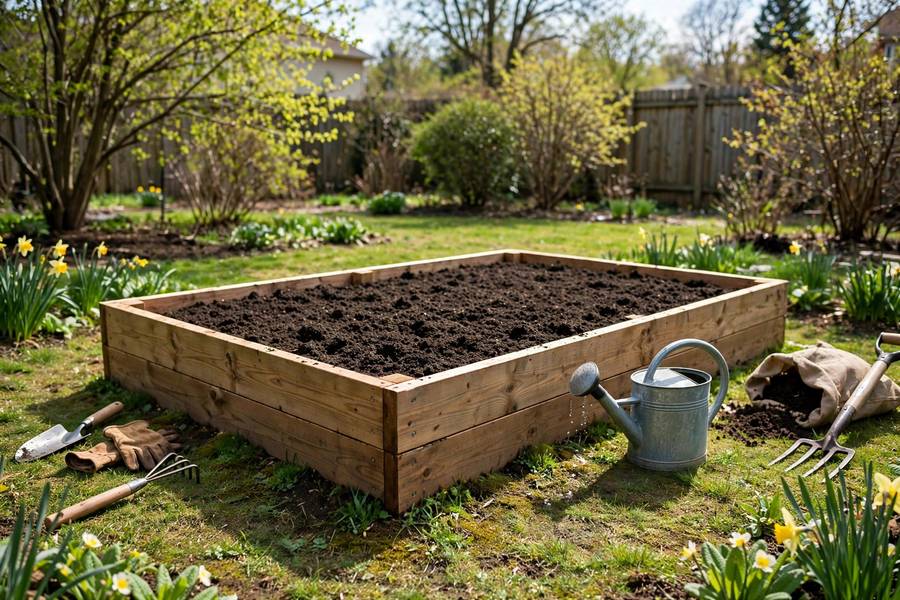
For the bed itself, beginners should strongly consider a simple raised bed: four boards, eight inches tall, four by eight feet, filled with a mix of topsoil and compost. It sidesteps bad native soil entirely, warms up earlier in spring, and drains well. If you go in-ground, loosen the top eight inches with a fork and work in two to three inches of compost. Either way, this is the weekend where your garden is truly born, and it is deeply satisfying work.
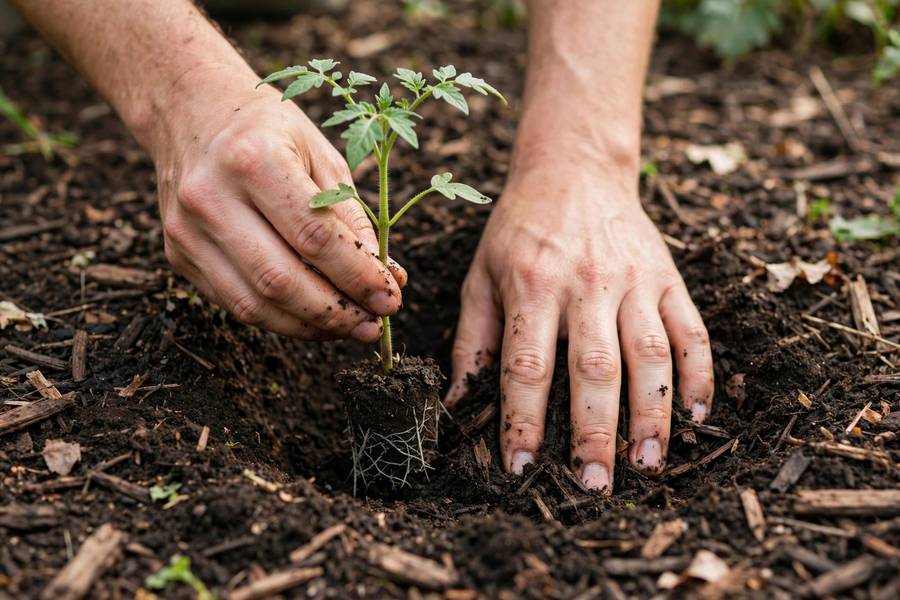
Do not skip edging. A simple trench or boards between lawn and bed stops grass from creeping back in, and creeping grass is the weed you will fight all season if you let it establish a beachhead.
Phase 3: Choose Plants You Cannot Easily Kill
Your first plant list should be boring in the best way. Cherry tomatoes (transplants, not seed), zucchini, bush beans, lettuce, radishes, green onions, basil, and peppers cover the bases with maximum forgiveness. These germinate reliably or transplant easily, tolerate imperfect care, and produce fast enough to keep you excited. Every one of them earned its place through my own trial and error.
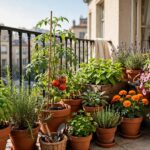
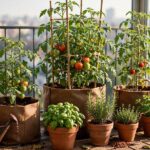
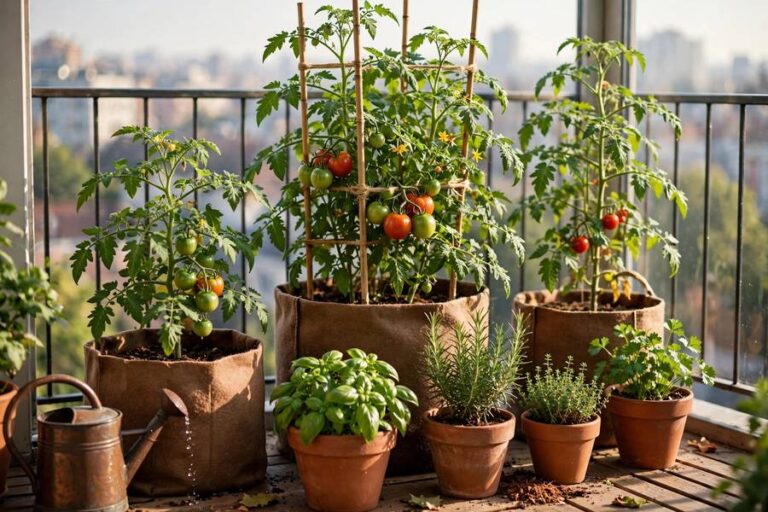
Buy transplants for tomatoes, peppers, and herbs; direct-sow everything else after the last frost date. Read the seed packets and believe the spacing numbers, even though the bed looks emptier than you expect. And plant what your family eats. Nobody needs a row of kohlrabi they will not touch. A small garden of favorites beats a large garden of obligations every time. For container growers, the same easy plants adapt beautifully to pots; see what container gardening is for the setup.
Phase 4: Plant at the Right Time (Not When You Are Excited)
The hardest discipline in spring gardening is waiting. Planting warm-season crops like tomatoes and peppers before the last frost kills them overnight, and I have the dead seedlings to prove it. Find your area’s average last frost date, then add a week of caution for good measure. Cool-season crops like peas, lettuce, and radishes go in weeks earlier; they actually prefer the cool.
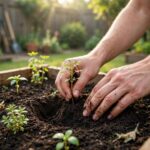
Harden off transplants before planting out: set them outside for a few hours daily over a week, gradually increasing exposure. Seedlings raised indoors are soft, and unhardened transplants can stall for weeks from transplant shock. Plant on a cloudy afternoon or in the evening, water deeply at planting, and mulch around (not touching) the stems. These small courtesies at planting time pay off in weeks of stronger growth.
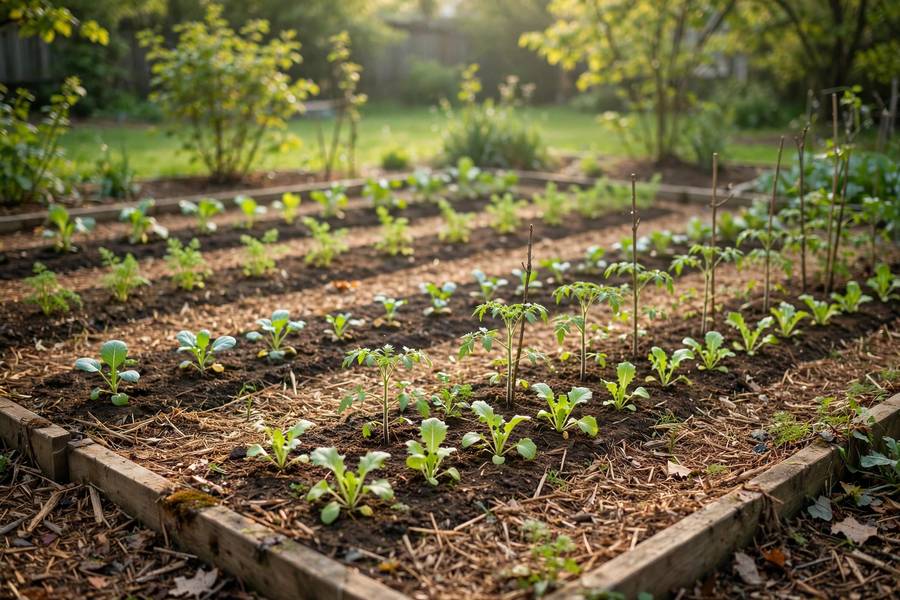
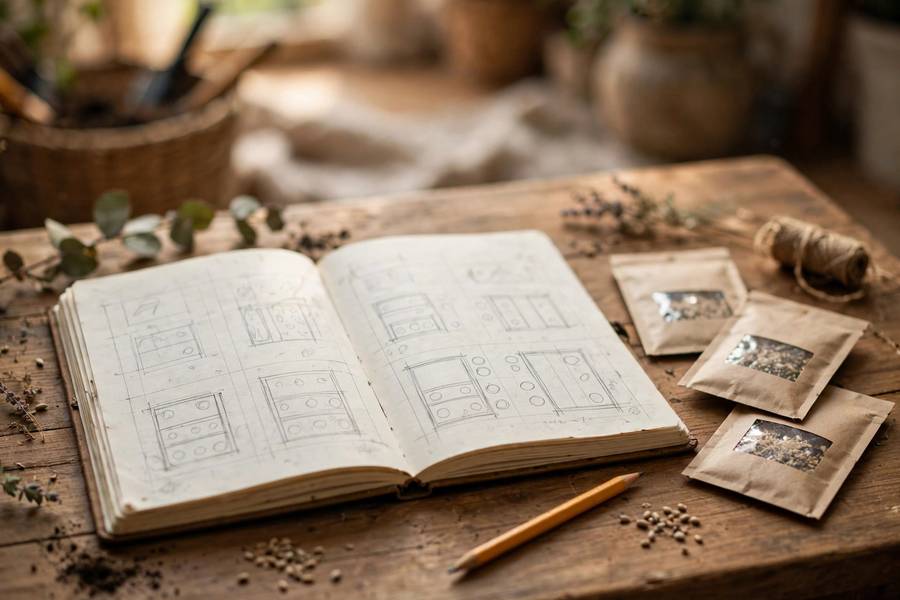
Keep a simple garden journal from day one: what you planted, when, and where. By fall you will have a personalized record worth more than any book, and next spring you will plant with confidence instead of guesses.
Phase 5: The Weekly Rhythm That Keeps It Alive
Gardens do not need constant attention; they need consistent attention. My weekly rhythm: a deep watering session two to three times a week (daily for containers in heat), a ten-minute weed patrol with a hoe while weeds are tiny, and a walk-through to check for pests, yellowing leaves, or anything looking off. That is genuinely it for most of the season. An hour or two a week maintains a beginner garden beautifully.
Feed the soil, not just the plants. Side-dress heavy feeders like tomatoes with compost when they start fruiting, and keep everything mulched with two to three inches of straw or shredded leaves. Mulch is the closest thing to a gardening cheat code: it suppresses weeds, holds moisture, and feeds the soil as it breaks down. Start your own supply with composting at home, and within a season you will be gardening on a closed loop of free fertility.
What I Wish Someone Had Told Me Before Year One
First: your garden will look empty in May and jungle-like in July. Trust the spacing. Second: something will fail, and it is not a verdict on you. My first cucumbers died of wilt; my second planting thrived. Gardening is a conversation with nature, and nature sometimes changes the subject. Third: harvest often. Picking beans, zucchini, and lettuce regularly signals the plant to produce more; neglected plants slow down.
Fourth: take photos every month. You will be amazed at the transformation, and photos help you plan next year. Fifth: talk to neighboring gardeners. The retired man three doors down taught me more about my local soil in one conversation than a month of reading. Start from scratch with the phases above, lean on my guide on how to start a garden for reference, and give yourself grace. Every expert gardener you admire once killed a tomato seedling. Welcome to the club.
Pick a sunny spot (6-8 hours of direct sun) that is convenient to your house and water. Watch the light for three days before committing. Everything else, soil, plants, timing, flows from this one decision, and sun is the factor you cannot fix later.
Smother the grass with cardboard covered by 4 inches of compost or mulch and wait 6-8 weeks, or strip the sod with a spade for faster results. Then build a raised bed or loosen the native soil and mix in 2-3 inches of compost. Edge the bed to stop grass creeping back.
Plant cool-season crops (peas, lettuce, radishes) a few weeks before your last frost date, and warm-season crops (tomatoes, peppers, beans) one to two weeks after it. Find your average last frost date online and treat it as a guideline, not a guarantee.
About 1-2 hours a week for a small bed: deep watering 2-3 times weekly, a 10-minute weed patrol, and a walk-through to check plant health. Containers in summer heat need daily watering checks. Consistency matters far more than total hours.
Planting too much, too early, in unprepared soil. Beginners commonly plant warm-season crops before the last frost, overcrowd the bed, and skip soil preparation. Start small, wait for the right timing, feed the soil with compost, and trust the spacing on seed packets.