How Long Does It Take to Build Endurance? The Honest Timeline

“How long until I’m fit?” is the question I hear most, and I understand the impatience behind it. You are putting in the work and you want to know when the payoff arrives. Here is the honest answer nobody on social media will give you: noticeable improvements in 3 to 4 weeks, a real aerobic base in 12 to 16 weeks, and the kind of deep endurance that feels effortless in 12 to 24 months. Those numbers are not motivational; they are physiological. Your body builds endurance through specific adaptations, mitochondria, capillaries, blood volume, each on its own timeline, and no supplement or hack meaningfully accelerates the sequence. In this guide I will walk you through exactly what adapts when, why your cardiovascular system outruns your joints, and how to measure progress so you stay motivated through the boring middle. Build your plan on strength training for runners foundations and track it against marathon training for beginners milestones.
The Honest Timeline: What Happens When
Weeks 1 to 2: plasma volume expands, which is why workouts suddenly feel slightly easier; this is mostly fluid, not fitness, but it is real and motivating. Weeks 3 to 4: mitochondrial enzymes upregulate and your easy pace starts improving; this is the first genuine adaptation, and it is when most people get hooked. Weeks 6 to 8: capillary density increases around working muscles, improving oxygen delivery; your heart rate at a fixed pace drops noticeably. Weeks 10 to 16: structural changes accumulate, cardiac output improves, fat metabolism shifts, and you have built what coaches call a base: the ability to train consistently without breaking down. Months 6 to 12: the deep adaptations, tendon remodeling, bone density, movement efficiency, compound into durability that lets you handle serious volume. Year 2 and beyond: diminishing but real returns as your ceiling keeps rising. Anyone promising to shortcut this timeline is selling something.

Why Your Engine Adapts Faster Than Your Chassis
Your heart and lungs are drama queens that adapt fast and complain loudly; your tendons and bones are stoics that adapt slowly and silently. This mismatch is the central fact of endurance training. By week 3 your engine feels ready for workouts your chassis cannot survive, and this is precisely when most beginners get hurt. Shin splints, Achilles irritation, and IT band issues are almost never fitness problems; they are timeline problems, the result of loading connective tissue faster than its 8-to-12-week remodeling cycle allows. Respect the slower timeline and everything works. The practical rule: increase weekly volume by no more than 10 percent, and hold volume steady every fourth week. Boring? Yes. Effective? Undefeated. how to build endurance
The 12-Week Base: Your First Real Milestone
Twelve weeks of consistent easy training is the first milestone that actually matters. Not twelve weeks of heroic training, twelve weeks of showing up: 3 to 5 sessions a week, mostly easy, one long session, two strength days. At the end of it you will have lower resting heart rate, faster easy pace, the ability to train day after day without soreness, and, most importantly, the durability to start training harder. I consider an athlete “base-built” when they can run 60 minutes easy and feel normal the next day. Everything before that is preparation; everything after that is building on a foundation instead of on sand. If you have twelve weeks, spend them here. It is the highest-return investment in all of endurance sport.

What Speeds It Up (And What Doesn’t)
What speeds it up: consistency (nothing beats it), genuinely easy easy-days (lets you accumulate volume), strength training (keeps you healthy enough to stay consistent), sleep (adaptation happens overnight), and patience with the long session. What does not: altitude masks, expensive supplements, “metabolic” workouts that are just CrossFit rebranded, and training harder to “make up” missed sessions. The single biggest accelerator is simply not getting injured, because six months of uninterrupted moderate training beats three months of heroic training followed by three months of rehab every single time. Protect your consistency above all else; it is the whole game.
How to Measure Progress Without a Lab
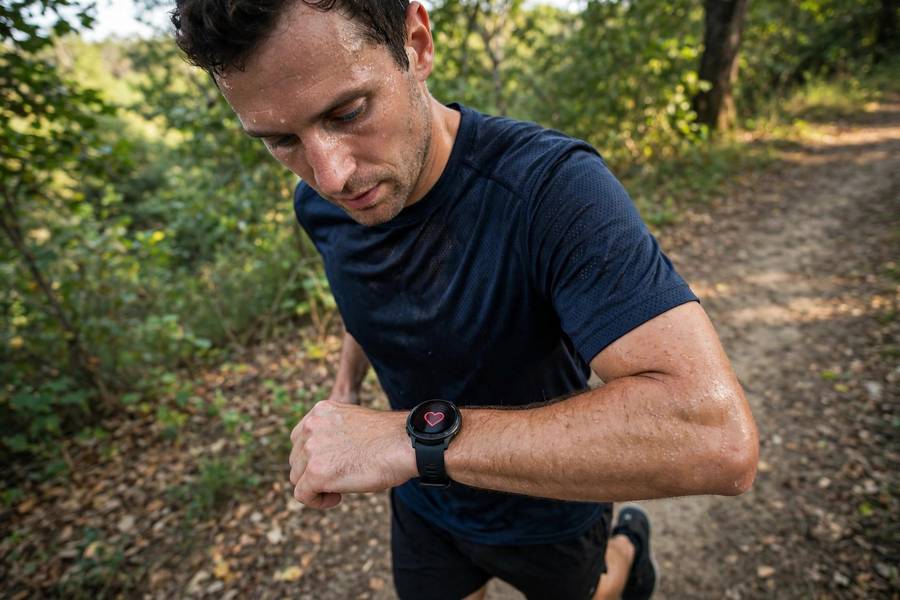
You do not need a sports lab. Test one: resting heart rate every morning; a 5-to-10 beat drop over three months means your base is building. Test two: pace at a fixed heart rate; run at 140 bpm once a month on the same route and watch pace improve. Test three: the talk test on long sessions; full sentences at mile eight means real aerobic fitness. Test four: recovery heart rate; how fast your pulse drops in the first minute after a hard effort, faster drops mean better fitness. Test monthly, not weekly, because adaptations are slow and weekly noise will drive you crazy. Write the numbers down. On the days motivation dips, the logbook is proof that the boring work is working.
So: 3 to 4 weeks to feel it, 12 to 16 weeks to build it, a year or two to own it. Start now, stay consistent, and let physiology do what physiology does.
What About VO2 Max? The Ceiling Question
Everyone asks about VO2 max, the maximum rate of oxygen use, because it sounds like the master stat. It matters, but less than people think. For beginners and intermediates, improvements come overwhelmingly from the base adaptations, efficiency, fat metabolism, capillary density, rather than from raising the VO2 max ceiling. Two athletes with identical VO2 max can differ by 20 minutes in a marathon based on base alone. Chasing VO2 max with constant intervals before building base is the classic impatience error; it works for about a month, then stalls hard. Build the base for a year, then spend focused blocks raising the ceiling, and you will go further than the interval addict every time. The ceiling matters most at the elite level; the foundation matters most everywhere else, which is where you and I live.
The Role of Genetics (And Why It Barely Matters)
Genetics influence your ceiling and your rate of adaptation; some people build mitochondria faster, some have naturally higher VO2 max. Here is why it barely matters for you: the gap between untrained and trained is so enormous that it dwarfs genetic differences among non-elites. A genetically average person who trains consistently for two years will outperform a genetically gifted person who trains sporadically, every single time, by a wide margin. The research on trainability shows everyone improves; “non-responders” in early studies turned out to be under-dosed, and when volume increased, they responded like everyone else. So unless you are chasing Olympic medals, genetics is trivia. The variables you control, consistency, easy-day discipline, sleep, strength work, explain nearly all the variance in outcomes for recreational athletes. Control those and let the gifted worry about their gifts.
The bottom line on timelines: your body is not a microwave, and anyone selling 30-day transformations is selling the sizzle, not the steak. Commit to the real timeline and you will be amazed where a year of patient work takes you.
Noticeable improvements in 3-4 weeks, a real aerobic base in 12-16 weeks of consistent training, and deep, effortless endurance in 12-24 months. The timeline is physiological and cannot be meaningfully shortcut.
Your cardiovascular system adapts in 2-3 weeks but tendons and bones need 8-12. The engine outruns the chassis. Increase volume max 10% per week and keep easy days genuinely easy to respect the slower timeline.
The aerobic base is your foundation of mitochondrial density, capillary networks, and fat metabolism, built through 12+ weeks of mostly-easy volume. You are base-built when you can go 60 minutes easy and feel normal the next day.
Morning resting heart rate (should drop 5-10 bpm over months), pace at a fixed heart rate on the same route monthly, the talk test on long sessions, and one-minute heart rate recovery after hard efforts.
Consistency above all, genuinely easy easy-days, twice-weekly strength work, adequate sleep, and not getting injured. Supplements, gadgets, and harder training do not accelerate the physiological timeline.
You can build noticeable fitness in 30 days: plasma volume expands, mitochondria upregulate, and easy pace improves. But a true aerobic base needs 12-16 weeks, and deep durability needs a year. Thirty days starts the process; it does not complete it.
Older athletes adapt slightly slower and need more recovery, but they still adapt significantly; studies show 70-year-olds building VO2 max with consistent training. The principles are identical at any age, just dose volume and intensity more conservatively.