How to Tell If Avocados Are Ripe: 3 Foolproof Tests

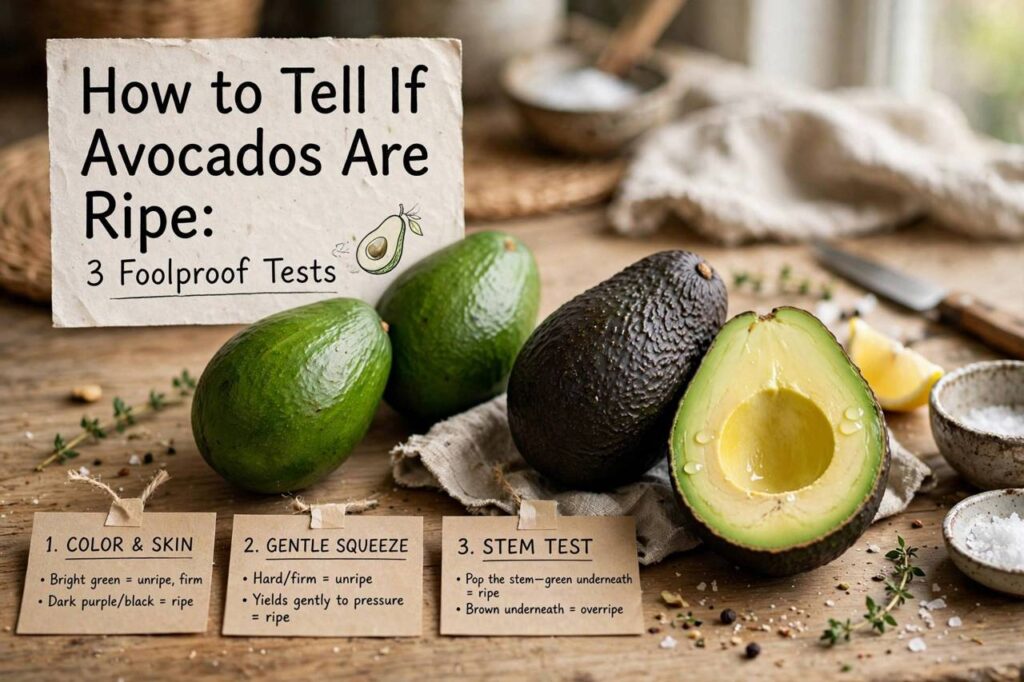
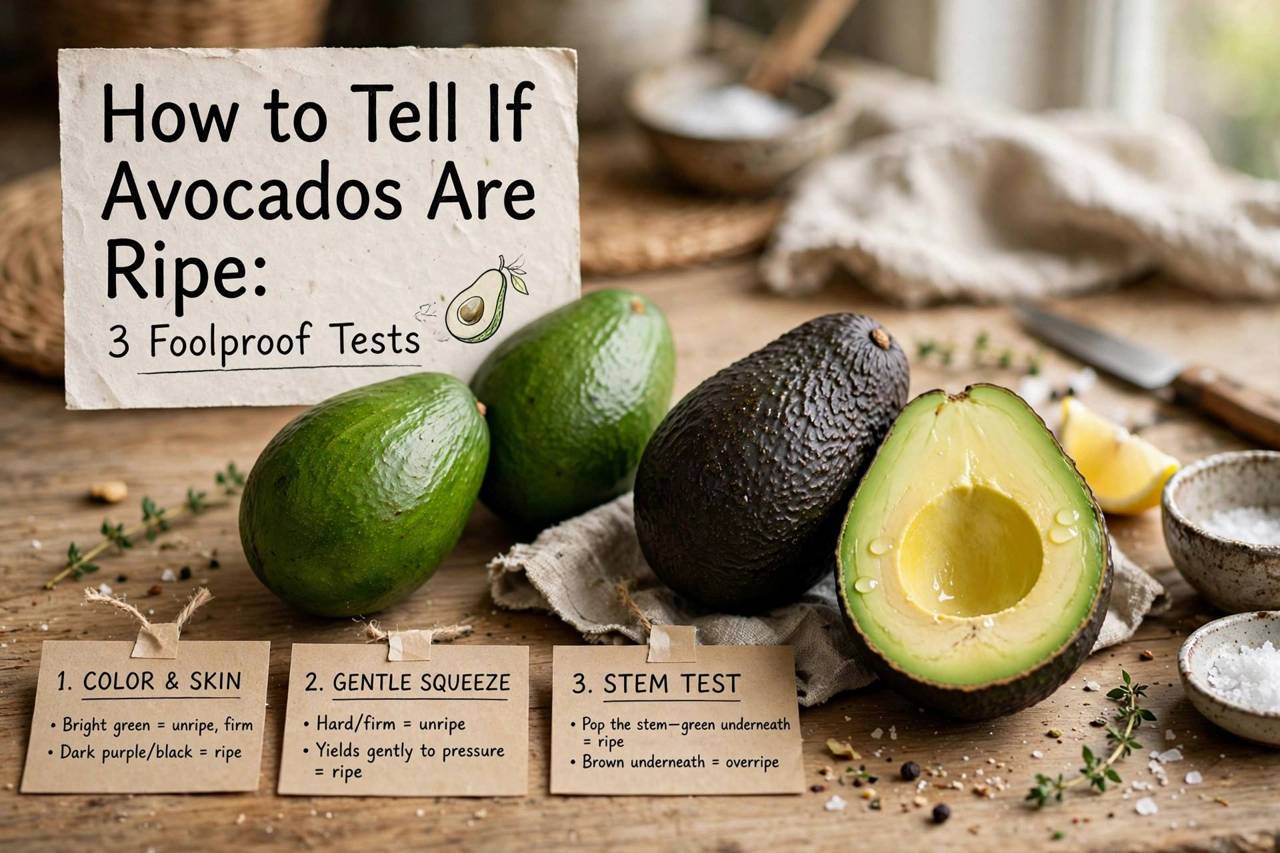
There is a special kind of heartbreak that only avocado lovers know: you buy a beautiful, dark, promising avocado, wait two days, cut it open, and find brown mush inside. Or the opposite — you need guacamole tonight, and every avocado in the store feels like a rock. Learning how to tell if avocados are ripe is one of those small kitchen skills that pays off every single week, because it means perfect avocados on demand instead of avocado roulette.
The good news: ripeness is easy to read once you know the signs. It comes down to three things — color, feel, and the little stem trick — plus knowing how to speed things up or slow them down. This guide covers all of it: how to pick a ripe avocado at the store, how to tell when the ones on your counter are ready, and what to do with avocados at every stage.
How to Tell If Avocados Are Ripe: The Three Signs
1. Color: dark, but not the whole story
For the common Hass avocado — the bumpy-skinned variety that makes up most of what’s sold — ripeness brings a color change from bright green to very dark green, almost black. An unripe Hass is grass-green; a ripe one is dark and purplish-black.
But color alone can fool you. Some avocados darken before they’re truly ripe inside, and other varieties (like Fuerte or Bacon avocados) stay green even when ripe. So treat color as a first clue, not a verdict. If it’s bright green, it’s almost certainly not ready. If it’s dark, move on to the feel test.
2. Feel: gentle pressure, not a squeeze
This is the real test. Hold the avocado in your palm — not your fingertips, which can bruise it — and press very gently. A ripe avocado yields slightly to pressure, like pressing the fleshy part of your palm below your thumb. It should give a little without feeling soft or mushy.
Here’s the scale: rock-hard means unripe (give it days). Slight give means ripe and ready. Noticeably soft or dented means overripe — cut it open immediately and use what’s good, because it won’t improve. And never squeeze hard in the store; you’ll bruise the fruit for the next person, and bruised spots turn brown and bitter.
3. The stem test: the most reliable trick
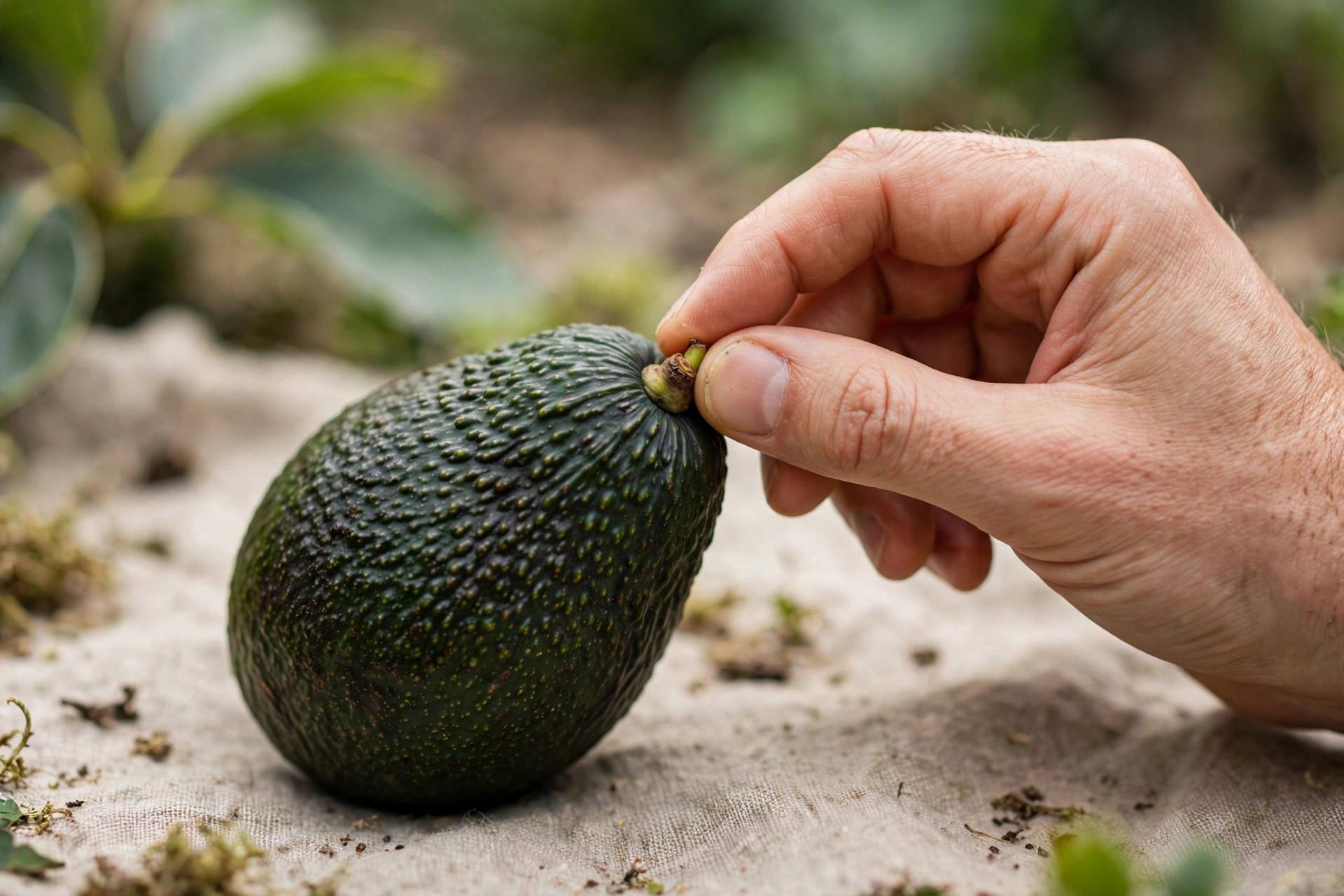
Pop off the little stem nub at the top of the avocado and look at the color underneath. Green underneath means ripe and ready. Brown underneath means overripe — the browning has started inside. If the stem won’t budge at all, the avocado isn’t ripe yet.
This test is remarkably accurate because the stem end reflects what’s happening inside the fruit. Produce workers use it, chefs use it, and now you can too. Just be gentle, and don’t do it to every avocado in the bin — check the one you’re planning to buy.
Timing: When Will It Be Ready?
Avocados ripen off the tree, which means the ones you buy are usually in some stage of the process. Here’s a rough timeline at room temperature:
Rock-hard, bright green: 4–5 days to ripeness. Buy these if you’re planning ahead — say, for the weekend.
Firm with the faintest give: 2–3 days. The sweet spot for buying: they’ll be perfect soon and you control the timing.
Yields gently, dark skin: ripe now. Use within a day or two.
Soft with dark spots: overripe. Use today — in smoothies, dressings, or baking, where texture matters less. Cut away any brown, stringy bits.
Temperature matters enormously. Avocados ripen at room temperature and basically pause in the refrigerator. So the strategy is simple: ripen on the counter, then refrigerate once ripe to hold them for a few extra days.
How to Speed Up (or Slow Down) Ripening
Need a ripe avocado tomorrow? Put it in a paper bag with a banana or apple. Those fruits release ethylene gas, a natural plant hormone that triggers ripening, and the bag traps it around the avocado. This can cut ripening time from days to about 24 hours. Adding the banana roughly doubles the effect.
What about the microwave or oven tricks you see online? Skip them. Heat softens the avocado but doesn’t ripen it — ripening is a chemical process involving starches converting to sugars and oils developing. You can’t microwave chemistry. You’ll get a warm, soft, bland avocado that tastes like disappointment.
To slow things down, refrigerate. A ripe avocado kept in the fridge stays good for 3–5 more days. An unripe avocado in the fridge will take much longer to ripen — useful if you bought a bag of hard ones and want to stagger them. Just bring them back to room temperature to finish ripening.
What to Do at Every Stage
Different ripeness stages suit different uses, and knowing this turns “imperfect” avocados into ingredients instead of waste.
Perfectly ripe (creamy, bright green-yellow flesh): the all-rounder. Slices for toast and salads, chunks for grain bowls, the base of guacamole. This is the avocado at its peak — nutty, buttery, rich.
Slightly underripe (firm but sliceable): actually great for grilling or roasting. Halve it, brush with oil, and grill cut-side down for a few minutes — the heat softens it and adds smoky flavor. Firm avocado also holds its shape in salads better than soft ones.
Overripe (soft, some brown spots): don’t throw it out. Scoop out the good green parts and blend into smoothies, salad dressings, or chocolate mousse — yes, avocado chocolate mousse is real and genuinely good. Overripe avocado also works in baking as a butter substitute in brownies and quick breads.
And the brown question everyone asks: a little browning on the surface is just oxidation — the same thing that happens to a cut apple. It’s harmless. Scrape or squeeze lemon juice over it and carry on. But brown, stringy, mushy flesh throughout means it’s past saving. Compost it and move on.
Storing Avocados the Right Way
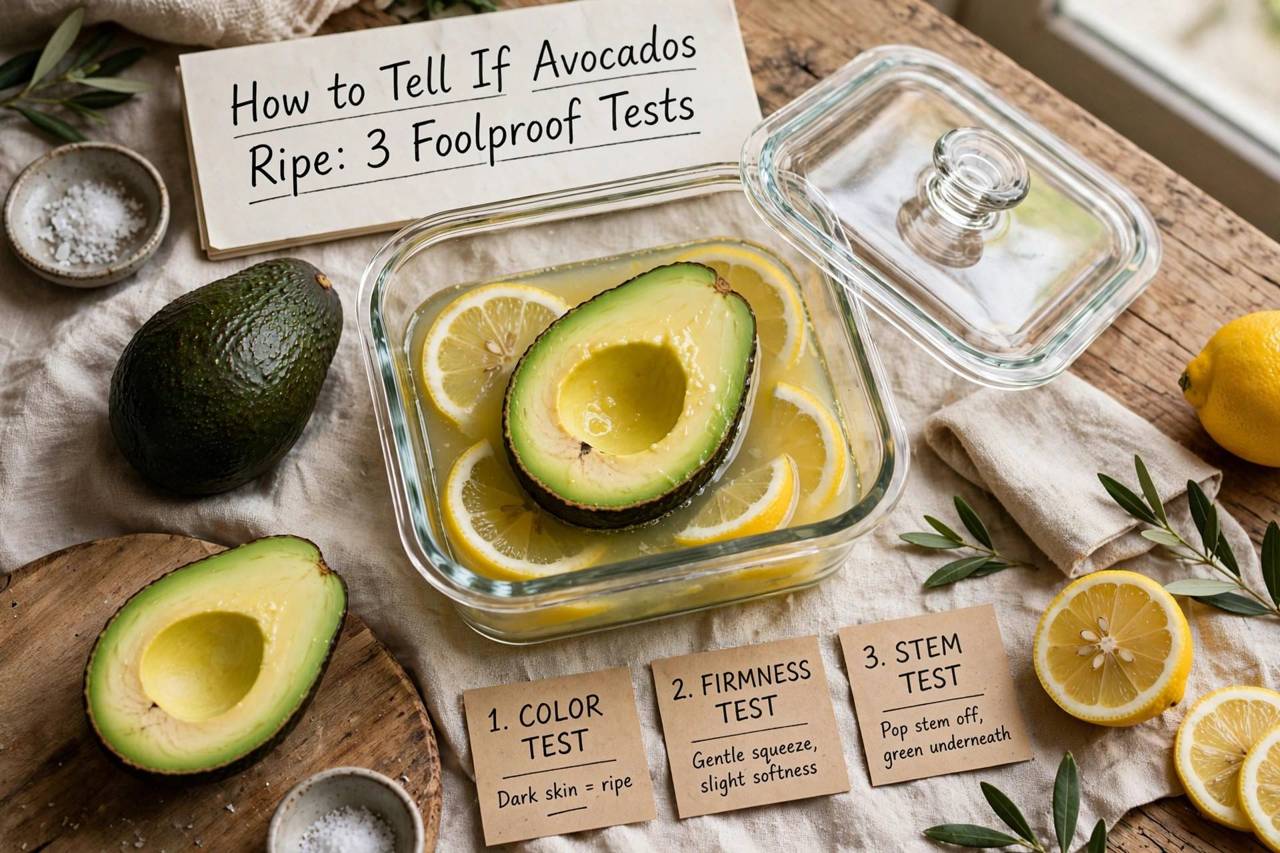
Whole, unripe avocados: room temperature, out of direct sun. A fruit bowl is perfect.
Whole, ripe avocados: refrigerator, uncut. They’ll hold for several days.
Cut avocado: this is where most people go wrong. The cut surface browns within hours from air exposure. The fix is minimizing air contact: squeeze lemon or lime juice over the surface, press plastic wrap directly onto the flesh (not just over the container), and refrigerate. Stored this way, half an avocado stays green for a day or two.
Can you freeze avocado? Yes, with a caveat. Freeze it as purée with a squeeze of lemon juice in portion-sized containers, and it’s fine for smoothies, dressings, and guacamole later. The texture changes, so don’t expect sliceable avocado after thawing — but for blended uses, it’s perfectly good and a great way to rescue a glut of ripe ones.
Avocados are one of those ingredients that reward a little attention — and once you can read them, you’ll never suffer through a bad one again. If you’re building your kitchen skills, our guide to batch cooking shows how to plan meals around fresh ingredients like these so nothing goes to waste.
Avocado Varieties: Does the Type Change the Test?
Everything above describes the Hass avocado, which is what you’ll find in most stores. But you might run into other varieties, and they play by slightly different rules.
Hass: the standard. Bumpy dark skin when ripe, creamy texture, nutty flavor. The color-feel-stem tests all apply exactly as described.
Fuerte: smooth, thin, green skin that stays green even when ripe — so ignore color entirely and rely on feel and the stem test. The flavor is milder and the texture a bit more watery than Hass. Common in winter months.
Bacon: another green-when-ripe variety with smooth skin. Lighter flavor, less oil content. Same rule: feel and stem, not color.
Pinkerton: long, pear-shaped, with pebbly green skin that darkens somewhat when ripe. Good all-rounder, and the elongated shape makes it easy to spot.
Reed: round like a cannonball, stays green when ripe, with a rich, almost buttery flavor. These get large — one Reed can be a meal. Again, trust the squeeze, not the color.
The practical takeaway: when buying any avocado you don’t recognize, ask the produce staff or just default to the feel test and the stem test, which work across all varieties. Color is a Hass-specific shortcut. And whichever variety you bring home, the ripening rules — counter to ripen, fridge to hold, paper bag with a banana to hurry — are universal.
One last buying tip: when avocados go on sale, buy them rock-hard and in quantity. They ripen over staggered days on your counter, and the ripe ones hold in the fridge — a cheap bag of hard avocados becomes a full week of perfect toast if you manage the timing right.
Frequently Asked Questions
How can you tell if an avocado is ripe without cutting it?
Use three checks: the skin should be dark (for Hass avocados), it should yield gently to palm pressure without feeling mushy, and the stem should pop off easily revealing green underneath. If all three check out, it’s ripe.
How long does it take for an avocado to ripen?
A rock-hard avocado takes about 4–5 days at room temperature. To speed it up, place it in a paper bag with a banana — the ethylene gas can ripen it in about 24 hours. Refrigeration slows ripening dramatically.
Is it okay to eat an overripe avocado?
If it’s just soft with some brown spots, yes — cut away the brown bits and use the rest in smoothies, dressings, or baking. If the flesh is brown and stringy throughout with an off smell, it’s past its prime and should be discarded.
Why do my avocados go from hard to rotten with no ripe stage?
You’re probably missing the window — the perfectly ripe stage can last just a day or two at room temperature. Check daily once they start softening, and move ripe ones to the refrigerator immediately to hold them for 3–5 more days.
Should you refrigerate avocados?
Refrigerate ripe avocados to keep them at peak ripeness for several days. Keep unripe avocados at room temperature — cold slows the ripening process. Once refrigerated, an unripe avocado will take much longer to ripen even after returning to room temperature.